Almost everyone who owns a coffee machine confuses these two jobs, so start here: descaling and cleaning are not the same thing, they fix different problems, and doing one does nothing for the other. Descaling removes limescale — the hard mineral deposit that water leaves inside the boiler and pipes. Cleaning (backflushing) removes rancid coffee oils — the brown, bitter gunk that builds up in the group head, portafilter, and baskets of an espresso machine. Skip either one long enough and the machine tastes bad, runs badly, or dies early. The two Urnex powders here handle the two jobs, and the liquid descaler is the no-measuring version for pod and drip owners.
Take the two problems in turn. Limescale is a water problem: every time your machine heats water, dissolved minerals precipitate out and coat the internal surfaces, narrowing passages and insulating the heating element until the machine struggles to reach temperature and eventually clogs. How fast this happens depends entirely on your water — a hard-water home may need to descale every month or two, a soft-water or filtered-water home far less often. Rancid oils are a coffee problem: every shot leaves oil behind, and over weeks that oil oxidizes and turns bitter, so a machine that is never backflushed starts making every shot taste stale no matter how good the beans are.
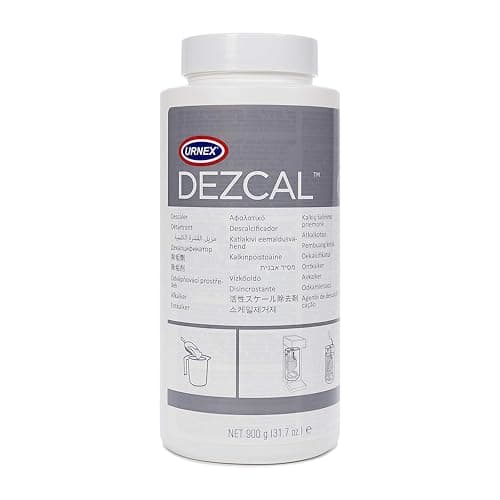
Our top pick, and the one thing almost every machine needs, is Urnex Dezcal descaling powder. Urnex is the descaler the industry actually uses, it works on any brand of coffee or espresso machine, and the 900g tub lasts a long time, so the cost per descale is tiny. It is faster and more effective than vinegar and leaves no lingering smell — the two reasons people reach for vinegar and then regret it. The honest cons are minor: it is a powder you measure yourself rather than a pre-dosed sachet, and it descales only — it does nothing for coffee oils.
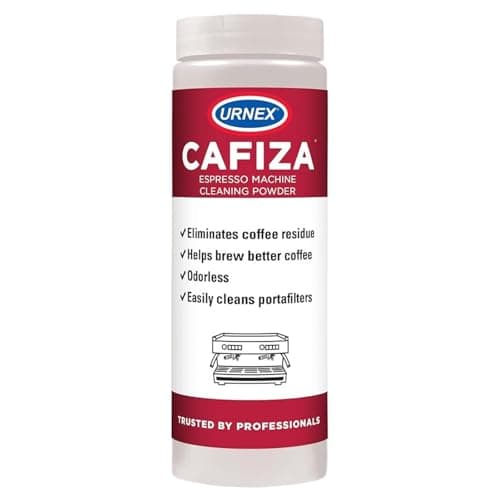
That is where Urnex Cafiza comes in, and it is the other half of the kit for espresso owners. Cafiza is a backflush cleaning powder that strips the built-up coffee oils out of a group head and cleans portafilters and baskets — the exact job Dezcal does not do. It is the café standard for this, a little goes a long way, and it makes an honest difference to how a neglected machine tastes. Its one limit is structural: it is only useful on machines you can actually backflush or soak parts from, which means most semi-auto espresso machines — not drip makers and not pod machines, which have no group head to clean.
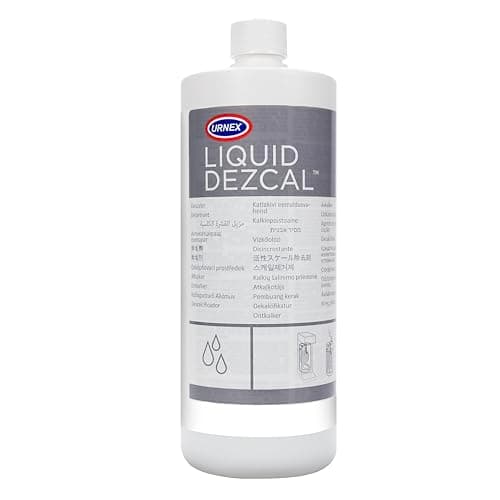
The third pick, Urnex Liquid Dezcal, is the same trusted descaling chemistry in a pour-and-go liquid with no powder to measure. It is the easiest descaling routine there is, and it is the natural choice for a Keurig or a drip machine where you just want to pour, run a cycle, and be done. It works across pod, drip, and espresso machines too. It costs more per descale than the big powder tub and gives you fewer total uses, so if you descale often and want the lowest cost per use, the powder wins; if you value zero measuring, the liquid is worth the small premium.
One warranty note that can save you a headache, and it applies to the descaler specifically: some machines require their own branded descaler to keep the warranty valid. A handful of manufacturers — certain espresso and pod brands especially — state in the manual that using a third-party descaler voids coverage, even though the chemistry is broadly the same. This is a policy, not a chemistry problem, so before you reach for a generic descaler on a machine that is still under warranty, check the manual. If it demands the branded product, use that until the warranty lapses; Cafiza-style cleaning is rarely restricted the same way. For the full routine, see our guide on how to clean an espresso machine.
A concrete schedule beats good intentions, so here is a workable one for a semi-auto espresso machine. Wipe the steam wand and backflush with plain water after every session; run a proper Cafiza backflush weekly; and descale with Dezcal every one to three months depending on your water. The single best way to descale less often is to feed the machine softer water — a simple filter jug or an in-tank filter cuts the mineral load that becomes scale, so hard-water homes especially save themselves both work and machine wear by filtering first. Drip and pod machines are simpler: they need descaling on the same water-dependent cadence but no backflush. Whichever machine you own, the pattern that kills them is neglect — scale that is never cleared eventually blocks the boiler, and oils that are never stripped make every cup taste worse until you stop noticing how good the machine once was.
How to choose — and how to actually maintain your machine
The buying decision follows from the two jobs. Figure out which jobs your machine needs, then buy the products that cover them.
1. Everyone needs a descaler
Every machine that heats water builds limescale, so every machine needs descaling — espresso, drip, or pod alike. For a semi-auto espresso machine or anyone who does not mind measuring, the Dezcal powder is the cheapest per descale and the obvious default. For a Keurig or drip machine where you want pour-and-go simplicity, the Liquid Dezcal is worth the small premium. Frequency depends on your water: hard water can mean every four to eight weeks, filtered or soft water much less. If shots run slow or the machine is slow to heat, you are overdue. The 900g powder tub is the most economical choice by a wide margin if you descale regularly, and one tub lasts most home users a very long time; the liquid trades that low cost-per-use for the convenience of never measuring, which is a fair swap for a once-in-a-while Keurig descale but poor value for a machine you clean monthly. Whichever form you pick, do not wait for a visible problem — by the time scale slows the flow, it has already been building for weeks, and a proactive schedule is far kinder to the machine than a reactive rescue.
2. Espresso owners also need a backflush cleaner
If you have a semi-auto espresso machine, add Cafiza. Backflushing with it weekly strips the rancid coffee oils out of the group head that a descaler never touches, and it is what keeps a machine tasting clean rather than increasingly bitter. Drip and pod owners can skip it — there is no group head to backflush — and descaling is all those machines need.
3. Do not substitute one job for the other
This is the mistake to avoid: descaling a machine that tastes bitter from oil buildup does nothing, and backflushing a machine that runs slow from limescale does nothing. Match the product to the symptom — mineral scale and slow heating call for descaler; bitter, stale-tasting shots on good beans call for a backflush clean. Most espresso owners run both on their own schedules: backflush weekly, descale every month or two.
4. Check the manual before you buy a generic descaler
Because a few manufacturers void the warranty if you use a non-branded descaler, check your manual first if the machine is still covered. It is a policy quirk, not a chemistry one, but it is real money if a repair gets denied. Once the warranty is up, a professional-standard generic like Dezcal does the same job for far less. And do not use vinegar as a shortcut — it is slower, less effective, and the smell lingers in a way that taints the next few coffees. Skipping maintenance entirely is the one guaranteed way to kill a machine early; the small habit of regular cleaning is the cheapest repair there is.
5. Always rinse thoroughly afterward
Both descaler and backflush cleaner are food-safe products designed for machines that make your coffee, but they are still chemicals, and none of them belong in the cup. After any descale, run one or two full tanks of plain fresh water through the machine to flush every trace of solution out of the boiler and lines before you brew again — the first coffee after descaling should taste of nothing but coffee. After a Cafiza backflush, run several clean backflush cycles with water only, then pull and discard a shot or two. Follow the dose on the tub rather than eyeballing it, keep the products sealed and out of reach of children, and never mix a descaler with anything else. Done properly, the whole routine is quick, cheap, and the difference between a machine that lasts a decade and one that quietly dies in three years.