Let's clear up the biggest myth first: a moka pot does not make espresso. It's often sold as a "stovetop espresso maker," but real espresso is pulled at around 9 bar of pressure, and a moka pot builds only about 1-2 bar as steam pushes water up through the grounds. What you get is a rich, strong, concentrated coffee with a bold and slightly bitter edge — genuinely delicious, and its own thing, but not a 9-bar shot and, in most cases, without real crema.
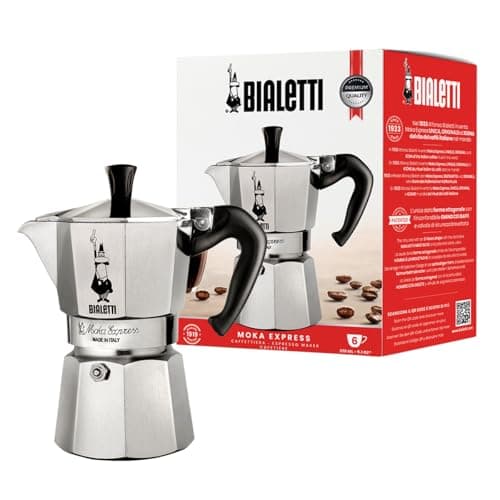
Judged as what it actually is — the cheapest way to make intense coffee with nothing to plug in — the moka pot is superb. The Bialetti Moka Expressis the icon: an aluminum design barely changed since 1933, nearly indestructible, with gaskets and parts in every kitchen shop. It tops the list because it's the genuine article at a give-away price.
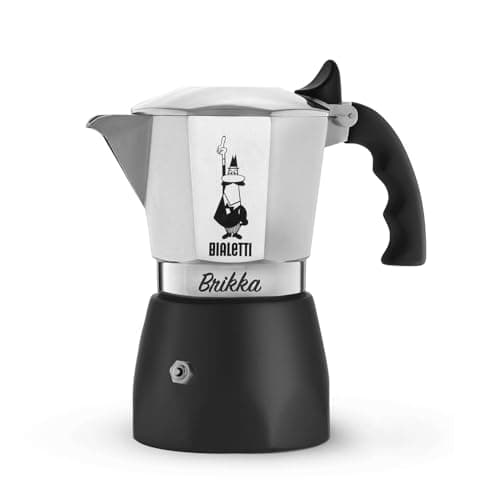
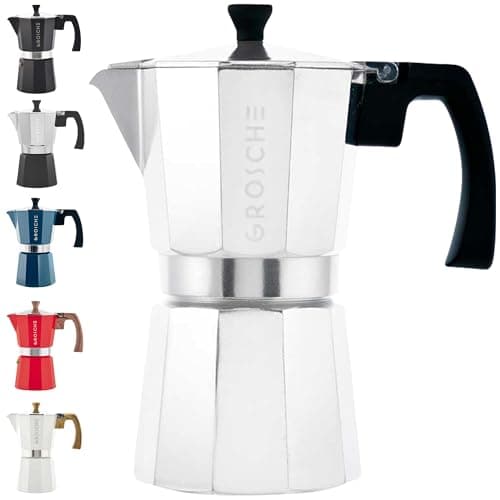
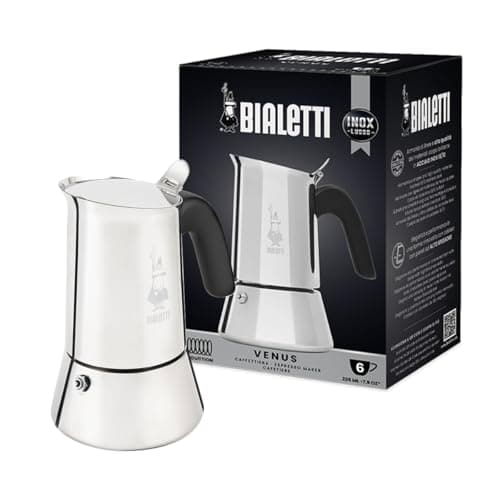
The Bialetti Brikka is the exception to the no-crema rule — a weighted pressure valve on top builds more pressure than a standard pot and produces an actual (if thin) crema layer, the closest a stovetop gets to an espresso-style result. The GROSCHE Milano is the same classic brew as the Bialetti with a cooler-touch handle and color options, and the Bialetti New Venusswaps aluminum for stainless steel so it works on an induction cooktop — the one thing the aluminum classics can't do.
What to skip? Don't buy a moka pot expecting espresso with a thick crema — that's a job for an entry espresso machine, and going in with the wrong expectation is the fastest way to be let down by an otherwise wonderful little brewer. If you want to understand exactly how the two differ, our coffee vs espresso guide lays it out.
The other half of a good moka brew is what you put in it, and it is not the bean you would choose for a pour-over: the best coffee for a moka pot ranks seven whole-bean coffees for this brewer specifically, and explains why medium and dark espresso blends work here while light single origins fight you.
The short answer
Quick picks
#ad · Live prices from the Amazon Product API, as of October 20, 2026. Where we have no verified live price, we show none — we would rather leave a gap than print a number that has rotted.
In detail
The picks, in full
Strong stovetop coffee on any budget
Bialetti Moka Express (6-Cup)
AluminumStovetop6-cup (moka)No electricity
The stovetop icon. Not true espresso, but a rich, strong shot for the price of lunch.
- Brew quality
- 7
- Ease of use
- 5
- Build quality
- 7
- Versatility
- 6
- Value
- 10
Pros
- +Makes a genuinely rich, concentrated coffee for a tiny price, with nothing to plug in
- +Nearly indestructible aluminum and a design unchanged since 1933 — parts and gaskets are everywhere
- +The ritual and the smell are half the appeal, and it's fun to learn
Cons
- −It brews around 1-2 bar, not the 9 of real espresso — no true crema, and the profile is bolder and more bitter
- −Aluminum isn't induction-compatible, and it needs care not to boil dry
Don't buy this if…
…you have an induction cooktop or you want actual espresso with crema. Get the stainless Induction Venus for the former, or an espresso machine for the latter.
Moka lovers who want crema
Bialetti Brikka Moka Pot
Pressure-valve topCrema-focused2 shots (3.4 oz)Stovetop
The moka pot with a pressure valve — the closest a stovetop gets to real crema.
- Brew quality
- 8
- Ease of use
- 5
- Build quality
- 6
- Versatility
- 6
- Value
- 9
Pros
- +The weighted valve builds more pressure than a standard moka pot, producing an actual crema layer
- +A richer, more espresso-like result than the Moka Express for only a little more money
- +Same no-electricity, stovetop simplicity
Cons
- −Smaller capacity and fussier than the Moka Express — the valve wants the right grind and heat
- −Still not a 9-bar machine; the crema is real but thin next to a proper espresso
Don't buy this if…
…you want to brew a big pot for the table. The Brikka is built for a shot or two — the standard Moka Express in a larger size is the one for volume.
A moka pot with a nicer handle and colors
GROSCHE Milano Moka Pot (6-Cup)
AluminumStay-cool handle6-cup (moka)Color options
The Moka Express formula with a color choice and a soft-touch handle. A fine alternative.
- Brew quality
- 7
- Ease of use
- 5
- Build quality
- 8
- Versatility
- 6
- Value
- 8
Pros
- +Same classic moka brew as the Bialetti, with a more comfortable heat-resistant handle
- +Comes in colors if the raw-aluminum Bialetti isn't your kitchen's look
- +Well-priced and widely stocked with replacement gaskets
Cons
- −Aluminum, so not induction-compatible, same as the classic Bialetti
- −No pressure valve — it's a standard moka pot, not a crema-maker like the Brikka
Don't buy this if…
…you specifically want the original. The Bialetti Moka Express is the genuine article for a similar price — this is the stylistic alternative, not an upgrade.
Induction stovetops
Bialetti New Venus Induction Moka Pot
Stainless steelInduction compatible6-cup (moka)Dishwasher safe
The moka pot for induction cooktops — stainless, so it actually works on a modern hob.
- Brew quality
- 7
- Ease of use
- 5
- Build quality
- 8
- Versatility
- 7
- Value
- 8
Pros
- +Stainless construction means it works on induction, which the aluminum classics can't
- +Dishwasher safe and won't develop the aluminum patina some people dislike
- +The same rich moka brew, on the cooktop most new kitchens now have
Cons
- −Costs more than the aluminum Moka Express
- −Purists argue aluminum moka pots taste subtly different once seasoned — a matter of taste, not fact
Don't buy this if…
…you cook on gas or electric coils. You're paying for induction compatibility you won't use — the cheaper aluminum Moka Express is the better buy there.
How a moka pot works — and how to buy one
Understanding the mechanism is most of what you need to choose well and brew well.
Steam pressure, not a pump
Water in the bottom chamber heats until steam pressure pushes it up through a basket of ground coffee and into the top chamber. That pressure is only about 1-2 bar — a fraction of an espresso machine's 9 — which is why the result is strong and concentrated but not a true crema-topped shot. The one partial exception is the Brikka, whose valve holds back pressure until it's higher, coaxing out a real if modest crema.
Aluminum or stainless — check your stove
This is the choice that trips people up. The classic Bialetti and the GROSCHE are aluminum, which will not work on an induction cooktop. If your stove is induction, you need the stainless New Venus(or another steel pot). On gas or electric coils, the cheaper aluminum pots are the better buy — you'd be paying for compatibility you don't need.
Grind and heat make or break it
Use a grind a little finer than drip but coarser than espresso — too fine and it clogs and turns bitter. Keep the heat at medium: too high scorches the coffee. When it starts to splutter and hiss, it's done — take it off the heat and, if you can, cool the base to stop the brew. As with every brewer here, a consistent burr grindbeats a blade grinder's dust — and because the grind window here is narrower than any other filter brewer, our best grinders for a moka pot page covers which ones hit it.
Buy the size you'll actually drink, too. Moka pots are sized in small "moka cups," not mugs, and they brew best filled to their rated capacity — a too-big pot run half full makes worse coffee.
How we picked
We do not run a testing lab
We compiled published manufacturer specifications, computed what each option costs to run where relevant, and cross-referenced aggregated owner reviews, then scored each product against a published rubric. The scores are judgments from documented research — they are not measurements we took, because we do not have a lab and we are not going to pretend we do. Where a number came from a manufacturer or a standard, we name it in Sources.
Questions
Frequently asked
Does a moka pot make real espresso?+
No. A moka pot brews at roughly 1-2 bar of steam pressure, while real espresso needs about 9 bar, so it makes a strong, concentrated coffee rather than a true crema-topped shot. The one that comes closest is the Bialetti Brikka, whose pressure valve produces a thin crema. For an actual 9-bar shot you need an
espresso machine.
Can I use a moka pot on an induction cooktop?+
Only a stainless steel one, like the Bialetti New Venus. The classic aluminum Moka Express and the GROSCHE Milano aren't magnetic, so an induction hob won't heat them — you'd need an induction adapter plate or a steel pot instead.
Why does my moka pot coffee taste bitter or burnt?+
Usually heat or grind. Brew over medium heat, not high — too hot scorches the coffee — and pull it off the stove the moment it starts to splutter rather than letting it boil on. If it's harsh rather than burnt, your grind is likely too fine; a slightly coarser, even
burr grind usually fixes it.
Receipts
Sources
We do not run a testing lab, and we do not pretend to. Where a measured number came from a manufacturer spec sheet or a published standard, we name it and link it. Where we could not verify something, we say so on the page rather than quietly leaving it out. Read our full method.