You just bought an espresso machine, and now the internet wants to sell you fifty accessories. Ignore most of it. This is the short list: six things to buy first, the cheapest useful version of each, in the order they actually matter. Where our main accessories guide picks the best of each category, this one picks the budget starter — the least you can spend and still have a setup that makes a consistent shot.
Buy them in this order, because that is the order they change your coffee. First a scale with a timer — the biggest consistency upgrade there is, and the thing that turns a guessed dose into a recipe. Second a WDT tool, the cheapest fix for the clumpy grounds that cause channeling. Third a tampermatched to your portafilter — the Matow shown is the 51mm version for De'Longhi and budget machines, so buy the size that fits yours. Those three, together under the price of a single restaurant dinner, do almost all of the work.
One thing is deliberately not on this list, because it is not an accessory: the grinder. If you are still on pre-ground or a blade grinder, every tool above is polishing a shot that cannot be fixed downstream, and the money goes to a burr coffee bean grinder first — the Baratza Encore ESP is the cheapest one we would trust to dial in espresso. Come back to this checklist afterwards.
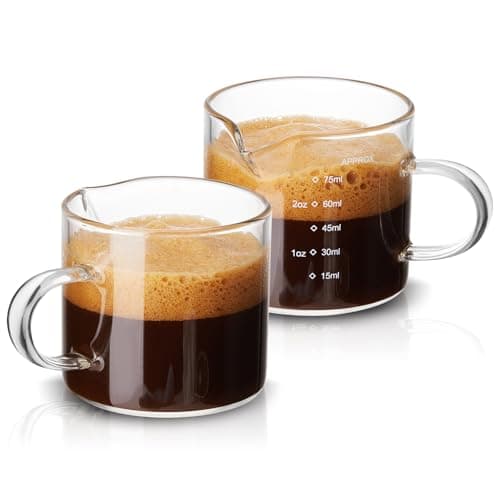
The next three are situational or nice-to-have. A milk pitcherearns its place only if you drink lattes and cappuccinos — skip it entirely if you take espresso black. A knock box keeps spent pucks tidy, and the plain stainless version does the exact same job as the handsome walnut ones for less. And a set of measuring shot glasses lets you watch your yield and the shot's color while you learn to dial in — a cheap visual aid that pairs with the scale rather than replacing it.
Add it all up and the whole starter kit is modest — far less than the machine cost, and less than a single premium tamper on its own. The point of buying the cheapest useful version is that these tools change the shot through what they do, not what they cost: a fifteen-dollar scale that reads to 0.1g and times the shot delivers the same consistency win as a café scale five times the price. Spend what you save on good beans or a better grinder — both matter more than any upgrade on this list.
The short answer
Quick picks
#ad · Live prices from the Amazon Product API, as of October 20, 2026. Where we have no verified live price, we show none — we would rather leave a gap than print a number that has rotted.
In detail
The picks, in full
The lowest-cost path to weighed brewing
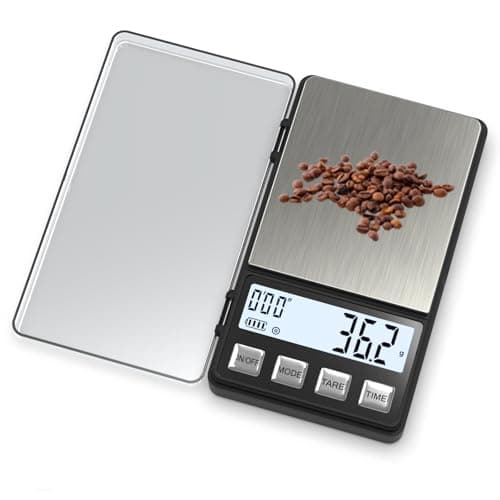
Weightman Espresso Scale with Timer
0.1g resolutionTimerFits under portafilterBacklit LCD
The cheapest scale that does the two jobs: weigh to 0.1g and time the shot. That's enough.
- Build quality
- 6
- Does the job
- 8
- Ease of use
- 7
- Value
- 10
Pros
- +Does everything a home brewer needs — 0.1g weight and a timer — for pocket money
- +Small and thin enough to sit on the drip tray under most portafilters
- +The single best-value way to stop brewing blind
Cons
- −Budget build and a slightly slower response than pricier scales
- −Not water-resistant, so a milk or shot spill is a hazard
Don't buy this if…
…you want café-grade responsiveness and flow-rate data. Those are on the TIMEMORE — this is the do-the-job-cheaply option.
Fixing channeling on any espresso machine
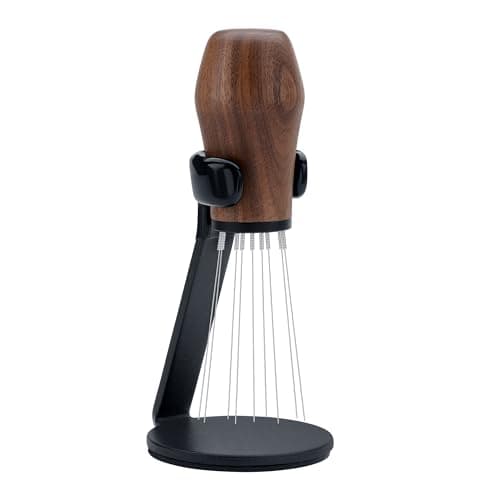
Normcore WDT Distribution Tool (V3)
9 thin needlesWeiss distributionWalnut handle + standAny basket size
The single cheapest upgrade to your espresso. Nine needles that break up clumps before you tamp.
- Build quality
- 8
- Does the job
- 10
- Ease of use
- 8
- Value
- 10
Pros
- +Stirring the grounds with fine needles breaks up clumps and static, which is the biggest cause of channeling and sour shots — the highest impact-per-dollar espresso tool there is
- +Works with any machine and any basket size, so it's never obsolete
- +The stand keeps it tidy and the walnut handle is a nice touch for the price
Cons
- −It adds a few seconds of prep to every shot
- −The needles are fine and will bend if you're rough with them
Don't buy this if…
…you don't make espresso. It does nothing for drip, press, or pour-over — it's an espresso puck-prep tool, full stop.
51mm De'Longhi and Casabrews owners
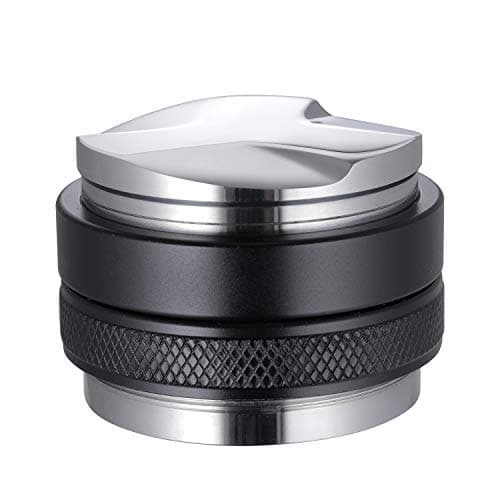
MATOW 51mm Distributor & Tamper
51mmDistributor + tamperDual-sidedFits De'Longhi portafilters
A dual distributor-and-tamper for 51mm machines — the two jobs most beginners skip, in one tool.
- Build quality
- 7
- Does the job
- 8
- Ease of use
- 8
- Value
- 9
Pros
- +One tool levels the grounds (distribute) and compresses them (tamp) — the two steps that most affect a beginner's shot
- +Sized for the 51mm portafilters on many budget machines, which the common 58mm tools don't fit
- +Cheap enough to be a no-brainer add-on with a first machine
Cons
- −51mm only — useless on a 54mm Breville or a 58mm Gaggia
- −A budget tool; the finish isn't luxurious
Don't buy this if…
…your portafilter isn't 51mm. Measure first — the wrong-size tamper is the single most common returned espresso accessory.
Learning latte art at home
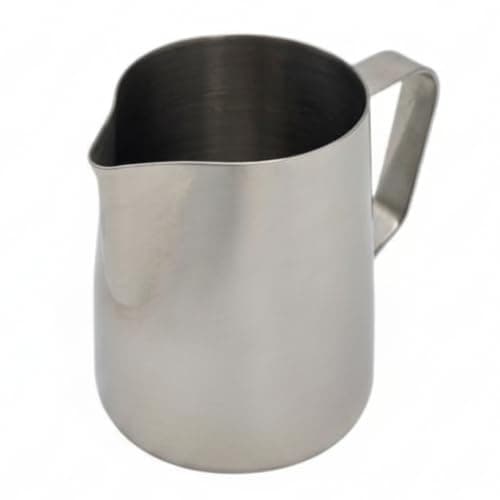
Rattleware 12oz Latte Art Pitcher
12 ozStainless steelSharp pour spoutCafé standard
The café-standard steaming pitcher. A sharp spout, the right size, and it costs almost nothing.
- Build quality
- 8
- Does the job
- 9
- Ease of use
- 9
- Value
- 10
Pros
- +The well-defined spout is what actually lets you pour a pattern — vague-spouted pitchers make latte art impossible
- +12 oz is the right size for one or two drinks, so milk steams and textures properly
- +It's the pitcher most cafés actually use, at a home-friendly price
Cons
- −Plain stainless with no measurement markings inside
- −Single-wall, so it gets hot to hold while steaming
Don't buy this if…
…you only ever drink black espresso. A milk pitcher is dead weight in the cupboard if you never steam milk.
The cheapest tidy puck bin
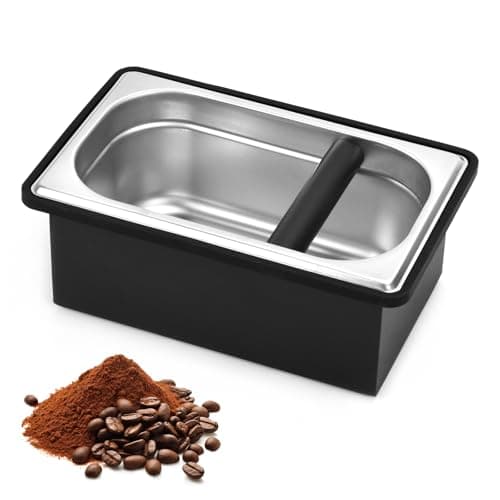
Homure Stainless Espresso Knock Box
Stainless steelRemovable knock barLarge capacitySimple build
A no-frills stainless knock box that does the exact same job for less.
- Build quality
- 7
- Does the job
- 8
- Ease of use
- 8
- Value
- 9
Pros
- +Covers the whole job — knock, hold, empty — for noticeably less than the walnut-trimmed boxes
- +Removable bar makes cleaning easy
- +Solid stainless that'll outlast the coffee habit
Cons
- −Plainer looks and a lighter base that can shift on a slick counter
- −No premium touches like a wood base or extra padding
Don't buy this if…
…you want the counter to look considered. The Normcore is the handsome one — this is the do-the-job-cheaply one.
Watching your shot volume while you dial in
Espresso Shot Glasses with Handle (Set of 2)
~2.5 oz (75 ml) glassVolume markingsHandleSet of 2
Measuring shot glasses so you can see your yield. A cheap, genuinely useful dialing-in tool.
- Build quality
- 6
- Does the job
- 7
- Ease of use
- 8
- Value
- 9
Pros
- +The volume markings let you see exactly how much espresso you're pulling — useful for hitting a ratio when you're learning
- +Clear glass shows the shot's color and the tiger-striping, which tells you a lot about extraction
- +Cheaper than almost any other coffee tool and doubles as a serving glass
Cons
- −A scale measures yield more accurately by weight than these do by volume
- −Thin glass doesn't hold heat like a porcelain cup
Don't buy this if…
…you already weigh your output on a scale. Weight beats volume for accuracy — these are a nice visual, not a second measuring system you need.
The order to buy in, and what to skip for now
The six items above are ranked by priority, not by price. Work down the list and stop wherever your budget or your drinks tell you to.
1. Scale with a timer — buy this first
A cheap 0.1g scale that times the shot is the highest-value thing a beginner can add. Weighing in and out against the clock is what makes a shot repeatable. Do not skip it, and do not overspend — the budget option does the whole job.
2. WDT tool — the cheapest quality jump
Stirring your grounds with fine needles breaks up the clumps that cause channeling and sour shots. It costs almost nothing and works on any machine and any basket size, so it never becomes obsolete.
3. Tamper that fits your portafilter
Match the size — 58mm for commercial-style machines, 54mm for Breville, 51mm for many De'Longhi and budget machines. A combined distribute-and-tamp tool like the Matow covers two steps in one on a 51mm machine. Buying the wrong size is the most common beginner return, so measure first. See the full tamper guideif you're unsure.
4. Milk pitcher — only if you drink milk drinks
A sharp-spouted steaming pitcher is essential for lattes and impossible to skip if you want latte art. If you drink espresso black, cross it off the list — it does nothing for you.
5. Knock box — a tidy convenience
Optional. It gives spent pucks a home so you empty every few days instead of after each shot. The plain stainless version does the identical job as the premium walnut ones for less. Knock into a lined bin if you'd rather save the money.
6. Measuring shot glasses — a cheap learning aid
Marked glasses let you see your yield and the shot's color and striping while you learn. A scale measures output more accurately by weight, so treat these as a helpful visual, not a second measuring system. Then read how to make espresso at home and put the kit to work.
How we picked
We do not run a testing lab
We compiled published manufacturer specifications, computed what each option costs to run where relevant, and cross-referenced aggregated owner reviews, then scored each product against a published rubric. The scores are judgments from documented research — they are not measurements we took, because we do not have a lab and we are not going to pretend we do. Where a number came from a manufacturer or a standard, we name it in Sources.
Questions
Frequently asked
How much do the starter accessories cost?+
The whole six-item kit is modest — far less than the machine itself, and less than a single premium tamper bought on its own. The three essentials (a scale, a WDT tool and a tamper) are the bulk of the value and still add up to less than a nice restaurant dinner. The point of buying the cheapest useful version is that these tools work through what they do, not what they cost.
What order should I buy espresso accessories in?+
Scale first, then a WDT tool, then a
tamper that fits your portafilter — those three change the shot the most. After that, a milk pitcher only if you drink milk drinks, a knock box for tidiness, and measuring shot glasses as a cheap learning aid. Work down the list and stop wherever your budget or your drinks tell you to.
What can I skip as a beginner?+
Skip the milk pitcher if you drink espresso black, and treat the knock box and shot glasses as optional extras rather than needs. You can also skip every enthusiast add-on for now — bottomless portafilters, puck screens, dosing funnels — since they change the cup far less than getting the
scale, WDT tool and grind right first.
Receipts
Sources
We do not run a testing lab, and we do not pretend to. Where a measured number came from a manufacturer spec sheet or a published standard, we name it and link it. Where we could not verify something, we say so on the page rather than quietly leaving it out. Read our full method.