The French press is the most forgiving good coffee maker there is. You drop coarse grounds in the carafe, pour hot water over them, wait four minutes, and press a metal mesh to the bottom. Because that mesh filters instead of paper, the coffee's oils and fine particles stay in the cup — which is exactly what gives press coffee its heavy, round, full body. It's also, dollar for dollar, the cheapest way to make coffee that genuinely tastes good.
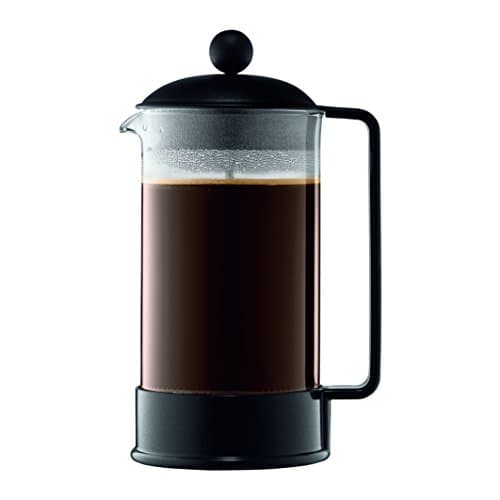
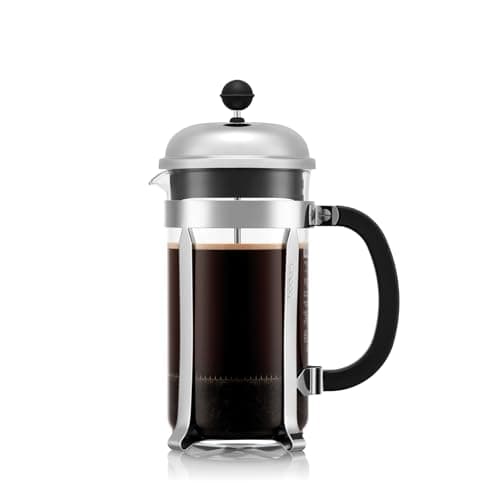
The Bodum Chambord tops this list because it is the press everyone pictures and still the one to buy: borosilicate glass, a stainless frame, and replacement parts on every shelf for the day you knock the beaker off the counter. If you want the same coffee for even less, the Bodum Brazil is literally the same carafe in a plastic frame and the best pure value in this whole hub.
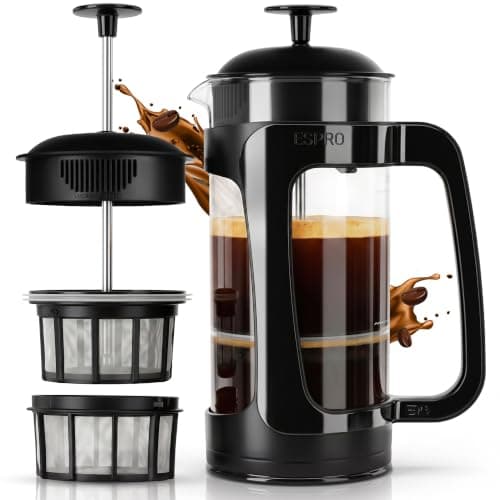
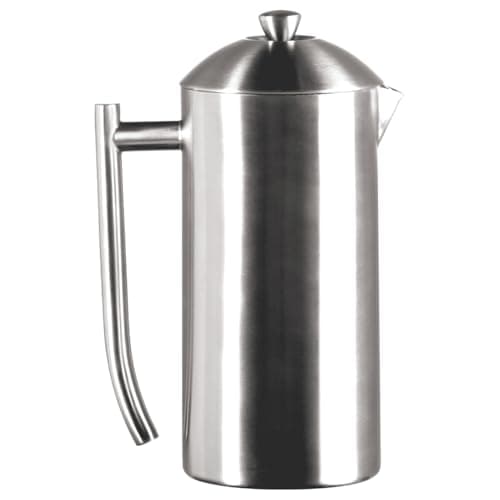
The other two solve the press's two real annoyances. The Espro P3 uses a double micro-filter that catches far more of the fines a standard mesh lets through, so there's no gritty last sip — the fix for the one thing people dislike about press coffee. The Frieling trades glass for double-walled stainless: it survives drops and keeps the brew hot far longer, for the clumsy and the slow drinkers among us.
What to skip? Don't overpay for a press if a little sediment doesn't bother you and you drink your coffee straight away — the plain Bodum does the brewing just as well as the pricier two, and the money is better spent on a burr grinder, which matters far more to a press than the press itself does. A blade grinder produces dust and boulders in the same batch, and the mesh lets all that dust straight through into your cup.
The short answer
Quick picks
#ad · Live prices from the Amazon Product API, as of October 20, 2026. Where we have no verified live price, we show none — we would rather leave a gap than print a number that has rotted.
In detail
The picks, in full
The default French press
Bodum Chambord French Press (34oz)
34 ozBorosilicate glassStainless frameMade in Portugal
The French press. The one everyone pictures, and still the one to buy.
- Brew quality
- 8
- Ease of use
- 8
- Build quality
- 8
- Versatility
- 6
- Value
- 9
Pros
- +Full-immersion brewing with a metal filter gives you the heavy, full body that paper filters strip out
- +The classic design is classic for a reason — replacement parts and glass are cheap and everywhere
- +No paper filters to buy, ever — the running cost is zero
Cons
- −The metal mesh lets fine sediment through, so the last sip has grit
- −Glass carafe — it will eventually meet a hard floor
Don't buy this if…
…you hate any sediment in your cup or you're clumsy near a tile floor. A grit-reducing Espro or a paper-filtered pour-over is the cleaner-cup answer.
French press body without the sediment
ESPRO P3 French Press
Double micro-filterBorosilicate glass32 ozGrit-free brew
A French press with a double micro-filter — the fix for the gritty last sip.
- Brew quality
- 8
- Ease of use
- 7
- Build quality
- 8
- Versatility
- 6
- Value
- 8
Pros
- +The patented double filter catches far more fines than a standard mesh, so the cup is clean to the bottom
- +The filter also stops the brew when you plunge, reducing the over-extraction that makes press coffee bitter as it sits
- +Same full-immersion body as any press, minus the trademark grit
Cons
- −The double filter is more to rinse and clean than a plain mesh
- −Costs more than a basic Bodum for a difference only sediment-sensitive drinkers will prize
Don't buy this if…
…a little grit doesn't bother you. Then you're paying extra to solve a problem you don't have — the Bodum Chambord is the cheaper, simpler press.
Clumsy hands and slow drinkers
Frieling Double-Wall French Press (36oz)
Double-wall stainless36 ozInsulatedDishwasher safe
The unbreakable French press. Stainless double wall keeps it hot and survives drops.
- Brew quality
- 8
- Ease of use
- 7
- Build quality
- 9
- Versatility
- 6
- Value
- 7
Pros
- +Double-walled stainless keeps the brew hot far longer than glass, and it won't shatter
- +Genuinely built to last — this is the press you don't replace
- +Dishwasher safe, unlike most glass presses
Cons
- −You can't see the brew level or color through steel
- −Costs several times what a glass Bodum does
Don't buy this if…
…you drink your press coffee straight away and watch your budget. The insulation and toughness are wasted if the pot's empty in five minutes — a glass Bodum does the brewing for far less.
The lowest-cost good cup
Bodum Brazil French Press (34oz)
34 ozBorosilicate glassPlastic frameMade in Portugal
The cheapest way to make genuinely good coffee. A plastic-framed press that just works.
- Brew quality
- 8
- Ease of use
- 8
- Build quality
- 7
- Versatility
- 6
- Value
- 10
Pros
- +Costs about the price of two coffee-shop lattes and makes better coffee than either
- +Same borosilicate carafe and brewing as the pricier Chambord — the frame is the only real difference
- +The single best value in this entire guide, full stop
Cons
- −The plastic frame feels cheaper than the Chambord's steel
- −Same mesh-filter grit as any standard press
Don't buy this if…
…you want something that looks the part on the counter. It's built to a price and shows it — the Chambord is the handsomer press for a few dollars more.
How to get the most from a French press
The method is simple, but three things decide whether the cup is great or muddy.
Grind coarse, and grind it evenly
A French press wants a coarse, even grind — roughly like sea salt. This is the press's make-or-break: the mesh filter lets fine particles through, so any dust from an uneven grind ends up as silt in your cup and as bitterness from over-extraction. That's why a burr grindermatters more here than on almost any other brewer — a blade grinder makes exactly the dust a press can't filter out.
Sediment: standard mesh vs double filter
Every standard press (Chambord, Brazil, Frieling) uses a single metal mesh and will leave a little grit in the last inch of the cup — most people never mind it. If you do, the paper-filtered pour-overis the cleanest cup of all, or the Espro P3's double filter keeps the press body while catching most of the fines.
Glass or stainless
Glass presses are cheaper, let you watch the brew, and are easy to replace — the right call for most kitchens. Double-walled stainless, like the Frieling, costs several times more but shrugs off drops and keeps coffee hot long after glass has gone cold. Buy stainless if you're clumsy or you nurse a cup for an hour; buy glass otherwise.
One habit worth adopting: decant the press into a mug or thermos the moment you plunge. Coffee left sitting on its own grounds keeps extracting and turns bitter — the fix costs nothing.
How we picked
We do not run a testing lab
We compiled published manufacturer specifications, computed what each option costs to run where relevant, and cross-referenced aggregated owner reviews, then scored each product against a published rubric. The scores are judgments from documented research — they are not measurements we took, because we do not have a lab and we are not going to pretend we do. Where a number came from a manufacturer or a standard, we name it in Sources.
Questions
Frequently asked
How long should French press coffee steep?+
About four minutes with a coarse grind. Much longer and it starts to over-extract and turn bitter; much shorter and it's weak and sour. Once the time's up, plunge and pour it all out — leaving the coffee on the grounds keeps it brewing.
Why is my French press coffee gritty or muddy?+
Two causes: too fine a grind, and the mesh filter letting the resulting dust through. Grind coarser and use a
burr grinderso the particles are even — a blade grinder makes the fine dust that slips past the mesh. If you still want it cleaner, the Espro P3's double filter or a paper pour-over removes far more.
Glass or stainless steel French press?+
Glass for most people — cheaper, easy to replace, and you can see the brew. Stainless (like the Frieling) if you're prone to dropping things or you drink slowly and want the coffee to stay hot, since the double wall insulates far better than glass.
Receipts
Sources
We do not run a testing lab, and we do not pretend to. Where a measured number came from a manufacturer spec sheet or a published standard, we name it and link it. Where we could not verify something, we say so on the page rather than quietly leaving it out. Read our full method.