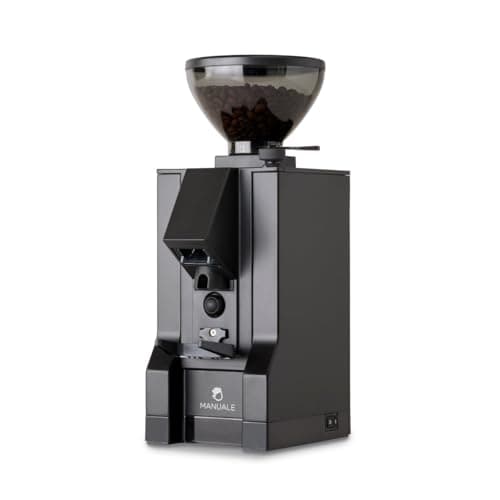
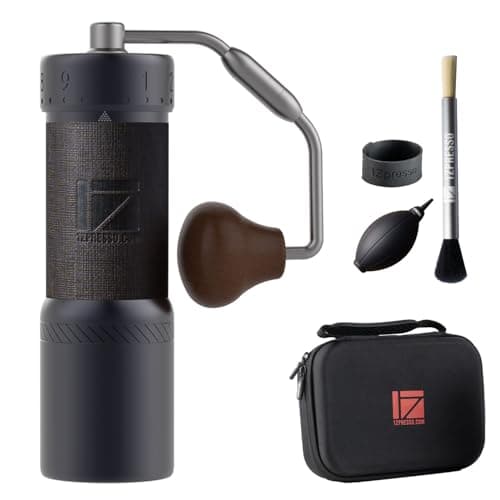
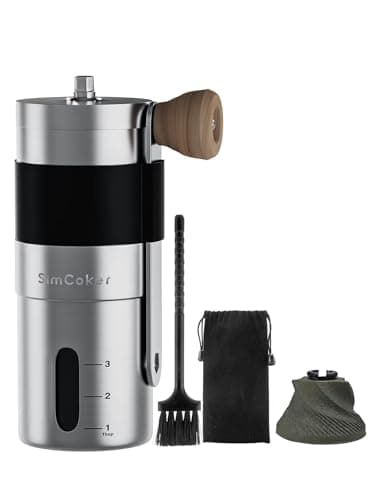
A coffee bean grinder is the piece of gear that decides most of what ends up in your cup — and the most common mistake in home coffee is spending on the machine and skimping on it. It is backwards. A great espresso machine or pour-over cone fed by an uneven grind makes muddy, unpredictable coffee; a modest brewer fed by an even grind makes something you look forward to. Below are the six we would actually buy, ranked, with a plain note on what each one cannot do.
And the first rule of grinders is not about brand or budget — it is about mechanism. Buy a burr grinder. Never buy a blade grinder. A blade grinder is a spinning propeller that chops beans into random gravel: dust and boulders in the same batch, no way to set a size, and no way to repeat it tomorrow. A burr grinder crushes beans between two shaped burrs held a fixed distance apart, so every particle comes out close to the same size and you can dial that size in. That single difference is the whole game — we explain exactly why in burr vs blade.
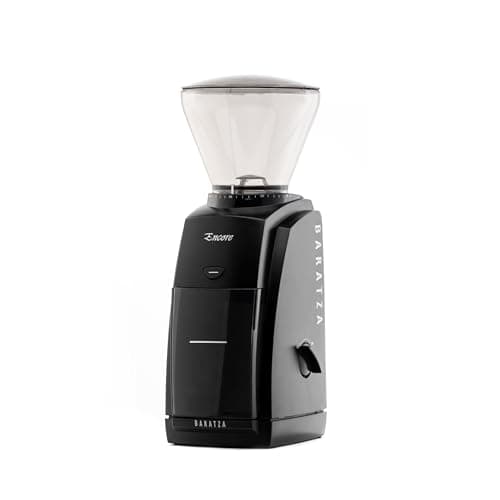
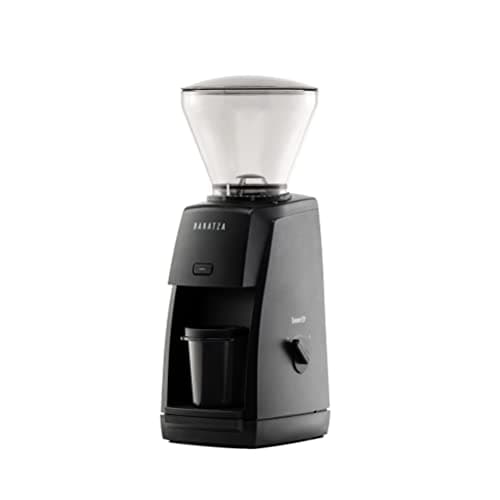
We ranked these six on grind consistency first, then usable range, then how much they cost to live with. The Baratza Encore ESP takes the top spot because it is the rare entry grinder that does both jobs: it grinds fine enough for espresso and coarse enough for French press, and Baratza sells every internal part on its own, so it is a grinder you repair rather than replace. Below it, the order splits by what you actually brew.
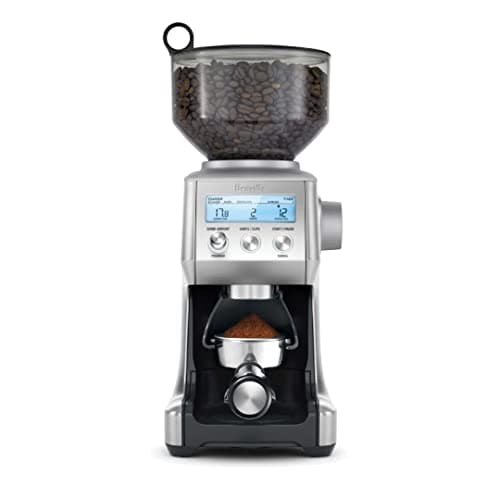
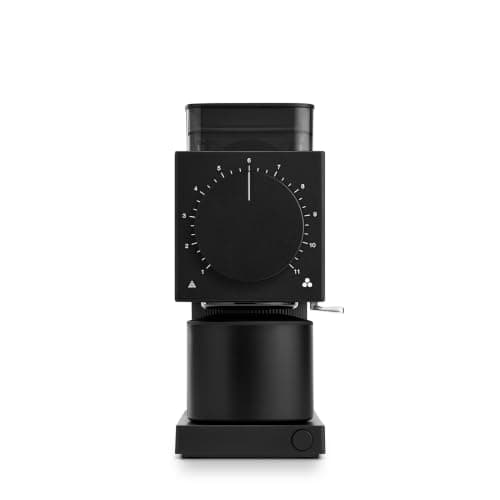
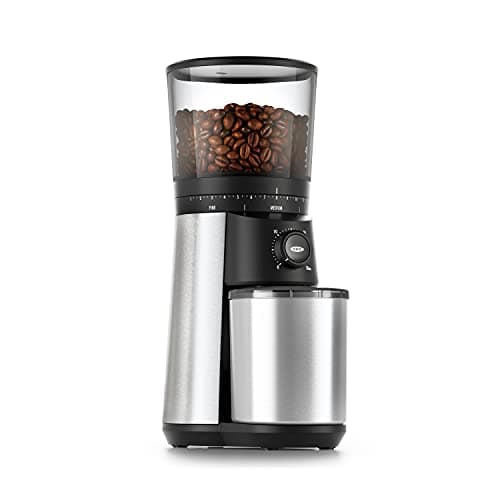
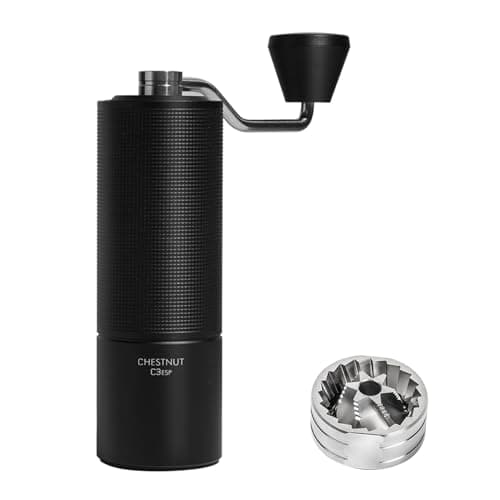
If you only ever make filter coffee, the plain Baratza Encore does the drip-and-press job for less. If you own a Breville machine, the Smart Grinder Pro grinds straight into the portafilter with a timed dose. The Fellow Ode Gen 2 is here for filter obsessives who want flat-burr evenness and near-zero waste, and the OXO is the cheapest sensible way off a blade grinder for drip. The TIMEMORE C3 proves a hand grinder can out-grind electric boxes twice its price if you do not mind the arm work — the full field of manual options is on our hand grinder guide, and the same field sorted by price tier is in our best burr coffee grinders roundup.
None of these passed through our hands. We compiled the manufacturers' published specifications, worked through the trade-offs each burr design forces, and priced everything live. Where a grinder's strength or weakness is a matter of design rather than measurement — a filter grinder that will not reach espresso fineness, say — we say so plainly rather than pretend we ran it in a lab. Our method is on how we research.
How to actually choose a coffee grinder
Once you have accepted that it must be a burr grinder, four decisions separate the right one for you from the wrong one. Here they are, in the order that matters.
1. Burr vs blade — this is not a real choice
Say it once more: buy a burr. A blade grinder chops beans into a random mix of powder and chunks, which extracts unevenly and tastes sour and bitter at the same time. Every grinder on this page is a burr grinder, and even the cheapest of them is a category leap over any blade model. If you own a blade grinder, replacing it is the highest-impact upgrade in your kitchen.
2. Conical vs flat burrs
Conical burrs (the Baratzas, the OXO, the Breville) are cheaper, quieter, and forgiving — the sensible default for most homes. Flat burrs (the Fellow Ode, and the espresso grinders on our espresso grinder guide) tend to produce a more uniform particle size, which many drinkers prefer for clean filter coffee, at more cost and more noise. Neither is "better" in the abstract; they suit different priorities.
3. Espresso range vs filter range
This is the trap that costs people money. Espresso needs a very fine, precise grind; filter needs a coarser one. A filter-only grinder like the plain Encore or the Ode cannot grind fine enough for good espresso, no matter how nice it is. If there is any chance you will pull a shot, buy a grinder with the espresso range built in — the Encore ESP over the plain Encore. If you only brew pour-over or press, you can skip that range and save money.
4. Stepped vs stepless, and single-dose vs hopper
Stepped grinders click between fixed settings — simple and repeatable, ideal for filter and fine for home espresso. Stepless grinders slide smoothly between any point, which espresso obsessives want for micro-adjusting a shot. Separately, a hopper holds a batch of beans for grab-and-go convenience, while single-dose grinders take exactly the beans for one brew, so nothing goes stale — at the cost of a little more fuss each time. For a first grinder, a stepped hopper grinder like the Encore ESP is the easiest life; single-dose stepless is where serious espresso setups go.
5. Retention — how much coffee stays stuck inside
Every hopper-fed grinder keeps a few grams in the grind path between uses, and those grams are yesterday's coffee joining today's brew. For a household that works through one bag of the same beans a fortnight, that is a non-issue and you should not pay to fix it. It starts to matter when you switch roasts often, when you weigh doses precisely for espresso, or when you are chasing the last few percent of clarity in a filter brew — which is exactly what single-dose grinders like the Fellow Ode Gen 2 are built for. Judge it by your habits, not by the spec sheet.
6. Burr life, parts, and the cost of keeping it
Burrs are a wear item. They dull slowly enough that most people never notice — the grind drifts and the coffee gets quietly duller — and on a home grinder that is a multi-year horizon, not an annual one. What decides whether that is a repair or a replacement is whether the maker will sell you the part. Baratza's whole model is that it does: burrs, gears and drive parts sold individually with published guides, which is why the Encore platform keeps beating prettier sealed-shut rivals on our value scoring. A grinder you can rebuild at the kitchen table is usually the cheaper grinder over a decade, whatever the sticker says. Regular cleaning is the other half — old oils and fines blunt flavor and consistency long before the burrs themselves do.
7. Noise, mess and counter space
The unglamorous part you live with every morning. Flat-burr grinders run louder and hotter than conicals. Hoppers add height, so measure the clearance under your cabinets before you buy a tall grinder. And static is the difference between grounds landing in the cup and grounds landing on the counter, which is why anti-static designs earn their keep. A hand grinder sidesteps all three at the cost of your arm. None of this changes what is in the cup; all of it changes whether you keep using the thing.
Which coffee bean grinder is right for you
Buy the Baratza Encore ESP if you want one grinder to cover everything — it reaches espresso-fine and filter-coarse, and it is rebuildable. The catch: it is hopper-fed, so a few grams of retention linger. Full write-up in our Baratza Encore ESP review.
Buy the plain Baratza Encore if you are certain you will only ever brew drip, press and pour-over. It saves real money and grinds filter just as well. The catch: it cannot reach espresso, and no setting change fixes that.
Buy the Breville Smart Grinder Pro if you own a Breville espresso machine and want the tidiest routine — a timed dose straight into the portafilter. The catch: stepped adjustment is coarser than a stepless espresso grinder, and it is not built to be rebuilt the way a Baratza is.
Buy the Fellow Ode Gen 2 if filter coffee is the hobby and you want flat-burr clarity with near-zero retention. The catch: it will not grind espresso, ever, and it costs several times an entry grinder while doing fewer jobs.
Buy the OXO Brew Conical if budget is the constraint and you need to get off a blade grinder today. The catch: it is a filter tool and an appliance rather than a repairable platform — see best grinders under $100 if that is your bracket.
Buy the TIMEMORE C3 if you make one or two cups a day, or you travel — the consistency embarrasses electric grinders costing more. The catch: you are the motor, and grinding espresso-fine by hand every morning is a real chore.
Matching a grinder to your brewer, and the head-to-heads
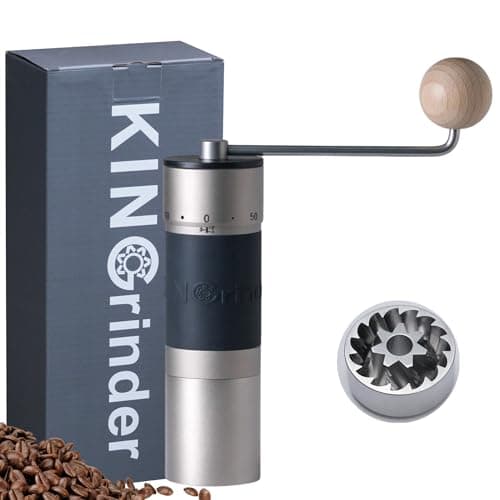
Grind range matters more than brand, and the brewer decides the range. If you brew with an AeroPress, our best grinders for AeroPresspage explains why you need a good filter grinder rather than an expensive espresso one — and why a hand grinder suits that brewer unusually well. For the cheapest sensible electric in the filter range, the OXO Brew Conical review is the one to read. And if you are stuck between two specific models, two comparisons cover the pairs people actually agonise over: Encore ESP vs Breville Smart Grinder Pro on the electric side, and 1Zpresso J-Ultra vs KINGrinder K6 on the manual side.