Espresso's most common failure isn't the machine or the beans — it's channeling: water finding one easy path through a clumpy, uneven puck and rushing through it, over-extracting that channel while the rest of the coffee sits under-extracted. The fix costs almost nothing. WDT — the Weiss Distribution Technique — is just stirring the grounds in the basket with a rake of fine needles until every clump is broken and the bed is uniform, before tamping.
The evidence for needle-work is about as settled as home espresso gets: grinders clump (especially at espresso fineness), clumps channel, and thirty seconds of raking removes them. The Normcore WDT — proper sub-0.4mm needles, a stand, a design that mixes deep rather than scratching the surface — is the version of the tool that does the job right. The spinning distributor is the honest runner-up with a caveat: it levels and polishes the topof the bed nicely, but can't reach clumps below its blades — useful after WDT, cosmetic without it.
The short answer
Quick picks
| # | Product | Best for | Score | Price |
|---|
| 01 | | Fixing channeling on any espresso machine | | $32.69·Amazon |
| 02 | | Leveling grounds on 58mm machines | | $29.99·Amazon |
#ad · Live prices from the Amazon Product API, as of Sep 16, 2026. Where we have no verified live price, we show none — we would rather leave a gap than print a number that has rotted.
In detail
The picks, in full
Fixing channeling on any espresso machine
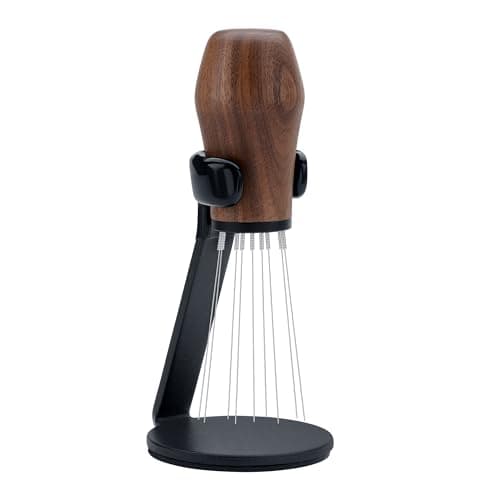
Normcore WDT Distribution Tool (V3)
9 thin needlesWeiss distributionWalnut handle + standAny basket size
The single cheapest upgrade to your espresso. Nine needles that break up clumps before you tamp.
- Build quality
- 8
- Does the job
- 10
- Ease of use
- 8
- Value
- 10
Pros
- +Stirring the grounds with fine needles breaks up clumps and static, which is the biggest cause of channeling and sour shots — the highest impact-per-dollar espresso tool there is
- +Works with any machine and any basket size, so it's never obsolete
- +The stand keeps it tidy and the walnut handle is a nice touch for the price
Cons
- −It adds a few seconds of prep to every shot
- −The needles are fine and will bend if you're rough with them
Don't buy this if…
…you don't make espresso. It does nothing for drip, press, or pour-over — it's an espresso puck-prep tool, full stop.
Leveling grounds on 58mm machines
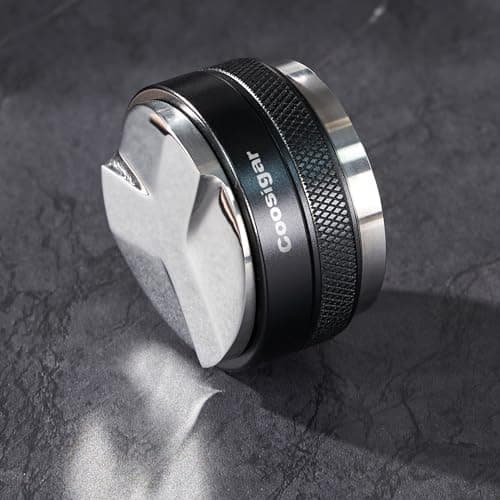
Coosigar 58mm Dual-Head Distributor & Tamper
58mmDual head (distribute + tamp)Tool-free depth adjustmentStainless base, alloy handle
A two-sided leveler for 58mm baskets — a bladed face to even the bed, a flat face to tamp it.
- Build quality
- 8
- Does the job
- 7
- Ease of use
- 9
- Value
- 7
Pros
- +Levels the coffee bed evenly so water doesn't channel through a low spot — a real fix for uneven shots
- +One tool covers both halves of puck prep: spin the bladed face to distribute, then flip to the flat face to tamp
- +Coosigar sets the depth with a collar that needs no screws, shims or Allen keys, so matching it to your dose takes seconds
Cons
- −A spinning leveler compacts the surface but doesn't fix clumping underneath — it's a partner to a WDT tool, not a replacement
- −Coosigar covers it for 120 days, short for a tool you'll reach for every morning
Don't buy this if…
…you already use a WDT tool and a calibrated tamper. The overlap is real — a distributor adds the least of the three once you have the other two.
Puck prep, in the right order
The sequence that works: dose into the basket (weighed, always), WDT-rake until visibly uniform, settle with a light tap, then one level tamp. That's the whole ceremony — it adds twenty seconds and removes the biggest variable your dial-incan't control.
Who benefits most: anyone on an entry or mid-range grinder (they clump most), anyone whose bottomless portafilter shows spritzing, anyone whose shots run inconsistently at identical settings. Single-dose grinder owners with excellent burrs benefit least — but still benefit.
Skip entirely:anything sold as a "needle tamper" combo, and distributor-only workflows on clumpy grinders — you'll be leveling the roof of a house with no walls.
How we picked
We do not run a testing lab
We compiled published manufacturer specifications, computed what each option costs to run where relevant, and cross-referenced aggregated owner reviews, then scored each product against a published rubric. The scores are judgments from documented research — they are not measurements we took, because we do not have a lab and we are not going to pretend we do. Where a number came from a manufacturer or a standard, we name it in Sources.
Questions
Frequently asked
Does WDT actually make a difference?+
For most home setups, yes — visibly and repeatably. Channeling from clumped grounds is the dominant cause of spraying, gushing, inconsistent shots, and needle-stirring is its direct mechanical fix. The closer your grinder is to entry-level, the bigger the improvement; even excellent grinders benefit at espresso fineness.
WDT tool or distribution tool — which first?+
WDT, unambiguously. The needles fix the puck's interior (where channeling is born); the spinning distributor only organizes the top few millimeters. If you own both, use them in that order. If you own one, own the needles — a distributor without WDT is tidying the surface of the problem.
Can I just use a toothpick or a whisk of paperclips?+
The bent-paperclip origin story is real and a DIY rake genuinely works — the technique is the magic, not the handle. Purpose-built tools earn their modest price with properly thin needles (thick ones compact more than they break up), comfortable grip and a stand. Start DIY tonight if you like; you'll buy the tool eventually.
Receipts
Sources
We do not run a testing lab, and we do not pretend to. Where a measured number came from a manufacturer spec sheet or a published standard, we name it and link it. Where we could not verify something, we say so on the page rather than quietly leaving it out. Read our full method.