"Prosumer" is the tier above the entry machines — closer to café gear than kitchen appliance, built for someone who already dials in shots and wants a higher ceiling. Before we rank anything, the honest headline: most people do not need a prosumer machine. A Bambino Plus or a Barista Express makes espresso the vast majority of home drinkers would be delighted with, and the money that separates them from the machines here buys a lot of good beans and a great grinder. This list is for the person who has outgrown an entry machine and knows exactly why — not for a first buyer reaching for the top shelf.
What actually defines this tier is a few pieces of real hardware. The big one is a dual boiler (or heat exchanger): two independent heating systems that let you extract a shot and steam milk at the same time, with no waiting and no temperature compromise between the two. On a single-boiler entry machine you pull the shot, then wait for the boiler to climb to steam temperature; a dual boiler deletes that wait and holds both temperatures steady. Add PID temperature control, which keeps brew water dead-steady shot to shot rather than drifting, and a commercial 58mm group and portafilter, which gives you thermal mass, better puck prep, and access to the same accessories cafés use. Those three things — simultaneous extract-and-steam, temperature stability, and a commercial group — are what you are paying for. If you are still learning what those mean, start with our guide to dialing in espresso before you spend here.
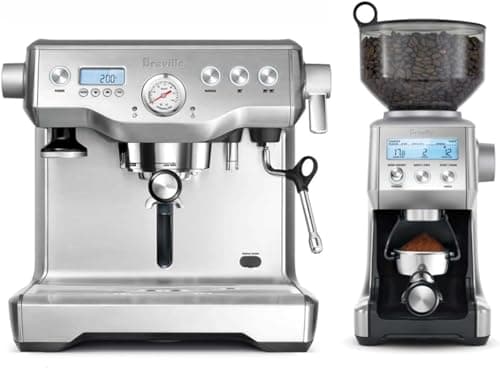
The Breville Dual Boiler takes the top spot as the best all-round machine of the three. It is a true dual boiler with PID control and a 58mm group, and this package ships with the Smart Grinder Pro, so it is a complete grind-to-cup upgrade in one box — the jump that genuinely defines the prosumer step, at a price that undercuts a lot of imported prosumer gear. It is expensive, big, and heavier to live with than an entry machine, and buying it as a machine-plus- grinder bundle is only value if you actually need the grinder too. But for someone stepping up who wants the whole capability without assembling it piece by piece, it is the most sensible landing spot.
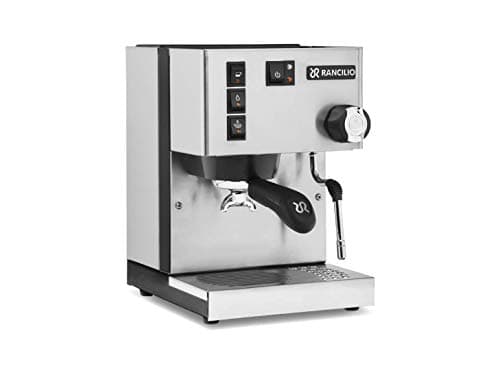
The Rancilio Silvia ranks second, and it is a deliberately different animal: a commercial-grade single boiler, not a dual boiler. We include it because it is the classic skill-builder — a genuinely commercial group head and 58mm portafilter in a home machine, famously durable and endlessly repairable, with a deep enthusiast community and a mod ecosystem decades deep. The honest trade is that as a single boiler it makes you wait and manage temperature surfing between shot and steam, and it has no PID unless you add one. It is not the do-it-all machine the Dual Boiler is; it is the machine you buy to learn espresso properly on hardware that will outlast most of your kitchen and that skills transfer straight up from. If that appeals, our Gaggia Classic Pro review covers the step below it.
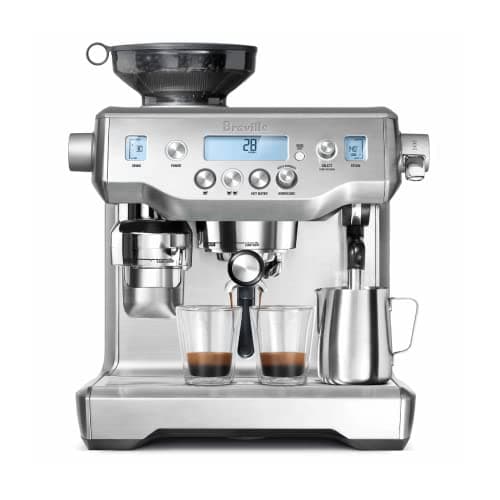
The Breville Oracle sits third as the premium wildcard: a dual boiler that automates the grinding, dosing, tamping, and milk while keeping a real 58mm dual-boiler shot underneath. It is the closest thing to a super-automatic that still pulls a proper portafilter shot — prosumer quality with hands-off convenience, an unusual and genuinely appealing combination. It ranks third only because it is very expensive and because the automation is more to service over time, and enthusiasts who want full manual control will find the auto grind-and-tamp gets in the way. It is a specific machine for a specific buyer: someone who wants café-grade shots without the café-grade routine, and can pay for it.
None of these were in our hands. We compiled the manufacturers' published specifications, reasoned through the trade-offs each design forces, and priced everything live. Where a machine's reputation rests on a documented trait — the Silvia's commercial group and mod community, the Oracle's automation — we say so rather than pretend we measured shot temperatures ourselves, in line with our research method.
How to choose a prosumer espresso machine — and whether to
This tier rewards a clear-eyed buyer and punishes an impulsive one. Here is how to decide whether to step up at all, and if so, to which machine.
1. First, honestly: do you need this tier?
Most people don't, and saying so is the most useful thing in this guide. If you are buying your first machine, or you don't yet dial in shots by weight and time, a prosumer machine is money spent on a ceiling you can't reach yet — a Bambino Plus or Barista Expresswill serve you better and leave budget for a great grinder and beans. Step up only when you can name the specific limit you've hit — waiting between shot and steam, temperature drift, a basket you've outgrown. If you can't name it, you're not there yet, and that's a good thing for your wallet.
2. Dual boiler vs single boiler — the core decision
This is the fork within the tier. A dual boiler (the Breville Dual Boiler, the Oracle) runs the brew and steam systems independently, so you extract and steam simultaneously with no wait and no temperature compromise — the single biggest quality-of-life jump over an entry machine, and a real one if you make milk drinks. A commercial single boiler like the Rancilio Silvia makes you wait and "temperature surf" between pulling a shot and steaming, but rewards you with commercial-grade build, repairability, and the purest learning experience. Choose the dual boiler for capability and convenience; choose the single boiler to learn the craft on bulletproof hardware.
3. PID and temperature stability
Espresso is fussy about brew-water temperature, and small drifts show up as sourness or bitterness in the cup. PID control holds that temperature dead-steady shot to shot, which is why it is a hallmark of this tier — the Breville Dual Boiler and Oracle include it. The Silvia does not out of the box, which is precisely why one of the most common enthusiast mods is adding a PID to it. If shot-to-shot consistency is a limit you've actually felt on an entry machine, PID is a concrete reason to step up; if you haven't, it's a benefit you'll grow into rather than one you need today.
4. The 58mm commercial group
All three machines here use a 58mm portafilter, the commercial standard, and it matters for more than bragging rights. The larger group carries more thermal mass for stable extractions, the wider basket makes puck prep and distribution easier, and — importantly — the whole world of commercial tampers, baskets, and accessories fits it, so your skills and your gear transfer straight up toward café equipment. It is one of the quieter reasons enthusiasts favor this tier: you stop being locked into a proprietary small-format basket and join the standard everyone else builds tools for.
5. Match the machine to the kind of enthusiast you are
The ranking is less a verdict than a matching exercise. Want the whole capability in one box with the least hassle? The Breville Dual Boiler bundles a dual boiler, PID, and a grinder — the all-rounder. Want to genuinely learn espresso on commercial-grade, endlessly repairable hardware and don't mind the single-boiler dance? The Rancilio Silvia is the classic teacher. Want prosumer shot quality but with the grinding, tamping, and milk automated? The Oracle is the hands-off premium path. There is no single "best" here — there is the one that fits how you want to spend your mornings.
6. The grinder is still non-negotiable
Stepping up the machine does not change the oldest rule in espresso: the grinder decides more of the cup than the machine does, and a prosumer machine only makes a mediocre grinder's shortcomings more obvious. The Breville Dual Boiler package includes the Smart Grinder Pro, which is why it's such a clean upgrade; the Silvia and a bare Oracle purchase assume you already have — or will buy — a serious grinder to match. If you're spending at this level, do not pair the machine with an entry grinder; see our best grinders for espresso and budget accordingly. A great machine fed by a weak grinder is the most common and most expensive mistake in this tier.
7. Live with the size, the heat-up, and the upkeep
Prosumer machines are bigger, heavier, and more demanding to own than entry machines, and that is part of the deal. They take up real counter space, they can take longer to come fully up to temperature (many enthusiasts leave them on or on a timer), and there is more to keep clean — backflushing, gaskets, and, on the Oracle, the automation adds parts that eventually need service. None of it is a dealbreaker for someone who wants this machine, but it is a real change from the plug-and-play entry world, so go in expecting a hobby appliance, not a kitchen gadget.
8. When to step up — and when to stop
The honest advice bookending this guide: step up when you've hit a specific, named limit on an entry machine and you know you'll use the extra capability, and stop reaching higher the moment the returns stop matching your palate. This tier delivers a real, audible improvement for someone who dials in and makes milk drinks daily; above it, the gains get smaller and the prices get steeper fast. Buy the machine that clears the limit you actually have, put serious money into the grinder and beans, and resist the urge to chase the last few percent you may never taste.