01
Manual espresso on a budget
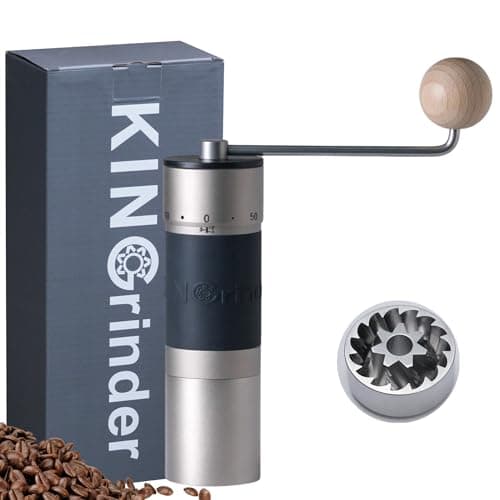
KINGrinder K6 Manual Grinder
Stainless burrsExternal numbered adjustEspresso-fine stepsManual
7.6/10
A lot of hand grinder for the money — external adjustment and espresso-fine steps.
- Grind consistency
- 8
- Grind range
- 8
- Ease of use
- 6
- Build quality
- 7
- Value
- 9
Pros
- External numbered adjustment makes dialing in espresso far easier than grinders you set from inside
- Fine, repeatable steps genuinely suited to espresso, not just an afterthought
- Undercuts pricier hand grinders while matching a lot of their capability
Cons
- Manual grinding for espresso is hard work, same as any hand grinder
- Brand support and long-term reputation are thinner than TIMEMORE or 1Zpresso
Don't buy this if…
…you value a proven brand and resale value. TIMEMORE has the longer track record — the K6 is the value play, not the safe-brand play.
$109.00View on Amazon
Price as of October 27, 2026. Prices change — Amazon's is the one that counts.
#ad · we may earn a commission from this link to KINGrinder K6 Manual Grinder