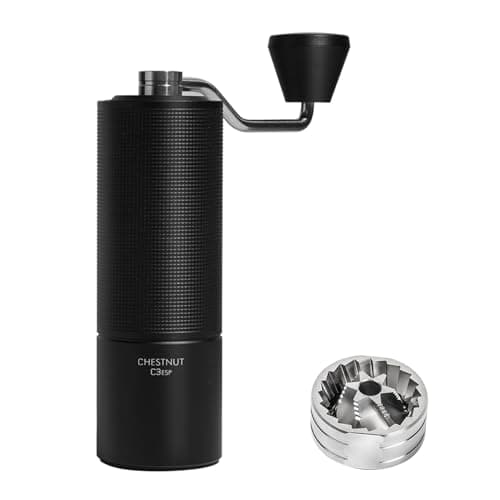
A hand grinder is one of the best-value ideas in coffee, and the TIMEMORE Chestnut C3 is the grinder that proves it. Take out the motor and the housing an electric grinder pays for, and the money left over goes straight into the burrs — which is why this compact hand grinder produces a consistency that shames electric boxes costing twice as much. It needs no power, packs into a bag, makes almost no noise, and in the ESP version grinds fine enough for real espresso. The only catch is the oldest one in manual coffee: you are the motor.
What you are actually buying is the burr set. The C3 runs TIMEMORE's stainless S2C conical burrs in a tight, low-tolerance body, and that combination is the whole story: a particle distribution clean enough to make a proper pour-over sing and even enough for a silt-free French press. It feels premium in the hand, too — machined metal rather than the creaky plastic of the cheap grinders it replaces — with a foldable handle and a build that survives being thrown in a bag. For a first burr grinder, a travel grinder, or a legitimate main grinder for a one- or two-cup household, it is a remarkable amount of grind quality for the money.
Range is the C3's quiet strength. It covers espresso through French press, so a single grinder handles nearly every way you might brew, and the ESP variant tightens the fine end enough to actually dial in a shot rather than merely reach espresso-ish. That flexibility is rare at the price. If you brew filter today but suspect espresso is in your future, a C3 ESP keeps the door open the way the Baratza Encore ESP does on the electric side — for a fraction of the outlay and none of the counter space.
A note on the two versions, because it trips people up. The standard C3 and the C3 ESP share the same body and stainless burrs; the ESP simply adds finer, tighter steps at the espresso end of the adjustment, the same way the Encore ESP does on the electric side. If espresso is on your radar at all, buy the ESP — the small premium is far cheaper than replacing the grinder later, and it costs you nothing for filter, where the two behave identically. Maintenance is easy either way: the burrs unscrew for cleaning without tools, there is no motor to burn out, and a quick wipe-down keeps stale oils from dulling the grind. That simplicity is part of why a well-kept hand grinder often outlives the electric box it replaced — keep it clean and it just keeps going.
Now the honest catch, because it decides whether this grinder is right for you. It is manual, and grinding a fine espresso dose by hand every morning is a genuine arm workout — the finer the grind and the more shots you pull, the more it feels like exercise rather than ritual. For one or two coffees a day, a filter grind is quick and even enjoyable; for espresso volume it gets old fast. The C3 is also single-dose by nature, with a small hopper, so it is a one-or-two-cups-at-a-time tool, not the grinder for a full pot or a busy household every morning. If that describes your kitchen, an electric grinder from our main rankings is the saner buy — and we say so plainly.
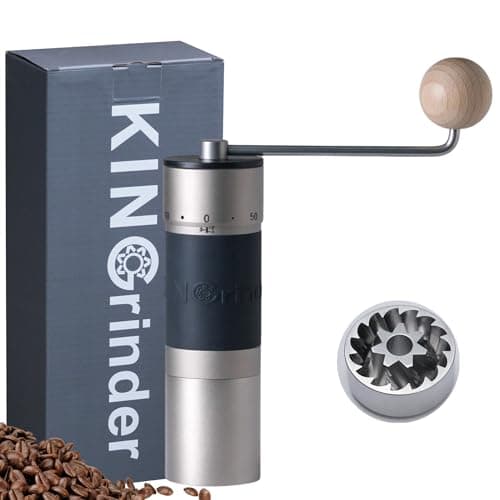
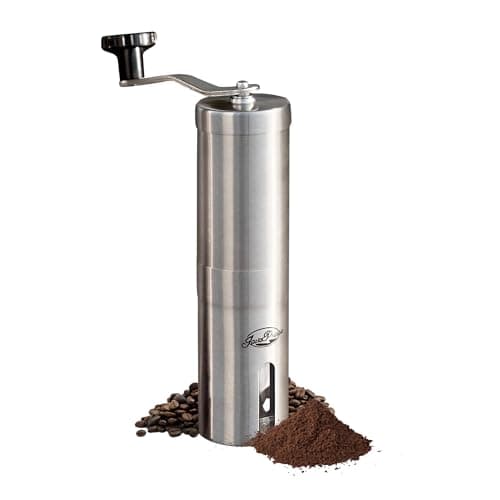
Against its rivals the C3 is the all-rounder. The KINGrinder K6 is the espresso-on-a-budget alternative: its external, numbered adjustment makes returning to a known espresso setting easier than any internally-set grinder, so dedicated espresso hand-grinders may prefer it — at the cost of a thinner brand track record. The JavaPresse is the cheapest genuine step up from a blade grinder, fine for press and drip but a real stretch for espresso, and it lags the C3 on both consistency and speed. The C3 sits in the middle as the one most people should buy: the best balance of grind quality, range, build and value, from a brand with the longest track record of the three. Our full method is on how we research.
Who should buy the Chestnut C3
Buy it if you brew one or two cups at a time and want the best grind quality your money can buy, or if you travel and want a tough, packable grinder that is also a legitimate everyday one. For value-first first-timers, it is a category leap over the blade grinder most people start with, as our burr vs blade explainer lays out.
Skip it if you make several espressos every morning — hand-grinding fine, daily, gets tiring fast, and an electric grinder like the Baratza Encore ESP is worth it for your forearms alone. Skip it too if you grind for a full pot or a whole household at once; the small single-dose capacity makes that a chore.
Grind quality per dollar
This is the C3's entire argument. With no motor or housing to fund, the price concentrates in the stainless burrs, so the grind you get punches well above electric grinders at the same money and holds its own against ones that cost more. For filter — press, pour-over, drip — the result is even enough that your brewer, not the grinder, becomes the limiting factor. That is exactly the standard we hold a good grinder to, and the C3 clears it at a value price.
The effort trade-off, honestly
You pay for that grind quality in effort, not dollars. A coarse filter grind is quick and light; a fine espresso dose is a real crank, and doing it several times a day is a workout. Think about how you actually brew before you buy: an occasional espresso and daily filter is a fair trade and part of the ritual, while a multi-shot morning habit points you back to an electric grinder. There is no wrong answer — just be honest about your mornings. Whatever you brew, keep the grind matched to the method with a sensible coffee-to-water ratio.
C3 vs KINGrinder K6 vs JavaPresse
The C3 is the all-rounder and the safe default: best balance of quality, range and build, and the strongest brand behind it. The KINGrinder K6 is the pick if espresso is your main event and you want the easiest dial-in — its external numbered adjustment beats setting the grind from inside — accepting a less-proven brand. The JavaPresse is the budget floor: a true burr grind for pocket money and a fine camping grinder, but it trails on consistency and is marginal for espresso, so treat it as the lowest-cost step off a blade grinder rather than a grinder to grow into. See the rest of the field in our hand grinder guide and the best grinders under $100.