Every coffee scale weighs, but an espresso scale has a harder job than a kitchen scale or even a general brewing scale, and that is the whole reason this page exists separately from our budget coffee scales roundup. That page answers one question — what is the cheapest way to stop brewing blind — and any 0.1g scale with a timer wins it. This page answers a different one: which scale is actually good at espresso, where the shot is over in under half a minute, the whole game is played in tenths of a gram, and the scale has to keep up with liquid moving fast into a cup wedged under a portafilter. For that job the ranking is not about price. It is about response speed, a flow-rate readout, sensible auto-timing, a footprint small enough to sit on the drip tray, and the 0.1g resolution that is simply the floor. We have ranked four on exactly those espresso-specific terms, and named the budget fallback for when they matter less to you.
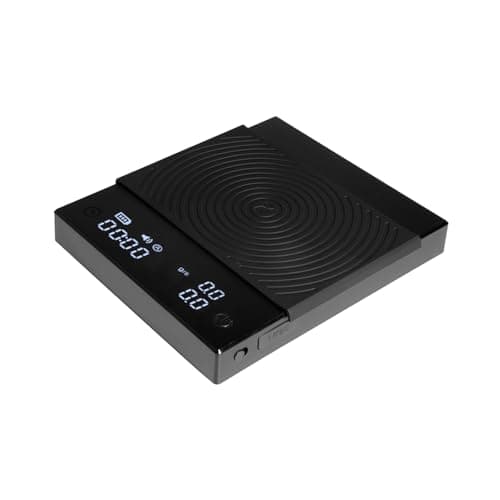
Our top pick is the TIMEMORE Black Mirror Basic 3 Coffee Scale. It nails the two numbers espresso lives on — accurate 0.1g weight and a built-in timer — in a body that is genuinely ultra-thin and small enough to sit on the drip tray under a portafilter, which is exactly where an espresso scale needs to live so you can weigh the shot in the cup as it pours. It is responsive and cleanly built, and for most people dialing in espresso by weight and time it is all the scale they will ever need. The honest cons are the ones common to nearly every coffee scale at this price: it is not fully sealed against drips, so you keep it dry and clear of the steam-wand splash, and its auto-off can trigger mid-brew if you pause too long between steps. Neither undermines the core job it does so well — turning guesswork into a repeatable recipe you can pull the same way every morning.
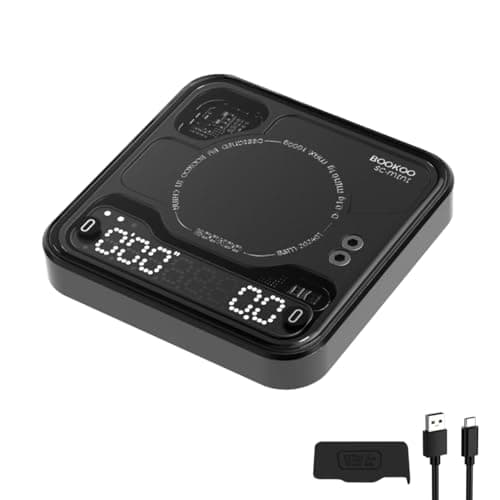
Second is the BOOKOO Espresso Coffee Scale, and it is the pick for the person who wants to read the shot as it develops, not just weigh the end result. Its standout traits are fast response and a flow-rate readout — it shows you how quickly liquid is actually moving through the puck in real time, which is a genuinely useful diagnostic when you are chasing an even extraction, and its footprint is small enough to live on the drip tray permanently. It covers the fundamentals — 0.1g accuracy and a timer — and then adds the espresso-specific intelligence on top. The trade-offs: those extra features carry a small learning curve over a plain weigh-and-time scale, and like almost all coffee scales it is not fully waterproof, so it needs to stay dry. If a flow-rate readout and quick response are what you are paying up for, this is the scale built around them.
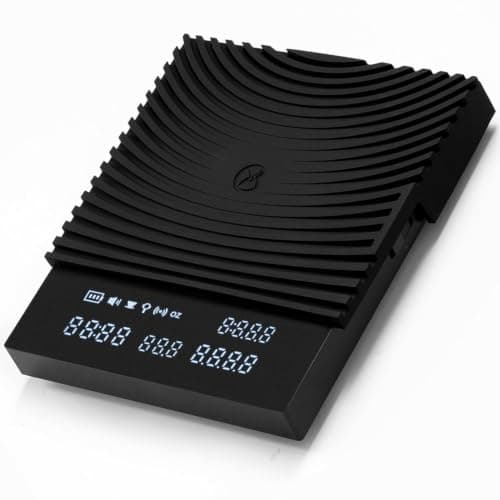
Third is the TIMEMORE Coffee Scale Basic 2.0, which also carries a flow-rate readout in an espresso-tray-sized body and is the natural crossover from our budget guide — it appears there as the top-of-budget step-up, and it earns a place here because that flow-rate feature is a real espresso-dialing aid the cheapest scales lack. Think of it as the value route to flow-rate data: it weighs to 0.1g, times the shot, and shows you flow, all while staying small enough to tuck under the group head. Why third rather than first? Because for pure espresso response the Black Mirror is a touch more refined and the BOOKOO is built more explicitly around real-time reading, and the Basic 2.0 carries the same honest caveats as its siblings — it is not the fully sealed build of a cafe scale, so keep it dry, and its auto-off can cut in mid-brew if you pause. It is a lot of espresso-useful capability for a sensible price.
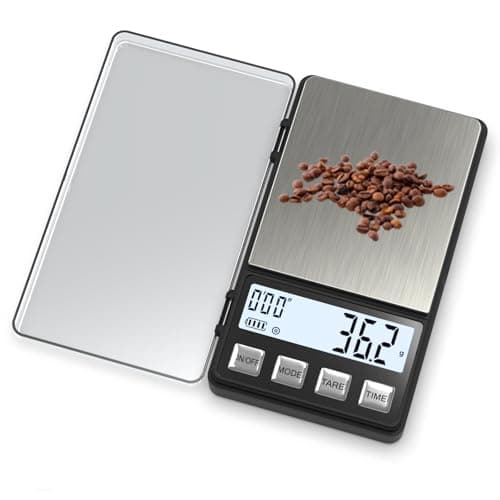
Fourth is the Weightman Espresso Scale with Timer, and it is here as the honest budget fallback — the answer when the espresso-grade extras are not worth it to you. It does the two jobs that genuinely matter, 0.1g weight and a timer, for pocket-money money, and it is small and thin enough to sit on the drip tray under most portafilters. What it gives up is exactly the espresso-specific stuff the picks above lead with: there is no flow-rate readout, and its response is a touch slower than the pricier scales, so you learn to anticipate your pour and stop just short of target to let the number catch up. It is also not water-resistant, so a shot spill is a hazard rather than a wipe-up. If your budget is tight or you simply want weight and time without the extras, the Weightman is more than enough — it is our overall value champion on the budget scales page, and it does not suddenly become a bad scale because you are making espresso.
Put together, the choice is clear. Buy the Black Mirror Basic 3 if you want the best all-round espresso scale — slim, accurate, responsive, and no fuss. Step to the BOOKOO if you specifically want fast response and a flow-rate readout to read shots as they pull. Take the TIMEMORE Basic 2.0 as the value way into flow-rate data. And drop to the Weightman if you just need reliable weight and time for the lowest outlay. Whichever you pick, remember the scale is one dial in a system: pair it with a good grinder and a repeatable dialing-in routine, and lean on our coffee-to-water ratio guide for the numbers the scale lets you actually hit.
The short answer
Quick picks
#ad · Live prices from the Amazon Product API, as of Sep 16, 2026. Where we have no verified live price, we show none — we would rather leave a gap than print a number that has rotted.
In detail
The picks, in full
Dialing in espresso by weight and time
TIMEMORE Black Mirror Basic 3 Coffee Scale
0.1g resolutionBuilt-in timerUltra-thinEspresso-tray size
A slim, accurate espresso scale with a built-in timer — the two numbers that turn guesswork into a repeatable recipe.
- Build quality
- 8
- Does the job
- 9
- Ease of use
- 8
- Value
- 8
Pros
- +0.1g resolution plus a timer is the single biggest consistency upgrade in coffee — repeatable ratios instead of guesswork
- +Ultra-thin and small enough to sit on the drip tray under a portafilter
- +Clean, responsive, and nicely built for the price
Cons
- −Not fully sealed against drips — keep it dry to protect it
- −The auto-off can trigger mid-brew if you pause too long
Don't buy this if…
…you already own any 0.1g scale with a timer. It'll do the same job — this is the nicer, coffee-shaped version, not a must-have upgrade.
Espresso dialing that reacts in real time
BOOKOO Espresso Coffee Scale
0.1g resolutionBuilt-in timerFlow-rate readoutSmall footprint
A fast-responding espresso scale with a timer and flow-rate readout in a footprint that fits under the group head.
- Build quality
- 8
- Does the job
- 9
- Ease of use
- 8
- Value
- 7
Pros
- +Fast response and a flow-rate readout make it genuinely useful for reading a shot as it pulls
- +0.1g accuracy and a timer cover the fundamentals every espresso setup needs
- +Small enough to live on the drip tray permanently
Cons
- −The extra features add a small learning curve over a plain weigh-and-time scale
- −Like most coffee scales it isn't fully waterproof, so keep it dry
Don't buy this if…
…you just need weight and a timer. A simpler scale like the TIMEMORE covers the basics for less — the flow-rate readout is the reason to pay up.
Anyone brewing without a scale (i.e. brewing blind)
TIMEMORE Coffee Scale Basic 2.0
0.1g resolutionBuilt-in timerFlow-rate readoutEspresso-tray size
The scale that turns guesswork into a recipe. Weight and a timer — the two numbers that matter.
- Build quality
- 8
- Does the job
- 9
- Ease of use
- 8
- Value
- 9
Pros
- +A scale with a timer is the single biggest jump in coffee consistency there is — it turns 'a scoop or two' into a repeatable ratio
- +0.1g resolution and a small footprint fit under a portafilter or on a brew stand
- +The flow-rate readout is a genuinely useful espresso-dialing aid the cheap scales lack
Cons
- −Not the fully sealed, drip-proof build of a café scale — keep it dry
- −The auto-off can cut in mid-brew if you pause too long
Don't buy this if…
…you already own any 0.1g kitchen scale with a timer. It'll do the job — this is the nicer, coffee-shaped version, not a required upgrade.
The lowest-cost path to weighed brewing
Weightman Espresso Scale with Timer
0.1g resolutionTimerFits under portafilterBacklit LCD
The cheapest scale that does the two jobs: weigh to 0.1g and time the shot. That's enough.
- Build quality
- 6
- Does the job
- 8
- Ease of use
- 7
- Value
- 10
Pros
- +Does everything a home brewer needs — 0.1g weight and a timer — for pocket money
- +Small and thin enough to sit on the drip tray under most portafilters
- +The single best-value way to stop brewing blind
Cons
- −Budget build and a slightly slower response than pricier scales
- −Not water-resistant, so a milk or shot spill is a hazard
Don't buy this if…
…you want café-grade responsiveness and flow-rate data. Those are on the TIMEMORE — this is the do-the-job-cheaply option.
How to choose an espresso scale
The reason espresso scales are their own category is that the demands of a 25-to-35-second shot are different from weighing beans for a pour-over. Five things separate a scale that is good at espresso from one that merely weighs — work down them in order, and be honest about which you actually need.
1. Response speed — the defining espresso spec
This is the criterion that matters most for espresso and least for anything else. In a shot that is over in under half a minute, with liquid arriving fast, a scale that lags a beat behind the coffee actually landing in the cup makes it easy to overshoot your target yield before the display catches up. A fast, responsive scale — the Black Mirror and the BOOKOO lead here — shows the weight climbing in near real time so you can stop the pump dead on target. A slower budget scale like the Weightman still gets you there; you just learn to anticipate the pour and cut it slightly early. If you take espresso weight seriously, response speed is the upgrade you feel every single shot, and it is the main thing your money buys as you move up this list.
2. Resolution — 0.1g is the floor
Espresso is played in tenths of a gram: the difference between an 18g and a 19g dose in the basket, or a 36g and a 40g yield in the cup, is a real and tastable change. A scale that reads only in whole grams is a baking scale and cannot see any of that, so 0.1g resolution is non-negotiable — every pick here has it. You do not need to go finer; 0.01g scales exist, but they are slower, fussier, and pricier for precision you will never use in a cup. Treat 0.1g as the entry ticket and spend your attention on response speed and features instead.
3. Flow-rate readout and auto-timing
These are the espresso-specific features that separate a plain weigh-and-time scale from a shot-reading tool. A flow-rate readout — on the BOOKOO and the TIMEMORE Basic 2.0 — shows how fast liquid is actually moving through the puck as the shot develops, which helps you spot a shot gushing (grind too coarse or a channel) or crawling (grind too fine) while it is happening rather than after. Auto-timing— a scale that starts the timer on its own when it senses the first drops, and can pair weight to elapsed seconds — takes one job off your hands mid-pull; where a scale offers it, it is a real convenience, and where it does not you simply start the timer by hand. Neither feature is mandatory to make good espresso, but both are what "espresso-grade" buys you beyond the basics. If you are still learning to dial in, the visibility they give is genuinely instructive.
4. Footprint — it has to fit under the portafilter
A pour-over scale can be as big as it likes; an espresso scale has to fit in a cramped, specific place — on the drip tray, under the group head, holding a cup while the portafilter hangs above it. That means slim and smallwins: a low-profile scale like the ultra-thin Black Mirror leaves headroom for the cup, while a tall or wide scale forces you to weigh the shot after pulling it rather than as it pours, which is less useful. Before you buy, it is worth checking the height between your drip tray and the portafilter spouts against the scale's thickness plus your usual cup. A scale that will not fit under your machine is a scale you will end up not using for espresso at all.
5. Water resistance, auto-off, and battery
Two smaller traits nag daily. Almost none of these scales is fully sealed against water — cafe scales are, budget and prosumer coffee scales generally are not — so treat any spill from the steam wand or a gushing shot as a real threat: keep the scale clear of drips and wipe splashes immediately, and a dry scale lasts for years. Auto-off is the other one: many scales power down after a fixed idle time to save battery, which is fine until it cuts out mid-brew during a slow pre-infusion or a paused step — check whether the timer holds the display awake, and if yours is aggressive, tap it to keep it live. Most run on batteries; a few charge over USB, which is tidier for daily use. None of this changes the core value, but the gap between a scale you love and one you tolerate often lives in these details.
When a budget scale is enough — and this isn't that page
Be honest with yourself about which problem you are solving. If your goal is simply to stop brewing blind — to weigh a dose and time a shot at all — then any 0.1g scale with a timer wins, and the cheapest good one is the right answer; that is precisely what our best budget coffee scales guide is for, and the Weightman leads it. This page is for the next step: when you want fast response, a flow-rate readout, and a scale built to sit under the group head and help you read a shot, not just weigh it. Both pages recommend the Weightman for the person on a budget — it is a genuinely good scale. The difference is only whether espresso-grade response and features are worth paying up for, and only you know that.
How we picked
We do not run a testing lab
We compiled published manufacturer specifications, computed what each option costs to run where relevant, and cross-referenced aggregated owner reviews, then scored each product against a published rubric. The scores are judgments from documented research — they are not measurements we took, because we do not have a lab and we are not going to pretend we do. Where a number came from a manufacturer or a standard, we name it in Sources.
Questions
Frequently asked
What makes an espresso scale different from a regular coffee scale?+
Mostly response speed and size. Espresso happens fast — the shot is over in under half a minute — so a good espresso scale reacts quickly enough to let you stop the pump right on your target yield instead of overshooting while the display lags. It also has to be slim enough to sit on the drip tray under the portafilter so you can weigh the shot as it pours. Espresso-focused scales often add a flow-rate readout and auto-timing on top. A general coffee or pour-over scale can be bigger and slower because it is weighing beans and a longer brew. If your goal is just to weigh and time cheaply, see our
budget scales guide instead.
Do I actually need a flow-rate readout?+
No — but it is genuinely useful, especially while you are learning. Flow rate shows how fast liquid is moving through the puck in real time, so you can see a shot gushing (grind too coarse, or a channel) or crawling (grind too fine) as it happens rather than working it out afterward. The BOOKOO and the TIMEMORE Basic 2.0 have it; the Black Mirror and the Weightman do not, and plenty of people dial in perfectly well with just weight and a timer. Treat flow rate as a helpful diagnostic you pay a little more for, not a requirement.
Should I just buy a cheap scale instead?+
Quite possibly, and that is not a cop-out. If your aim is simply to stop guessing — to weigh your dose and time your shot — any 0.1g scale with a timer does that, and the Weightman on our
budget scales page is our value champion for exactly that. Step up to the scales on this page only when you specifically want espresso-grade response speed, a flow-rate readout, or a slimmer footprint under the group head. The jump from no scale to any scale is far bigger than the jump between these; buy the cheap one first if you are unsure.
Will an espresso scale fit under my portafilter?+
Usually, if it is a slim one — which is why low-profile scales like the TIMEMORE Black Mirror are built the way they are. The thing to check is the height between your machine's drip tray and the portafilter spouts, then compare it to the scale's thickness plus the cup you brew into. If the gap is tight, favor the thinnest scale you can find; if a slim scale still will not fit, you can weigh the shot on the counter right after pulling it, which loses the live reading but still gives you an accurate yield.
Receipts
Sources
We do not run a testing lab, and we do not pretend to. Where a measured number came from a manufacturer spec sheet or a published standard, we name it and link it. Where we could not verify something, we say so on the page rather than quietly leaving it out. Read our full method.