A travel mug is the piece of coffee gear you touch more than any other — every commute, every school run, every walk to the desk. That makes it a genuinely good gift and a genuinely easy thing to get wrong, because the shelves are full of mugs that look the part and then leak in a bag, go lukewarm by the second red light, or refuse to fit the one cup holder that actually matters to you. Cutting through it is simpler than the marketing makes it sound. Three things decide whether a travel mug is any good: how long it holds heat, whether the lid truly seals, and whether it fits where you need to put it down. Everything else — finish, color, brand cachet — is decoration on top of those three. We have ranked four of the best on exactly that basis, and we have been honest about the trade-offs, because the "best" mug depends entirely on whether you commute with it in a bag, drive with it in a cup holder, or sip it slowly at a desk.
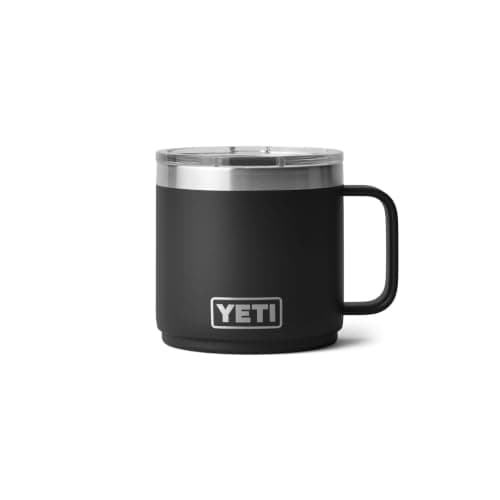
Our top pick, and the one that suits the most people, is the YETI Rambler 14 oz Mug. YETI built its name on double-wall vacuum insulation, and this mug earns it: coffee poured in hot is still genuinely hot an hour later, which is the whole reason to own an insulated vessel in the first place. The 18/8 stainless body is close to indestructible, so it shrugs off the drops and knocks that end most travel mugs, and unlike a lot of insulated tumblers it is dishwasher-safe rather than a hand-wash chore. This is a buy-it-once mug. The honest caveat is the lid: the magnetic MagSlider top is splash-resistant, not fully leak-proof, so it will spill if it tips over in a bag. Buy the YETI for ruggedness and heat retention, and you will love it; buy it expecting to throw it sideways into a backpack and you will be mopping up. You also pay a premium for the name and the build — but in this case the build is real.
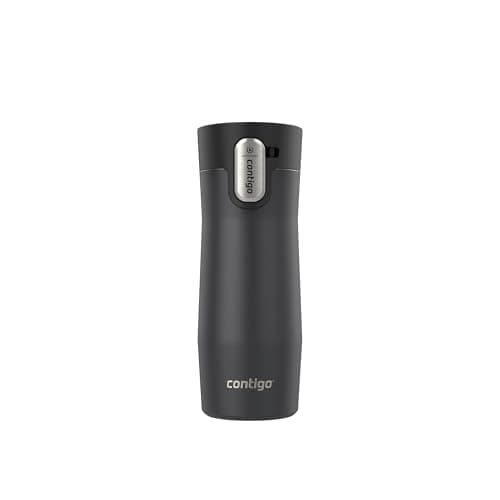
If a spill-proof seal is your first priority — and for anyone stowing a mug in a bag or setting it in a car's center console, it should be — the Contigo West Loop Travel Mug is the smarter default. Its Autoseal lid is the standout feature: it stays sealed shut between sips and only opens when you press the button, which means it genuinely does not leak in a bag or a car. The one-handed button is easy to work while driving or walking, and the stainless double-wall build keeps coffee warm at a fair, sensible price that makes it the easy recommendation for most commuters. The trade-offs are modest and worth knowing: the button mechanism has more small crevices to clean than a plain screw or flip top, so it needs a proper wash rather than a quick rinse, and while its insulation is good, it will not hold heat across many hours the way the YETI does. For the daily commute, that is the right compromise for most people.
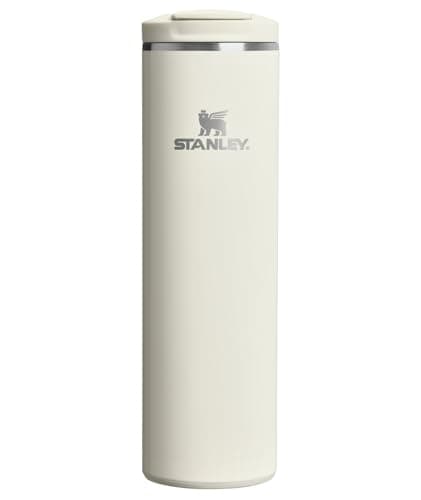
The Stanley Transit FlipTop Travel Mugis the pick if you want ruggedness and a leak-resistant lid in the same vessel. It brings the vacuum insulation Stanley is known for — coffee stays hot for hours, matching the best in the category — and pairs it with a flip-top lid that locks shut and resists leaks, so it is safe to stow in a bag in a way the YETI's MagSlider is not. Classic Stanley toughness means it will survive drops and years of daily abuse. The honest cons: the flip-top mechanism has crevices that need proper cleaning to stay fresh and off-flavor-free, and it is bulkier and heavier than a slim commuter mug, so it feels less nimble in the hand. If you want heat retention and a lid you can trust in a bag, and you do not mind a chunkier object, the Stanley splits the difference between the YETI and the Contigo nicely.
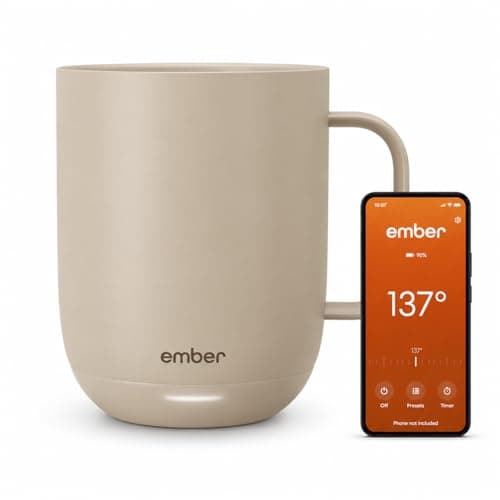
Last, and deliberately so, is the Ember Temperature Control Smart Mug 2 (14 oz) — the splurge, and we want to be straight about what you are paying for. This is a heated smart mug: it holds your coffee at an exact temperature you set in an app, so a slowly sipped cup at a desk never goes cold and never scalds. When that is the problem you have — you are a slow drinker whose coffee is stone cold by the last third — it solves it beautifully, feels genuinely premium, and makes a memorable gift for the coffee person who has everything. But the trade-offs are large and real. It is expensive for a single mug, the battery only lasts so long away from its charging coaster, and it is fundamentally a gadget that needs charging and can eventually fail — where a plain vacuum-insulated mug never does. It is not a travel mug in the commuting sense at all; it lives on a desk near its coaster. If you drink your coffee at a normal pace or want zero fuss, a YETI keeps it hot for hours with no app, no charging, and far less money. Buy the Ember only if desk coffee going cold is a daily frustration worth paying a premium to end.
So the short version, and the one to keep in mind if you are buying this as a gift: pick the YETI for the best all-round mix of near-indestructible build and hours-long heat, if you can live with a splash-resistant rather than fully sealed lid; pick the Contigo if a truly leak-proof, one-handed lid for bags and commuting is the thing that matters most; pick the Stanley if you want ruggedness and a locking leak-resistant lid together in one bombproof package; and reach for the Ember only as a considered luxury for a slow desk sipper. For more coffee-gift ideas across every budget, our gifts for coffee lovers guide is the natural next stop, and whatever mug you choose deserves good beans to fill it.
How to choose a travel coffee mug
A travel mug is a small purchase you make rarely and use constantly, so it pays to buy the right one once. The decision comes down to five things, and only the first two are truly non-negotiable — the rest is about matching the mug to how and where you actually drink.
1. Heat retention — vacuum insulation is the whole point
The reason to buy an insulated mug rather than any old cup is to keep coffee at a pleasant drinking temperature for longer, and the technology that does it is double-wall vacuum insulation: two walls of stainless steel with the air pumped out of the gap between them, so almost no heat can escape by conduction. A true vacuum-insulated mug like the YETI or the Stanley keeps coffee hot for hours; a cheap single-wall "travel mug" is barely better than a paper cup and will be lukewarm before you finish the drive. If long-lasting heat is your priority, this is the spec to insist on — and it is worth remembering that coffee is served hot for a reason, so a mug that holds that temperature is doing the single most important part of its job. One practical note: pre-warming the mug with a splash of hot water before you pour buys you even more time.
2. The lid — splash-resistant is not the same as leak-proof
This is where most travel-mug regret comes from, because the marketing blurs a line that matters enormously in practice. A splash-resistantlid — like the YETI's magnetic MagSlider — keeps coffee from sloshing out while you carry it upright, but it will leak if the mug tips over in a bag or rolls off a car seat. A truly leak-prooflid — like the Contigo's Autoseal button or the Stanley's locking flip-top — actually seals shut between sips and survives being laid on its side. Decide honestly how you carry your coffee. If it lives upright in a cup holder and goes straight from counter to console, a splash lid is fine and often nicer to drink from. If it gets tossed in a backpack next to a laptop, only a genuinely sealing lid will do — the cost of getting this wrong is a soaked bag, not just a wet counter.
3. Cup-holder fit — measure before you buy
A travel mug you cannot set down where you need it is a daily frustration, and the most common failure is a base that is too wide for a car's cup holder. Standard cup holders are generous, but larger tumblers and wide-base mugs can wedge or refuse to seat at all, and office mug rests and bike bottle cages have their own limits. If cup-holder fit matters to you, the safe move is to measure the holder you actually use— the diameter and the depth — and check the mug's base against it before buying rather than guessing from a photo. A slimmer, taller mug generally drops into more holders than a short, wide one of the same capacity, so shape matters as much as size. Capacity is the other half of this: a 14 oz mug is a comfortable single-serving size that fits most holders, where a big road-trip tumbler buys volume at the cost of fit.
4. Materials and cleaning — the part you live with
Almost all good travel mugs are made of 18/8 stainless steel (also written 304 stainless), which resists corrosion, does not hold flavors, and takes a beating without denting easily — it is the right material and worth insisting on over plastic-bodied mugs that can retain smells. The bigger day-to-day variable is the lid. Simpler lids are quicker to rinse; the leak-proof mechanisms that make the Contigo and Stanley so trustworthy have small crevices where coffee oils and, worse, milk residue can hide and turn sour if you only give them a quick swish. Look for a lid that fully disassembles for cleaning, and check whether the mug is genuinely dishwasher-safe — the YETI is, which is a real convenience, while many insulated mugs are strictly hand-wash. If you drink milky coffee, weight cleanability more heavily; the sourness of a neglected lid ruins an otherwise perfect mug.
5. Temperature-control mugs — the splurge, weighed honestly
A heated smart mug like the Ember is a different category of object, and it is worth being clear-eyed about when it makes sense. It does one thing a passive insulated mug cannot: it holds coffee at an exact temperature indefinitely while it sits on its powered coaster, so a slow desk sipper never faces a cold last third. If that specific problem genuinely bothers you every day, it is a real luxury and a standout gift. But it is expensive for its capacity, it is tethered to a charging coaster to work all day, and — being an electronic gadget with a battery — it needs charging and can eventually wear out, where a simple vacuum mug is essentially forever. It is a desk companion, not a commuter. For the vast majority of people, and for the money, a vacuum-insulated mug that holds coffee hot for hours with zero fuss is the better buy. Treat the Ember as a deliberate indulgence for a particular kind of slow, stationary coffee drinker — and if you are shopping for a gift, weigh it against how the recipient actually drinks before you spend.