Coffee does not go "off" the way milk does — it goes flat. From the moment beans are roasted they start shedding the aromatic compounds that make good coffee taste like anything at all, and the four things that speed that up are oxygen, light, heat, and moisture. Oxygen is the big one: every time air sits against your beans it oxidizes the oils and drives off the volatile aromatics, so a two-week-old bag left open tastes papery and dull next to the same beans on day three. A storage canister exists to slow that down, and most of them do it the lazy way — a rubber gasket that keeps new air from getting in. The Fellow Atmos is the one that goes a step further and actually removes the air that is already in the jar. That is the whole reason it earns this review, and the whole reason we need to be honest about what it can and cannot do.
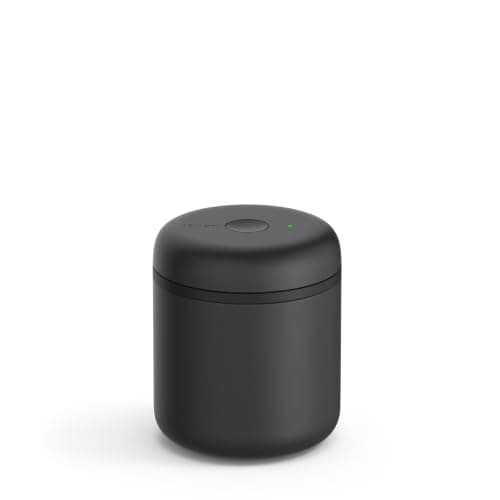
The pitch is simple and, unusually for coffee gear, true: you fill the Fellow Atmos Electric Vacuum Canister, put the lid on, and it does the rest. An electric pump built into the lid senses the air inside and evacuates the canister down to a vacuum automatically — there is no twisting a knob by hand and no manual pumping. When it detects air creeping back in, it re-seals on its own, so the beans stay under vacuum between openings. The pump is rechargeable over USB-C and reusable indefinitely, with no consumables to buy. Less air against the beans means slower oxidation, which is the single most useful thing a canister can do for coffee you are keeping for more than a few days, and the Atmos is one of the few that actively removes the air rather than merely trapping it. It is also a genuinely handsome steel object that looks the part next to a grinder. The honest caveats are size and price. Fellow rates the canister at roughly 0.7L, so a standard 12oz bag is a close fit rather than swimming in headroom — check the size against the bag you usually buy, since Fellow offers more than one size. And it costs more than a plain airtight jar that is "good enough" if you drink fast, and the pump does need occasional recharging where a passive lid never does. But if your problem is beans quietly fading over two or three weeks, the Atmos is the canister that actually addresses it.
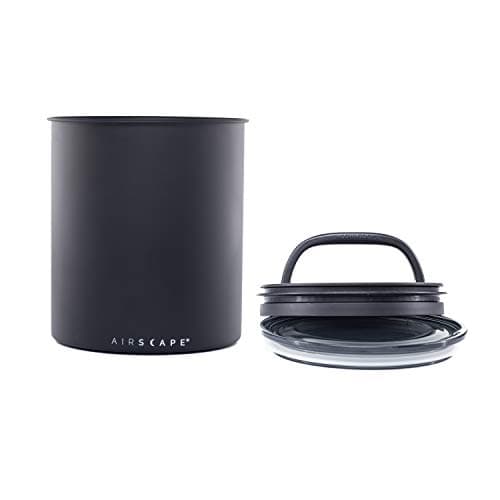
The most interesting comparison is not a cheaper vacuum canister — it is a different idea about how to get the air out. The Airscape Coffee Canister uses a plunger: an inner lid with a one-way valve that you physically press down onto the coffee, pushing the air out through the valve as it goes. It is clever because the seal shrinks with the coffee — as you use beans up and press the plunger further down, there is never a growing pocket of stale air sitting on top the way there is in a fixed-volume jar. It is simple, well-made steel that lasts for years, and the 2.2 lb size we looked at swallows a big bag whole — more than the Atmos holds, so it is the better home for bulk buys. The trade-off is honest: the plunger is manual pressure, not a pulled vacuum, so it displaces air rather than evacuating it, and if you keep only small 12oz bags the large canister leaves a lot of headspace unless you push the plunger all the way down every time. Think of it this way — the Atmos pulls air out; the Airscape squeezes it out. Both beat a plain gasket, and for a big bag the Airscape is the more practical vessel.
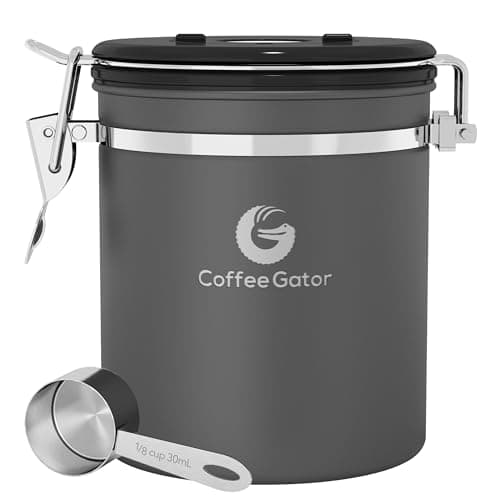
The third option is the value pick, and it solves a slightly different problem. The Coffee Gator Stainless Steel Canister is not a vacuum canister at all — it is a well-sealed steel jar with a one-way CO2 valve and a date-tracker dial on the lid. That valve matters specifically for freshly roasted beans, which off-gas carbon dioxide for days after roasting: the valve lets that CO2 escape without letting oxygen back in, which is the correct feature for coffee you buy close to its roast date. The date dial, which you set to the day you opened the bag, is genuinely useful for remembering how old your coffee is. It is cheap, it comes with a scoop, and for most people rotating through bags at a normal pace it is plenty. The honest cons are the flip side of the price: it is a gasket-and-valve seal, not a true vacuum like the Atmos, so for beans you deliberately store for weeks it protects them less, and the steel body hides how much coffee is left.
So who should buy which? Reach for the Fellow Atmosif you want the best-sealing canister and you keep beans long enough for oxygen to matter — it is the one that does more than "airtight," and it looks the part doing it; just match the size to your bag. Choose the Airscape if you buy big bags and want a simple, durable way to keep the air off a large volume, with a seal that shrinks as you drink. And take the Coffee Gator if you want solid, valve-vented storage for the least money, especially for fresh-roast beans still giving off CO2. Whichever you pick, remember the canister is one part of a system: it slows staling, it does not stop it, and it works best paired with the habits in our how to store coffee beans guide and with beans bought fresh in the first place. For the wider field of jars and containers, our best coffee storage containers roundup is the place to compare.
The short answer
Quick picks
#ad · Live prices from the Amazon Product API, as of Sep 16, 2026. Where we have no verified live price, we show none — we would rather leave a gap than print a number that has rotted.
In detail
The picks, in full
The best-sealing canister
Fellow Atmos Electric Vacuum Canister
Automatic electric vacuumRechargeable (USB-C)Steel bodyReusable
The canister that vacuums itself — it senses the air and pumps it out automatically, no twisting.
- Build quality
- 9
- Does the job
- 9
- Ease of use
- 8
- Value
- 7
Pros
- +The electric pump removes air automatically, which slows the oxidation that turns coffee stale — the one canister that does more than 'airtight'
- +A handsome steel object that looks the part next to a grinder
- +Reusable, no consumables — recharge over USB-C
Cons
- −Pricier than a plain gasket canister that's 'good enough' for fast drinkers
- −The pump needs occasional recharging, unlike a passive lid
Don't buy this if…
…you finish a bag within a week. Beans that fresh barely oxidize — a cheap airtight jar is fine, and the vacuum is money you don't need to spend.
Larger bags and simple sealing
Airscape Coffee Canister (2.2 lb)
Plunger inner lidHolds 2.2 lbSteel bodyOne-way valve
The plunger canister — press the inner lid down to push the air out. Simple and effective.
- Build quality
- 8
- Does the job
- 8
- Ease of use
- 8
- Value
- 8
Pros
- +The inner plunger lid presses air out as you push it down, so the seal shrinks with the coffee
- +The 2.2 lb size swallows a big bag, which the small Fellow can't
- +Well-made steel that lasts for years
Cons
- −The plunger is manual pressure, not a true pulled vacuum
- −For a small bag, the big canister leaves a lot of headspace unless you use the plunger fully
Don't buy this if…
…you buy small 12oz bags. The 2.2 lb size is oversized for that — a smaller Fellow or Coffee Gator seals a small bag better.
Best value airtight storage
Coffee Gator Stainless Steel Canister (16oz)
One-way CO2 valveDate-tracker dialStainless steelIncludes scoop
The value canister with a one-way CO2 valve and a freshness date dial. Does the job for little money.
- Build quality
- 8
- Does the job
- 8
- Ease of use
- 8
- Value
- 9
Pros
- +The one-way valve lets fresh-roast CO2 escape without letting oxygen in — the right feature for recently roasted beans
- +A dial on the lid tracks when you opened the bag, which is genuinely useful
- +Cheap, and it comes with a scoop
Cons
- −A gasket-and-valve seal, not a true vacuum like the Fellow Atmos
- −Steel body hides how much coffee is left
Don't buy this if…
…you want the maximum seal for beans you keep for weeks. The vacuum-pulling Fellow Atmos protects long-stored beans better.
How to choose a coffee storage canister
A canister is a small, one-time purchase you will use every single day, so it pays to buy the right one for how you actually drink. The decision comes down to five things — and the first is understanding what you are actually fighting.
1. The four enemies of fresh coffee
Coffee stales for four reasons: oxygen, light, heat, and moisture. Oxygen is the one a canister most directly fights — it oxidizes the oils and strips the aromatics that give coffee its flavor, which is why a bag left open fades fastest. A good canister is opaque or kept in a cupboard (light), lives on the counter and not next to the oven or a sunny window (heat), and seals against humid air (moisture). Any canister worth buying is airtight; the question is how aggressively it deals with the oxygen already inside, and that is what separates the three tools here. Whole beans also stale far more slowly than ground coffee, because ground coffee exposes vastly more surface area to the air — so the single biggest freshness win, before any canister, is grinding right before you brew.
2. Vacuum vs plunger vs one-way valve — how the air gets out
This is the core choice. A vacuum canister like the Fellow Atmos actively pumps air out — the electric Atmos senses the air and evacuates the canister automatically, then re-seals when air creeps back — which is the most thorough way to get oxygen off the beans. A plunger canister like the Airscape displaces air instead: you press an inner lid down onto the coffee and force the air out through a valve, so the seal shrinks as the coffee is used up and no stale pocket builds on top. A one-way CO2 valve canister like the Coffee Gator does not remove air at all — it seals well and lets the CO2 that fresh beans give off escape without letting oxygen back in. In rough order of how much oxygen they keep off long-stored beans: vacuum, then plunger, then valve-sealed jar. In rough order of price, the same. Match the mechanism to how long your beans actually sit.
3. Size — match the canister to your bag
This is where people most often buy wrong. A canister that is too small will not hold your bag; a canister that is too large leaves a big pocket of air above the beans, which partly defeats the point. Fellow rates the electric Atmos at roughly 0.7L, which takes a standard 12oz bag as a close fit rather than leaving it swimming in headroom; Fellow offers more than one size, so match the canister to the bag you usually carry. The 2.2 lb Airscape is the opposite — it swallows a big bag but leaves a lot of headspace if you only put a small one in it, unless you use the plunger fully every time. The rule of thumb: pick a canister whose capacity roughly matches the bag you usually buy, and if you buy big and drink slow, favor a design (plunger or vacuum) that removes the headroom rather than just sealing it in.
4. Material, light, and the everyday details
Almost all good canisters are stainless steel, which is durable, does not hold odors, and blocks light completely — an advantage over clear glass jars, which look nice but let light degrade the beans unless you keep them in a cupboard. The trade-off with steel is that you cannot see how much coffee is left, so a canister with a scoop or a date dial (like the Coffee Gator) adds a little daily convenience. Look for a seal or valve that is easy to operate one handed in a morning routine, and a build with no consumables to replace — the Atmos pump and the Airscape valve are both reusable indefinitely, which is part of what justifies the higher outlay. None of this changes the coffee, but it is the difference between a canister you reach for and one that ends up in a drawer.
5. What a canister cannot do — and who should skip one
Be honest with yourself here, because the marketing is not. No canister revives stale beans. A vacuum, a plunger, and a valve all slow the rate at which fresh coffee fades; none of them puts flavor back into coffee that has already gone flat. If your beans arrive past their prime, the fix is buying fresher, not storing harder. And a canister cannot outrun the calendar forever — see how long coffee beans last for realistic timelines. The people who genuinely benefit are those who keep a bag open for more than a few days: for them a vacuum canister like the Atmos meaningfully protects the back half of the bag. The people who should skip the spend are fast drinkers who finish a bag within a week — beans that fresh barely oxidize, and a cheap airtight jar is honestly fine. Do not buy the vacuum canister to solve a problem you do not have.
How we picked
We do not run a testing lab
We compiled published manufacturer specifications, computed what each option costs to run where relevant, and cross-referenced aggregated owner reviews, then scored each product against a published rubric. The scores are judgments from documented research — they are not measurements we took, because we do not have a lab and we are not going to pretend we do. Where a number came from a manufacturer or a standard, we name it in Sources.
Questions
Frequently asked
Does a vacuum canister actually keep coffee fresher, or is it marketing?+
It genuinely helps, with a real limit. Oxygen is a leading cause of coffee going flat, so actively pulling the air out — as the electric Fellow Atmos does automatically with its built-in pump — slows the oxidation that dulls flavor, which matters for beans you keep open for more than a few days. The honest limit is that it slows staling, it does not stop it, and it does nothing for moisture or heat, so you still keep the canister cool and dry and still drink the beans within a sensible window. For a fast drinker who finishes a bag in a week, the difference is small; for someone nursing a bag over two or three weeks, it is worth having.
Will the Atmos bring stale or old beans back to life?+
No, and no canister will. A vacuum, a plunger, or a valve all slow the rate at which fresh coffee fades — they cannot put back the aromatics that already escaped from beans that have gone flat. If your coffee already tastes papery or dull, storing it better will not fix it; the answer is buying fresher beans closer to their roast date. Think of a canister as protecting good coffee, not repairing bad coffee.
Should I keep coffee in the freezer instead of a canister?+
For everyday coffee you are drinking now, a good airtight canister on the counter is simpler and avoids the condensation risk that comes from taking beans in and out of the cold. Freezing can help for long-term storage of beans you are not opening yet, but only if they are sealed airtight and thawed fully before opening so moisture does not condense on them. For most people the canister is the right daily tool. Our
how to store coffee beans guide walks through both approaches and when each makes sense.
What size Fellow Atmos should I buy?+
Match it to the bag you usually buy. Fellow rates the electric Atmos we reviewed at roughly 0.7L, which takes a standard 12oz bag as a close fit rather than leaving it swimming in headroom. Fellow offers more than one size, so if you routinely buy larger bags, step up accordingly; pick a capacity that roughly matches your bag so you are not left with a big pocket of air above a small amount of coffee, which partly defeats the point of vacuum sealing.
Receipts
Sources
We do not run a testing lab, and we do not pretend to. Where a measured number came from a manufacturer spec sheet or a published standard, we name it and link it. Where we could not verify something, we say so on the page rather than quietly leaving it out. Read our full method.