The most common reason a home espresso shot tastes sour, thin, or just off is not the machine, the beans, or even the grinder — it is channeling. When you grind fresh coffee it comes out in clumps, riddled with static, packed unevenly into the basket. Water under nine bars of pressure always takes the path of least resistance, so it punches a channel through the loosest spot, blasts through that one area, and barely touches the rest of the puck. The result is a shot that is simultaneously over-extracted (where the water rushed through) and under-extracted (everywhere else) — the textbook recipe for a harsh, unbalanced cup. The single cheapest, highest-impact fix for that is to break up the clumps and even out the grounds before you tamp, and the tool that does it is a WDT tool. The Normcore WDT Distribution Tool is the one we keep reaching for, and it is close to the best money you can spend on espresso.
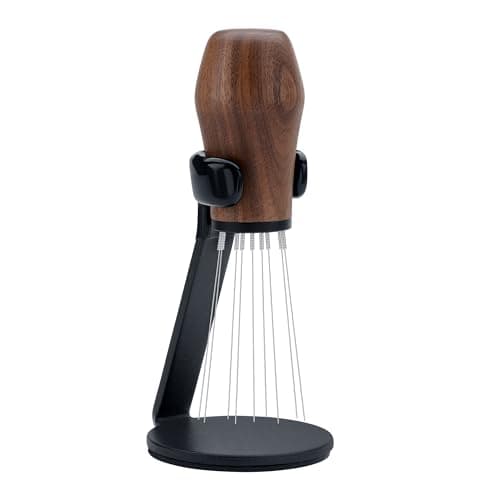
WDT stands for the Weiss Distribution Technique, and the idea is almost comically simple: you stir the dry grounds in the basket with a cluster of very fine needles before tamping. That stirring breaks up the clumps, dissipates the static, and redistributes the coffee into an even, uniform bed with no dense spots and no loose spots for water to exploit. The Normcore WDT tool does this with nine thin needles set in a walnut handle, and it comes with a stand to hold it upright between shots. The needles are fine enough to actually fluff the grounds rather than just dragging channels through them, the tool works with any machine and any basket size — so it is never obsolete when you upgrade — and the whole thing costs a fraction of what a new grinder or machine does while delivering a larger, more reliable improvement in the cup. If you make espresso and own exactly one prep tool, this is the one to own. It is, in impact-per-dollar terms, the best-value espresso accessory there is.
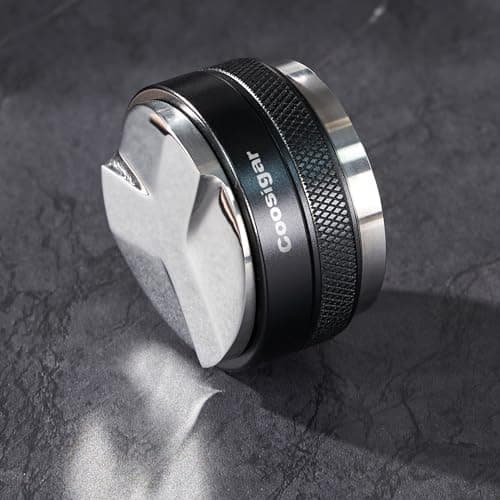
The comparison people most often get wrong is between a WDT tool and a spinning distributor, so let us be precise, because they do different jobs. The 58mm Dual-Head Distributor & Leveler is a puck-shaped tool you set on top of the basket and spin: adjustable-depth wings rotate across the surface and level the top of the coffee bed so it is flat before you tamp. That is genuinely useful — a flat, level bed helps water enter the puck evenly. But here is the honest limit: a spinning leveler only touches the surface. It flattens and lightly compacts the top, but it cannot reach down and break up the clumps buried inside the puck, which is where channeling actually starts. In other words, a distributor levels; a WDT tool de-clumps. They are partners, not substitutes, and if you can only buy one, the WDT tool addresses the deeper cause. A distributor is a nice second step for a perfectly level surface — it just is not a replacement for stirring the grounds first.
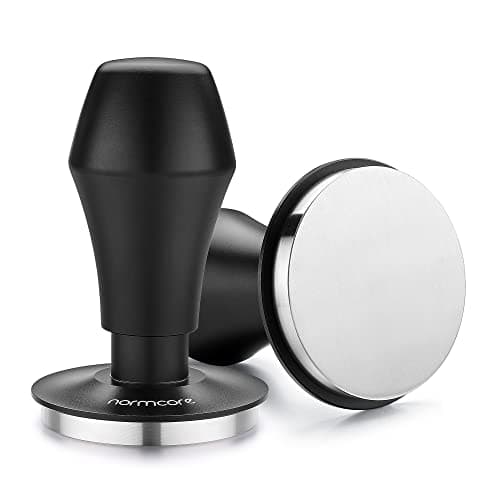
The third tool completes the picture, because puck prep is really a sequence. The Normcore Spring-Loaded Tamper handles the final step: compressing the evened-out grounds into a solid puck with consistent pressure. Its calibrated spring clicks at a set force, so every tamp is identical — which removes another shot-to-shot variable, especially for beginners whose by-hand tamp pressure wanders. The 58.5mm base gives a snugger fit in most 58mm baskets than a loose 58mm tamper, which helps keep the edges sealed. But note what it does and does not do: a tamper compresses, it does not de-clump. Tamping down onto a clumpy, uneven bed just locks the unevenness in place. That is exactly why the order matters — WDT first to break up and distribute, then (optionally) a leveler for a flat surface, then the tamper to compress. Each tool owns one job, and the WDT tool owns the one with the biggest effect on whether your shot channels.
The honest downside of the Normcore WDT tool is real but small: it adds a step. Stirring the grounds takes a few extra seconds on every single shot, and if you want a latte in ninety seconds flat before work, that friction is a genuine cost. The fine needles will also bend if you are rough with them or jam the tool into the basket like a spade — they are meant to be swirled gently, not stabbed. And, obviously, it does nothing for drip, French press, or pour-over; it is an espresso puck-prep tool, full stop, useless if you do not pull shots. Those caveats aside, the value is hard to overstate. Buy the Normcore WDT tool as the first and most important puck-prep upgrade; add the distributor only if you want a perfectly level surface on top of an already de-clumped bed; and add the tamper to make your final compression repeatable. To see where all three sit in a full routine, our how to dial in espresso guide and espresso tamping guide walk through the whole sequence, and our best espresso puck-prep tools roundup compares the wider field.
How to choose a WDT tool
A WDT tool is a cheap purchase, but a few details separate one that genuinely improves your shots from a gimmicky needle-on-a-stick. Here is what actually matters — and where a WDT tool fits against the other puck-prep gear.
1. Why WDT works — the mechanism, briefly
Freshly ground coffee clumps and holds static, so it never falls into the basket evenly on its own. Those clumps and dense patches are what water channels around under pressure, ruining extraction. Stirring the grounds with fine needles breaks the clumps apart, releases the static, and leaves a uniform bed where water can pass through all of the coffee at the same rate rather than blasting through one weak spot. That even flow is the entire goal of puck prep, and WDT is the step that achieves it most directly. It is not a placebo — it addresses the specific physical cause of channeling, which is why it is the highest-impact cheap upgrade in espresso.
2. Needle gauge and count — finer is better
The needles are the whole tool, so their quality is what you are paying for. Fine needles — thin gauge — fluff and separate the grounds cleanly; thick, stiff wires just carve tracks through the coffee and leave clumps intact between them. A cluster of several fine needles, like the nine on the Normcore, covers the basket and works the whole bed in a few gentle swirls. The trade-off with fine needles is fragility: they will bend if you stab the tool in or treat it roughly, so the technique is a light stir, not a dig. When comparing tools, favor thinner needles over thicker ones and enough of them to reach across the basket, and treat a tool with a couple of very stiff prongs as a distributor pretending to be a WDT tool.
3. Handle, stand, and depth
The parts around the needles decide whether you actually use the tool every day. A comfortable handle — the Normcore uses walnut — makes the swirl easy to control, and an included stand keeps the needles upright and clean between shots instead of rolling around the counter coated in grounds. Some tools let you adjust needle depth; you generally want the needles to reach most of the way down the puck so you are de-clumping the whole bed, not just the top layer, but not so deep that they scrape the basket. These are small things, but a WDT tool that is fiddly or messy to store is a WDT tool you will skip on a busy morning — and skipping it is exactly when channeling comes back.
4. WDT vs distributor vs tamper — three jobs, not one
This is the confusion that costs people money, so it is worth being blunt. A WDT tool de-clumps and distributes the loose grounds. A spinning distributor levels the surface of the bed and lightly compacts the top. A tamper compresses the whole bed into a solid puck. They are three different steps in a sequence, and none replaces another: a distributor cannot reach the clumps inside the puck, and a tamper just locks in whatever unevenness is already there. If you are building a puck-prep kit from scratch, buy them in order of impact — WDT tool first, tamper second (a calibrated one like the Normcore makes your pressure repeatable), and a distributor last, as a finishing touch for a level surface. Spending on a distributor before a WDT tool is the classic mistake: you polish the top while the real problem sits underneath.
5. The honest catch, and who should skip it
A WDT tool has one genuine downside: it adds a step to every shot. Stirring the grounds takes a few seconds, and for someone who wants a fast, minimal routine that friction is real — worth knowing before you buy. It also demands a little care, since fine needles bend if you are heavy-handed. So who should skip it? Nobody who is serious about espresso, honestly — the payoff is too large for the cost. The people it is genuinely wrong for are those who do not pull espresso at all: it does nothing for drip, press, or pour-over, and it is a waste of a drawer if you never use a portafilter. For everyone making espresso, though, the few seconds it adds buy a more consistent, less sour shot, and that is the best trade in the hobby.