Decaf has spent decades as the punchline of the coffee world, and cheap decaf earns the reputation — flat, papery, faintly stale. But that is a processing and freshness problem, not something inherent to decaffeinated beans. The single biggest variable is how the caffeine was removed, and once you buy decaf made the right way and grind it fresh, the gap between it and regular coffee is far smaller than the jokes suggest.
We ranked these four on the things that actually decide whether a decaf is worth drinking: the decaffeination method first, because it sets the flavor ceiling; then roast and versatility; then value per pound and how fresh you can realistically buy it. Flavor claims stay close to what each roaster publishes — we don't have a lab, so where a bean's reputation rests on something specific, like a Swiss Water process or a low-acid profile, we point to that rather than invent tasting notes. Prices render live, so every value call reflects what a bag costs today, not a number typed once and left to go stale.
There are three broad ways to strip caffeine from green coffee, and they are not equal. The cheapest and most common is a solvent process: the beans are soaked so a chemical solvent — usually methylene chloride or ethyl acetate — bonds to the caffeine and carries it off. The solvent is driven off before roasting and regulators treat the trace residue as safe, but the method tends to strip flavor along with the caffeine. A second route uses pressurized carbon dioxide, which is gentler on flavor but expensive and mostly used at industrial scale. The third is the Swiss Water Process: a patented, entirely chemical-free method that uses only water, temperature, and a carbon filter to pull the caffeine out while leaving most of the flavor compounds in the bean.
Swiss Water is the one to look for. It is chemical-free by design, its makers report it removes 99.9% of the caffeine, and because it treats flavor gently it produces the decaf that tastes most like coffee. Three of our four picks use it; the fourth earns its place on sheer availability and value, and we flag exactly what it trades away.
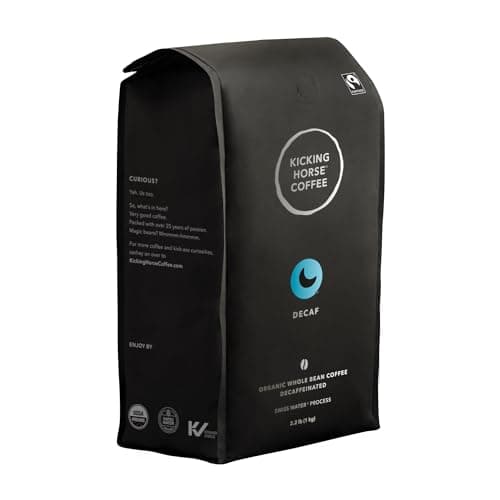
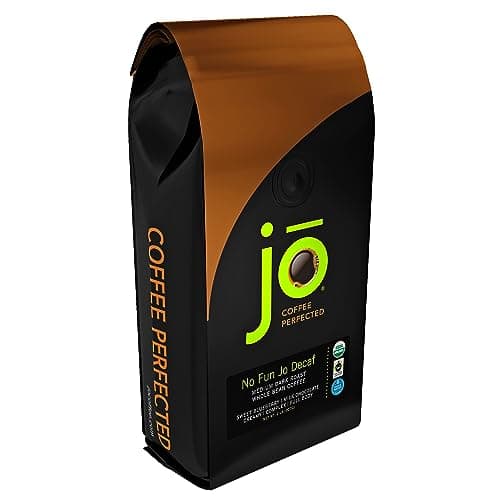
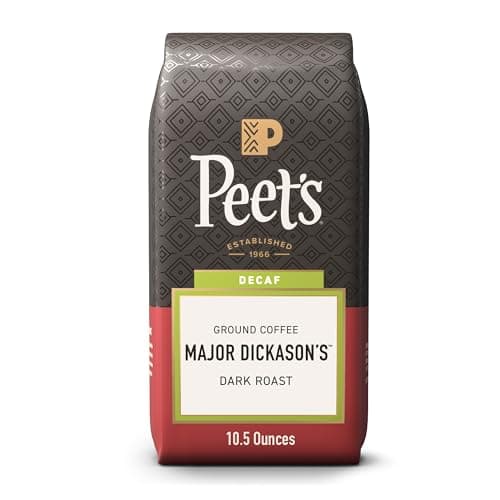
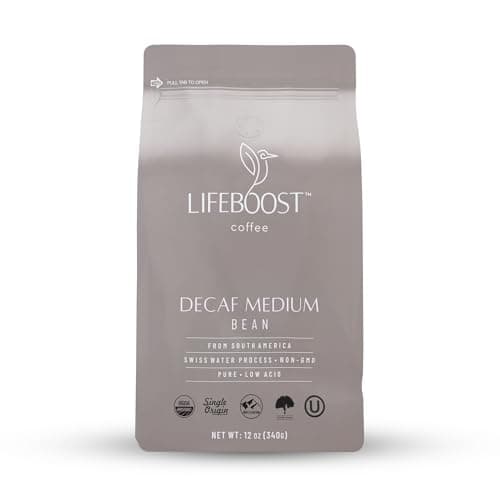
Lifeboost Swiss Water Decaf takes the top spot as the decaf that tastes like a choice, not a sacrifice: chemical-free, low-acid, organic single origin, and third-party tested, it is the pick when you want an evening cup or a gentle stomach without giving up flavor. Kicking Horse Decaf is the value play — the same chemical-free Swiss Water processing, organic and Fairtrade, in a big bag at a much lower price per pound, with enough body to pull a respectable decaf espresso. No Fun Jo Decaf is for people who take their decaf dark and serious: a genuinely rich, Swiss Water organic roast for anyone who finds most decaf weak. Peet's Decaf Major Dickason's is the grocery-shelf safety net — a good, full-bodied dark blend you can buy anywhere, with two honest caveats we cover below.
Two things everyone gets wrong about decaf. First, it is not caffeine-free. Decaffeination removes the great majority of the caffeine but never all of it, so a decaf cup still carries a small amount — trivial for most people, but worth knowing if you are avoiding caffeine for medical reasons rather than taste. Second, buy whole bean whenever you canand grind it fresh. Decaf is no more immune to staling than regular coffee, and freshness does more for a decaf cup than the roaster's name on the bag. Three of these picks are sold whole bean; Peet's Decaf ships ground, which is convenient but means it fades faster once the bag is open — buy it small and drink it quickly.
A quick honest map of who should skip each. Lifeboost is the priciest bag here by a wide margin, so if low acidity and sourcing transparency aren't things you care about, you're paying for benefits you won't use — Kicking Horse gives you the same chemical-free decaf for far less. No Fun Jo's medium-dark roast is firmly bold; if you like light, bright, fruity coffee, its darker profile will read as heavy and can turn a touch ashy if you brew it too hot. And Peet's Decaf, for all its convenience, ships ground and isn't marketed as Swiss Water, so anyone who grinds fresh or specifically wants a chemical-free process should reach for one of the whole-bean picks instead.
Worth saying plainly: decaf is not a consolation prize. It is the right coffee for the after-dinner cup, for the second or third of the day when more caffeine would wreck your sleep, and for anyone cutting back who still wants the ritual and the taste. A trick that works well is keeping a bag of decaf next to your regular beans and blending them — a "half-caf" scoop lets you dial your own caffeine down gradually rather than going cold turkey, and because good decaf now tastes close to the real thing, the cup barely suffers. Buy decaf as coffee you actually want to drink, not as a compromise, and the picks here reward that.
Not sure which to buy? Get Lifeboost if a gentle stomach or an evening cup is the whole reason you want decaf; Kicking Horse if you want chemical-free decaf at the best price and a bag that lasts; No Fun Jo if you take your coffee dark and think most decaf tastes weak; and Peet's if grocery-store convenience matters to you more than grinding fresh. Whichever you pick, buy the smallest bag that suits your pace and grind it right before brewing — freshness is what closes the last of the gap between decaf and the real thing.
How to choose a decaf worth drinking
Decaf rewards a slightly different checklist than regular coffee — the processing method matters more, and freshness matters just as much. Here is what actually moves the cup, in order.
1. Check how it was decaffeinated
This is the decision that separates good decaf from the flat stuff. A bag that says Swiss Water Process(or explicitly "chemical-free" or "mountain water") has had its caffeine removed with water rather than a solvent, and it keeps more of the coffee's flavor. Bags that say nothing about the method are usually solvent-processed — safe, but the reason so much decaf tastes hollow. If the label is silent, assume solvent and adjust your expectations. Our top three picks are all Swiss Water; Peet's is not, and leans on a heavy dark roast to cover for it.
2. Buy whole bean, not ground
Decaf stales exactly like caffeinated coffee: ground coffee loses aroma within days, whole beans hold it for weeks. Grinding fresh is the cheapest upgrade you can make, and it matters more for decaf than almost anything, because a delicate decaf has less flavor to spare in the first place. Lifeboost, Kicking Horse, and No Fun Jo are all whole bean; Peet's Decaf is sold ground, so if you own a burr grinder the whole-bean picks are the smarter buy. If you do go ground, keep the bag sealed and stored well and finish it fast.
3. Match the roast to how you drink it
Decaf comes in the same roast spectrum as everything else. A smooth medium like Lifeboost is the easy, low-acid all-rounder and the pick for drinking black or as an evening cup. A bolder medium-dark like No Fun Jo, or a dark blend like Peet's and Kicking Horse, gives you more body and stands up better to milk and to espresso. None is objectively better — see our light vs dark roast guide for the trade-offs — but a dark decaf is the safer choice if you want it to taste like a strong regular coffee.
4. Remember it is decaf, not no-caf
Decaffeination is a reduction, not an elimination. A decaf cup still contains a small residual amount of caffeine — enough that if you are pregnant, on a caffeine-restricted medication, or genuinely caffeine-intolerant, you should treat "decaf" as "low-caf" and talk to a doctor rather than a coffee site. For everyone drinking decaf simply to sleep at night, the residual amount is small enough not to matter.
5. Freshness beats pedigree
The best decaf on this page, bought stale, will lose to a lesser decaf bought fresh. Look for a roast date rather than a distant "best by," buy a size you will finish in a month, and store it airtight and away from light and heat. If a sensitive stomach is part of why you drink decaf, the same beans overlap heavily with our low-acid picks — Lifeboost appears on both lists for a reason.
Read the label language carefully
Roasters use several names for the same chemical-free method — "Swiss Water," "Swiss Water Process," "mountain water," or simply "chemical-free" or "water-processed." Any of those signals the good process. What you will almost never see spelled out is the solvent method, because "processed with a chemical solvent" is not a selling point; instead the bag just stays silent on how it was decaffeinated. Treat that silence as your answer. When a decaf makes no processing claim at all, it is almost certainly solvent-processed, and while regulators consider that safe, it is the category most likely to taste flat.
Pair it with the rest of your setup
You do not need separate gear for decaf — it behaves like any other bean in a burr grinder, a drip machine, a press, or an espresso portafilter. The one adjustment worth knowing is that decaffeinated beans are often more brittle and can extract a little faster, so if a decaf shot or pot tastes thin or bitter, nudge your grind and dose before blaming the bag. Everything in our whole bean vs ground and storage guides applies to decaf unchanged.