"Organic" on a coffee bag tells you how the beans were grown, not how good the coffee tastes — and it is worth being clear-eyed about that before you pay a premium for it. A certified-organic label means the farming met a set of standards; it does not mean the roast was skilled or the beans were fresh. The good news is that the roasters who bother to certify tend to care about the rest too, and the four bags here clear both bars: they are genuinely certified and genuinely worth drinking.
We ranked these four on flavor and value first, then on what the certifications actually deliver, because an organic seal is a starting filter and not a guarantee of a good cup. Every bag here is genuinely certified and genuinely drinkable — plenty of coffee is one without the other. As everywhere on the site, tasting descriptions stay close to what each roaster publishes rather than invented notes, and prices render live so the value calls track what a bag costs today.
So what does the label actually certify? USDA Organic is an agricultural standard: it means the coffee was grown without synthetic pesticides or fertilizers, the farm was managed to those rules, and the whole chain from farm to bag was audited to keep organic beans separate from conventional ones. It is a claim about growing practices and soil, not about flavor, caffeine, or acidity. Fairtrade is a different kind of certification entirely — it is about economics, not agronomy. It sets a floor price paid to farming cooperatives and adds a premium meant to fund community projects, so it speaks to how the growers were paid, not how the coffee was farmed or how it tastes. Many bags carry both, and the two answer different questions: organic is about the environment and what is (not) on the bean; Fairtrade is about the people who grew it.
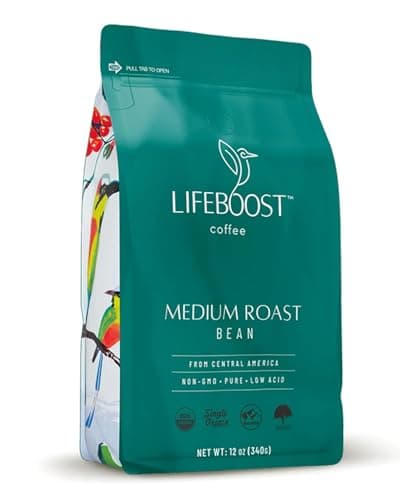
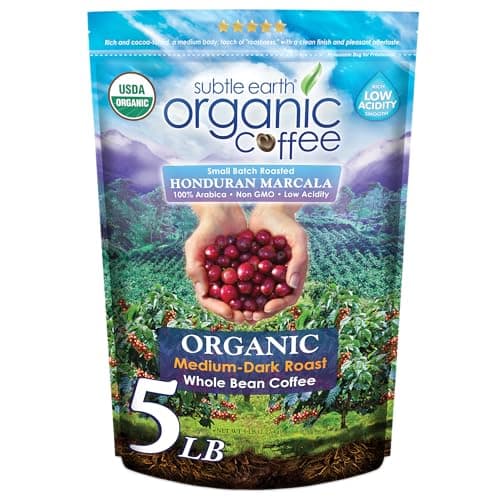
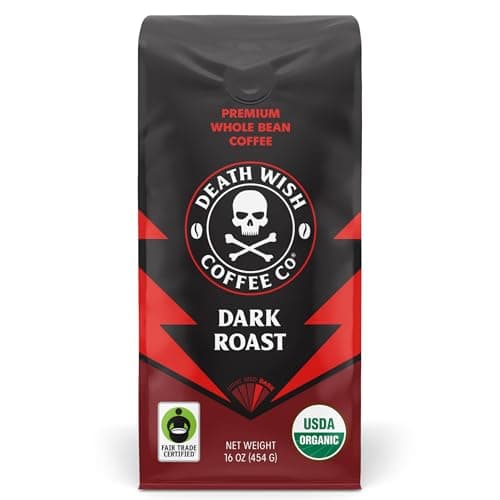
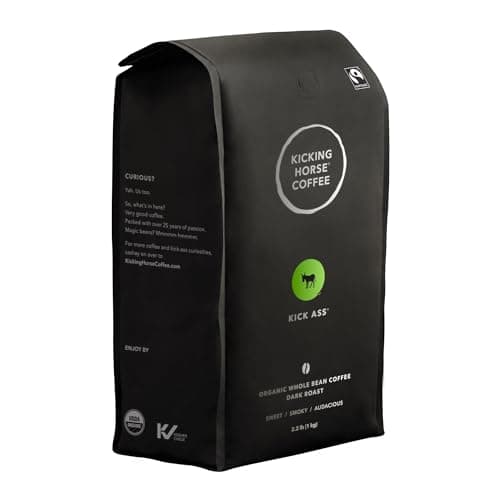
Kicking Horse Kick Asstakes the top spot as the default certified-organic pick: organic, Fairtrade, and Kosher, sold in a big bag at a genuinely fair price, it is a bold, chocolatey dark roast that works everywhere from drip to espresso. It is the bag we would hand almost anyone who asks for "a good organic coffee" without further detail. Lifeboost Organic Medium Roast is the premium, transparency-first choice — organic single origin, low-acid, and third-party tested for pesticides and mycotoxins, which is a step beyond the certification alone. Subtle Earth Organic is the value bulk buy: a smooth, low-acid, chocolatey medium-dark by the five-pound bag, and one of the lowest costs per pound for a certified-organic whole bean. And Death Wish is the outlier — organic and Fair Trade, but chosen and priced for its high caffeine first, so it lands here for anyone who wants the certification and the kick together rather than for flavor value.
The trade-off that trips people up with organic coffee is bulk versus freshness. The best per-pound deals — Subtle Earth's five-pound bag, Kicking Horse's big bag — only pay off if you actually drink through them before they stale. Coffee is at its best for roughly a month after roasting once the bag is opened; a light-to-moderate drinker who buys five pounds will be brewing tired, flat coffee by the end of the bag, wiping out the savings. Heavy households and offices should size up; everyone else is usually better served by a smaller bag bought more often. Freshness beats a good price on paper every time — see whole bean vs ground for why the math works the way it does, and how to store coffee beans for stretching what you buy.
One honest note on why to buy organic at all. If your reason is flavor, the certification is not a guarantee — plenty of superb coffee is uncertified, and plenty of dull coffee is certified. If your reason is environmental impact, farm-worker chemical exposure, or paying growers fairly, the labels do real work and are worth the small premium. Buy organic for the reason that actually matters to you, then judge the bag on the same things you would judge any coffee: process, roast, and freshness.
The honest downsides, pick by pick. Kicking Horse Kick Ass is a dark roast, so its origin brightness is subdued — light-roast fans should look elsewhere, and it can taste harsh if you under-dose it. Lifeboost is the most expensive per ounce here by some margin; if acidity and third-party testing aren't priorities for you, a standard organic costs far less. Subtle Earth's five-pound bag is only a bargain if you drink fast, and its medium-dark profile is mellow rather than bright or complex. And Death Wish is priced and blended for caffeine first — if the kick isn't the point for you, you are paying a premium for strength you don't need, and Kick Ass or Subtle Earth give you more flavor per dollar.
It is also worth understanding why organic and Fairtrade cost more, because the premium is not arbitrary. Organic farming forgoes cheap synthetic inputs, which can mean lower yields and more labor, and the certification itself carries audit and paperwork costs that get passed along. Fairtrade builds in a minimum price and a community premium by design, so a portion of what you pay is routed back to grower cooperatives rather than captured downstream. Whether that is worth it depends entirely on your reason for buying — for the environment or the growers it is money doing real work; for flavor alone it is not a reliable signal, because a skilled uncertified roaster can easily out-cup a certified one.
Not sure where to land? Buy Kicking Horse Kick Ass if you just want a trustworthy organic that works everywhere; Lifeboost if certification alone isn't enough and you want tested transparency and low acidity; Subtle Earth if you drink a lot and want the lowest cost per certified-organic pound; and Death Wish if you want the seal and a serious caffeine hit together. Then treat the organic label as one box ticked and judge the bag on freshness like any other coffee.
How to shop for organic coffee
Organic is a starting filter, not a finish line. Once you have decided the label matters to you, here is how to make sure the coffee inside is actually good.
Know which label you're paying for
USDA Organic certifies growing practices — no synthetic pesticides or fertilizers, an audited chain from farm to bag. Fairtradecertifies economics — a price floor and a premium paid to grower cooperatives. They are not interchangeable, and a bag can carry one, both, or neither. Kicking Horse Kick Ass and Death Wish carry both; if a farmer's income is your priority, look specifically for the Fairtrade mark, not just "organic."
Certification is not a taste rating
Nothing about the organic seal tells you the roast was well executed or the beans are fresh. Treat it as one box ticked, then judge the coffee on everything else: is it whole bean, does it show a roast date, and does the roaster have a track record? Lifeboost's third-party testing goes a step further than the certification by publishing what is (and isn't) in the bag — useful if transparency, not just the label, is what you are after.
Size the bag to your habit
This is the real money decision. A five-pound Subtle Earth bag is superb value per pound and a waste of money if it goes stale before you reach the bottom. Match the bag to how fast you drink: a solo drinker or a small household is better off with Kicking Horse's or Lifeboost's smaller bags bought more often, while a heavy-coffee house or an office is exactly who the bulk bags are for. When in doubt, buy less and buy again.
Pick a roast, same as any coffee
Organic beans span the roast spectrum. Kick Ass and Death Wish are dark and bold; Subtle Earth is a smooth medium-dark; Lifeboost is a low-acid medium that is easy to drink black. If you find regular coffee harsh on the stomach, the low-acid organics (Lifeboost, and Subtle Earth to a degree) overlap with our low-acid picks. If you want the most versatile organic for every brew method, a medium like Lifeboost or a bag from our medium-roast roundup is the all-rounder.
Look past the seal to the roaster
The organic seal is a floor, not a recommendation, so the roaster's reputation still does most of the work. A house that publishes roast dates, sources single origins, and — like Lifeboost — pays for third-party testing is telling you it cares about more than the certification. A generic "organic" bag from an unknown brand with only a distant "best by" date is meeting the legal bar and nothing more. Certification and quality are separate questions; make sure the bag answers both before you pay the premium.
If you buy bulk, store it right
The whole case for a five-pound organic bag is cost per pound, and staling quietly erases it. If you do size up, decant what you are not using into an airtight container away from light and heat, and only keep a week or two's worth in your day-to-day jar — the rest stays sealed. Freezing in airtight portions is a legitimate way to stretch a big bag if you genuinely can't finish it in a month; just don't leave beans loose in the freezer door, where moisture and odors get in. Our storage guide has the full method.