The AeroPress and the French press look like rivals — both are cheap, both steep coffee in water rather than dripping it, both plunge — but they make genuinely different cups and suit different people. The short version: the AeroPress makes a clean, low-bitterness cup in about two minutes and cleans up in ten seconds, while the French press makes a heavy, full-bodied cup with the simplest method in coffee and scales to a whole pot. Neither is better in the abstract; the right one depends on the cup you like and the cleanup you will tolerate. Here is the full comparison, factor by factor.
How each one brews
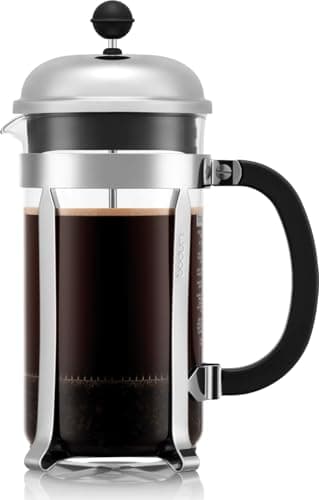
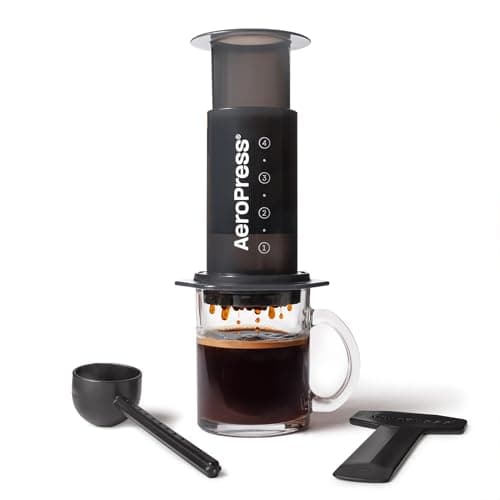
Both are immersion brewers — the grounds sit and soak in hot water — but the filter is where they split. In the AeroPress you steep grounds in the chamber, then press the plunger by hand, forcing the coffee through a paper micro-filter in a few seconds. That gentle push of air is the trick that makes it quick, but the key part is the paper. In the Bodum Chambord and every classic French press, the coffee steeps for around four minutes and you press a metal mesh to the bottom to separate the grounds. Paper versus metal is the single fact that explains almost every difference below.
The cup: clean versus heavy
Paper catches oils and the finest particles; metal mesh lets them through. So the AeroPress gives you a clean, bright, low-bitterness cup that sits somewhere between a pour-over and a press — clearer than press coffee while keeping a little more body than a paper-filtered dripper. The French press gives you a heavy, round, full-bodied cup because those oils and fines stay in, which is exactly what fans love about it. The flip side is grit: the mesh lets fine sediment through, so the last sip of a press carries a little silt, while the AeroPress cup is clean to the bottom. If you like a rich, textured mouthful, the press wins; if you want clarity and no sediment, the AeroPress does.
Cleanup: ten seconds versus a rinse
This is where the AeroPress runs away with it. When you are done, you unscrew the cap and push the plunger the last inch to eject the spent grounds and paper filter as a single dry puck straight into the bin, then rinse the seal — about ten seconds. The French press is messier: you have to scoop or wash a slurry of wet grounds out of the beaker, which are awkward to bin and tend to clog a drain, and then clean the mesh in its frame. Neither is hard, but the AeroPress is dramatically the tidier of the two, which is a big part of why it wins so many daily-driver spots.
Speed and the shape of the ritual
There is a real difference in pace, too. The AeroPress is genuinely fast: grounds, a short steep, and one firm press put a cup in your hand in about two minutes, which is a large part of why it wins so many weekday mornings. The French press is not slow, exactly, but its roughly four-minute steep is a fixed wait you cannot rush without under-extracting, and it asks you to time the plunge and then decant promptly so the coffee does not keep brewing on its grounds. Neither is a chore, and some people love the press's enforced pause. But if you are brewing against the clock, the AeroPress is the quicker, more press-and-go route to a finished cup.
Capacity, durability, and travel
The French press wins on capacity: the 34oz Chambord makes enough for two or three mugs in one brew, while the AeroPress Original makes one or two cups at a time. If you are brewing for a table, the press is the obvious tool. The AeroPress wins decisively on durability and travel: its plastic body shrugs off drops that would shatter the Chambord's borosilicate glass beaker, and there is nothing to leak, which is why it dominates camping, offices, and suitcases. The Chambord is the better-looking object on a counter — the steel frame and glass are a genuine design classic — but it is glass, and a hard floor will eventually win.
The verdict
Choose the AeroPress if you mostly brew one or two cups, you want a clean cup with no sediment, you value fast cleanup, or you travel — it is the more versatile, more forgiving, tidier brewer. Choose the French press if you love a heavy, full-bodied cup, you often brew for more than one, and you want the simplest possible method with no paper filters to buy, ever. Many coffee people happily own both: a Chambord for a relaxed weekend pot and an AeroPress for a fast, clean weekday cup. They cost about the same as two coffee-shop drinks each, so owning the pair is not extravagant — and whichever you pick, the grind matters more than the choice between them.
Which should you buy?
Choose the AeroPress if you brew one or two cups at a time, you prefer a clean, bright, low-sediment cup, you want cleanup measured in seconds, or the brewer needs to survive a bag. It is the more forgiving of the two and the most versatile single brewer we recommend — the same device makes a filter-style cup or a short, concentrated espresso-style one. One honest note: it is not a true espresso maker, because you build only a few bars of pressure by hand rather than the nine of a real machine, so there is no proper crema.
Choose the French press if you want a heavy, full-bodied cup, you often brew for two or three, and you like the dead-simple method — grounds, water, wait, plunge — with zero consumables to restock. The Bodum Chambord is the default pick: cheap, handsome, and endlessly repairable, with glass and parts available everywhere. Accept a little sediment in the last sip and the occasional risk to the glass, and it rewards you with the richest cup in this comparison.
The thing that matters more than either: the grind
Both brewers live or die on the grind, and for the same reason — contact time. The French press wants a coarse, even grind (roughly like sea salt) so the mesh does not fill with dust and the long steep does not over-extract into bitterness. The AeroPress wants a medium-fine, even grind because its short contact time punishes unevenness. In both cases, evenness is everything, which is why a burr grinderlifts either cup more than switching brewers ever would — a blade grinder's mix of dust and boulders is the most common reason a home brew disappoints. Our French press guide and coffee-to-water ratio guide cover the recipe for each.