A coffee-and-espresso combo machine answers one very common household problem: one person wants a mug of drip in the morning and another wants a milky espresso drink, and nobody wants two appliances fighting over the same stretch of counter. A combo puts both jobs in a single box — a drip or pod side for regular coffee, an espresso side for shots, and usually a milk frother bolted on so you can build a cappuccino too. When it fits your household, it is genuinely convenient, and it saves both money and space over buying an espresso machine and a separate coffee maker.
Here is the honest headline before you spend anything, because the marketing will not lead with it: a combo is a jack of both trades and a master of neither. A dedicated espresso machine will out-pull the espresso side, and a dedicated drip maker or a pour-overwill out-brew the coffee side. What you are buying is versatility, not a best-in-class shot or a best-in-class pot. So the first question is not which combo — it is whether you should buy a combo at all. If you drink almost entirely one or the other, two dedicated machines, or one good machine plus a cheap second brewer, will make you happier for similar money. Combos earn their place in genuinely split households, where the compromise on each side is a fair price for covering everyone from one appliance.
It also helps to know that 'espresso' means two different things across this list, and the difference matters. The Ninja Espresso & Coffee Barista System makes its shots from Nespresso-compatible capsules — you drop in a pod rather than grinding, dosing, and tamping — which Ninja describes as a capsule espresso system. The two De'Longhi machines, by contrast, are rated by the manufacturer as pump espresso machines with a portafilter you fill with ground coffee, which is closer to how a standalone espresso machine works. Neither approach turns a combo into a barista-grade machine, but the capsule route trades some ceiling for near-zero effort, while the portafilter route gives you more control and more fuss. Which you prefer is a big part of the decision.
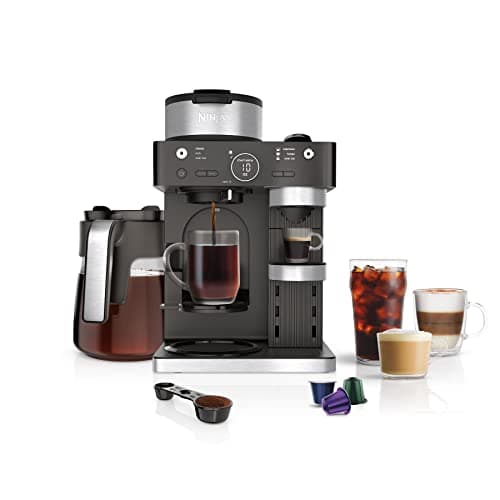
Our top pick is the Ninja Espresso & Coffee Barista System (CFN601) because it is the most genuinely do-everything unit here. It handles Nespresso-compatible capsule espresso for the shot drinker and drip or ground coffee for the pot drinker, and its built-in frother lets you turn either into a latte or cappuccino without a separate steamer. For a house where one person wants a quick capsule espresso and another wants a mug of filter coffee, one machine covers both, and anyone can operate it. The compromise is exactly the one above: capsule espresso will not match a real pump shot, and neither side is best-in-class. But as a single box that keeps a mixed household happy, it is the most convincing combo we would recommend.
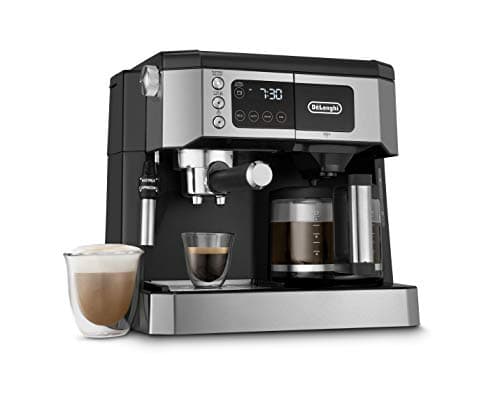
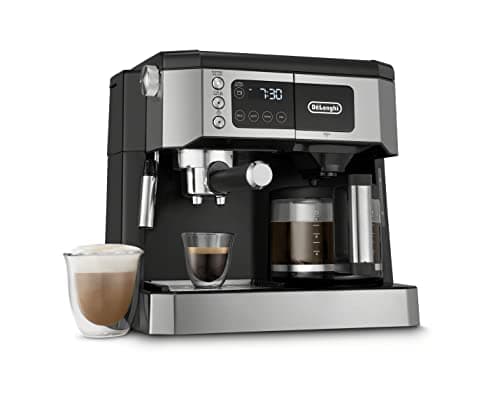
The two De'Longhi combos — the BCO430 All-in-One and the COM530M— cover the same do-both brief and differ mainly in layout. Both put a pump-espresso side, a drip coffee carafe, and a milk frother into one machine, and both are pitched by De'Longhi at the household that wants a full pot of drip and a real portafilter shot from a single footprint. The practical difference is in how the two sides and their controls are arranged on the machine, so the choice between them comes down to which layout suits your counter and the way you actually make drinks, rather than a gap in what they can do. In our ranking the BCO430 edges ahead as the more familiar all-in-one, with the COM530M a close alternative if its arrangement fits your space better.
It is worth being clear-eyed about running costs, because they follow directly from the espresso choice. Capsule espresso, like the Ninja's, carries a per-pod price on every single shot — convenient, but it adds up quickly for a daily drinker, the same way pod coffee always costs more than the equivalent from a bag of beans. The De'Longhi combos feed their espresso side ground coffee, so the cost per shot is a fraction of a capsule's and you can buy whatever beans you like. Over a year of daily espresso that gap is real money, and it can easily outweigh a difference in the sticker price. There is a waste angle too: capsules generate single-use packaging every cup, where ground coffee does not, which is worth weighing if that matters to you. If you will pull a shot every morning, put the pod bill into the comparison; if espresso is an occasional treat, the hands-off convenience of capsules may be worth the premium.
The milk side deserves a realistic word too, since it is a big part of why people buy a combo. Every machine here includes a frother so you can make a latte or cappuccino, and for a weekday milk drink that is genuinely enough. But a built-in frother is not a professional steam wand, and it will not texture the silky microfoam a standalone espresso machine can, so temper your expectations if latte art matters to you. What a combo does exceptionally well is the plain, practical case: one machine on the counter, simple enough that everyone in the house can make their own drink, covering coffee and espresso and milk without three separate gadgets. It also means one appliance to descale and maintain rather than two, a small but real saving in ongoing hassle. If that everyday convenience is the goal, a combo delivers it better than any pile of single-purpose machines.
So who should skip combos entirely? Anyone who leans heavily one way. If espresso is the point, a dedicated pump machine pulls a noticeably better shot for the money you would spend on a combo — buy the machine and make your everyday coffee with an inexpensive AeroPress or French press on the side. If coffee is the point and you never really wanted espresso, a versatile drip maker like the Ninja DualBrew Pro does the coffee job better and costs less. And if what you actually want is fast, hands-off capsule coffee rather than espresso at all, a straightforward pod machine from the single-serve field is the simpler buy. A combo is the right call in one specific situation: a household that genuinely wants both, from one machine, and accepts the trade to get it.
How to choose a coffee & espresso combo
Work these in order. The first question decides whether you should buy a combo at all; the rest sort out which one.
1. Be honest about your coffee-to-espresso split
A combo only makes sense if you truly use both sides. If your household is genuinely mixed — espresso drinks for one person, mugs of drip for another — the convenience of a single box is real and worth the compromise. But if you drink ninety percent one way, you are paying for a second-rate version of the thing you do not use. In that case, buy the machine that nails the drink you actually make and add a cheap second brewer for the occasional other cup. Decide this before you compare models, because it can point you out of the category entirely.
2. Capsule espresso or a portafilter
The espresso sides here split into two camps. The Ninja uses Nespresso-compatible capsules, which means near-zero effort — drop a pod, press a button — at the cost of the per-cup pod price and a lower flavor ceiling than fresh grounds. De'Longhi's combos use a portafilter you fill with ground coffee, which gives you more control over the shot and works with any beans, but asks you to dose and tamp and clean a real filter. Pick capsule if you value speed and simplicity above all; pick a portafilter if you want to steer the shot and feed it fresh, cheaper coffee. Our guide to making espresso at home covers what the portafilter route asks of you.
3. The coffee side: carafe, pod, or concentrate
Look just as hard at the coffee half, since it is the side you will probably use most. The De'Longhi combos brew a full drip carafe, which suits a household that wants a pot on the go. The Ninja brews drip and ground coffee across cup sizes. Match the coffee side to how you drink: a carafe for a family that empties a pot, single-cup flexibility for a couple who brew on demand. A combo that makes great espresso but weak, small-batch coffee will disappoint if coffee is your daily driver.
4. Milk: frother versus steam wand
Every machine here includes a milk frother so you can make lattes and cappuccinos, but a frother is not a professional steam wand and will not texture microfoam like a standalone espresso machine. For most people a built-in frother is perfectly good for a morning milk drink and one less gadget to own. Just set expectations: if latte art and silky milk matter to you, that is a reason to look at a dedicated espresso machine rather than any combo.
5. Footprint, cleaning, and the two-machine alternative
Combos are bulkier than a single-purpose machine and have more parts — two brew paths, a frother, and a portafilter or pod holder — which means more to clean and more that can eventually fail. Before you buy, price out the honest alternative: a dedicated espresso machine plus a cheap coffee maker, or a good coffee maker plus a manual espresso maker, often costs about the same and does each job better. Buy the combo when saving space and having one simple machine anyone can use outweighs peak quality on either side. When it does, the picks above are the ones we would put on the counter.
6. Match the machine to your household
Finally, picture who actually uses it. A combo pays off most in a household with genuinely split tastes and more than one coffee drinker — someone who wants a quick espresso and someone who wants a mug of drip, sharing one machine. The Ninja suits the house that prizes speed and simplicity, where a capsule shot and a press of a button beat any ritual; the De'Longhi combos suit the drinker who wants to steer the shot with fresh grounds and still brew a full carafe for everyone else. If you live alone and drink one thing, the honest answer is usually a single dedicated machine plus a cheap second brewer. Buy the combo when one box keeping several people happy is worth more to you than peak quality on either side.