The most common way home drip coffee goes bad has nothing to do with the beans. It's the hotplate. A glass carafe sits on a heated pad that keeps the coffee "hot" by slowly cooking it — after about half an hour the pot turns bitter, flat, and stewed, and by the second cup you're drinking something noticeably worse than the first. A double-wall thermal carafe fixes this by design: it keeps coffee hot with insulation instead of applied heat, so it's never cooking on a burner. The last cup tastes like the first.
If you drink a pot over a morning rather than downing it in one go, that difference is the whole reason to buy a thermal-carafe machine. But the carafe is only half the story. The other half is brew temperature: the Specialty Coffee Association puts the extraction sweet spot at 195-205°F (about 90-96°C), and machines that brew cooler under-extract and taste thin and sour no matter what carafe they pour into. The brewers below were chosen because they get both right — they hit the SCA window going in, and they hold the heat without stewing once brewed.
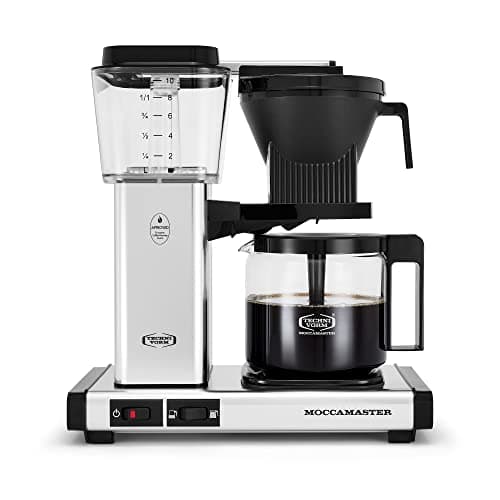
The Technivorm Moccamaster tops the list. Hand-built in the Netherlands, it brews squarely inside the SCA temperature window with a copper heating element, saturates the bed evenly, and is built to be repaired for decades — parts are sold individually, and fifteen-to-twenty-year machines are unremarkable. One note: the Moccamaster is sold in both glass-carafe and thermal-carafe versions, so for this list you want the thermal configuration. Its premium price is really a longevity purchase; the coffee itself is matched lower down.
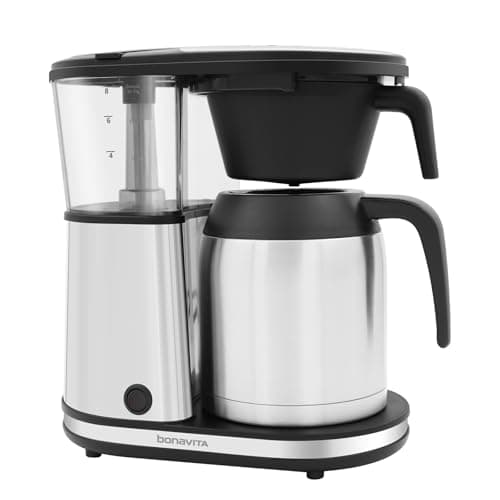
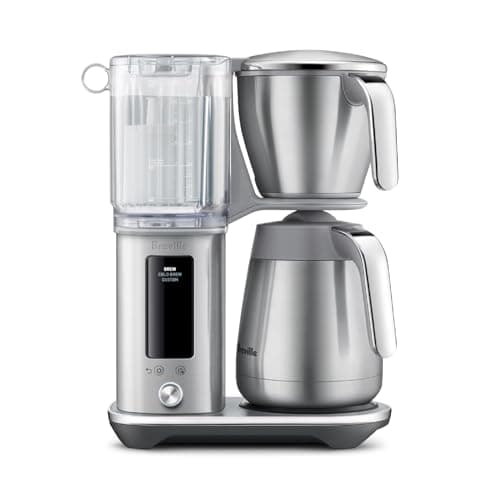
The OXO Brew 9 Cup is the value pick and the one most people should buy: it hits the same SCA-certified temperature for far less, adds a programmable timer the Moccamaster skips, and its showerhead saturates evenly rather than drilling one hole through the grounds. The Bonavita Connoisseur is the no-nonsense choice — one button, correct temperature, a pre-infusion bloom, and a thermal carafe, with no timer to fuss over. And the Breville Luxe Breweris the versatile one: its Custom Brew mode is the rare setting that lets you dial bloom volume, bloom time, brew temperature and flow rate by hand, alongside an SCA-certified Golden Standard preset and a cold brew that finishes in half an hour. It replaced Breville's Precision Brewer Thermal, which is no longer sold; the glass-carafe Precision Brewer is still around, but a glass pot on a hot plate is the one thing this list exists to avoid.
What to skip? Don't pay the Moccamaster premium expecting better-tasting coffee than the OXO or Bonavita — you're buying a repairable, decades-long build, not a different cup. Don't buy the Breville's dials if you'll never turn them; a one-button Bonavita makes the same correct pot with less to think about. And a thermal carafe is overkill if you drain the pot in ten minutes — a glass carafe is fine when nothing sits long enough to stew. Whatever you choose, feed it a burr grinder and fresh beans; the grind lifts the cup more than any of these machines do.
How to choose a thermal-carafe coffee maker
Work through these in order. The first two decide how the coffee tastes; the rest are convenience and cost.
1. Brew temperature comes first
Extraction happens in a narrow heat band — the SCA's 195-205°F. Below it, water drags out sour, thin, papery flavors and quits before the sweetness, which is the number-one reason cheap drip machines taste weak. Look for "SCA certified" or a published brew temperature in that range; every machine on this list qualifies. A great carafe can't rescue coffee that was under-brewed to begin with, so this is the spec you buy first.
2. Thermal carafe vs glass on a hotplate
A hotplate keeps glass-carafe coffee hot by slowly stewing it bitter; a double-wall thermal carafe keeps it hot by insulation, so it's never cooking. If a pot lasts you an hour or more, insist on thermal — it's the difference between a good second cup and a stewed one. If you empty the carafe within a few minutes, a glass carafe is genuinely fine, and you can save the money. Match the carafe to how long your coffee actually sits.
3. Even saturation — soak the whole bed, not one hole
A good brewer spreads water over all the grounds through a showerhead; a cheap one dribbles it through the center and leaves the edges dry, so half the coffee never brews. You can't always read this off a spec sheet, but it tracks closely with temperature certification — the machines that bother to get the heat right (the four here) usually get the shower right too. A Moccamaster review goes deeper on why even saturation matters as much as temperature.
4. Convenience, budget, and the grinder
Past temperature and the carafe, most of what separates these is convenience: a programmable timer (OXO, Breville), one-button simplicity (Bonavita), adjustable variables (Breville), or buy-it-for-life repairability (Moccamaster). None of those change the taste — decide which you'll actually use and buy the cheapest machine that has them. Then put the money you saved toward a burr grinder and fresh beans, which is where the next real jump in the cup comes from. On a tighter budget, our best cheap coffee makers covers the level below this one.