Skip to content
Bean & Burr

HUB 02 · Coffee Makers

French Press vs Pour-Over

Immersion vs percolation — the two manual methods make opposite cups from identical beans. Texture decides this one.

By Stephen V.Updated How we research
#ad

We earn a commission when you buy through our Amazon links, at no extra cost to you. It never affects our rankings, and we say so when the cheaper product is the better buy. How this works.

These are the two ways to make coffee by hand, and they are philosophical opposites. A French press is immersion: grounds steep in all the water for about four minutes, then a metal mesh separates them — nothing else removed. Pour-over is percolation: water passes through the bed once, through paper that catches oils and fines. Same beans, opposite cups.

The press's metal mesh keeps the oils and micro-particles paper removes, producing a heavy, round, full-bodied cup — coffee with texture. It is also the forgiving method: steep time is a clock, not a technique, and no pour skill is involved. The trade is clarity: distinct origin notes blur into that body, and the last sip carries sediment. Pour-over inverts every one of those sentences — clean, articulate, lighter-bodied, and dependent on your pour and a uniform grind.

Cost of entry is a wash — both start cheap — so the decision is honestly about texture preference and patience. Thick and rich with zero technique: press. Clean and expressive, with a small craft to learn: pour-over. (The Espro P3 in the picks below is the hybrid answer: a press with a double micro-filter that removes most of the sediment complaint.)

The short answer

Quick picks

#ProductBest forScorePrice
01
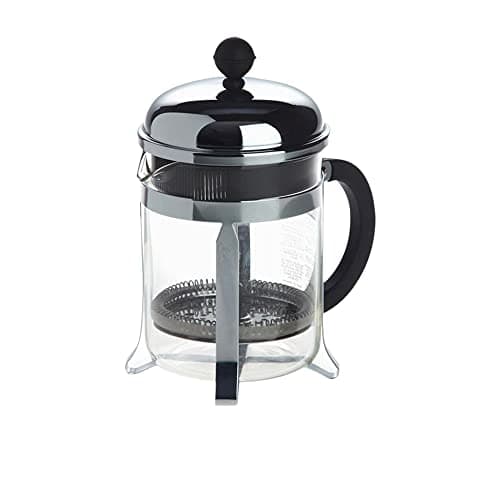
Bodum Bodum Chambord French Press (34oz)
Bodum Chambord French Press (34oz)

The French press. The one everyone pictures, and still the one to buy.

The default French press
7.8
$39.69Amazon
02
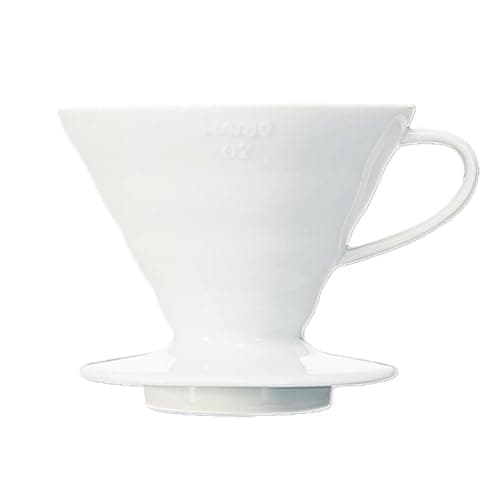
Hario Hario V60 Dripper (02)
Hario V60 Dripper (02)

The world's default pour-over cone. Cheap, brilliant, and endlessly rewarding to learn.

The classic pour-over starting point
8.2
$29.00Amazon
03
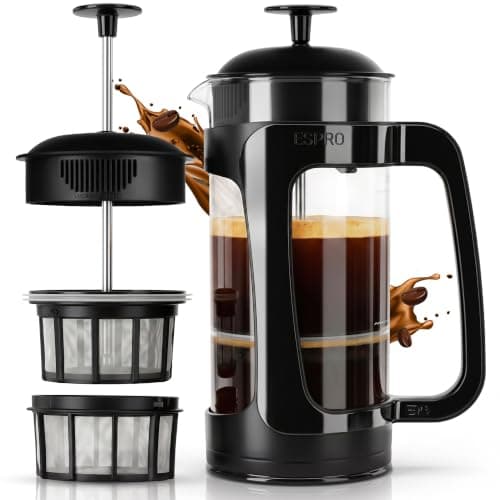
ESPRO ESPRO P3 French Press
ESPRO P3 French Press

A French press with a double micro-filter — the fix for the gritty last sip.

French press body without the sediment
7.4
$39.94Amazon

#ad · Live prices from the Amazon Product API, as of Jul 26, 2026. Where we have no verified live price, we show none — we would rather leave a gap than print a number that has rotted.

In detail

The picks, in full

01
Bodum Bodum Chambord French Press (34oz)

The default French press

Bodum Chambord French Press (34oz)

34 ozBorosilicate glassStainless frameMade in Portugal
7.8/10

The French press. The one everyone pictures, and still the one to buy.

Brew quality
8
Ease of use
8
Build quality
8
Versatility
6
Value
9

Pros

  • Full-immersion brewing with a metal filter gives you the heavy, full body that paper filters strip out
  • The classic design is classic for a reason — replacement parts and glass are cheap and everywhere
  • No paper filters to buy, ever — the running cost is zero

Cons

  • The metal mesh lets fine sediment through, so the last sip has grit
  • Glass carafe — it will eventually meet a hard floor

Don't buy this if…

you hate any sediment in your cup or you're clumsy near a tile floor. A grit-reducing Espro or a paper-filtered pour-over is the cleaner-cup answer.

$39.69View on Amazon

Price as of Jul 26, 2026. Prices change — Amazon's is the one that counts.

#ad · we may earn a commission from this link to Bodum Chambord French Press (34oz)

02
Hario Hario V60 Dripper (02)

The classic pour-over starting point

Hario V60 Dripper (02)

60° coneSpiral ribsSingle large holeCeramic
8.2/10

The world's default pour-over cone. Cheap, brilliant, and endlessly rewarding to learn.

Brew quality
9
Ease of use
6
Build quality
9
Versatility
7
Value
10

Pros

  • The cone shape and single big hole give you total control over flow and extraction — the reason it's the enthusiast default
  • Costs almost nothing and pairs with cheap filters
  • Produces a clean, bright, articulate cup that shows off good beans

Cons

  • The control is a double edge — a sloppy pour makes a mediocre cup, so it rewards a kettle and a bit of practice
  • You'll want a scale and ideally a gooseneck kettle to get the most from it

Don't buy this if…

you want to walk away while it brews. Pour-over is hands-on for two to three minutes — if that's a chore, a French press or a drip machine is the set-and-forget option.

$29.00View on Amazon

$30.505% off

Price as of Jul 26, 2026. Prices change — Amazon's is the one that counts.

#ad · we may earn a commission from this link to Hario V60 Dripper (02)

03
ESPRO ESPRO P3 French Press

French press body without the sediment

ESPRO P3 French Press

Double micro-filterBorosilicate glass32 ozGrit-free brew
7.4/10

A French press with a double micro-filter — the fix for the gritty last sip.

Brew quality
8
Ease of use
7
Build quality
8
Versatility
6
Value
8

Pros

  • The patented double filter catches far more fines than a standard mesh, so the cup is clean to the bottom
  • The filter also stops the brew when you plunge, reducing the over-extraction that makes press coffee bitter as it sits
  • Same full-immersion body as any press, minus the trademark grit

Cons

  • The double filter is more to rinse and clean than a plain mesh
  • Costs more than a basic Bodum for a difference only sediment-sensitive drinkers will prize

Don't buy this if…

a little grit doesn't bother you. Then you're paying extra to solve a problem you don't have — the Bodum Chambord is the cheaper, simpler press.

$39.94View on Amazon

Price as of Jul 26, 2026. Prices change — Amazon's is the one that counts.

#ad · we may earn a commission from this link to ESPRO P3 French Press

The honest sorting questions

Milk or black?Press coffee's body stands up to milk and sugar beautifully; delicate pour-over nuance drowns in them. Habitual milk-adders should lean press and save the single-origin bags.

One cup or a pot? A press scales to guests effortlessly; pour-over is gloriously single-serve (a Chemex is the batch pour-over compromise).

Morning temperament?The press asks four unattended minutes; pour-over asks three attentive ones. Know which you have at 6:45am — the method you'll actually use beats the method that reviews best. Both need the same burr grinder and honest ratio, so the gear investment carries across if you switch.

How we picked

We do not run a testing lab

We compiled published manufacturer specifications, computed what each option costs to run where relevant, and cross-referenced aggregated owner reviews, then scored each product against a published rubric. The scores are judgments from documented research — they are not measurements we took, because we do not have a lab and we are not going to pretend we do. Where a number came from a manufacturer or a standard, we name it in Sources.

Questions

Frequently asked

Which makes stronger coffee, French press or pour-over?
Brewed to the same ratio, their strength is similar — the press just FEELS stronger because its oils and fines give the cup weight and texture. If you want genuinely stronger coffee from either, change the ratio (more coffee), not the method. Body and strength are different things wearing the same word.
Is French press coffee bad for cholesterol?
Unfiltered coffee (press included) retains cafestol, a compound paper filters remove, and regular heavy consumption of unfiltered coffee is associated with modestly raised LDL in the research. An occasional press is a non-issue for most people; a five-cup-a-day habit is a reason some switch to paper-filtered methods. If it's a concern for you, that's a real point for pour-over.
Why does my French press taste muddy?
Usually the grind — too fine, or from a blade grinderproducing dust that slips the mesh. Use a uniform coarse grind, pour promptly when the plunge is done (sitting on the grounds keeps extracting), and decant fully. The Espro's double filter is the hardware fix if technique doesn't get you there.

Keep reading

Receipts

Sources

We do not run a testing lab, and we do not pretend to. Where a measured number came from a manufacturer spec sheet or a published standard, we name it and link it. Where we could not verify something, we say so on the page rather than quietly leaving it out. Read our full method.