Skip to content
Bean & Burr

HUB 06 · Learn

Latte vs Cappuccino vs Flat White

Same espresso, same milk — the drinks differ only in proportion and foam. Here's the honest breakdown, minus the café mystique.

By Stephen V.Updated How we research
#ad

We earn a commission when you buy through our Amazon links, at no extra cost to you. It never affects our rankings, and we say so when the cheaper product is the better buy. How this works.

Every espresso-and-milk drink on a café menu is the same two ingredients — espresso and steamed milk — in different proportions with different foam. That is the entire secret. A latte is the milkiest, a cappuccino carries the most foam, and a flat white is the smallest and strongest of the three. Everything else is branding.

The three drinks, side by side

 LatteCappuccinoFlat white
Typical size10-16 oz5-6 oz5-6 oz
Espresso1-2 shots1-2 shots2 shots
Milk characterLots of milk, thin foam capEqual parts milk and airy foamThin microfoam, barely a cap
Coffee intensityMildestMiddleStrongest
TextureSmooth, milkyLight, foamyVelvety, dense

What actually separates them

The latte is a milk drink with coffee in it — comforting, mild, and the canvas for every flavored syrup ever invented. Order it when you want warm and gentle. The cappuccino is defined by its foam: classically a third espresso, a third steamed milk, a third foam, so the coffee still leads and every sip ends in that airy cap. The flat white — the antipodean import — is a double shot with just enough silky microfoam to round it off: the most coffee-forward milk drink on the menu, which is exactly why espresso enthusiasts default to it.

Making them at home

The espresso is identical in all three — a properly dialed-in shot or two. The difference is entirely in the milk steaming: stretch longer (more air) for a cappuccino, briefly for a latte, barely at all for a flat white, then pour. A home machine that steams well covers all three drinks with one skill — which is why our machine rankings treat steam quality as a first-class criterion, not a footnote. The other half of that skill is the vessel: a 12oz pitcher suits a single flat white or cappuccino and a 20oz one covers two drinks at once, and getting that wrong is the most common reason home microfoam refuses to come together — the sizes are laid out in our milk pitcher guide. Milk-drink households should also budget shots accordingly: at two shots per flat white, a quick cost check shows the home setup paying itself off fastest for exactly the people drinking the most of these.

The short answer

Quick picks

#ProductBest forScorePrice
01
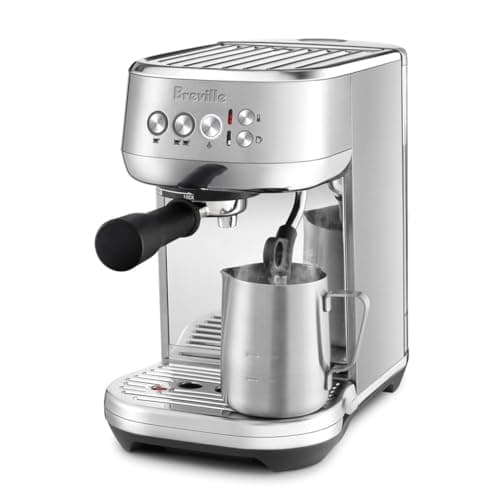
Breville Breville Bambino Plus (BES500)
Breville Bambino Plus (BES500)

The one to buy if you already have a grinder. Tiny, fast to heat, and it auto-steams milk.

People who already own a grinder
8.2
$499.95Amazon
02
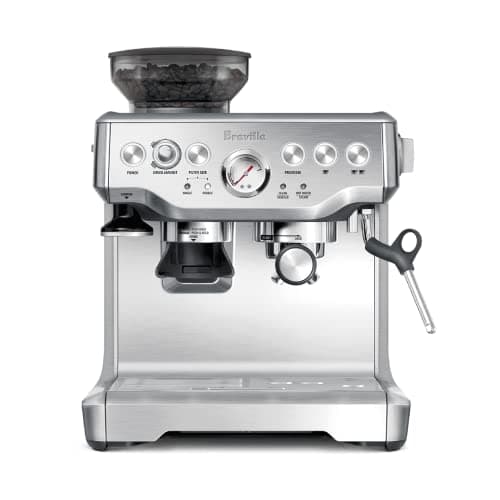
Breville Breville Barista Express (BES870XL)
Breville Barista Express (BES870XL)

The default first real espresso machine, and it earns that spot: a grinder is built in.

Most people buying their first proper machine
8.0
$689.99Amazon
03
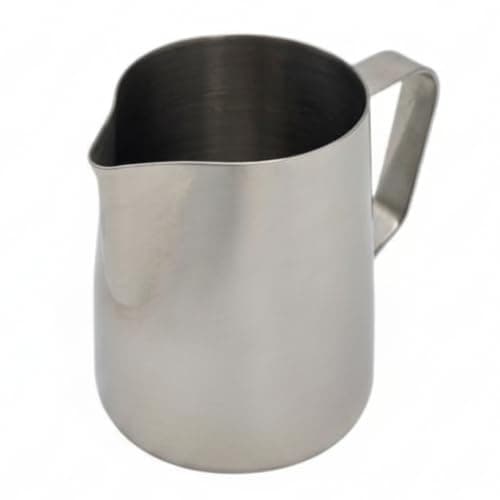
Rattleware Rattleware 12oz Latte Art Pitcher
Rattleware 12oz Latte Art Pitcher

The café-standard steaming pitcher. A sharp spout, the right size, and it costs almost nothing.

Learning latte art at home
9.0
$16.95Amazon

#ad · Live prices from the Amazon Product API, as of Sep 16, 2026. Where we have no verified live price, we show none — we would rather leave a gap than print a number that has rotted.

In detail

The picks, in full

01
Breville Breville Bambino Plus (BES500)

People who already own a grinder

Breville Bambino Plus (BES500)

No built-in grinder54mm portafilter3-second heat-upAutomatic milk texturing
8.2/10

The one to buy if you already have a grinder. Tiny, fast to heat, and it auto-steams milk.

Shot quality
8
Steam & milk
8
Ease of use
9
Build quality
7
Value
9

Pros

  • Breville rates it at a 3-second heat-up — you genuinely can go from cold to a shot faster than a kettle boils
  • The automatic milk-texturing wand froths to a set temperature and texture with no technique required, which is the feature beginners actually benefit from
  • A tiny footprint that fits a cramped counter where the Barista Express won't

Cons

  • No grinder, so you must own or buy one — factor that into the real price
  • Small water tank means frequent refills if you make several drinks a day

Don't buy this if…

you don't have a grinder and don't want to buy one. Pre-ground coffee makes bad espresso in any machine, and this one gives you nowhere to grind — get the Barista Express instead.

$499.95View on Amazon

Price as of Sep 16, 2026. Prices change — Amazon's is the one that counts.

#ad · we may earn a commission from this link to Breville Bambino Plus (BES500)

02
Breville Breville Barista Express (BES870XL)

Most people buying their first proper machine

Breville Barista Express (BES870XL)

Built-in conical burr grinder54mm portafilter15-bar pump1600W ThermoCoil
8.0/10

The default first real espresso machine, and it earns that spot: a grinder is built in.

Shot quality
8
Steam & milk
8
Ease of use
8
Build quality
8
Value
8

Pros

  • The integrated grinder is the whole point — one purchase gets you a grind-to-shot setup, which is what most beginners actually need
  • Dose, grind size, and shot volume are all adjustable, so you can genuinely dial in rather than being stuck with one recipe
  • Breville's parts and service network in the US is the least painful in the category

Cons

  • The built-in grinder is good, not great — serious espresso people eventually add a dedicated grinder and this one becomes the backup
  • Single-boiler ThermoCoil, so you wait a few seconds between pulling a shot and steaming milk

Don't buy this if…

you already own a good grinder. Then you are paying for a grinder you don't need — look at the grinder-less Bambino Plus and put the savings toward better beans.

$689.99View on Amazon

Price as of Sep 16, 2026. Prices change — Amazon's is the one that counts.

#ad · we may earn a commission from this link to Breville Barista Express (BES870XL)

03
Rattleware Rattleware 12oz Latte Art Pitcher

Learning latte art at home

Rattleware 12oz Latte Art Pitcher

12 ozStainless steelSharp pour spoutCafé standard
9.0/10

The café-standard steaming pitcher. A sharp spout, the right size, and it costs almost nothing.

Build quality
8
Does the job
9
Ease of use
9
Value
10

Pros

  • The well-defined spout is what actually lets you pour a pattern — vague-spouted pitchers make latte art impossible
  • 12 oz is the right size for one or two drinks, so milk steams and textures properly
  • It's the pitcher most cafés actually use, at a home-friendly price

Cons

  • Plain stainless with no measurement markings inside
  • Single-wall, so it gets hot to hold while steaming

Don't buy this if…

you only ever drink black espresso. A milk pitcher is dead weight in the cupboard if you never steam milk.

$16.95View on Amazon

Price as of Sep 16, 2026. Prices change — Amazon's is the one that counts.

#ad · we may earn a commission from this link to Rattleware 12oz Latte Art Pitcher

How we picked

We do not run a testing lab

We compiled published manufacturer specifications, computed what each option costs to run where relevant, and cross-referenced aggregated owner reviews, then scored each product against a published rubric. The scores are judgments from documented research — they are not measurements we took, because we do not have a lab and we are not going to pretend we do. Where a number came from a manufacturer or a standard, we name it in Sources.

Questions

Frequently asked

Which has the most caffeine — latte, cappuccino or flat white?
For the same number of shots, they're identical — caffeine comes from the espresso, not the milk. In practice a flat white often edges ahead because it's standardly a double, while a small latte or cappuccino may be built on a single. Size of the cup changes the milk, never the caffeine.
Is a flat white just a small latte?
Close, but not quite. The two real differences: a flat white is standardly a double shot in a ~6oz cup (so a much higher coffee-to-milk ratio than a 12oz latte), and its milk is steamed with minimal foam — thin, velvety microfoam rather than a latte's thicker cap. Same ingredients, noticeably stronger, denser drink.
What's the difference between a wet and dry cappuccino?
Foam proportion. 'Wet' means more steamed milk and less foam — drifting toward a latte. 'Dry' means more foam and less liquid milk, up to the all-foam 'bone dry.' The classic thirds recipe sits in the middle; the modifiers just slide the milk-to-foam ratio one way or the other.

Keep reading

Receipts

Sources

We do not run a testing lab, and we do not pretend to. Where a measured number came from a manufacturer spec sheet or a published standard, we name it and link it. Where we could not verify something, we say so on the page rather than quietly leaving it out. Read our full method.