Skip to content
Bean & Burr

HUB 06 · Learn

Cappuccino vs Macchiato: What's the Difference?

One is a balanced milk drink, the other is espresso barely marked with foam. Here's how milk, foam, ratio, and size differ - and when to reach for each.

By Stephen V.Updated How we research
#ad

We earn a commission when you buy through our Amazon links, at no extra cost to you. It never affects our rankings, and we say so when the cheaper product is the better buy. How this works.

A cappuccino and a macchiato both start with espresso, but they sit at opposite ends of the milk spectrum. A cappuccino is a balanced milk drink — roughly equal parts espresso, steamed milk, and airy foam. A macchiato(the traditional espresso macchiato) is almost all espresso, "stained" with just a small dollop of foam. One is a creamy, foamy cup you linger over; the other is a short, intense shot with a whisper of milk. Confusing the two leads to a lot of surprised first sips.

The whole difference comes down to how much milk you add. Everything else — the size, the texture, the character — follows from that single choice. Once you see it that way, the two drinks are easy to tell apart and easy to order with confidence.

Side by side

 CappuccinoMacchiato (espresso)
Typical size5-6 oz2-3 oz
EspressoSingle or double shotSingle or double shot
MilkRoughly equal parts milk and foamA dollop of foam only
FoamDeep, airy foam capA small spoonful
Ratio (rough)1 espresso : 1 milk : 1 foamMostly espresso, a touch of foam
CharacterBalanced, creamy, foam-forwardIntense, espresso-forward

Milk and foam: the core difference

A cappuccino is defined by its foam. The classic build is roughly a third espresso, a third steamed milk, and a third airy foam, which gives it that light, cloud-topped texture and a milder, creamier flavor than a straight shot. The foam is a real, visible layer you can spoon, and it is a big part of the drinking experience. Our how to make a cappuccino at home guide walks through building it.

A macchiato flips the emphasis entirely. It is espresso with just a small dollop of foam dropped on top — the milk exists only to "mark" the shot and soften its bite, not to make a milky drink. There is no real milk layer to speak of, just a pale stain on the crema. It stays small, intense, and coffee-first. Our how to make a macchiato guide covers the real version (and why it is not the sweet chain drink).

Size and strength

The size difference follows directly from the milk. A cappuccino, with its milk and foam, fills a 5 to 6 ounce cup; a macchiato, with almost no milk, is a 2 to 3 ounce drink served in a small cup. In flavor, the macchiato tastes much stronger and more intense because there is little milk to dilute the espresso, while the cappuccino tastes milder and creamier. Caffeine, though, tracks the number of shots, not the milk — a cappuccino and a macchiato built on the same double shot carry roughly the same caffeine, even though the macchiato tastes far more intense.

The verdict: when to choose each

Choose a cappuccino when you want a balanced, creamy, comforting milk drink — something to sip and savor, with the espresso softened by milk and a satisfying foam cap. It is the better choice for a leisurely morning coffee or anyone who finds straight espresso too intense.

Choose a macchiato when you want the punch of espresso with just a touch of milk to round off the sharpest edge — a short, strong, coffee-forward drink you can knock back quickly. It is the pick for espresso lovers who want almost all coffee.

If you want something between the two, that is exactly the territory of the cortado (equal parts espresso and milk) and the flat white (a little more milk in a small cup). For the full family map, see espresso drinks explained and the latte vs cappuccino vs flat white comparison.

The short answer

Quick picks

#ProductBest forScorePrice
01
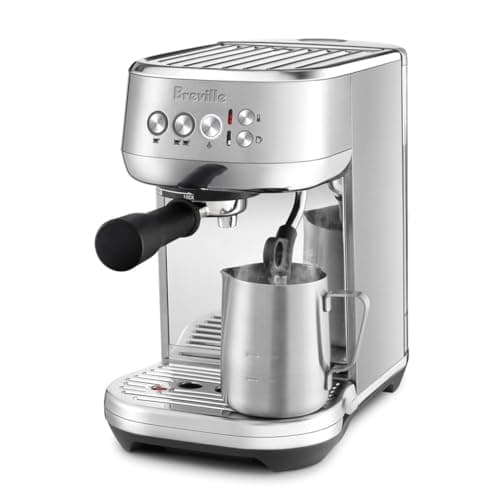
Breville Breville Bambino Plus (BES500)
Breville Bambino Plus (BES500)

The one to buy if you already have a grinder. Tiny, fast to heat, and it auto-steams milk.

People who already own a grinder
8.2
$499.95Amazon
02
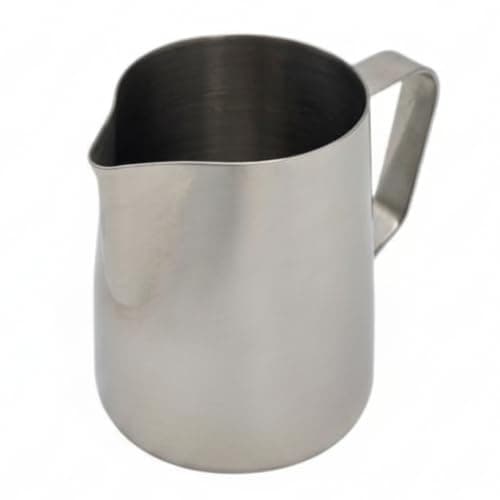
Rattleware Rattleware 12oz Latte Art Pitcher
Rattleware 12oz Latte Art Pitcher

The café-standard steaming pitcher. A sharp spout, the right size, and it costs almost nothing.

Learning latte art at home
9.0
$16.95Amazon
03
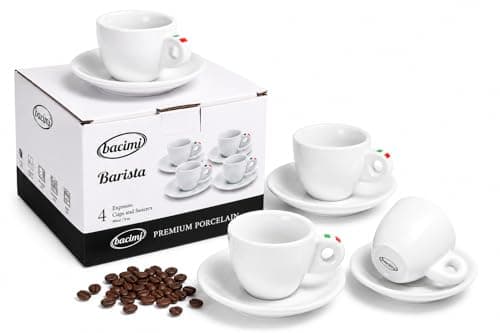
Bacimi Bacimi Espresso Cups & Saucers (Set of 4)
Bacimi Espresso Cups & Saucers (Set of 4)

Thick porcelain espresso cups that keep a shot hot. The detail that makes home espresso feel real.

Serving espresso properly
8.3
$29.95Amazon

#ad · Live prices from the Amazon Product API, as of Sep 16, 2026. Where we have no verified live price, we show none — we would rather leave a gap than print a number that has rotted.

In detail

The picks, in full

01
Breville Breville Bambino Plus (BES500)

People who already own a grinder

Breville Bambino Plus (BES500)

No built-in grinder54mm portafilter3-second heat-upAutomatic milk texturing
8.2/10

The one to buy if you already have a grinder. Tiny, fast to heat, and it auto-steams milk.

Shot quality
8
Steam & milk
8
Ease of use
9
Build quality
7
Value
9

Pros

  • Breville rates it at a 3-second heat-up — you genuinely can go from cold to a shot faster than a kettle boils
  • The automatic milk-texturing wand froths to a set temperature and texture with no technique required, which is the feature beginners actually benefit from
  • A tiny footprint that fits a cramped counter where the Barista Express won't

Cons

  • No grinder, so you must own or buy one — factor that into the real price
  • Small water tank means frequent refills if you make several drinks a day

Don't buy this if…

you don't have a grinder and don't want to buy one. Pre-ground coffee makes bad espresso in any machine, and this one gives you nowhere to grind — get the Barista Express instead.

$499.95View on Amazon

Price as of Sep 16, 2026. Prices change — Amazon's is the one that counts.

#ad · we may earn a commission from this link to Breville Bambino Plus (BES500)

02
Rattleware Rattleware 12oz Latte Art Pitcher

Learning latte art at home

Rattleware 12oz Latte Art Pitcher

12 ozStainless steelSharp pour spoutCafé standard
9.0/10

The café-standard steaming pitcher. A sharp spout, the right size, and it costs almost nothing.

Build quality
8
Does the job
9
Ease of use
9
Value
10

Pros

  • The well-defined spout is what actually lets you pour a pattern — vague-spouted pitchers make latte art impossible
  • 12 oz is the right size for one or two drinks, so milk steams and textures properly
  • It's the pitcher most cafés actually use, at a home-friendly price

Cons

  • Plain stainless with no measurement markings inside
  • Single-wall, so it gets hot to hold while steaming

Don't buy this if…

you only ever drink black espresso. A milk pitcher is dead weight in the cupboard if you never steam milk.

$16.95View on Amazon

Price as of Sep 16, 2026. Prices change — Amazon's is the one that counts.

#ad · we may earn a commission from this link to Rattleware 12oz Latte Art Pitcher

03
Bacimi Bacimi Espresso Cups & Saucers (Set of 4)

Serving espresso properly

Bacimi Espresso Cups & Saucers (Set of 4)

3 ozThick porcelainSet of 4 + saucersDishwasher & microwave safe
8.3/10

Thick porcelain espresso cups that keep a shot hot. The detail that makes home espresso feel real.

Build quality
8
Does the job
8
Ease of use
9
Value
8

Pros

  • Thick porcelain holds heat, so a small shot doesn't go lukewarm before you drink it — a real functional reason, not just looks
  • 3 oz is the correct size for a single or double espresso, unlike oversized mugs that make a shot look sad
  • A set of four with saucers covers guests and looks the part

Cons

  • Porcelain chips if you're careless stacking them
  • Purely a serving vessel — it does nothing for the coffee itself

Don't buy this if…

you drink everything as a big milk latte. Espresso cups are for short drinks — a set of these is wasted if a mug is always your endpoint.

$29.95View on Amazon

Price as of Sep 16, 2026. Prices change — Amazon's is the one that counts.

#ad · we may earn a commission from this link to Bacimi Espresso Cups & Saucers (Set of 4)

Ordering (and making) the right one

Beyond the definitions, a little context helps you pick the right drink and make it well at home. Here is what actually matters.

Decide how much milk you want

The honest deciding factor is milk. If you want a creamy, foamy, milk-forward cup, that is a cappuccino. If you want espresso with barely a mark of milk, that is a macchiato. Almost everything else — the size, the strength, the texture — flows from that one choice, so start there rather than with the name. This is also the most common ordering mistake: people expect a milky macchiato and get a shot with a dab of foam.

Foam skill is what separates them at home

A cappuccino demands good milk foam — a deep, stable, airy cap — so it rewards practice with a steam wand and is where milk-texturing technique matters most. A macchiato needs only a spoonful of foam, so it is far more forgiving and can be made with a simple milk frother. If you are still learning to steam milk, the macchiato is the easier drink to nail. Our how to steam milkguide covers building the cappuccino's foam.

The shot underpins both

Whichever you choose, the espresso is the backbone — more exposed in the macchiato, softened in the cappuccino, but essential to both. A good grinder and espresso machine that pull a sweet, balanced shot lift either drink. Get the shot right first, then decide how much milk to add on top.
How we picked

We do not run a testing lab

We compiled published manufacturer specifications, computed what each option costs to run where relevant, and cross-referenced aggregated owner reviews, then scored each product against a published rubric. The scores are judgments from documented research — they are not measurements we took, because we do not have a lab and we are not going to pretend we do. Where a number came from a manufacturer or a standard, we name it in Sources.

Questions

Frequently asked

What is the difference between a cappuccino and a macchiato?
A cappuccino is a balanced milk drink - roughly equal parts espresso, steamed milk, and airy foam - served in a 5-6 oz cup. A traditional espresso macchiato is mostly espresso with just a dollop of foam, served small at 2-3 oz. The cappuccino is creamy and milk-forward; the macchiato is intense and espresso-forward. See how to make a macchiato for the real version.
Is a macchiato stronger than a cappuccino?
In flavor, yes - a macchiato tastes much stronger because it has almost no milk to dilute the espresso, while a cappuccino is softened by steamed milk and foam. In caffeine, though, they are similar if built on the same number of shots, since caffeine tracks the espresso, not the milk. So a macchiato tastes more intense but is not necessarily higher in caffeine.
Which has more milk, a cappuccino or a macchiato?
A cappuccino, by far. It is roughly one-third steamed milk and one-third foam on top of the espresso. A traditional macchiato has only a small dollop of foam - just enough to 'stain' the shot - and no real milk layer. If you want a milky drink, order a cappuccino; if you want espresso with a whisper of milk, order a macchiato.
What if I want something between the two?
You want a cortado or a flat white. A cortado is equal parts espresso and lightly textured milk - more milk than a macchiato, far less than a cappuccino. A flat white adds a bit more milk in a small cup. Both are coffee-forward middle grounds between the intense macchiato and the creamy cappuccino.

Keep reading

Receipts

Sources

We do not run a testing lab, and we do not pretend to. Where a measured number came from a manufacturer spec sheet or a published standard, we name it and link it. Where we could not verify something, we say so on the page rather than quietly leaving it out. Read our full method.