The last thing that happens to your coffee before water hits it is the tamp — pressing the loose grounds into a firm, level puck. Its job is not really to compress hard; it is to create a uniformbed of consistent density so water under pressure passes through the whole puck evenly instead of punching a channel through a soft spot. The catch is that a tamp done by hand is wildly inconsistent: press a little harder one morning, a little softer the next, tilt the tamper a few degrees, and the puck density changes shot to shot, which is one reason a beginner's espresso tastes different every single day. The Normcore Spring-Loaded Tamper exists to take that variable off the table with a calibrated spring, and it is the tamper we reach for when we want repeatable results without thinking about it — but we will also be honest about where tamping ranks in the list of things that actually change your shot.
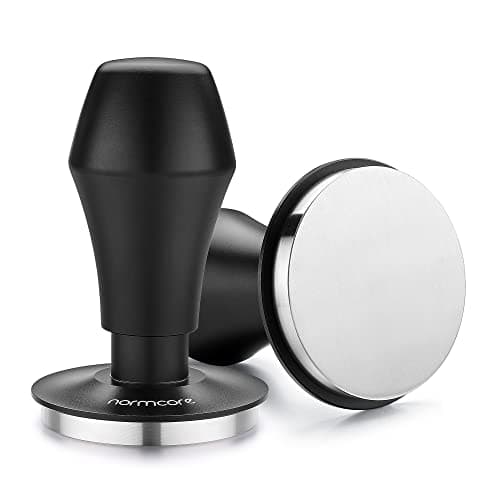
The Normcore 58.5mm Spring-Loaded Tamper works on a simple, effective idea. A calibrated spring inside the handle clicks audibly and gives way once you reach a set pressure, so no matter how hard you lean on it, every tamp lands at the same force. That single feature removes one of the biggest sources of shot-to-shot variation for anyone still learning, because your by-hand pressure no longer wanders. Normcore offers swappable springs — the version we looked at is rated around 15/25/30 lb options — so you can pick your tamp weight and then forget about it. The 58.5mm base is a deliberate half-millimeter over the nominal 58mm, which gives a snugger fit in most 58mm baskets than a loose 58mm tamper and helps keep the puck edges sealed against side-channeling. It is stainless, it includes a stand, and it is nicely built. The honest cons are real but modest: a calibrated tamper is a crutch some baristas outgrow once their by-hand tamp is consistent, and 58.5mm is slightly large for a few baskets, so you do need to check yours before buying.
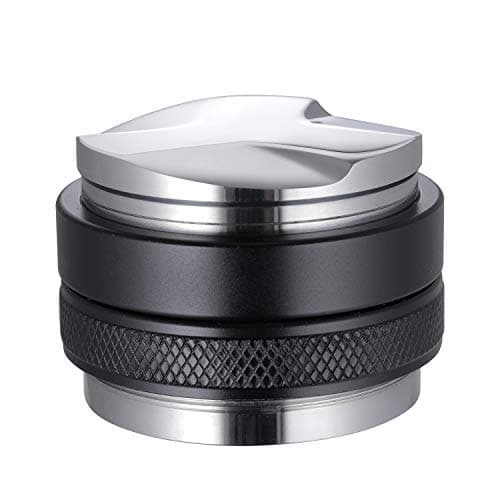
The comparison that saves people money is against a cheap tamper — and the most useful contrast here is the MATOW 51mm Distributor & Tamper, a budget dual-sided tool that levels the grounds on one face and tamps with the other. It is genuinely good value for what it is: one inexpensive tool that does the two prep steps most beginners skip, and it is sized for the 51mm portafilters on many entry-level machines that the common 58mm tools simply do not fit. But it makes the trade-offs of a budget tool plain. There is no calibrated spring, so your tamp pressure is back to whatever your hand does that morning — the very inconsistency the Normcore is built to eliminate. And it is 51mm only, useless on a 54mm Breville or a 58mm machine. That points at the single most important buying rule for any tamper: match the base to your basket. A 58.5mm Normcore is wrong for a 51mm De'Longhi, and a 51mm MATOW is wrong for a 58mm Gaggia — the mis-sized tamper is one of the most commonly returned espresso accessories, so measure your portafilter first and buy the size that fits it.
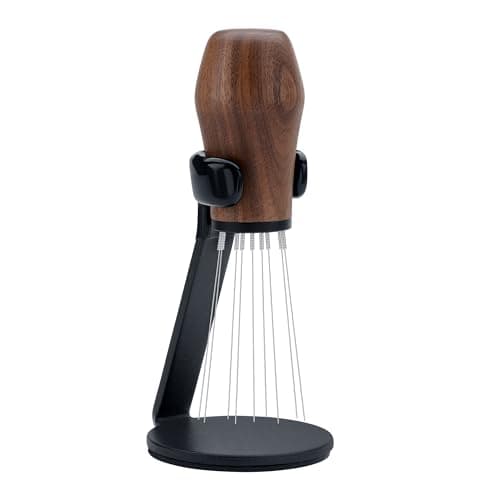
Here is where we have to be honest about priorities, because it will change what you buy. A tamper compresses; it does not de-clump. And for most home setups, uneven grounds — not uneven tamp pressure — are the bigger cause of channeling and sour shots. Freshly ground coffee comes out in clumps riddled with static, and if you tamp straight down onto that clumpy, uneven bed, a calibrated spring just locks the unevenness in place with perfect consistency. That is why the tamper we recommend pairing with the Normcore is a WDT tool like the Normcore WDT Distribution Tool: its fine needles stir the dry grounds before you tamp, breaking up the clumps and dissipating the static so the bed is genuinely uniform. The honest order of impact for most people is distribution first, tamp consistency second — the WDT tool addresses the deeper cause of a bad shot, while the calibrated tamper removes a smaller, real-but-secondary variable on top of it. Buy the Normcore tamper to make your final compression repeatable; buy the WDT tool if you can only afford one and want the bigger improvement. Together they cover the two steps that decide whether your puck extracts evenly.
So who should buy the Normcore tamper? Reach for it if you have a 58mm machine and you want your tamp to stop being a variable — it is the most foolproof way to make every puck the same, and the 58.5mm base seals the basket better than a loose one. Choose the cheap MATOW instead if you own a 51mm machine and want a budget tool that both levels and tamps, accepting that your pressure will not be calibrated. And whatever tamper you pick, spend on a WDT tool first if you have not already, because distribution is where the larger gain lives. To see where tamping sits in a full routine, our espresso tamping guide and how to dial in espresso guide walk through the whole sequence, and our best espresso puck-prep tools roundup compares the wider field.
How to choose an espresso tamper
A tamper is a cheap, once-in-a-lifetime buy, but choosing the wrong one is one of the most common espresso mistakes — usually because people fixate on the tamp and get the size wrong, or spend on calibration before they have fixed the step that matters more. Here is how to buy well, in order.
1. What a tamp actually does — the mechanism
A tamp exists to turn loose grounds into a firm, level, uniform puck so that water under nine bars of pressure meets even resistance across the whole surface. The goal is consistency, not force: what you want is the same density every time, with no soft edges where water can rush through and channel. Once the coffee is compacted enough to be solid, pressing harder does very little — beyond a certain point the puck is about as dense as it is going to get, and extra effort just tires your wrist. Understanding that reframes the whole purchase: you are not buying a tool to press hard, you are buying a tool to press the same way every time, on a bed that is already even. Both of those conditions matter, and the second is easy to forget.
2. Calibrated spring vs flat tamper — consistency
This is the feature the Normcore is built around. A plain flat tamper is a metal disc on a handle; how hard you press is entirely up to your hand, which is fine once your technique is grooved but inconsistent while you are learning. A calibrated spring tamper, like the Normcore, has a spring that clicks and gives way at a set force, so every tamp lands at the same pressure regardless of how hard you lean. For a beginner, that removes a real shot-to-shot variable and shortens the learning curve. The honest counterpoint: it is a crutch some baristas outgrow, because a steady hand can tamp just as consistently for free. If you value repeatable results now and do not want to think about pressure, the calibrated spring earns its small premium; if you already tamp consistently by feel, a good flat tamper does the same job.
3. Size — match the base to your basket
This is where most tampers get returned. The base has to match your portafilter basket, and the common sizes are 58mm (most prosumer machines, Gaggia, Rancilio), 54mm (most Brevilles), and 51mm(many budget De'Longhi and similar machines). A 58.5mm tamper like the Normcore is a deliberate half-millimeter over nominal 58mm for a snugger fit that seals the puck edges — but it is wrong for a 54mm or 51mm basket, and the 51mm MATOW is equally wrong for a 58mm machine. Measure your portafilter, or check your machine's spec, before you buy anything. A slightly loose tamper leaves an unsealed ring of grounds around the edge where water channels; a tamper that is too big will not seat at all. Get the size right and everything else is secondary.
4. Tamp vs distribution — where the bigger win is
Here is the part the marketing skips. A tamper compresses the bed; it cannot break up the clumps and static in the loose grounds, and for most home setups those uneven grounds are the bigger cause of channeling than uneven tamp pressure. That means the order of impact for most people is distribution first, tamp consistency second. A WDT tool stirs the dry grounds with fine needles to break up clumps before you tamp, addressing the deeper cause; the calibrated tamper then removes a smaller, secondary variable on top. If you are building a puck-prep kit and can only buy one tool first, buy the WDT tool for the larger improvement, then add a calibrated tamper to lock in repeatable compression. Spending on a fancy tamper while tamping onto clumpy grounds is polishing the last step while the first one is broken.
5. Build, stand, and who should skip the spend
The smaller details decide whether you enjoy using it daily. A comfortable handle, a flat and well-finished stainless base, and an included standto keep the tamper upright and off the counter all make a tool you reach for rather than one that rolls around collecting grounds. Swappable springs, like the Normcore's, let you tune your tamp weight if you want to experiment. As for who should skip the calibrated tamper: if you already tamp consistently by feel, you do not need one — a plain flat tamper in the right size does the job for less. And if your shots still taste sour or harsh, do not reach for a tamper at all yet; fix distribution with a WDT tool first, because that is far more likely to be your problem. Buy the calibrated tamper to make an already-even bed repeatable, not as a cure for channeling it cannot address.