Some mornings you don't want a nuanced cup — you want a jolt. High-caffeine coffee is a real category built for exactly that: a harder wake-up than a standard bag delivers. But it's also the corner of coffee most wrapped in marketing, where "strongest ever" does a lot of heavy lifting on the label. So this list is honest about two things at once: which bags genuinely bring more caffeine, and where the claims outrun the science. Buy for the kick if the kick is the point — just know what actually drives it.
We ranked these three on real caffeine punch first, because that's the whole reason to be here; then on whether the coffee is actually drinkable rather than merely strong; then on value and sourcing. Caffeine figures come from widely-published ranges rather than invented numbers — the amount in any given cup depends on the beans, the dose, and how you brew it — and prices render live, so the value calls track what a bag costs today. Where a brand's "strongest" claim is more marketing than measurement, we say so.
Start with what really determines caffeine, because it isn't what most people think. Three things move the needle. The biggest is the type of bean: there are two main coffee species, Arabica and Robusta, and Robusta contains roughly twice the caffeine of Arabica. Most high-caffeine coffees lean on Robusta or on Robusta-heavy blends for exactly that reason — our Arabica vs Robusta guide explains the trade-off (Robusta brings the caffeine but a harsher, more bitter flavor). The second is the dose: more coffee per cup means more caffeine, full stop, so a strong-tasting, heavily-dosed brew hits harder regardless of the bag. The third is the brew method, since longer contact between water and grounds extracts more caffeine.
Now the myth worth killing: dark roast is not stronger in caffeine.It's one of the most repeated beliefs in coffee and it's essentially false. Roasting doesn't meaningfully create or destroy caffeine, so a dark roast and a light roast from the same bean have nearly the same amount — the differences that exist are small and come down to how you measure (by scoop, lighter roasts can even edge ahead because the denser beans pack more in per spoon). Dark roast tastes bolder and more intense, which is why people assume it's more caffeinated, but boldness of flavor and milligrams of caffeine are two different things. If a bag is genuinely high-caffeine, it's because of the beans and the dose, not because it's roasted dark.
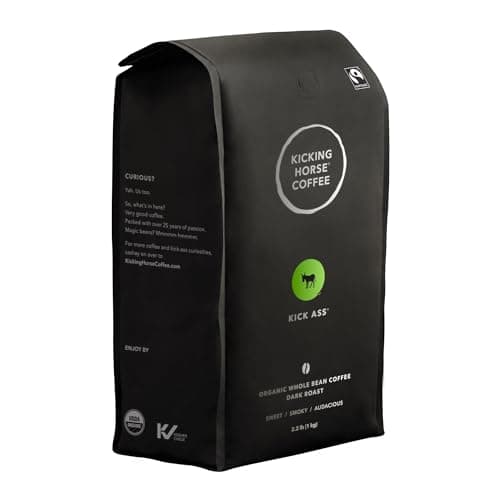
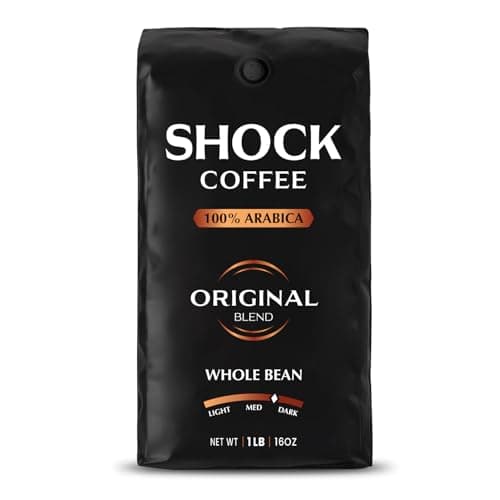
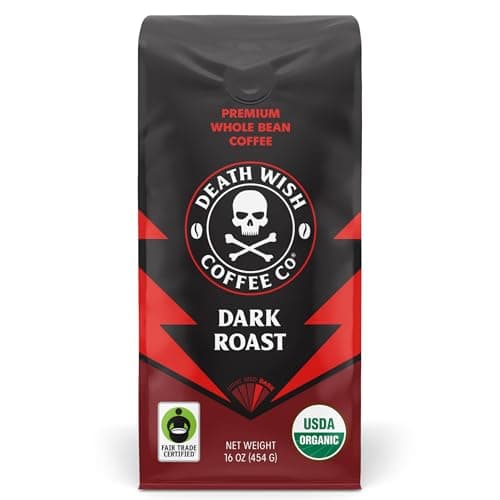
Death Wish Coffeetakes the top spot as the pick that actually delivers on the promise: it blends higher-caffeine beans for a real, measurable kick — not just a scary name — and, to its credit, the bold dark profile tastes decent rather than burnt, which its reputation undersells. It's also organic and Fair Trade, so the strength doesn't come with a sourcing asterisk. Kicking Horse Kick Assis the pick for people who want a strong, bold cup without buying a novelty: it's a punchy, chocolatey organic dark roast that's a genuinely excellent everyday coffee first and a hard-hitting one second. Be clear-eyed, though — its caffeine isn't specially engineered the way Death Wish's is; it's a robust, well-dosed dark roast, so the "kick" is as much its bold flavor and a full scoop as anything exotic. Shock Coffeerounds it out as the pure-kick option, marketed as one of the strongest all-natural coffees: buy it when caffeine is the entire metric and flavor is beside the point — it does the one job, a hard wake-up, and doesn't pretend to be subtle.
Here's the honest part the labels won't volunteer: "strongest coffee in the world" is a marketing-adjacent claim, not a regulated one. There's no official contest and no standardized test behind most of these boasts, and the caffeine in your actual cup depends far more on how much coffee you use and how you brew it than on which bold-named bag you bought. A heavily-dosed pot of an ordinary dark roast can out-caffeinate a stingy cup of a "high-caffeine" brand. That doesn't mean the category is fake — Death Wish and Shock really do blend for more caffeine — it means you should treat the superlatives as flavor of the branding, and judge the cup by the beans and the dose.
Because these bags hit harder, the safety note matters more than usual. The U.S. Food and Drug Administration cites 400 milligrams of caffeine a day— roughly four or five cups of regular coffee — as an amount not generally associated with dangerous effects for healthy adults, and it puts a typical 8-ounce cup of coffee at around 80 to 100 milligrams. High-caffeine coffees can carry meaningfully more than a standard cup, so a couple of mugs can move you toward that daily ceiling faster than you'd expect. The FDA also notes that sensitivity varies from person to person, and that people who are pregnant or have certain conditions should be more conservative. None of that is a reason to avoid a strong cup — it's a reason to count your cups honestly and not stack these on top of energy drinks and pre-workout. Our how much caffeine is in coffee guide has the full breakdown.
The honest limits, pick by pick. Death Wish is built around caffeine, so it's overkill and pricey if you're not chasing that — for flavor per dollar, a standard specialty dark gives you more — and it's dark and intense with no subtlety, so it's not for the caffeine-sensitive. Kick Ass is the odd one out on pure caffeine: it's a superb bold organic dark roast, but its strength is flavor and dose more than an engineered caffeine load, so if you're here strictly for maximum milligrams, Death Wish or Shock are the more literal answer. Shock is the opposite trade — it's all kick and little nuance, bold and blunt rather than refined, so it's a poor buy if you actually want to enjoy the cup rather than survive the morning.
So, which bag? Buy Death Wish if you want the genuine high-caffeine hit in a dark roast that still tastes good; Kicking Horse Kick Ass if you want a bold, strong-drinking everyday coffee that happens to pack a punch, with organic sourcing you can feel good about; and Shock if the caffeine kick is the entire reason you're buying and flavor is negotiable. Whichever you pick, remember the real levers are the beans and the dose — and keep an eye on your daily total, because the whole point of these bags is that they add up faster.
How to choose a high-caffeine coffee
Buying for a kick is easy to get wrong, because the loudest claims aren't the ones that matter. Here is what actually decides how hard your cup hits — and how to do it safely.
Look at the bean type first
The single biggest driver of caffeine is the species of coffee. Robusta carries roughly twice the caffeine of Arabica, so genuine high-caffeine coffees usually lean on Robusta or Robusta-heavy blends. The catch is flavor: Robusta is harsher and more bitter, which is why an all-Arabica specialty bag tastes better but hits softer. Our Arabica vs Robusta guidewalks through the trade-off so you can decide how much flavor you'll trade for milligrams.
Ignore the dark-roast myth
Dark roast is not more caffeinated than light roast — roasting barely changes the caffeine content, so a bold, dark cup tastes stronger without actually carrying more. Buy dark because you like the flavor, not because you think it's a shortcut to a bigger jolt. If a bag is truly high in caffeine, it's the beans and the dose doing it, not the roast color. Our light vs dark roast guide unpacks what roasting actually changes.
Dose is the lever you control
The most reliable way to get more caffeine is simply to use more coffee. A heavier dose per cup raises caffeine no matter which bag you buy, which is also why a strongly-brewed ordinary dark roast can out-punch a weakly-brewed "high-caffeine" brand. Dial your coffee-to-water ratio up if you want more kick — but do it deliberately, and count it toward your daily total.
Treat "strongest" claims as marketing
There's no official test or contest behind most "world's strongest coffee" boasts, and the caffeine in your cup depends more on dose and brew than on the superlative on the bag. Some brands — Death Wish, Shock — really do blend for more caffeine, so the category isn't fake, but the ranking language is branding. Judge by the beans and how much you brew, not by whose label shouts loudest.
Decide how much flavor you'll sacrifice
High caffeine and great flavor pull in opposite directions, because the caffeine often comes from Robusta and from dark, intense roasting. Be honest about which you want. If you'll trade taste for a hard wake-up, a pure-kick bag delivers; if you want a strong cup you'll actually enjoy, a bold, well-made dark roast is the smarter buy. There's no single right answer — just don't expect a novelty caffeine bomb to also be a refined coffee.
Know the safe daily amount
The FDA points to 400 milligrams of caffeine a day — about four or five regular cups — as generally safe for healthy adults, with a typical 8-ounce cup running roughly 80 to 100 milligrams. High-caffeine coffees can carry well more than that per cup, so it's easy to reach the ceiling in fewer mugs. Sensitivity varies, and people who are pregnant or have heart or anxiety conditions should be more cautious. Count your cups, and don't stack these with energy drinks or pre-workout. Our how much caffeine is in coffee guide has the numbers.
Brew method changes the extraction
How you brew shifts how much caffeine ends up in the cup, because longer contact between water and grounds pulls out more. A full immersion or a long drip cycle extracts more than a quick pull, and a bigger mug simply holds more coffee and more caffeine than a small one. If maximum kick is the goal, a generously-dosed, full-contact brew from a high-caffeine bag is the combination that gets you there — no single factor does it alone.