Bones Coffee is the best-known flavored coffee brand in the United States, and the honest verdict is narrower than either its fans or its critics will tell you: it is very good at the thing it does, and the thing it does is flavored coffee. If you want graham cracker, vanilla caramel or churro in your morning cup, Bones does it with more enthusiasm and better base coffee than the supermarket alternatives. If you want to taste what a Colombian washed lot tastes like, nothing in the range is for you, and no amount of good packaging changes that. Start with the five-bag Sample Pack rather than a 12 oz gamble, and if flavored coffee turns out not to be your thing, High Voltage is the unflavored bag that proves the roaster can also just roast coffee.
What is actually in the bag
Bones publishes more about its ingredients than most flavored-coffee brands, which makes a fair review possible. From the company's own FAQ: the ingredients are "100% Arabica Coffee, Natural & Artificial Flavors"; the beans are sourced from farms across Central and South America, Africa and the South Pacific; and "All of our coffees are medium roast (except Sumatra, Army of Dark Chocolate, Dark Roast)". Flavored coffee contains propylene glycol as a binding agent, which is the standard carrier the flavored-coffee industry uses to make flavor oils stick to a roasted bean, and three flavors use ethyl alcohol as a carrier instead.
Two things in that list matter more than they look. First, medium roast across almost the whole range is the right call: a dark roast would bury the added flavor under roast character, and a light roast would clash with it. Second, Bones states it uses no sugar or sweeteners in its ground or whole-bean coffee, and that a brewed 8 oz cup is approximately 2 calories, 0 g carbs and 0 g sugar. That is the single most useful fact about the brand, and it is why Bones is a genuinely sensible replacement for a flavored creamer rather than another one: the sweetness is aroma and suggestion, not sugar.
Why the cup never quite matches the bag
This is the complaint that comes up in every discussion of Bones, and it is not a defect. Cut open a bag of S'morey Time and the aroma is extraordinary — toasted marshmallow, graham cracker, genuinely dessert-like. The brewed cup is noticeably more restrained. The reason is that flavor oils are volatile aromatics sitting on the outside of the bean: you perceive most of them through your nose from the dry grounds, and hot water drives off a lot of what is left. Add that there is no sugar in the coffee, and your brain — primed by a smell it associates with something sweet — registers the unsweetened cup as a letdown.
Knowing that, you can work with it. Brew flavored coffee a little stronger than you normally would, keep the bag sealed between uses, and grind immediately before brewing. A splash of milk helps a great deal more than it does with unflavored coffee, because dairy carries the fat-soluble aromatics that water alone leaves behind. People who say Bones tastes like nothing are often drinking it black at a weak ratio, which is the worst case for the format. Our coffee-to-water ratio page has the numbers to brew up from.
The grinder problem, which Bones admits itself
This is the part of the review that matters most on a site about burr grinders, and it is the part most reviews skip. Bones' own FAQ advises against running flavored beans through a burr grinder or a grinder built into a coffee maker, on the grounds that they are harder to clean. That is honest of them and you should take it seriously.
The mechanism is simple: the flavoring is an oil coating. Oils transfer to burrs, to the chute and to the grounds bin, where they go rancid and then flavor everything you grind afterwards. Grind a bag of Maple-anything through your grinder and your next pour-over will taste faintly of it for days. A burr grinder is harder to purge than a blade grinder because there is more surface area and more places for oil to sit.
There are three workable answers, in order of sense. Buy it pre-ground— Bones sells almost everything ground, set to a medium grind (the Espresso is ground fine), and since flavored coffee is not where grind precision earns its keep, this costs you very little. Keep a second, cheap grinder for flavored beans only; a $25 blade grinder is perfect for this one job. Or buy the pods— Bones Cups keep flavor oils away from your equipment entirely. What you should not do is run flavored beans through the grinder you use for espresso and then wonder why your shots taste odd. If you do it anyway, our how to clean a coffee grinder guide is the cleanup, and best flavored coffee compares Bones against the rest of the category.
Which bags are worth buying
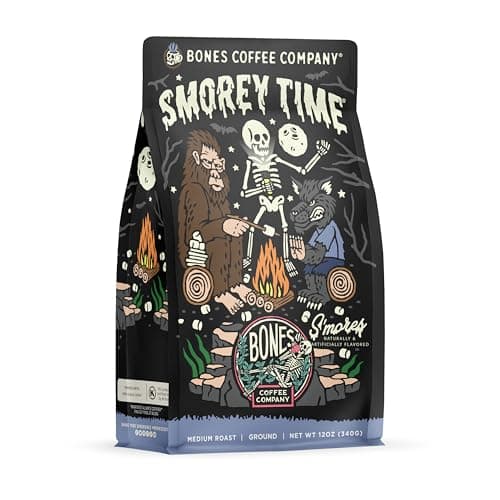
S'morey Timeis where to start if dessert flavors appeal. The graham-cracker-and-marshmallow profile is the most balanced of the sweet flavors — present without tasting synthetic — and it is listed in both ground and whole bean.
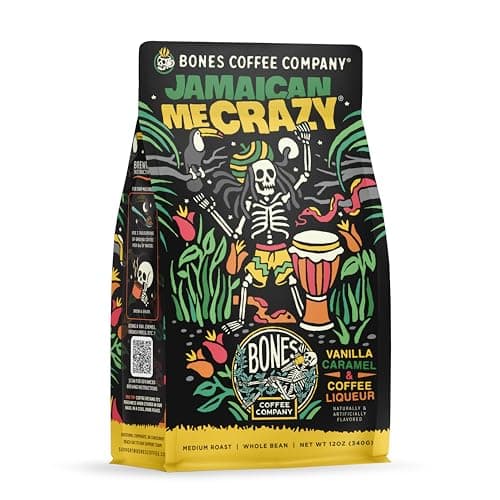
Jamaican Me Crazy is the one to hand someone who claims to dislike flavored coffee. Vanilla and caramel are the two flavors that survive hot water best, which makes it the most reliable bag in the range and the most direct substitute for a flavored creamer habit.
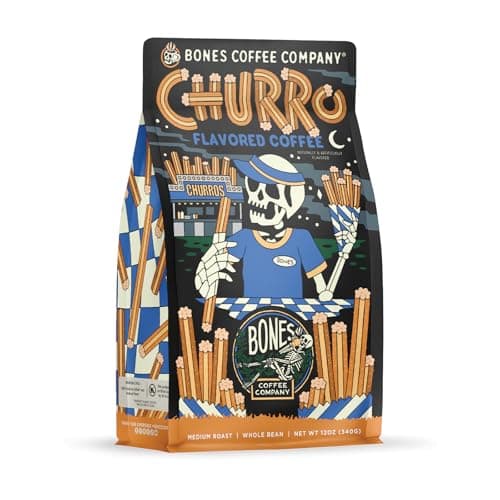
Churro is the sweet-cinnamon entry and the one we already carry in the registry: bold, aromatic, and squarely aimed at people who want cinnamon rather than a hint of it.
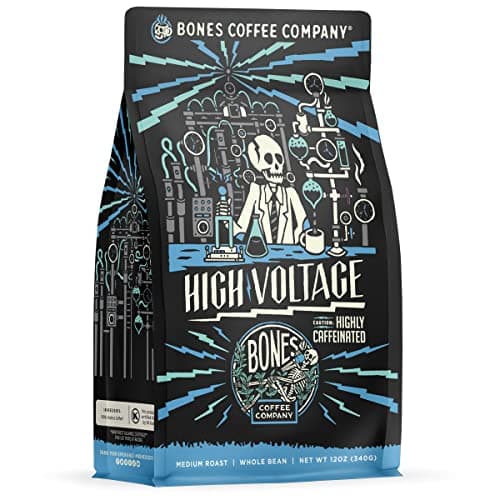
High Voltage is the unflavored bag, listed as low-acid Arabica and marketed as highly caffeinated. It is the only Bones bag we would put through a normal burr grinder without hesitation. One caution, stated plainly: Bones markets it as roughly double the caffeine of average coffee but does not publish a milligram figure, so treat that as a marketing claim rather than a measured dose. If caffeine content with published numbers is what you are after, Death Wish documents more, and best high-caffeine coffee compares the field.
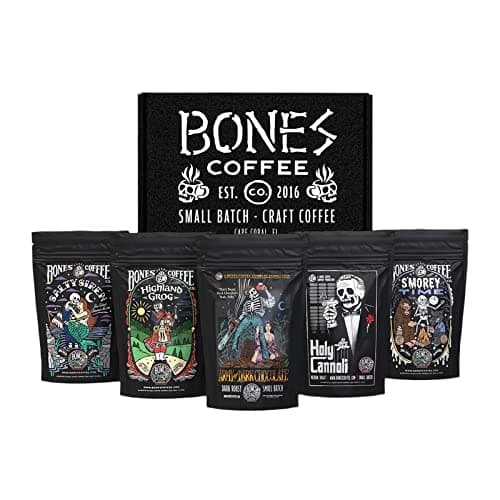
The Favorite Flavors Sample Packis the correct first purchase for almost everyone: five 4 oz bags, ground, for roughly the price of two full bags you might not finish. Flavored coffee is more personal than any other kind of coffee — what reads as cozy to one person reads as artificial to another — and a sampler is how you find out cheaply. It is also the obvious gift in the range; see coffee gifts under $50.
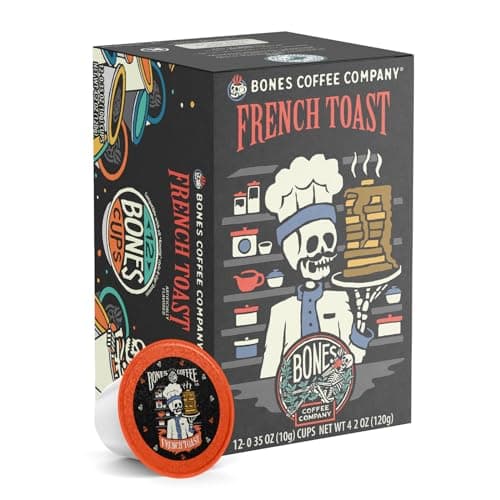
Bones Cups are the Keurig pods. They cost the most per cup of anything Bones sells and they lose the aroma that is the best part of the format, but they solve the grinder problem completely and they are far more interesting than the flavored pods supermarket brands sell. If you own a pod machine, they are a reasonable way in; our best coffee pods roundup puts them in context against the mainstream boxes.
Who should buy Bones, and who should not
Buy it if you like flavored coffee and are tired of supermarket versions that taste of sweetener; if you are trying to get off flavored creamers without giving up the taste; if you drink auto-drip or French press, which is where flavored coffee belongs; or if you are buying a gift for a coffee drinker whose taste you do not know precisely, in which case the sampler is almost unlosable.
Skip it if you want origin character — a single origin from our single-origin roundup is the opposite purchase and the better one for that; if espresso is your main brew method, because a flavored medium roast and oily beans are wrong for it twice over; or if your only grinder is the burr grinder you use for everything else and you are not willing to buy a second one or switch to pre-ground.
Is it good value?
Bones sits above supermarket flavored coffee and below third-wave single origin, which is roughly where it should sit. You are paying for 100% Arabica rather than filler, for flavors applied with real enthusiasm, and for packaging and branding that are a genuine part of the product. Against an unflavored specialty bag at the same price you are getting less coffee quality and more flavor, which is the trade the whole category runs on. Check the live price on this page before buying, because Bones discounts hard around holidays and the per-ounce maths on the sampler versus the 12 oz bags changes with it. For what the same money buys unflavored, see best coffee brands.
How flavored coffee is actually made
Flavor is added afterroasting, not before and not during. Roasted beans are tumbled with flavor oils while still warm, so the oils soak into the surface and coat the outside. A carrier is needed to make that happen evenly, and the industry standard is propylene glycol — which Bones names on its own FAQ as the binding agent in its flavored coffee. It is the same food-grade carrier used in flavor extracts generally. Knowing the mechanism explains every property of flavored coffee: why the aroma is strongest from dry grounds, why the beans look and feel oilier than unflavored ones, why they are hard on grinders, and why the flavoring fades faster than the coffee goes stale.
Brew methods that suit flavored coffee
Auto-dripis the natural home, and Bones lists its bags as compatible with it. A paper filter does absorb some of the oils, which slightly mutes the flavor and gives a cleaner cup — a fair trade. French press is the other method Bones names, and it is arguably better here: no paper means the oils stay in the cup, so the flavoring comes through at full strength. See how to use a French press.
Pour-over works but is the wrong tool: you are using a method designed to reveal subtle origin character on a coffee whose point is added flavor. Espresso is the one to avoid. Oily beans can clog a grinder and a portafilter basket, and a flavored medium roast lacks the solubility and body a short pressurized extraction needs. Cold brewis an underrated option — a long, cool extraction is gentle on the flavoring and the result tastes closer to the bag than anything hot does. Our cold brew guide has the ratio.
Storing flavored coffee
Flavored coffee has two clocks running: the coffee staling and the flavoring evaporating, and the second is faster. Keep it in an airtight container away from light and heat, buy sizes you will finish in a few weeks rather than bulk, and do not store it next to unflavored beans unless you want both to smell the same. Do not freeze it; the oil coating and condensation are a bad combination. Our how to store coffee beans page covers the general rules and storage containerscovers what to keep it in — and note that a canister that has held flavored coffee will pass that scent on, so dedicate one.
Flavored coffee and your equipment, in order of risk
Highest risk is a grinder built into a coffee maker, because you usually cannot get at the burrs properly to clean them — this is the one Bones specifically warns about and the one we would simply not do. Next is a dedicated burr grinder, which is cleanable but tedious; if it is your espresso grinder, do not. Lower risk is a blade grinder, which wipes out in seconds and is why a cheap second grinder is the standard solution. No risk at all is pre-ground or pods. A French press or drip basket needs no special treatment beyond normal washing, and a reusable metal filter will hold onto the scent, so wash it promptly.
If you want the flavor without the flavored beans
Two alternatives worth knowing. The first is to buy a good unflavored coffee and add real flavor at the cup — a vanilla syrup, a cinnamon stick in the French press, cocoa in the grounds. You keep control, you keep your grinder clean, and you can turn it off for one cup. The second is to look for coffees whose natural flavor runs in the direction you want: a natural-process Ethiopian for berry, a Sumatran for earthy chocolate, a Brazilian for nuts and caramel. That is a different and more expensive hobby, and it is what single-origin coffeeis for. Both are better long-term answers than flavored beans for anyone who owns a nice grinder — and neither is a reason to avoid a Bones sampler if dessert coffee simply sounds good to you.