Skip to content
Bean & Burr

HUB 02 · Coffee Makers

The Best Coffee Percolators

Percolators make strong, hot, old-fashioned coffee — and they are the one brewer that will happily boil your coffee if you let it. Here are the seven worth buying, and the rules that keep the cup drinkable.

By Stephen V.Updated How we research
#ad

We earn a commission when you buy through our Amazon links, at no extra cost to you. It never affects our rankings, and we say so when the cheaper product is the better buy. How this works.

A percolator is the only common brewer that puts the coffee back through the coffee. Water boils in the base, climbs a tube, rains over the grounds, drains through them, and then gets boiled and sent up again — over and over, until you stop it. Nothing else in your kitchen recirculates. That one mechanical fact explains everything people love about percolated coffee and everything they complain about, and it is the right place to start if you are deciding whether to buy one.

Here is the honest version, which most percolator roundups skip: by the standards the specialty-coffee world uses, a percolator brews wrong. The National Coffee Association puts the extraction window at 195-205°F, comfortably below boiling, and a percolator works by boiling. It also re-extracts grounds that have already given up what they had, which is the textbook recipe for the harsh, drying end of the flavor spectrum. If you want a clean, sweet, articulate cup, the honest answer is that you want a different machine — our best drip coffee makers roundup ranks brewers specifically on whether they hit that window.

And yet percolators sell, year after year, to people who are not confused. They make coffee that is hot— genuinely, stays-hot-for-an-hour hot, in a way a glass carafe on a warming plate does not. They make a lot of it. They have no paper filter, no pods, no electronics in the cheap ones, and nothing that cannot be scrubbed in a sink. They work on a campfire. And the flavor they produce — heavy, roasty, unambiguous — is the flavor a lot of people mean when they say "coffee." Buying one because you like that is a legitimate decision. Buying one expecting a pour-over is not.

So this page ranks percolators on the things that are actually variable between them, because the brewing method is a constant: how much control you have over the perk, whether the parts in the water path are stainless or plastic, whether the pot stops itself, what heat sources it works on, how big a batch it makes, and how long the maker will stand behind it. Every pot below was checked against Amazon's live catalog on October 3, 2026and was in stock on that date. One well-known camp percolator — Stanley's Hold Tight — came back unavailable and is therefore not ranked. We have not run these pots side by side in a lab, because we do not have one; how we research spells out exactly what we do instead.

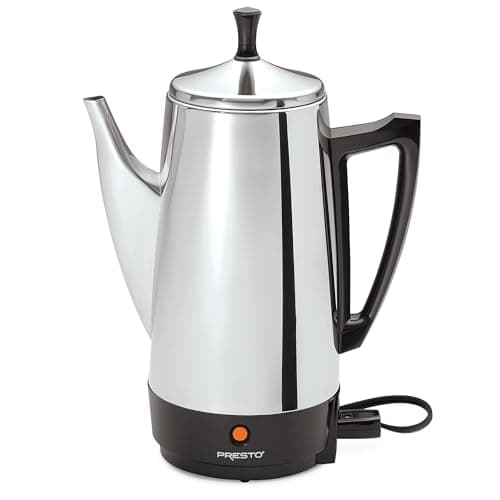
The Presto 02811is the pick for most people, and the reason is a published spec almost nobody else states: it brews from 2 to 12 cups at about a cup a minute. Both halves matter. The cup-a-minute rate means a full pot is done in roughly twelve minutes rather than simmering indefinitely, and the 2-cup floor means a small batch still brews properly — underfilling a percolator is the most common way people end up with thin, strange coffee and blame the pot. Presto lists the filter basket and perk tube as stainless, which is where a cheap percolator fails first, and the signal light hands the pot over to keeping the coffee hot without you deciding anything. The honest cons: the warranty is one year where Cuisinart gives three, and there is no brew-strength control of any kind. Your only lever is the dose.

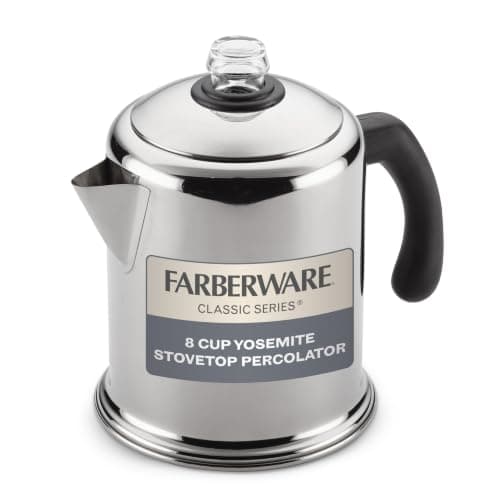
The Farberware Classic Yosemite 8-cupis the pick if you would rather own the brewing than automate it, and it is the cheapest genuinely good pot here. It is a bare stovetop percolator: 18/10 stainless, a permanent basket, a glass knob on the lid, no cord, no thermostat, no electronics. There is nothing in it to break, it is fully immersible and dishwasher safe, and because you control the burner you control the perk — which is more control than any automatic percolator gives you. The trade is attention. Leave it on a hot burner and it will boil the coffee and keep boiling it, and that is the fastest route to the burnt-percolator cliche. Farberware lists it for gas and electric stoves and does not sell it as induction compatible, so check your cooktop.

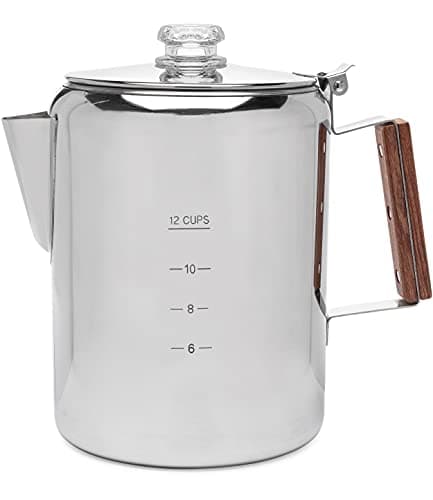
The COLETTI Bozemanis the camp pot, and it earns the slot on construction rather than romance. COLETTI builds it from 18/8 stainless with no aluminum and no plastic anywhere in it, which is the specification that matters once a pot is sitting in a fire rather than on a stove — there is nothing to melt, warp or leach. At 12 cups it holds about 60 oz, enough to actually feed a campsite, and the glass view top lets you judge the perk by eye. COLETTI publishes a one-year warranty on steel-part failure for pots bought new from them or their official Amazon storefront, which is unusual in camp cookware. Two honest cons: COLETTI lists it for campfires, gas, electric coil and glass-ceramic but not induction, so it may be camp-only for your kitchen, and it is heavy and slow to heat on a small camp stove. If camping is the whole reason you are here, our travel and camping coffee makers roundup covers the non-percolator options too.

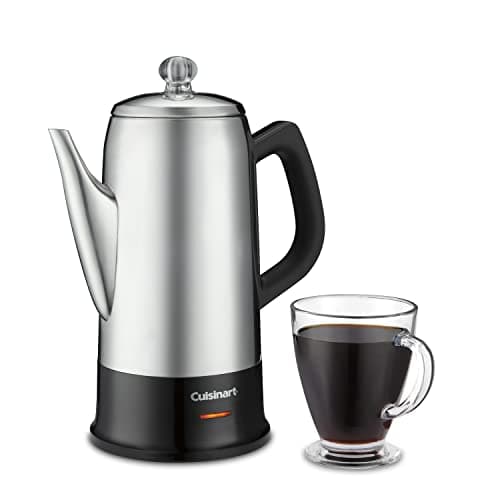
The Cuisinart PRC-12Nis the pot for the specific job of serving coffee away from an outlet. The cord detaches and the base is built to sit on a table without scarring it, so the pot carries to a potluck, an office or a dining table and keeps serving; it brews 4 to 12 cups, shows progress through a transparent knob, and Cuisinart backs it with a limited three-year warranty — triple the Presto's cover, and the clearest signal on this page about expected service life. The cons are blunt: it is the most expensive pot here and the coffee is not better than the Presto's, so you are paying for portability, finish and warranty. And a 4-cup minimum makes it a poor one-mug machine.

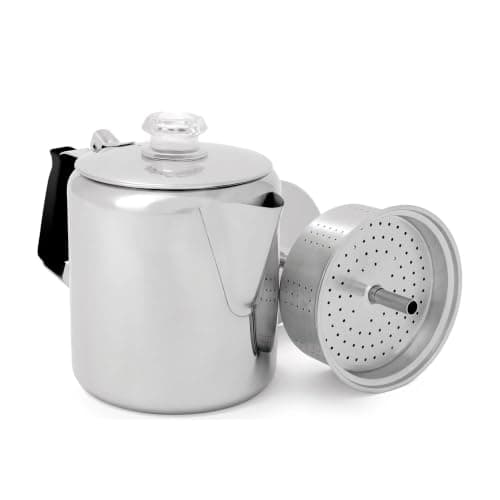
The GSI Outdoors Glacier Stainless 6-cup is the percolator you can actually carry. GSI lists it at 1 lb 4 oz and 0.9 liters, built from corrosion-resistant marine-grade stainless with a hinged lid that cannot get lost at a campsite and a silicone handle that stays cool over a stove. Those are small details that separate kit from gear. The limits are honest: six 5 oz cups is about 30 oz, which is a two-person pot, and it has no automation at all, so over a hot flame it will boil your coffee the moment you look away.

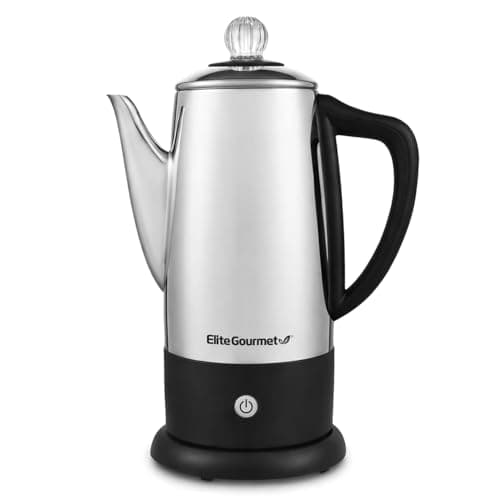
The Elite Gourmet 12-cup electricis the budget way in. It still has the two features that make an electric percolator worth owning — it switches to keep-warm on its own, and a clear knob shows the brew progressing — plus a permanent filter basket. It is a sensible holiday pot, garage pot or church-hall pot. It is not the one to cycle twice a day for five years: the build is a step down from the Presto and the Cuisinart, and on an appliance whose job is boiling water that is exactly where it shows.

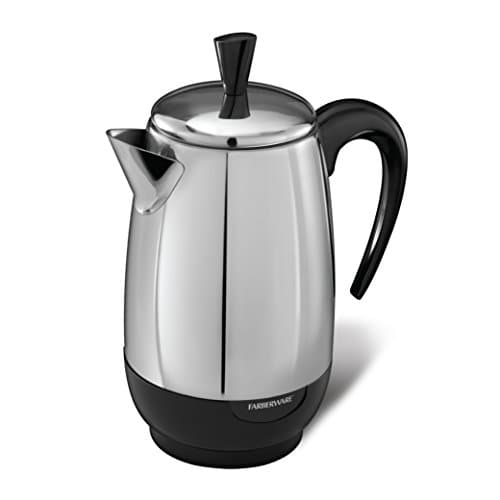
The Farberware 8-cup electric closes the list by solving a real problem: most electric percolators are 12-cup pots, and a 12-cup pot brewing two cups is how one-person households end up with disappointing coffee. Eight 5 oz cups is about 40 oz, the basket is stainless rather than plastic, and the keep-warm is automatic. It simply cannot scale up, and percolators are slow, so if you ever host you are brewing twice.

What we deliberately did not rank.Two things. First, the very cheap aluminum stovetop percolators — they cost a fraction of the stainless pots and they work, but aluminum in the water path is the thing buyers in this category most often say they are trying to avoid, and the thin ones dent and discolor fast. Second, the 40- to 100-cup percolator urns. They are excellent at their job, that job is catering rather than a kitchen, and ranking them next to a 12-cup pot would mislead everyone. If you want a broader map of methods before you commit, our guide to coffee brewing methods puts percolation next to drip, press and pour-over on the same page.

The short answer

Quick picks

#ProductBest forScorePrice
01
Presto Presto 02811 Stainless Steel 12-Cup Percolator
Presto 02811 Stainless Steel 12-Cup Percolator

The electric percolator to buy if you want one pot, one switch, and coffee that tastes the same every morning.

The best all-round electric percolator
7.2
$75.26Amazon
02
Farberware Farberware Classic Yosemite 8-Cup Stovetop Percolator
Farberware Classic Yosemite 8-Cup Stovetop Percolator

The cheapest honest percolator on the list, and the one with nothing in it that can break.

The best stovetop percolator, and the best value
7.6
$33.99Amazon
03
COLETTI COLETTI Bozeman Percolator (12 Cup)
COLETTI Bozeman Percolator (12 Cup)

The camp percolator built heavy enough to sit in a fire — and the one with no aluminum or plastic in the water path.

Campfires, cabins and car camping
7.4
$43.38Amazon
04
Cuisinart Cuisinart Classic 12-Cup Percolator (PRC-12N)
Cuisinart Classic 12-Cup Percolator (PRC-12N)

The one to buy if the pot has to leave the kitchen — detachable cord, cool base, three-year warranty.

Serving a crowd away from an outlet
7.0
$90.75Amazon
05
GSI Outdoors GSI Outdoors Glacier Stainless 6-Cup Percolator
GSI Outdoors Glacier Stainless 6-Cup Percolator

The percolator that goes in a pack — marine-grade stainless, a silicone handle, and a lid that cannot get lost.

Backpacking and small camp kitchens
7.0
$44.95Amazon
06
Elite Gourmet Elite Gourmet 12-Cup Electric Coffee Percolator
Elite Gourmet 12-Cup Electric Coffee Percolator

The budget electric percolator — it does the same job as the Presto with a shorter expected life.

The cheapest way into an electric percolator
6.6
$48.49Amazon
07
Farberware Farberware 8-Cup Stainless Steel Electric Percolator
Farberware 8-Cup Stainless Steel Electric Percolator

A small electric percolator for one or two people — the 8-cup answer when a 12-cup pot is too much.

One or two people, brewing daily
6.6
$59.49Amazon

#ad · Live prices from the Amazon Product API, as of October 7, 2026. Where we have no verified live price, we show none — we would rather leave a gap than print a number that has rotted.

In detail

The picks, in full

01
Presto Presto 02811 Stainless Steel 12-Cup Percolator

The best all-round electric percolator

Presto 02811 Stainless Steel 12-Cup Percolator

Brews 2-12 cupsAbout a cup a minute800 wattsStainless basket and perk tube
7.2/10

The electric percolator to buy if you want one pot, one switch, and coffee that tastes the same every morning.

Brew quality
7
Ease of use
9
Build quality
7
Versatility
6
Value
7

Pros

  • Presto publishes the two numbers that matter on a percolator — a 2 to 12 cup range and roughly a cup a minute — so a full pot is done in about twelve minutes and a half pot still brews correctly rather than running weak
  • The filter basket and perk tube are stainless, not plastic, which is the part of a percolator that lives in near-boiling water and the part that fails first on cheap pots
  • It switches itself to keeping the coffee hot when the signal light comes on, so there is no timer to set and nothing to judge — the single biggest reason an electric beats a stovetop for daily use

Cons

  • It is a percolator, so it recirculates very hot water through the grounds repeatedly — expect a heavier, more bitter cup than a drip machine brewing in the 195-205°F window
  • One year of warranty is thin next to Cuisinart's three on a comparable pot, and there is no brew-strength control at all: the only lever you have is how much coffee you put in the basket

Don't buy this if…

…you actually want clean, bright coffee rather than strong diner coffee. A percolator cannot produce it by design — the OXO Brew 9-Cup or a Technivorm Moccamaster is the machine for that cup.

$75.26View on Amazon

Price as of October 7, 2026. Prices change — Amazon's is the one that counts.

#ad · we may earn a commission from this link to Presto 02811 Stainless Steel 12-Cup Percolator

02
Farberware Farberware Classic Yosemite 8-Cup Stovetop Percolator

The best stovetop percolator, and the best value

Farberware Classic Yosemite 8-Cup Stovetop Percolator

8-cup stovetop18/10 stainless steelPermanent filter basketGas or electric stove
7.6/10

The cheapest honest percolator on the list, and the one with nothing in it that can break.

Brew quality
7
Ease of use
6
Build quality
9
Versatility
7
Value
9

Pros

  • There is no heating element, no thermostat and no cord, so there is nothing in it that can fail — a stovetop percolator is the closest thing in coffee to a buy-it-once purchase
  • Farberware lists it as 18/10 stainless with a fully immersible, dishwasher-safe body, basket, lid and knob, which makes cleanup genuinely trivial compared with any electric pot
  • The glass knob on top lets you watch the perk and pull it off the heat when you want, so you have more control over strength here than on any automatic percolator

Cons

  • You have to stand there. Left on a hot burner it will boil the coffee and keep boiling it, which is the fastest way to make a percolator taste like an ashtray
  • Farberware lists it for gas and electric stoves — it is not sold as induction compatible, so check your cooktop before buying

Don't buy this if…

…you want to fill a pot, press a switch and walk away. That is an electric percolator's whole job, and the Presto 02811 does it for roughly twice the money.

$33.99View on Amazon

Price as of October 7, 2026. Prices change — Amazon's is the one that counts.

#ad · we may earn a commission from this link to Farberware Classic Yosemite 8-Cup Stovetop Percolator

03
COLETTI COLETTI Bozeman Percolator (12 Cup)

Campfires, cabins and car camping

COLETTI Bozeman Percolator (12 Cup)

12 cup / 60 oz18/8 stainless steelGlass view topCampfire safe
7.4/10

The camp percolator built heavy enough to sit in a fire — and the one with no aluminum or plastic in the water path.

Brew quality
7
Ease of use
6
Build quality
9
Versatility
8
Value
7

Pros

  • COLETTI builds it from 18/8 stainless with no aluminum and no plastic anywhere in it, which matters more over a campfire than on a stove — there is nothing in the pot that can melt or warp
  • At 12 cups it holds about 60 oz, which is the size that actually feeds a tent full of people, and the glass view top means you can judge the perk by eye without a thermometer or a timer
  • COLETTI publishes a one-year warranty against steel-part failure on pots bought new from them or their official Amazon storefront, which is unusual in camp cookware

Cons

  • COLETTI lists it for campfires, gas, electric coil and glass-ceramic cooktops but NOT induction — if your home stove is induction this pot is camp-only
  • It is heavy and bulky by backpacking standards, and the full 60 oz takes a while to come up to temperature on a modest camp stove

Don't buy this if…

…you are carrying it on your back. Twelve cups of stainless is car-camping gear — the GSI Outdoors Glacier 6-cup is the one that goes in a pack.

$43.38View on Amazon

Price as of October 7, 2026. Prices change — Amazon's is the one that counts.

#ad · we may earn a commission from this link to COLETTI Bozeman Percolator (12 Cup)

04
Cuisinart Cuisinart Classic 12-Cup Percolator (PRC-12N)

Serving a crowd away from an outlet

Cuisinart Classic 12-Cup Percolator (PRC-12N)

Brews 4-12 cupsDetachable cordStay-cool bottom3-year limited warranty
7.0/10

The one to buy if the pot has to leave the kitchen — detachable cord, cool base, three-year warranty.

Brew quality
7
Ease of use
8
Build quality
8
Versatility
6
Value
6

Pros

  • The cord detaches and the bottom is built to sit on any surface without scarring it, so the pot carries to a table, a potluck or an office and keeps serving — that is the specific job this percolator is better at than anything else here
  • Cuisinart backs it with a limited three-year warranty, three times the cover on the Presto, which is the clearest signal on this page about expected service life
  • A transparent knob and a ready light mean you can see the brew progress and know when it is done without lifting the lid

Cons

  • It is the most expensive percolator on this page, and the cup it makes is not meaningfully better than the Presto's — you are paying for the warranty, the finish and the portability
  • Four cups is the published minimum, so it is poorly suited to one person brewing a single mug

Don't buy this if…

…the pot never leaves the counter. Nothing you are paying extra for here helps on a kitchen counter next to an outlet, and the Presto 02811 brews the same style of coffee for less.

$90.75View on Amazon

$99.959% off

Price as of October 7, 2026. Prices change — Amazon's is the one that counts.

#ad · we may earn a commission from this link to Cuisinart Classic 12-Cup Percolator (PRC-12N)

05
GSI Outdoors GSI Outdoors Glacier Stainless 6-Cup Percolator

Backpacking and small camp kitchens

GSI Outdoors Glacier Stainless 6-Cup Percolator

0.9 L / 6 cup1 lb 4 ozGlacier Stainless steelHinged lid, silicone handle
7.0/10

The percolator that goes in a pack — marine-grade stainless, a silicone handle, and a lid that cannot get lost.

Brew quality
6
Ease of use
6
Build quality
9
Versatility
7
Value
7

Pros

  • GSI lists it at 1 lb 4 oz and 0.9 liters, which is the smallest, lightest genuinely durable percolator here — a stainless pot you can carry rather than a stainless pot you can lift
  • Corrosion-resistant marine-grade stainless componentry and welds, which is the specification that matters once a pot is living in a wet pack rather than a dry cupboard
  • The hinged lid cannot be misplaced at a campsite and the silicone handle stays cool over a camp stove — two small details that are the difference between gear and kit

Cons

  • Six 5 oz cups is about 30 oz, so it is a two-person pot at most and the wrong tool for a group
  • It is a bare stovetop percolator with no automation whatsoever, which means over a hot flame it will boil the coffee the moment you stop paying attention

Don't buy this if…

…you are feeding a campsite. This is a pack-weight pot — the COLETTI Bozeman holds twice as much and is built for a fire.

$44.95View on Amazon

Price as of October 7, 2026. Prices change — Amazon's is the one that counts.

#ad · we may earn a commission from this link to GSI Outdoors Glacier Stainless 6-Cup Percolator

06
Elite Gourmet Elite Gourmet 12-Cup Electric Coffee Percolator

The cheapest way into an electric percolator

Elite Gourmet 12-Cup Electric Coffee Percolator

12-cup electricKeep-warm modeClear brew-progress knobStainless exterior
6.6/10

The budget electric percolator — it does the same job as the Presto with a shorter expected life.

Brew quality
6
Ease of use
8
Build quality
5
Versatility
6
Value
8

Pros

  • It is the least expensive electric percolator here and it still has the two features that make an electric worth owning: it switches to keep-warm on its own, and a clear knob shows the brew progressing
  • A permanent filter basket, so there is no ongoing cost and nothing to run out of
  • A reasonable choice for occasional use — a holiday pot, a garage, a church hall — where it will not be cycled daily for years

Cons

  • The build is a step down from the Presto and the Cuisinart, and on an appliance that boils water twice a day that is exactly where it shows up first
  • Like every percolator, there is no brew-strength control and no temperature control; unlike the better pots here it also has no long warranty to plan around

Don't buy this if…

…this is your daily coffee maker. Spend the difference on the Presto 02811 — it is the same category of coffee from a pot built to be used every day.

$48.49View on Amazon

Price as of October 7, 2026. Prices change — Amazon's is the one that counts.

#ad · we may earn a commission from this link to Elite Gourmet 12-Cup Electric Coffee Percolator

07
Farberware Farberware 8-Cup Stainless Steel Electric Percolator

One or two people, brewing daily

Farberware 8-Cup Stainless Steel Electric Percolator

8-cup electricStainless steel basketAutomatic keep-warmNo-drip spout
6.6/10

A small electric percolator for one or two people — the 8-cup answer when a 12-cup pot is too much.

Brew quality
6
Ease of use
8
Build quality
6
Versatility
5
Value
8

Pros

  • Eight 5 oz cups is about 40 oz, which is the right size for a household of one or two — brewing a small batch in a 12-cup pot is the most common way people end up with weak percolator coffee
  • The basket is stainless rather than plastic, and the keep-warm is automatic, so it needs no more attention than the bigger electrics
  • A no-drip spout and a stay-cool handle, which on a pot you pour from while it is still hot is a genuine daily-use improvement

Cons

  • It cannot scale up — if you ever host, an 8-cup pot is two rounds of brewing, and percolators are slow
  • Farberware's current electric percolators are a budget line rather than the heirloom pots the name is remembered for; the finish and feel are not in the Cuisinart's class

Don't buy this if…

…there is any chance you will need a full pot. The Presto 02811 brews from 2 to 12 cups, so it covers both this pot's job and the one it cannot do.

$59.49View on Amazon

$69.9915% off

Price as of October 7, 2026. Prices change — Amazon's is the one that counts.

#ad · we may earn a commission from this link to Farberware 8-Cup Stainless Steel Electric Percolator

How to choose a percolator — and how to make it taste good

The first four items decide which pot you buy. The last four decide whether you enjoy the coffee, and they matter more than the purchase does.

1. Electric or stovetop: automation versus control

This is the real fork in the road. An electric percolator perks itself, decides when to stop, and then keeps the pot hot — you fill it, flip it on, and walk away. A stovetop percolator does none of that and therefore gives you every bit of the control: you set the heat, you watch the perk, you take it off when you want. Electrics suit daily kitchen use. Stovetops suit people who want fewer parts, a pot that will outlive the kitchen, or a brewer that works on a camp stove and a gas ring equally. Neither is better coffee by default; the stovetop has a higher ceiling and a much lower floor.

2. Count cups honestly, in 5 oz cups

A percolator "cup" is the industry 5 oz cup, not a 12 oz travel mug. A 12-cup pot is about 60 oz, which is roughly five large mugs. This is the single most common sizing mistake in the category, and it cuts both ways: people buy a 12-cup pot for one person and brew below its useful minimum, or buy an 8-cup pot for a household of four and brew twice. Check the published minimum too — the Presto states 2 cups, the Cuisinart states 4 — because a percolator run below its floor does not extract properly.

3. Check what the water actually touches

The pot's exterior material is a cosmetic question. The water path is not. Look for a stainless perk tube and a stainless or at least heat-stable filter basket, because those parts sit in near-boiling water every single brew and they are what fail on cheap pots — a cracked plastic basket is the most common reason a percolator gets thrown out. Buyers who specifically want to avoid aluminum should read the listing carefully: plenty of "stainless" pots are stainless on the outside only.

4. Match the pot to your heat source before you buy

Induction is the trap. Many stovetop and camp percolators are explicitly sold for gas, electric coil, glass-ceramic and open fire but notinduction — COLETTI says so plainly about the Bozeman — and an induction cooktop will simply not see the pot. If you camp, check the other direction too: a pot rated for an open flame can sit in coals, and one that is not will discolor and warp.

5. Grind coarse. This is the whole game.

If you change one thing, change this. A percolator has no paper filter, so fine grounds go straight through the basket into your cup as sludge, and fine coffee also over-extracts brutally under repeated hot-water contact. Percolators want a coarsegrind — French press territory, visibly chunky, never the powder an espresso machine wants. That also means pre-ground supermarket coffee, which is cut for drip machines, is a poor match: it will perk muddy and bitter. A burr grinder solves it, and even a cheap one is enough for coarse work; our grinders under $100 roundup covers the honest entry point, and burr vs blade explains why a blade grinder cannot produce a usable coarse grind at all.

6. Perk slowly, and perk briefly

A percolator at a hard rolling boil is not brewing faster, it is boiling your coffee. On a stovetop pot, bring it up on medium heat until you see the first bursts in the glass knob, then turn the heat down until the perk is a lazy pulse rather than a fountain, and hold it there for about seven to ten minutes depending on how strong you want it. Longer is not better — past that point you are extracting bitter compounds out of grounds that have already given up the good ones. Electrics handle this themselves, which is the main thing you are buying with one.

7. Dose by weight, and dose a little lighter than you think

Because percolation re-extracts, the ratio that works in a drip machine can taste overdone in a percolator. Start around 1 part coffee to 17 parts water by weight — about 55 grams of coarse coffee for a 60 oz pot — and adjust from there. If the cup is harsh and drying, grind coarser and shorten the perk before you touch the dose. If it is thin and sour, perk a little longer. Our coffee-to-water ratio guide has the arithmetic for other pot sizes, and why coffee tastes bitter covers which direction to move when it goes wrong.

8. Pick a roast that suits the method

Percolation flattens delicate coffee. A bright, light, expensive single origin loses the aromatics that justify its price and can read as sour; a medium-dark or dark roast has the body to survive the treatment and tends to taste like itself. This is one of the few brewing methods where buying a cheaper, darker bag is genuinely the better call — see the best dark roast coffee. And clean the pot properly: coffee oils build up in a perk tube and basket and go rancid, and a stale percolator will make bad coffee out of good beans no matter what you do. Our how to clean a coffee maker guide covers descaling as well, which matters here because the base boils water dry-ish every cycle.
How we picked

We do not run a testing lab

We compiled published manufacturer specifications, computed what each option costs to run where relevant, and cross-referenced aggregated owner reviews, then scored each product against a published rubric. The scores are judgments from documented research — they are not measurements we took, because we do not have a lab and we are not going to pretend we do. Where a number came from a manufacturer or a standard, we name it in Sources.

Questions

Frequently asked

Is percolator coffee actually worse than drip coffee?
By specialty-coffee standards, yes — and the reason is mechanical, not snobbery. A percolator boils water and recirculates it through grounds that have already been extracted, while the National Coffee Association puts the useful extraction window at 195-205°F with a single pass. That pushes percolated coffee toward the heavy, roasty, slightly harsh end of the spectrum. Whether that is "worse" depends on what you want: if that strong, hot, old-fashioned cup is the taste you are after, no drip machine reproduces it. If you want clarity and sweetness, a good drip brewer or a pour-over will beat any percolator made.
What grind should I use in a percolator?
Coarse - roughly what you would use in a French press, visibly chunky rather than sandy. Percolator baskets have large perforations and no paper filter, so a fine grind passes straight through into the cup as sediment, and fine coffee also over-extracts badly under repeated hot-water contact. This is the single biggest reason people think percolators make bitter, muddy coffee: they are usually brewing drip-ground or pre-ground supermarket coffee in them. A burr grinder set coarse fixes most percolator complaints in one step.
How long should a percolator perk?
About seven to ten minutes of gentle perking once it starts, longer for a stronger pot and shorter for a milder one. The important part is the pace, not just the clock: you want a slow, lazy pulse in the glass knob, not a hard boil. On a stovetop percolator, bring it up on medium heat, then turn the heat down as soon as you see the first bursts. Electric percolators control this themselves and shut off into keep-warm, which is the main convenience you are buying with one.
Do percolators need paper filters?
No. Every pot on this page uses a permanent metal basket, which is part of the appeal — nothing to buy, nothing to run out of. Some people add a disposable wraparound filter disc anyway to cut sediment, and Presto includes them with the 02811; it does make for a cleaner cup. If you skip the paper, just grind coarse. Sediment in the bottom of the mug is almost always a grind problem rather than a basket problem.
Can you use a percolator on an induction cooktop?
Often not, and you have to check per pot. Several stovetop and camp percolators — including the COLETTI Bozeman — are published as working on campfires, gas, electric coil and glass-ceramic but notinduction, and an induction hob simply will not recognize the base. If your kitchen is induction and you want a stovetop brewer, verify induction compatibility on the specific model before you buy, or buy an electric percolator and sidestep the question entirely. The same trap catches moka pot buyers — see our moka pot roundup, where induction-specific models exist for exactly this reason.
Electric or stovetop percolator - which should I buy?
Electric if this is your everyday kitchen coffee maker: it perks itself, stops itself, and keeps the pot hot, so the pot cannot boil your coffee while you are getting dressed. Stovetop if you want maximum control, the fewest possible parts, or a pot that works on a camp stove and over a fire as well as on a burner. A stovetop percolator can make better coffee than an electric one because you decide when to stop it - and much worse coffee, for the same reason.
Why does my percolator coffee taste burnt?
Three causes, in order of likelihood. The grind is too fine, so the coffee over-extracts and sheds sediment. The perk ran too long or too hot, which is what actually produces the scorched flavor people associate with percolators — turn the heat down and stop sooner. Or the pot is dirty: rancid coffee oil in the perk tube and basket will taint every brew, and it builds up invisibly. Fix them in that order. If the cup is bitter rather than burnt, why coffee tastes bitter walks through the rest of the causes.

Keep reading

Receipts

Sources

We do not run a testing lab, and we do not pretend to. Where a measured number came from a manufacturer spec sheet or a published standard, we name it and link it. Where we could not verify something, we say so on the page rather than quietly leaving it out. Read our full method.