Most drip coffee makers make disappointing coffee, and it is not your beans' fault. The cheap machine that came with the kitchen almost certainly brews too cool, dribbles water through one spot in the grounds, and then parks the pot on a hot plate that slowly cooks it bitter. A good drip maker fixes all three of those things, and the difference in the cup is the reason this category is worth thinking about at all. Get the water hot enough, spread it evenly over the bed, and keep the finished coffee off a burner, and an automatic machine can make a genuinely excellent pot with none of the ritual of a pour-over.
The single most important number in this whole roundup is the brew temperature. The Specialty Coffee Association's standard for a well-extracted cup puts the water in a window of roughly 195-205 degrees F, and the honest truth is that most inexpensive drip machines never reach it — they brew lukewarm, under-extract the grounds, and hand you a thin, sour cup no bag of good beans can rescue. The machines here are ranked first and foremost on whether they hit that window. Three of the five are SCA-certified for it, one is hand-built to brew in it, and one is the honest volume pick that trades some of that temperature accuracy for fourteen cups on a timer. Everything else — the shower head, the carafe, the programming — is a tiebreaker after temperature.
After heat, the thing that separates a great drip maker from a merely warm one is how it wets the grounds. A cheap machine drips water through a single hole and drills a channel straight down the middle of the bed, so some of your coffee is over-extracted and most of it is barely touched. A good one uses a wide shower head that rains water across the whole surface, so the entire bed extracts evenly — the same reason a careful pour-over pours in slow circles. You cannot see this happening under the lid, but you taste it: even saturation is most of the gap between a flat cup and a sweet, balanced one. Where a machine makes a point of its shower head, we say so, because it is a real and underrated feature.
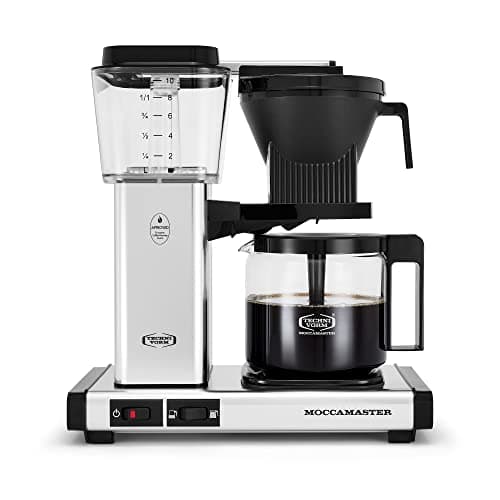
Our top pick is the Technivorm Moccamaster KBGV Select, and it wins on exactly the criteria above. Technivorm rates it to brew in the 196-205 degrees F window, which is the single biggest reason its coffee beats a supermarket machine's, and its copper boiling element and pulse the water over the grounds through a wide outlet arm for even saturation. What really sets it apart, though, is that it is hand-built in the Netherlands and genuinely repairable — parts are sold individually and it carries a five-year warranty, so it is designed to last a decade rather than a warranty period. The honest catch is that it is expensive for a drip machine and it is a pure brewer: there is no programmable wake-up timer and no frills. You buy it for the cup and the longevity, not for scheduling. If you want one machine to buy once and never think about again, this is it.
The OXO Brew 9-Cupis the value pick, and for most people it is the smartest buy in the roundup. It is SCA-certified to brew in the correct temperature window for a fraction of the Moccamaster's price — which is where most of the cup quality lives — and OXO gives it a "rainmaker" shower head that saturates the grounds evenly instead of drilling one hole through the bed. Crucially, it adds the daily-convenience features the Moccamaster deliberately skips: a programmable timer so coffee is ready when you wake, and a double-wall thermal carafe that keeps the pot hot without a taste-wrecking hot plate. The trade-offs are fair and worth naming: it is an appliance rather than a repairable heirloom, and its single-dial interface takes a few minutes to learn. If you would rather spend the difference on better beans, this is where we would point you.
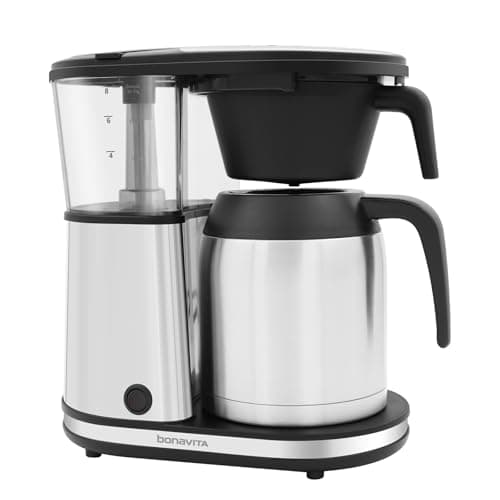
The Bonavita Connoisseur 8-Cupis the pick for anyone who wants great coffee with zero settings to think about. It is a one-touch, SCA-certified brewer: press a single button and it brews in the right temperature window, no menus, no dial, no decisions. It includes a pre-infusion mode that blooms the grounds before the main brew — the same technique higher-end pour-over borrows to let the coffee degas — and it drains into a double-wall thermal carafe rather than onto a hot plate. The honest cons are simple: there is no programmable wake-up timer, so you start it when you are up, and the build and support are plainer than the premium options. If the idea of a dial or a settings menu makes your eyes glaze over, the Bonavita is the least-fuss route to a genuinely good cup.
The Breville Precision Brewer (BDC400)is the enthusiast's machine — the one where you actually control the variables. Where every other maker here brews at a fixed temperature, Breville lets you adjust the brew temperature and flow rate, which almost no other home drip machine allows, and it is SCA-certified for its default brewing. On top of that it offers six modes — fast, gold-cup, strong, iced, cold brew, and a custom setting — plus a timer, which makes it the most versatile brewer in the roundup by a distance. The honest catch is that the flexibility is wasted on someone who just wants a button: it is more machine than most people ever use, it is pricey, and the many settings are a small learning curve. Buy it if tinkering is the point; skip it if you want good coffee with no decisions.
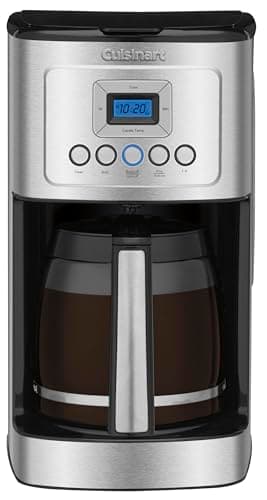
The Cuisinart PerfecTemp 14-Cup (DCC-3200)is the honest volume pick, and it is a different kind of machine from the four above it. This is the big programmable workhorse — fourteen cups on a twenty-four-hour timer, with brew-strength control and a self-clean cycle — the practical choice when a household or an office needs a lot of coffee ready before anyone is awake. It is cheap, everywhere, and a known quantity that just works. But we rank it last on cup quality for two honest reasons: it does not hit the same brew temperatures as the SCA-certified machines above it, and it drains into a glass carafe on a hot plate, which slowly stews the coffee bitter the longer it sits. It is a convenience-and-schedule machine, not a boutique one, and you should buy it knowing exactly that.
A quick word on carafes, because it decides more than people expect. A thermal carafe — the OXO and the Bonavita both use one — keeps coffee hot in an insulated flask with no heat under it, so the pot you pour at nine tastes like the pot you brewed at seven. A glass carafe on a hot plate, like the Cuisinart's, keeps coffee hot by literally continuing to cook it, which is why drip coffee turns flat and bitter over a morning. The Moccamaster and this configuration of the Precision Brewer both pour into a glass carafe on a hot plate too, though the Moccamaster's plate is tuned to a gentler holding temperature. If you drink your pot slowly, thermal is the honest upgrade; if you empty it in twenty minutes, it matters less. Either way, it is a real difference in the cup, not a spec-sheet detail.
Price tiers here map cleanly onto what you are buying, which makes the decision easier than it looks. At the top, the Moccamaster and the Precision Brewer are premium machines — one for longevity and a fixed perfect cup, the other for control — and you pay for it. In the sensible middle sit the OXO and the Bonavita, both SCA-certified, both thermal-carafe, both far cheaper than the premium pair and giving up little in the cup: this is where most people should shop. At the value end, the Cuisinart is the most machine-per-dollar for volume and scheduling, provided you accept it is not chasing the same cup. There is no cheap machine in this roundup that also nails temperature — that trade does not exist — so decide whether you are buying the best cup, the most convenience, or the most coffee, and the tier picks itself.
Finally, the honest caveat that applies to every machine on this page: a drip maker only brews what you feed it. Even the Moccamaster makes mediocre coffee from stale, pre-ground supermarket beans, and even the cheapest machine improves dramatically with fresh whole beans ground just before you brew. A burr grinder at a medium drip setting lifts the cup more than the difference between any two machines here, and weighing your coffee to a consistent ratiois what makes a good pot repeat. Buy the right machine for temperature and saturation, then put fresh, well-ground coffee through it — that order is the whole secret to great drip at home.
How to choose a drip coffee maker
Work these in order. The first two decide the cup; the rest sort out which machine fits your kitchen and your morning.
1. Brew temperature comes first
Before anything else, buy a machine that brews hot enough. The SCA standard puts the water in a window of about 195-205 degrees F, and most cheap drip makers never get there — they brew lukewarm and under-extract, which is why their coffee tastes thin and sour no matter what beans you use. Look for an SCA certification, like the OXO, Bonavita, and Breville carry, or a maker like the Moccamaster that is built and rated to brew in that window. If a machine does not tell you its brew temperature at all, assume it brews too cool. This one criterion filters out most of the market.
2. Even saturation and the shower head
The second thing that decides the cup is how evenly the water wets the grounds. A machine that drips through one hole channels water straight down the middle of the bed, over-extracting a little coffee and barely touching the rest. A wide shower head rains water across the whole surface so the entire bed extracts together, which is exactly what a careful pour-overdoes by hand. The OXO makes a point of its "rainmaker" head and the Moccamaster uses a wide outlet arm; both taste the difference. You cannot inspect this in a store, so lean on machines that call it out.
3. Thermal carafe or glass-and-hot-plate
Decide how the machine keeps coffee hot, because it changes the flavor over a morning. A thermal carafe is an insulated flask with no heat under it, so the last cup tastes like the first — the OXO, Bonavita, and Breville all use one, and it is the setup we prefer. A glass carafe on a hot plate, like the Cuisinart's, keeps coffee hot by continuing to cook it, which stews it flat and bitter the longer it sits. If you drink your pot over a couple of hours, pay for thermal; if you empty it fast, glass is fine and cheaper. See our thermal-carafe roundup for the deep dive.
4. Programmability and capacity
Now match the convenience features to your morning. A programmable timer means coffee is ready before you are out of bed — the OXO, Breville, and Cuisinart all have one; the Moccamaster and Bonavita deliberately do not. Capacity matters too: the Bonavita brews eight cups, the OXO nine, the Moccamaster ten, and the Cuisinart fourteen, so size the machine to how many drinkers it serves. A household that empties a big pot on a schedule is a different buyer from a couple who brew a fresh eight cups by hand. Be honest about which you are before you pay for a timer or a big carafe you will not use.
5. Build, repairability, and price tier
Finally, decide how long you want the machine to last and what you are willing to spend. The Moccamaster is the outlier here: it is hand-built and genuinely repairable, with parts sold individually and a five-year warranty, so it is a decade-long purchase rather than an appliance. The OXO, Bonavita, Breville, and Cuisinart are more conventional appliances — well-made, but not built to be rebuilt. Price tracks this closely: premium for the Moccamaster and Breville, sensible mid-range for the OXO and Bonavita, and value-and-volume for the Cuisinart. There is no machine here that is both cheap and temperature-accurate, so pick the trade-off you can live with and buy the best example of it.
6. Remember the grinder and the ratio
The last piece of advice is the one that costs nothing and matters most: the machine is only half the setup. A drip maker brews what you feed it, so fresh whole beans from a burr grinder at a medium drip grind will lift any machine here more than upgrading from one to the next, and a consistent coffee-to-water ratio is what makes a good pot repeatable. Descale on a schedule so the water stays hot and the flow stays even. Buy the right machine for temperature and saturation, then treat the grind and the ratio as part of the recipe, and even the value picks here make excellent coffee.