Skip to content
Bean & Burr

HUB 03 · Grinders

The Best Grinders for a Moka Pot

A moka pot needs a grind almost nobody gets right first time: finer than drip, clearly coarser than espresso, and even. These four hit it.

By Stephen V.Updated How we research
#ad

We earn a commission when you buy through our Amazon links, at no extra cost to you. It never affects our rankings, and we say so when the cheaper product is the better buy. How this works.

For most moka-pot drinkers the grinder to buy is the Baratza Encore ESP: it covers the fine-of-filter range a moka pot lives in with enough steps to find your spot, it is rebuildable rather than disposable, and it also reaches espresso if you ever move on. If you brew one pot a day, the TIMEMORE Chestnut C3 ESPis the better value — a hand grinder whose consistency embarrasses electrics at twice the money, and a moka dose takes under a minute to crank. The OXO Brew Conical is the cheapest electric that gets close, and the KINGrinder K6 is the cheapest grinder you can dial in repeatably, which on a moka pot matters more than it sounds.

Here is the thing that makes this a real question rather than a shopping list. A moka pot is the one brewer where grind size has a mechanical consequence, not just a flavour one.Brew with coffee that is too fine and you do not merely over-extract — you restrict the flow, pressure climbs in the boiler, the brew comes through too hot, and the cup tastes genuinely burnt. In the worst case the safety valve vents. Too coarse and water sprints through an open bed and the result is thin and sour. The window is narrower than any other brewer in the house except espresso.

What grind a moka pot actually wants

Aim for fine-medium: noticeably finer than drip, clearly coarser than espresso. The texture reference people find most useful is granulated table salt — espresso is closer to powdered sugar or flour, and if your moka grind feels like that, it is too fine. Our coffee grind size chart has the reference textures side by side.

The reason the window is tight is pressure. A moka pot brews at a small fraction of espresso pressure — low single-digit bar against nine for espresso — and it generates that pressure from steam in a sealed boiler. The grounds bed is the restriction in that circuit. Make the bed too tight and the only thing that gives is temperature and time, both in the wrong direction. This is also why you should never tamp a moka basket: fill it level, level it off with a finger, and leave it. Tamping is an espresso technique that actively breaks a moka pot.

Why evenness matters even more here

Every grinder produces a spread of particle sizes, not one size. On a moka pot that spread hurts you twice over: the fines over-extract and migrate into the cup as mud, and they also pack into the gaps between larger particles and tighten the bed, pushing you toward the burnt-and-restricted failure above. A blade grinder is therefore not a cheap option here, it is a broken one — it produces dust and boulders simultaneously, which is the exact combination a moka pot handles worst. Burr vs blade is the full argument, and it is why every pick on this page is a burr grinder.

The picks

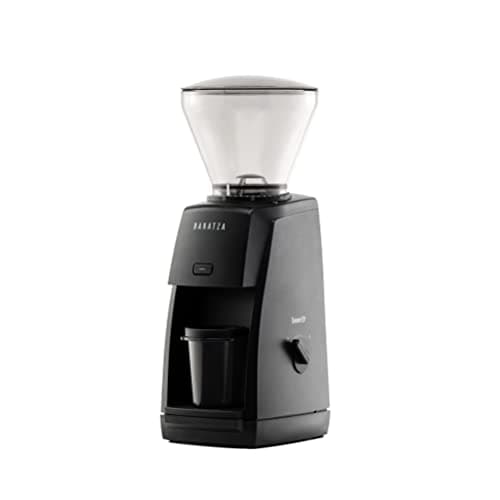
Baratza Encore ESP.The all-round answer. Baratza built the ESP version to extend the Encore's range down into espresso, and the useful side effect is a lot of usable adjustment in the fine-of-filter band where moka sits — so you can move in small steps rather than jumping over your target. The real argument is longevity: Baratza sells burrs, motors and gearboxes, so this is a grinder you repair rather than replace. The honest con is price — it is the most expensive pick here, and if moka is the only thing you will ever brew, you are paying for range you may not use. Our Encore ESP review goes deeper, and Encore vs Encore ESP covers whether the cheaper original is enough.

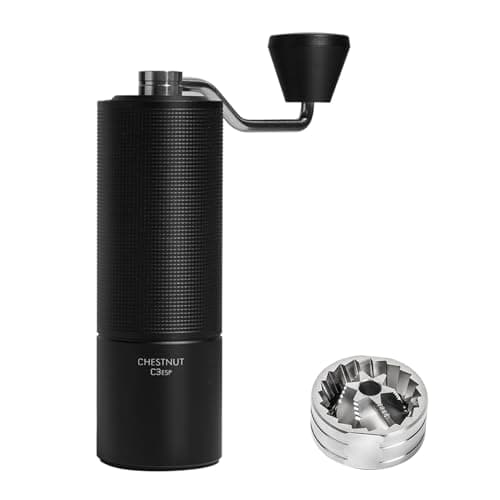
TIMEMORE Chestnut C3 ESP. The value champion, and for a one-pot-a-day household arguably the correct answer outright. Stainless S2C burrs and a tight build give a particle consistency that competes well above its price, and the range runs from espresso fine to press coarse, so the moka window sits comfortably in the middle of what it does best. A moka dose is small, so cranking it is well under a minute rather than a workout. The cons are inherent to hand grinding: it is manual, and single-dose capacity means a second pot is a second round. See the TIMEMORE C3 review.

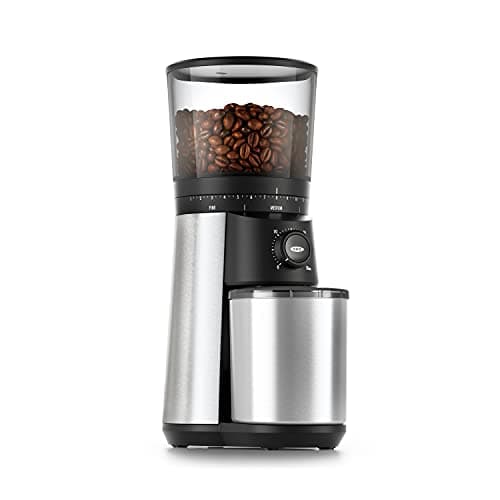
OXO Brew Conical Burr Grinder. The cheapest electric we would put near a moka pot. Fifteen settings plus a micro-adjust and a built-in timer for repeatable dosing, and a real burr grind rather than a blade. Two honest limitations: its sweet spot is drip and the fine end of its range is the weakest part of it, so you are working at the edge of what it does best; and it is an appliance rather than a repairable platform. For a budget upgrade from pre-ground it is still a large step up. Full review here.

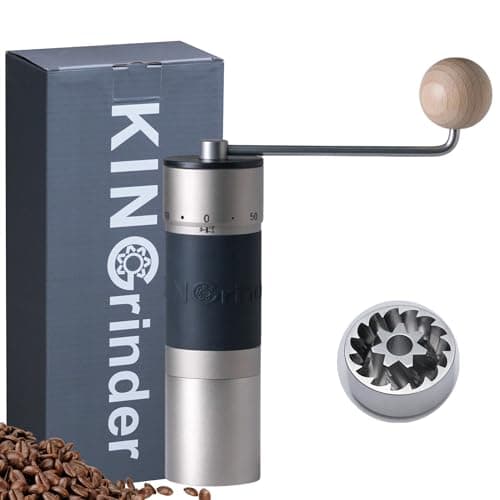
KINGrinder K6.Its standout feature is the one that suits moka best: the adjustment is external and numbered, so once you find your setting you can write down "moka: 14 clicks" and return to it exactly, every time. With a brewer this sensitive to grind, repeatability is worth more than a marginally better burr you cannot find your way back to. It undercuts the pricier hand grinders while matching much of what they do; what you give up is brand track record and resale value. See the KINGrinder K6 review and how it compares to 1Zpresso.

The one-line answer by situation

One grinder for moka now and maybe espresso later: Baratza Encore ESP. Best grind per dollar, one pot a day: TIMEMORE C3 ESP. Cheapest electric: OXO Brew Conical. Cheapest repeatable dial-in: KINGrinder K6. For the wider field see best burr grinders, and if you also brew press or pour-over, the French press and pour-over pages cover those windows.

The short answer

Quick picks

#ProductBest forScorePrice
01
Baratza Baratza Encore ESP
Baratza Encore ESP

The grinder to buy first. It does espresso AND filter, and Baratza will sell you every part.

The best all-round first grinder
8.4
$199.95Amazon
02
TIMEMORE TIMEMORE Chestnut C3 ESP Hand Grinder
TIMEMORE Chestnut C3 ESP Hand Grinder

The hand grinder that punches absurdly above its price. Espresso-capable, and it feels premium.

The best-value manual grinder
8.0
$99.00Amazon
03
OXO OXO Brew Conical Burr Grinder
OXO Brew Conical Burr Grinder

The budget burr grinder that gets filter coffee right. Not for espresso — and honest about it.

Cheapest sensible filter grinder
7.0
$109.95Amazon
04
KINGrinder KINGrinder K6 Manual Grinder
KINGrinder K6 Manual Grinder

A lot of hand grinder for the money — external adjustment and espresso-fine steps.

Manual espresso on a budget
7.6
$109.00Amazon

#ad · Live prices from the Amazon Product API, as of October 20, 2026. Where we have no verified live price, we show none — we would rather leave a gap than print a number that has rotted.

In detail

The picks, in full

01
Baratza Baratza Encore ESP

The best all-round first grinder

Baratza Encore ESP

Conical burrEspresso + filter range40mm burrsFully rebuildable
8.4/10

The grinder to buy first. It does espresso AND filter, and Baratza will sell you every part.

Grind consistency
8
Grind range
9
Ease of use
8
Build quality
8
Value
9

Pros

  • Unlike the plain Encore, the ESP has the fine range to actually grind for espresso — one grinder covers both worlds
  • Baratza's whole model is repairability: every part is sold individually, so this grinder is a decade-long purchase
  • Consistent enough to make the machine, not the grinder, your limiting factor at this price

Cons

  • Not a single-dose grinder — a little retention means a few stale grams between beans
  • For espresso-only use, dedicated espresso grinders offer finer adjustment (at a higher price)

Don't buy this if…

…you will only ever make filter coffee. Then you don't need the espresso range — the cheaper plain Encore does the filter job just as well.

$199.95View on Amazon

Price as of October 20, 2026. Prices change — Amazon's is the one that counts.

#ad · we may earn a commission from this link to Baratza Encore ESP

02
TIMEMORE TIMEMORE Chestnut C3 ESP Hand Grinder

The best-value manual grinder

TIMEMORE Chestnut C3 ESP Hand Grinder

Stainless S2C burrsEspresso to French pressFoldable handlePortable
8.0/10

The hand grinder that punches absurdly above its price. Espresso-capable, and it feels premium.

Grind consistency
8
Grind range
8
Ease of use
6
Build quality
8
Value
10

Pros

  • The stainless burrs and tight build give a consistency that shames electric grinders twice its price
  • The ESP version adjusts fine enough for real espresso, not just filter
  • Light, tough, and travel-friendly — a legitimate main grinder that also packs for trips

Cons

  • It's manual — grinding a fine espresso dose by hand is a genuine arm workout
  • Small single-dose capacity, so it's a one-or-two-cups-at-a-time tool

Don't buy this if…

…you make several espressos every morning. Hand-grinding fine, daily, gets tiring fast — an electric grinder like the Baratza Encore ESP is worth it for volume.

$99.00View on Amazon

Price as of October 20, 2026. Prices change — Amazon's is the one that counts.

#ad · we may earn a commission from this link to TIMEMORE Chestnut C3 ESP Hand Grinder

03
OXO OXO Brew Conical Burr Grinder

Cheapest sensible filter grinder

OXO Brew Conical Burr Grinder

Conical burr15 settings + micro-adjustTimer12 oz hopper
7.0/10

The budget burr grinder that gets filter coffee right. Not for espresso — and honest about it.

Grind consistency
7
Grind range
5
Ease of use
8
Build quality
6
Value
9

Pros

  • A real burr grinder for less than the Baratza — a massive upgrade over any blade grinder for drip and press
  • The timer makes repeatable dosing easy for daily drip
  • Simple, tidy, and does exactly what a filter drinker needs

Cons

  • Doesn't grind fine or consistently enough for good espresso
  • Not repairable like a Baratza — it's an appliance, not a platform

Don't buy this if…

…you make espresso, now or soon. It can't grind fine enough — the Baratza Encore ESP is the entry grinder that does both.

$109.95View on Amazon

Price as of October 20, 2026. Prices change — Amazon's is the one that counts.

#ad · we may earn a commission from this link to OXO Brew Conical Burr Grinder

04
KINGrinder KINGrinder K6 Manual Grinder

Manual espresso on a budget

KINGrinder K6 Manual Grinder

Stainless burrsExternal numbered adjustEspresso-fine stepsManual
7.6/10

A lot of hand grinder for the money — external adjustment and espresso-fine steps.

Grind consistency
8
Grind range
8
Ease of use
6
Build quality
7
Value
9

Pros

  • External numbered adjustment makes dialing in espresso far easier than grinders you set from inside
  • Fine, repeatable steps genuinely suited to espresso, not just an afterthought
  • Undercuts pricier hand grinders while matching a lot of their capability

Cons

  • Manual grinding for espresso is hard work, same as any hand grinder
  • Brand support and long-term reputation are thinner than TIMEMORE or 1Zpresso

Don't buy this if…

…you value a proven brand and resale value. TIMEMORE has the longer track record — the K6 is the value play, not the safe-brand play.

$109.00View on Amazon

Price as of October 20, 2026. Prices change — Amazon's is the one that counts.

#ad · we may earn a commission from this link to KINGrinder K6 Manual Grinder

Dialling in a moka pot, in order

Start at fine-medium — table-salt texture — and fill the basket level without tamping. Use the boiler's safety valve as your water line and do not go above it. Brew on medium heat rather than high: a moka pot does not need to be rushed and high heat is the other half of the burnt-coffee problem. Take it off the heat when the stream turns pale and starts to sputter, rather than letting it run dry.

Then adjust on taste, one variable at a time. Bitter, harsh, burnt: coarsen the grind, or lower the heat. Thin, sour, weak: go finer, or check you filled the basket level rather than leaving it half full. Why is my coffee bitter and sour vs bitter explain the mechanism behind each direction.

Can you just buy pre-ground "moka" coffee?

You can, and it is a legitimate shortcut — Italian supermarket moka grinds are targeted at roughly the right size. Two caveats. First, "espresso" pre-ground is usually too fine for a moka pot and is the most common reason a moka pot tastes burnt. Second, ground coffee stales fast: the NCA puts ground coffee at one to two weeks of real freshness against one to three for whole beans, because the surface area exposed to oxygen is far larger. A grinder is how you stop buying a stale input every week. Whole bean vs ground has the trade-off in full.

Hand or electric, for this brewer specifically

Moka is unusually friendly to hand grinders. The dose is small (a 6-cup Bialetti basket takes well under 20 g), the grind is not espresso-fine so the crank is light, and you brew once or twice a day rather than pulling shots back to back. That removes most of the standard objection to hand grinding, which is why two of the four picks here are manual and both are cheaper than the electrics while grinding at least as evenly. Hand grinder vs electric covers where the trade flips.

What not to spend money on

You do not need a dedicated espresso grinder for a moka pot. The thing espresso grinders cost money for is fine, repeatable adjustment at the very fine end of the range, and a moka pot does not use that range — it actively suffers there. If moka is your brewer, the grinder budget is better capped and the difference spent on fresher beans, which changes your cup more. Our beans for moka pot page covers what to put in it.

Keep it clean, or the setting drifts

Coffee oils build up on burrs and old grounds sit in the chute, and both change what a given setting produces — which is maddening on a brewer this grind-sensitive. Brush the burrs out regularly and give the grinder a proper clean every few months; how to clean a coffee grinderhas the routine. The same applies to the pot: a moka pot's gasket and filter plate clog, which changes flow for reasons that look like grind problems. How to clean a moka pot covers that.
How we picked

We do not run a testing lab

We compiled published manufacturer specifications, computed what each option costs to run where relevant, and cross-referenced aggregated owner reviews, then scored each product against a published rubric. The scores are judgments from documented research — they are not measurements we took, because we do not have a lab and we are not going to pretend we do. Where a number came from a manufacturer or a standard, we name it in Sources.

Questions

Frequently asked

What grind size is best for a moka pot?
Fine-medium — finer than drip, clearly coarser than espresso, roughly the texture of granulated table salt. Espresso-fine coffee restricts the flow, raises pressure and temperature in the boiler, and makes the cup taste burnt; drip-coarse coffee lets water through too quickly and makes it thin and sour.
Can I use espresso grind in a moka pot?
Not well. It is the single most common cause of bitter, burnt-tasting moka coffee, because the tight bed restricts flow and the brew comes through hotter and slower than it should. Pre-ground coffee labelled "espresso" is usually too fine; pre-ground labelled "moka" is the right target if you are buying ground.
What is the best grinder for a moka pot?
The Baratza Encore ESP for an electric you can repair and dial in finely, or the TIMEMORE Chestnut C3 ESP if you brew one pot a day and want the best grind per dollar — a moka dose takes under a minute to hand grind. On a tighter budget, the OXO Brew Conical is the cheapest sensible electric and the KINGrinder K6 is the cheapest grinder with numbered, repeatable settings.
Do I need to tamp the coffee in a moka pot?
No — and you should not. Fill the basket level and level it off; do not press it. Tamping is an espresso technique, and in a moka pot it tightens the bed, restricts flow and pushes you straight into the over-pressure, burnt-tasting failure mode. A level, untamped basket is correct.
Will a cheap blade grinder work for a moka pot?
It is the worst brewer to pair with a blade grinder. Blades produce dust and boulders at once; the dust over-extracts and packs the bed tighter, which drives the burnt flavour, while the boulders never extract at all. Any burr grinder, including the cheapest one on this page, is a decisive upgrade.
Is a hand grinder good enough for moka?
Better than good enough — it is arguably the right tool. The dose is small, the grind is not espresso-fine, and you brew once or twice a day, so the usual objections to hand grinding do not apply. Both hand grinders here grind at least as evenly as the electrics on this page and cost less.

Keep reading

Receipts

Sources

We do not run a testing lab, and we do not pretend to. Where a measured number came from a manufacturer spec sheet or a published standard, we name it and link it. Where we could not verify something, we say so on the page rather than quietly leaving it out. Read our full method.