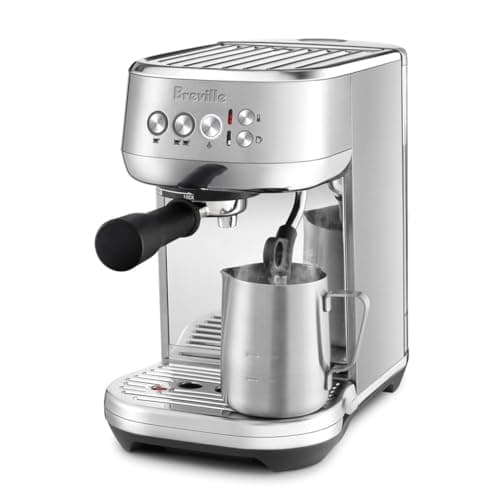
The five-hundred-dollar line is a meaningful one in home espresso. Below it you will not find a dual-boiler prosumer machine, but you will find every honest way to pull a real shot — and the machines here span almost the whole range, from the upper edge of the budget down to the cheapest thing that can legitimately be called an espresso machine. What separates them is not whether they make espresso. It is what each one quietly gives up to hit its price.
Budget machines tend to save money in the same few places: pressurized (dual-wall) baskets that flatter mediocre grinding rather than reward good grinding, single boilers, lighter build materials, and — on every machine in this list — no grinder at all. None of that stops them making a genuinely good shot; it just sets a lower ceiling and asks a little more of the rest of your setup. The Bambino Plus leads because it makes the best shot here and auto-textures milk, even though it sits at the top of the budget and leaves the grinder to you. Below it, the Gaggia Classic is the machine to buy if you want to learn the craft and keep it for a decade, the Dedica solves the no-counter-space problem, and the CASABREWS and Stilosa are the two lowest-risk ways to find out whether espresso will stick.
One thing to plan for up front: because none of these include a grinder, the real price of any of them is the machine plus a grinder. If you would rather have the grinder built into the box — which usually pushes the total toward the top of this budget or a little past it — read our best espresso machines with a built-in grinder instead. And if your ceiling is lower still, the best machines under $200 narrows this down to the true entry tier.
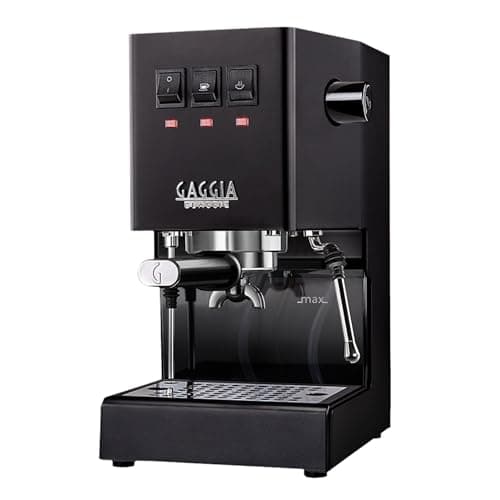
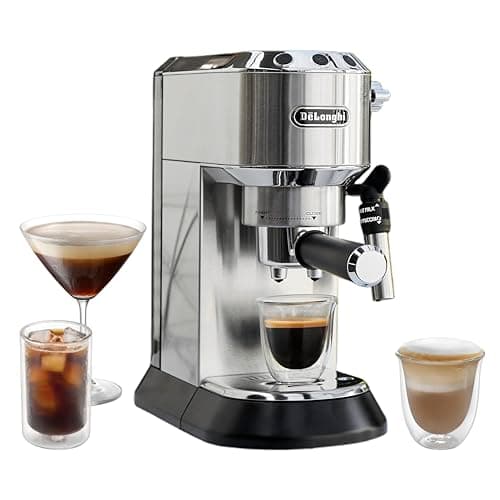
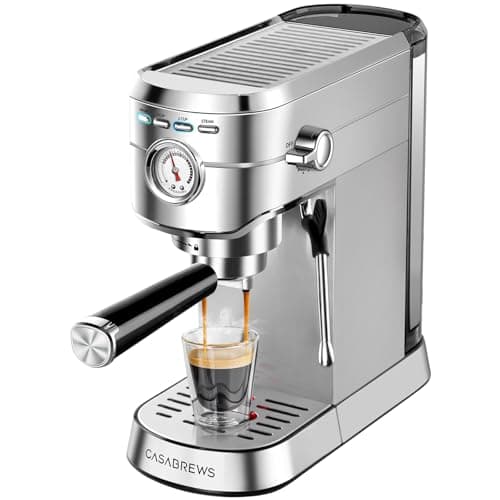
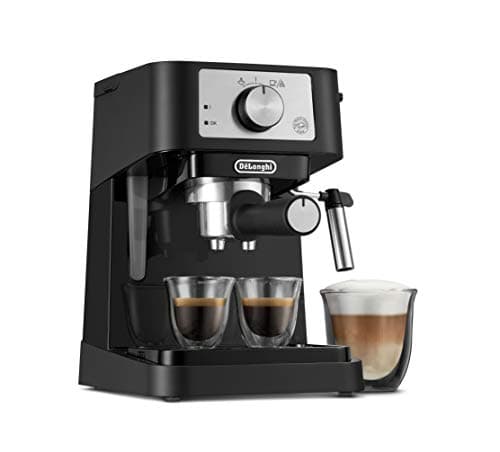
The ranking runs from the top of the budget to the bottom, because that is how the trade-offs stack. The Bambino Plus leads: it makes the best espresso here and auto-textures milk with no technique, and while it sits near the ceiling of this budget and leaves the grinder to you, it is the machine you are least likely to outgrow. The Gaggia Classic is next as the enthusiast's pick — a metal, serviceable body and a commercial 58mm portafilter that turns it into a platform you can learn on and keep for a decade. The slim Dedica follows for anyone whose real constraint is counter space, solving the "no room" problem better than anything else here. Then the two true starters: the CASABREWS, with its premium-looking stainless shell, and the De'Longhi Stilosa, the honest cheapest way in with a real manual steam wand to learn on. The lower you go, the more you are buying a way to try espresso rather than a machine to keep.
As always, none of these were tested in a lab. We worked from published specifications, reasoned through each design's trade-offs, and priced everything live — and where a budget claim like a "20 bar" pump number is marketing rather than quality, we say so plainly.
How to spend an espresso budget under $500
A budget this size buys a real espresso machine with room to spare — but only if you spend it in the right order. Here is how.
1. Split the budget: machine plus grinder
This is the single most important move, and the one most first-time buyers get wrong. Every machine on this list is grinder-less, and a cheap machine fed by a good grinder makes far better espresso than an expensive machine fed by a bad one. So plan the total from the start: if the budget is tight, spend on the grinder before you spend the last of it on the machine. It is the highest-impact dollar in espresso, full stop.
2. What the low price actually costs you
Knowing where budget machines economize helps you buy without regret. Pressurized baskets force crema even from a coarse or stale grind — forgiving for a beginner, but they cap shot quality and hide what your grinder is doing, which is a reason to upgrade the basket later, not a reason to avoid a budget machine now. Single boilers mean a short wait between pulling a shot and steaming milk, which is a non-issue for one or two drinks. Lighter build and thinner parts support are the real long-term costs — the Gaggia, being metal and serviceable, is the clear exception and the reason it ranks where it does.
3. Match the machine to how you will actually use it
The ranking is not a verdict on the "best" machine so much as on the best fit. Making milk drinks daily and want them easy? The Bambino Plus auto-textures microfoam with no technique. Want to learn espresso as a craft and grow into it? The Gaggia Classic and its 58mm commercial portafilter is the platform. Fighting for counter space? The Dedica is under five inches wide. Just testing whether the hobby is for you? The Stilosa is the honest cheapest way in, with the CASABREWS a hair above it. Buy for your situation, not for the top of the list.
4. The cheap upgrades that punch above the machine
The best value in budget espresso is not the next tier of machine — it is the two cheap tools that lift any machine's shots. A scale and a WDT tool together cost little and improve a cheap machine's output more than the next chunk of machine would. Add fresh beans for espresso — stale beans undo everything else — and even the cheapest machine here makes coffee you are proud of.
5. Manual wand, auto froth, or nothing — how you make milk
Milk capability separates these machines more than the shot does. The Bambino Plus auto-textures to a set temperature and foam level, which is the easiest path to a good latte for a beginner. The Gaggia, Dedica, and Stilosa give you manual wands — more to learn, but the way you actually pick up milk technique and, eventually, latte art. The CASABREWS includes a wand too. If milk drinks are the whole point of buying an espresso machine, weight your choice toward the automatic Bambino or a manual wand you are genuinely willing to practice on, and read how to make espresso at home before your first pour.
6. Reliability and parts support — the quiet cost of "cheap"
The biggest difference between a bargain-brand machine and a name-brand one is not usually the first shot — it is the fifth year. Breville, De'Longhi, and Gaggia have established parts and service networks in the US, so a worn gasket or a failed part is a fix rather than a landfill trip. Off-brand ultra-budget machines are cheaper up front partly because that support is thinner. That does not make them a bad first buy, but it does mean you should treat the cheapest options as starters you might replace, and the Gaggia in particular as the one built to be repaired and kept.
7. When it is worth spending up out of the budget
Sometimes the honest advice is to save a little longer. If you already know espresso is going to be a real habit, jumping to a machine with a grinder built in — covered in our built-in grinder roundup — can save you from buying a machine and a grinder separately later. And if you want the whole thing hands-off, a super-automatic starts above this budget but removes every step. Buying twice is the most expensive way to do this, so be honest about where you are heading before you buy the cheapest thing that works today.
8. Budget for the running cost, not just the machine
The sticker price is the smallest number in espresso over time. Beans, milk, filters, and the occasional descale add up, and the cheapest machine can still cost the most to feed if it pushes you toward wasteful habits. Fresh beans for espresso are the one running cost never to skimp on — stale coffee undoes every other saving. If you want to see the true number before you commit, our espresso cost calculator lays the whole bill out, and it is usually a strong argument for a machine you will keep over one you will replace.
9. The exception: the one machine here built to keep
Most machines in this budget are, honestly, appliances — good ones, but built to a price and replaced rather than repaired when they wear out. The Gaggia Classic is the deliberate exception, and it is worth understanding why it ranks so high despite offering the least hand-holding. Its metal body and simple internals are designed to be opened and serviced with basic tools, its commercial 58mm portafilter accepts the same accessories and modifications a deep enthusiast community has built for decades, and the platform grows with you rather than capping your progress. If you suspect espresso will become a lasting habit and you would rather buy once, it is the value play in this list even though it costs more up front than the starters — because "cheap" measured over ten years looks very different from cheap measured on the shelf. Do not write it off as too much machine for a beginner, either: for the right kind of beginner — the one who wants to learn the craft rather than be shielded from it — it is exactly enough, and the one machine on this list you may never need to replace.