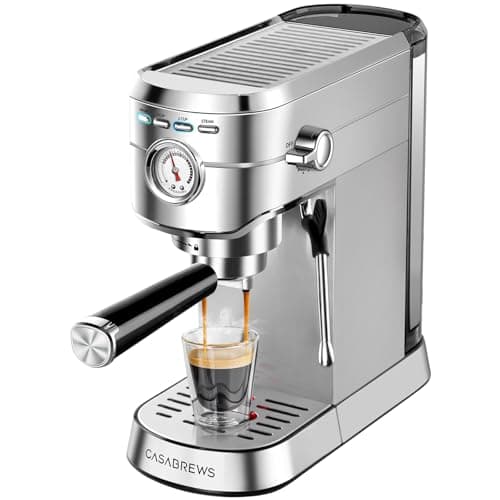
The CASABREWS CM5418 is one of the most-bought cheap espresso machines online, and its pitch is easy to understand: it costs less than the name-brand entry machines, it wears a stainless housing that looks more expensive than it is, and it includes a steam wand for milk drinks. For a lot of people it is the machine that answers a single question — "do I actually want to make espresso at home?" — without a painful outlay if the answer turns out to be no.
On its own terms, it delivers that. It pulls a real pressurized shot, it froths milk, and it looks the part on a counter. The honest framing is that it is a starter, not a keeper. The headline "20 bar" figure on the box is a pump rating, not a quality signal — real espresso is extracted at around 9 bar, so a bigger pump number tells you almost nothing about the cup. Like nearly all budget machines, it uses a pressurized (dual-wall) basket that forces crema even from a coarse or stale grind: forgiving for a beginner, but it caps shot quality and hides what your grinder is doing. And its long-term reliability and parts support are weaker than what Breville, De'Longhi, or Gaggia offer, which is the real cost of the low price.
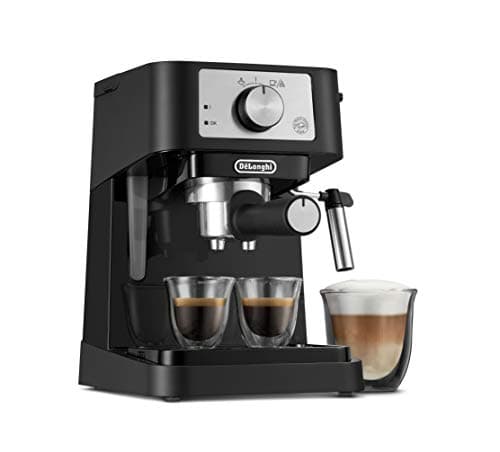
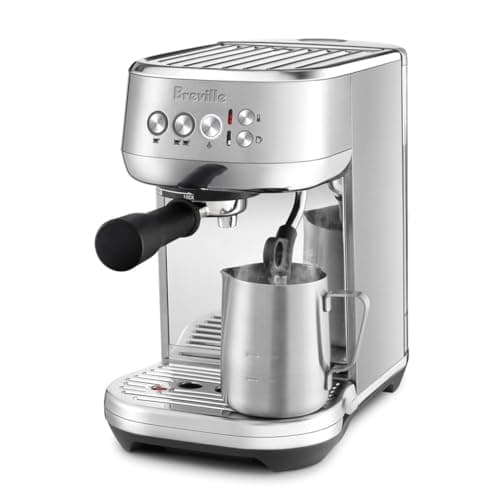
None of that makes it a bad buy — it makes it a specific one. If you want the cheapest plausible way to try espresso and you accept that you may outgrow it, the CM5418 does the job. If, on the other hand, you already suspect the hobby will stick, spending a little differently now saves you from buying twice. Below we put it against the two machines most people should weigh instead: the De'Longhi Stilosa, a name-brand starter that is often even cheaper, and the Breville Bambino Plus, the "buy once" upgrade.
What is it actually like to use? For a first machine, encouragingly forgiving. The pressurized basket means your early shots pour with crema even before your grind is dialed, which flatters the learning curve — you get a drinkable espresso on day one rather than a week of sour, gushing disasters. The steam wand froths enough milk for a cappuccino or a small latte, though it asks for patience and does not have the power of a pricier machine. The honest ceiling shows itself later: as your palate and technique improve, the pressurized basket keeps flattering and hiding in equal measure, so you stop learning what your grind is really doing. That is the moment most owners start eyeing an upgrade — which is exactly the right way to use a machine like this.
The reliability question deserves a straight answer. Ultra-budget machines from newer brands do not have the decades-deep parts and service networks that Breville, De'Longhi, and Gaggia have built, so if something fails outside the warranty window a repair is less likely to be practical than a replacement. For a machine at this price that many people treat as a try-before-you-commit purchase, that may be an acceptable trade — but go in with eyes open, and do not expect a decade of service from it the way you might from the metal, rebuildable Gaggia.
To be concrete about who this machine is for: it is for the curious. The person who has been buying espresso out and wonders whether they could make it at home, but is not ready to spend real money to find out. For that person the CM5418 is a low-stakes yes — it will make genuine espresso-based drinks, it will teach you whether you enjoy the process, and if you fall for the hobby you will know exactly what to buy next. For anyone who already knows they are serious, the same money is better aimed at a machine and grinder you will not replace.
As with everything on this site, we did not test this machine in a lab. We worked from the published specifications and the well-documented behavior of pressurized-basket budget machines, and we priced it live. Where the marketing overstates — that pump number — we say so.
Who should buy the CASABREWS CM5418 — and who shouldn't
Buy it if you want the lowest-risk way to find out whether making espresso at home is for you, you like that it includes a steam wand for milk drinks, and you are at peace with it being a machine you may replace once you know you are hooked. For a curious first-timer on a tight budget, it is a reasonable, low-stakes entry point, and the stainless look is a nice bonus at the price.
Skip it if you want a machine you will keep for years. If you already suspect espresso will stick, the money is better spent elsewhere: the De'Longhi Stilosa is a name-brand starter — often cheaper — with a genuine manual steam wand you can actually learn milk technique on and better long-term parts support, while the Breville Bambino Plusis the machine that makes a materially better shot, auto-textures milk, and holds its value as your skills grow. Between those three, only the CASABREWS is the pure "try it and see" option.
Whichever you pick, the truth about budget espresso applies: the machine is not the limiting factor. A cheap machine fed by a good grinder and paired with a scale and fresh beans makes espresso that embarrasses a careless setup on a pricier machine. If your total budget is tight, put the next dollar into the grinder, not the machine.
What to pair it with
If you do buy the CM5418, spend your next money where it counts. A basic burr grinder transforms what a pressurized-basket machine can do, because even a forgiving basket rewards a fresher, more even grind. A cheap scale to weigh your dose and yield turns guesswork into a repeatable recipe. And fresh beans for espresso — a forgiving crema blend while you learn — do more for the cup than anything about the machine itself. Get those three and the CASABREWS punches well above its price; skip them and no machine at any price will save the shot. This is the whole reason we rank the grinder ahead of the machine on every budget setup: it is the highest-impact dollar you can spend.