Skip to content
Bean & Burr

HUB 06 · Learn

Can You Freeze Coffee Beans?

Yes - and it is the only storage method that buys you months rather than weeks. The fridge, which is what most people reach for instead, actively makes things worse.

By Stephen V.Updated How we research
#ad

We earn a commission when you buy through our Amazon links, at no extra cost to you. It never affects our rankings, and we say so when the cheaper product is the better buy. How this works.

Yes, you can freeze coffee beans, and it works.By the National Coffee Association's own freshness figures, roasted beans last one to three weeks at room temperature and three to four months frozen. That is the single biggest extension available to you, and it costs nothing. The rule that makes it work: freeze in small airtight portions, and never return a portion to the freezer once you have opened it.

The counterintuitive part is the fridge. The NCA puts refrigerated beans at about two weeks — worse than simply leaving them in a cool, dark cupboard. So the instinct most people have (bag of beans in the fridge door) is the one storage choice that actively costs you freshness.

Why freezing works and refrigerating does not

Coffee goes stale mainly through oxidation, and chemical reactions slow down as temperature drops. A freezer is cold enough to slow oxidation dramatically. A fridge is only mildly cold, so it barely slows the staling — while introducing the two things that make coffee worse.

The NCA is explicit about the mechanism: coffee "absorbs and retains moisture — as well as odors and tastes — from the air around it." A fridge is humid and full of smells. Beans sitting in one pick up moisture and whatever was on last night's plate, and they are not getting much protection in exchange. The NCA also notes that most home containers let in small amounts of oxygen, which is why long-frozen food can suffer freezer burn and why condensation builds up in a refrigerator — so the container you use matters as much as the temperature you choose.

The one mistake that ruins frozen coffee

Condensation from repeated thawing.Every time you take a bag out of the freezer, warm room air meets cold beans and water condenses on them. Put that bag back and you have sealed moisture in with your coffee; do it daily for a month and you have genuinely damaged the beans. This is the real reason people say freezing coffee ruins it — not the freezing, the cycling.

The fix is simple: portion before you freeze. Split the bag into week-sized portions in separate airtight containers or sealed freezer bags, and take out one at a time. The portion you are drinking lives in a canister at room temperature; the rest stays frozen and untouched until its turn. Nothing goes back in.

The method, step by step

1. Portion it.One week of coffee per container — for one cup a day that is roughly 100 to 150 g. Press out as much air as you can. 2. Make it genuinely airtight and opaque. The retail bag is not designed for months of storage once opened; the NCA recommends taking coffee out of its retail packaging and into an airtight, opaque container. 3. Freeze it flat and leave it alone. Keep it away from anything strongly scented, and do not open it to check on it. 4. Thaw sealed.When a portion's turn comes, take it out and let it reach room temperature before opening, so condensation forms on the outside of the container rather than on your beans. 5. Transfer to a canister and drink it within a few weeks as normal.

Can you grind frozen beans?

Yes, and it works better than you would expect. Cold beans are more brittle, which means they fracture more evenly and produce slightly fewer fines — a genuine, if small, consistency benefit. There is no need to thaw a dose before grinding it. What you should not do is grind a whole frozen bag "to save time", because ground coffee stales in one to two weeks regardless of where it has been.

Should you freeze at all?

Honestly: only if your buying pattern needs it. If you buy a 12 oz bag every two or three weeks and keep it in a decent canister, you are already inside the fresh window and freezing adds nothing but handling. Freezing earns its place when you buy in bulk to save money, when you stock up on a seasonal coffee you cannot get later, or when you keep several single origins on rotation and only drink one at a time. The NCA also notes these methods are most beneficial in humid climates, where room-temperature storage is fighting the air.

The short answer

Quick picks

#ProductBest forScorePrice
01
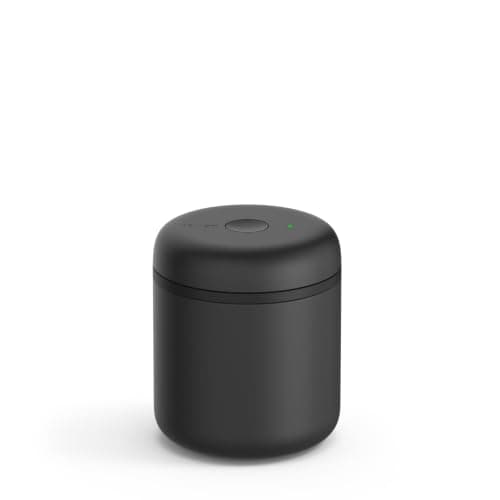
Fellow Fellow Atmos Electric Vacuum Canister
Fellow Atmos Electric Vacuum Canister

The canister that vacuums itself — it senses the air and pumps it out automatically, no twisting.

The best-sealing canister
8.3
$69.95Amazon
02
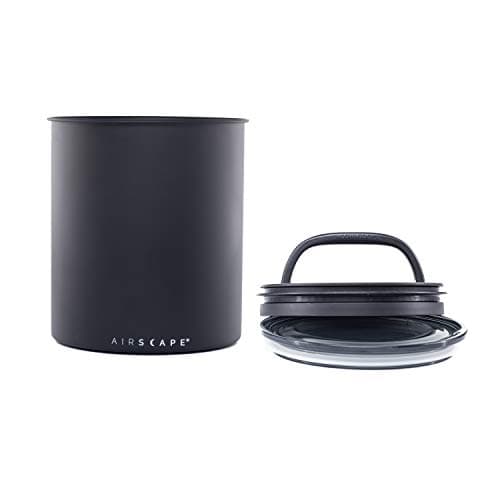
Airscape Airscape Coffee Canister (2.2 lb)
Airscape Coffee Canister (2.2 lb)

The plunger canister — press the inner lid down to push the air out. Simple and effective.

Larger bags and simple sealing
8.0
$47.49Amazon
03
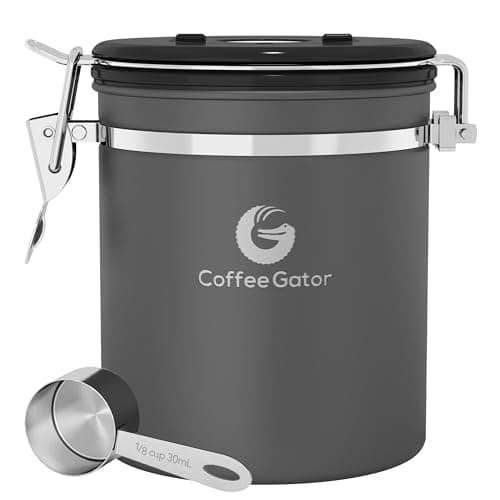
Coffee Gator Coffee Gator Stainless Steel Canister (16oz)
Coffee Gator Stainless Steel Canister (16oz)

The value canister with a one-way CO2 valve and a freshness date dial. Does the job for little money.

Best value airtight storage
8.3
$21.99Amazon

#ad · Live prices from the Amazon Product API, as of October 20, 2026. Where we have no verified live price, we show none — we would rather leave a gap than print a number that has rotted.

In detail

The picks, in full

01
Fellow Fellow Atmos Electric Vacuum Canister

The best-sealing canister

Fellow Atmos Electric Vacuum Canister

Automatic electric vacuumRechargeable (USB-C)Steel bodyReusable
8.3/10

The canister that vacuums itself — it senses the air and pumps it out automatically, no twisting.

Build quality
9
Does the job
9
Ease of use
8
Value
7

Pros

  • The electric pump removes air automatically, which slows the oxidation that turns coffee stale — the one canister that does more than 'airtight'
  • A handsome steel object that looks the part next to a grinder
  • Reusable, no consumables — recharge over USB-C

Cons

  • Pricier than a plain gasket canister that's 'good enough' for fast drinkers
  • The pump needs occasional recharging, unlike a passive lid

Don't buy this if…

…you finish a bag within a week. Beans that fresh barely oxidize — a cheap airtight jar is fine, and the vacuum is money you don't need to spend.

$69.95View on Amazon

Price as of October 20, 2026. Prices change — Amazon's is the one that counts.

#ad · we may earn a commission from this link to Fellow Atmos Electric Vacuum Canister

02
Airscape Airscape Coffee Canister (2.2 lb)

Larger bags and simple sealing

Airscape Coffee Canister (2.2 lb)

Plunger inner lidHolds 2.2 lbSteel bodyOne-way valve
8.0/10

The plunger canister — press the inner lid down to push the air out. Simple and effective.

Build quality
8
Does the job
8
Ease of use
8
Value
8

Pros

  • The inner plunger lid presses air out as you push it down, so the seal shrinks with the coffee
  • The 2.2 lb size swallows a big bag, which the small Fellow can't
  • Well-made steel that lasts for years

Cons

  • The plunger is manual pressure, not a true pulled vacuum
  • For a small bag, the big canister leaves a lot of headspace unless you use the plunger fully

Don't buy this if…

…you buy small 12oz bags. The 2.2 lb size is oversized for that — a smaller Fellow or Coffee Gator seals a small bag better.

$47.49View on Amazon

Price as of October 20, 2026. Prices change — Amazon's is the one that counts.

#ad · we may earn a commission from this link to Airscape Coffee Canister (2.2 lb)

03
Coffee Gator Coffee Gator Stainless Steel Canister (16oz)

Best value airtight storage

Coffee Gator Stainless Steel Canister (16oz)

One-way CO2 valveDate-tracker dialStainless steelIncludes scoop
8.3/10

The value canister with a one-way CO2 valve and a freshness date dial. Does the job for little money.

Build quality
8
Does the job
8
Ease of use
8
Value
9

Pros

  • The one-way valve lets fresh-roast CO2 escape without letting oxygen in — the right feature for recently roasted beans
  • A dial on the lid tracks when you opened the bag, which is genuinely useful
  • Cheap, and it comes with a scoop

Cons

  • A gasket-and-valve seal, not a true vacuum like the Fellow Atmos
  • Steel body hides how much coffee is left

Don't buy this if…

…you want the maximum seal for beans you keep for weeks. The vacuum-pulling Fellow Atmos protects long-stored beans better.

$21.99View on Amazon

Price as of October 20, 2026. Prices change — Amazon's is the one that counts.

#ad · we may earn a commission from this link to Coffee Gator Stainless Steel Canister (16oz)

What to store it in

For the working portion — the beans you are actually drinking — an opaque, airtight canister is the right tool, and the choice comes down to how it handles the air above the beans. A vacuum canister like the Fellow Atmos pumps air out of the sealed space, which is the hardest seal available and the right call for expensive beans you are drinking slowly. A plunger canisterlike the Airscape pushes the air out as you press its inner lid down and follows the coffee level as the bag empties — no charging, no technique, nothing to forget. A valve canister like the Coffee Gator is the budget answer: stainless, opaque, airtight, with a one-way valve, and genuinely fine for a 12 oz bag you finish in a fortnight.

All three beat the retail bag, which is the comparison that matters. Our full coffee storage containers roundup ranks the field, and Airscape vs Fellow Atmos settles the head-to-head most people end up at.

For the freezer specifically

You do not need a premium canister for the frozen portions — you need many small airtight ones. Rigid containers with good gaskets, or doubled freezer bags with the air pressed out, are both fine. The spec that matters is the seal, because the enemy in a freezer is moisture, not oxygen. Save the good canister for the portion on your counter, which is the one being opened twice a day.

The four enemies, and what each storage choice does about them

The NCA names them: air, moisture, heat and light. A canister handles air and light well. A freezer handles heat decisively and, correctly used, slows everything else. Neither handles moisture on its own — that is entirely down to your sealing and your thaw-before-opening discipline. And no storage method addresses the thing that matters most, which is how long ago the coffee was roasted. Our how to store coffee beans guide covers day-to-day storage and how long coffee beans last has the full freshness timeline.

The honest hierarchy

In descending order of effect on your cup: buy coffee that was roasted recently; grind it immediately before brewing; keep the working bag airtight, opaque and cool; freeze what you cannot drink inside three weeks. Storage is the fourth item on that list for a reason — it protects a good purchase, it does not create one. If you are still buying pre-ground, a grinder under $100 will do more than any canister or freezing routine, because ground coffee is on a one-to- two-week clock no matter how you store it.
How we picked

We do not run a testing lab

We compiled published manufacturer specifications, computed what each option costs to run where relevant, and cross-referenced aggregated owner reviews, then scored each product against a published rubric. The scores are judgments from documented research — they are not measurements we took, because we do not have a lab and we are not going to pretend we do. Where a number came from a manufacturer or a standard, we name it in Sources.

Questions

Frequently asked

Can you freeze coffee beans?
Yes. The NCA puts frozen roasted beans at three to four monthsagainst one to three weeks at room temperature. The conditions are that they go in airtight, in portions you will use one at a time, and that you never refreeze a portion after opening it — the damage comes from condensation during repeated thawing, not from the freezing itself.
Does freezing coffee beans ruin the flavor?
Not if you do it properly. What ruins beans is taking the same bag in and out of the freezer repeatedly: warm air condenses on cold beans each time, and sealing that moisture back in damages them. Portion the beans before freezing, thaw each portion sealed, and the flavour holds up for months.
Is it better to freeze or refrigerate coffee?
Freeze. Refrigerating is the worstof the three options — the NCA puts refrigerated beans at about two weeks, which is shorter than the one-to-three-week room-temperature range, because a fridge is humid and full of odours that coffee absorbs while being only mildly cold.
How long do coffee beans last in the freezer?
Three to four months, per the NCA's published freshness guidance, assuming the beans are in a genuinely airtight container and are not being thawed and refrozen. Unopened retail packages keep until their best-by date wherever you store them.
Do you have to thaw frozen coffee beans before grinding?
No. You can grind straight from frozen, and cold beans are slightly more brittle so they fracture a little more evenly. What matters is that you thaw the container sealed before opening it, so condensation forms on the outside rather than on the coffee.
Can you freeze ground coffee?
You can, and it is better than leaving it on a shelf, but it does not fix the underlying problem: ground coffee has far more surface area exposed to oxygen and runs out of real freshness in one to two weeks. Freeze beans, and grind each dose as you brew it.

Keep reading

Receipts

Sources

We do not run a testing lab, and we do not pretend to. Where a measured number came from a manufacturer spec sheet or a published standard, we name it and link it. Where we could not verify something, we say so on the page rather than quietly leaving it out. Read our full method.