Skip to content
Bean & Burr

HUB 04 · Accessories

Airscape vs Fellow Atmos

Two canisters, two completely different mechanisms for the same job. One is cheaper and never needs thinking about; the other pulls a harder vacuum and asks for a few seconds of your attention every time.

By Stephen V.Updated How we research
#ad

We earn a commission when you buy through our Amazon links, at no extra cost to you. It never affects our rankings, and we say so when the cheaper product is the better buy. How this works.

If you want the hardest seal and you will actually use it, buy the Fellow Atmos— it pumps air out of the canister rather than just keeping new air from getting in, and that is a genuinely different and better mechanism. If you want the sealing problem to disappear without a ritual, buy the Airscape: its plunger pushes the air out as you press it down, it needs no charging and no technique, and it costs meaningfully less. For a 12 oz bag on a budget, the Coffee Gator canister does the same core job with a one-way CO2 valve for a fraction of either.

The reason this comparison comes up constantly is that the two products look like competitors and are not really doing the same thing. Both are opaque, airtight coffee canisters. But one is a displacement device and the other is a vacuumdevice, and that difference decides which one suits you — not the price, and definitely not the finish.

The mechanism, which is the whole argument

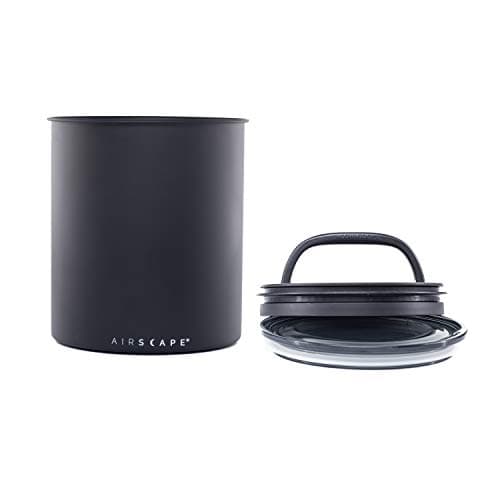
The Airscapehas an inner lid on a plunger with a one-way valve. You drop it onto the surface of the beans and press: the air between the beans and the lid is forced out through the valve, and the valve then stops it coming back. As you drink your way through the bag, the plunger follows the beans down, so the headspace above the coffee stays near zero for the life of the bag. There is nothing to charge, nothing to learn, and no way to do it wrong — you press until it stops.

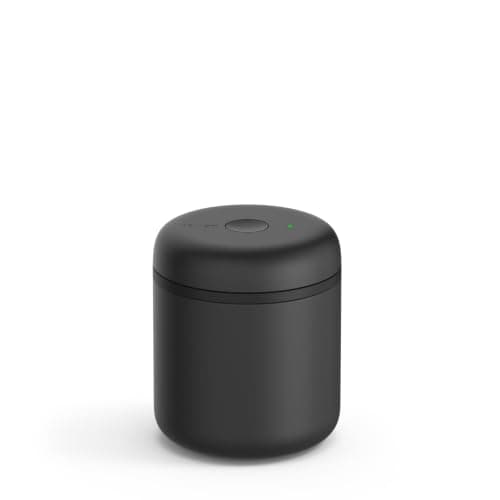
The Fellow Atmosworks the opposite way round. The lid is a pump. The beans sit in a fixed container and you remove air from the sealed space above them, which is a vacuum rather than a displacement. The electric version does it at the press of a button; the manual version is a twist. Because it is actively evacuating rather than passively excluding, it can get the oxygen concentration lower than a plunger can — and that is the one measurable advantage it holds.

Why does oxygen matter so much? Because staling is oxidation, and it is the dominant mechanism after roasting. The National Coffee Association lists air, moisture, heat and light as coffee's four enemies and puts roasted beans at room temperature at one to three weeks of real freshness. A canister is not a magic trick, but removing most of the oxygen moves you toward the top of that range instead of the bottom. Our how to store coffee beans guide covers the rest of the variables.

Where the Atmos actually wins

It holds beans you are not drinking fast. If you buy a 2 lb bag and take three weeks to finish it, or you keep two or three single-origins on rotation and only open one of them some weeks, the Atmos earns its premium. The vacuum is doing real work on the part of the bag you are not touching. That is also the case for anyone buying expensive specialty coffee, where the thing you are protecting is worth protecting.

It is a nicer object. This is not a performance claim and we are not going to dress it up as one, but it matters to buyers: the Atmos is a countertop item people like looking at, and the electric version makes a satisfying noise. If the canister lives on display, that is a legitimate reason to pick it.

Where the Airscape wins, which is more often than the internet suggests

Ritual-free beats theoretically better.The Airscape's advantage is that the correct action is the obvious one. You press the lid down. There is no step you can skip, no pump to re-run after you take beans out, and no battery. A vacuum canister that you forget to re-pump after every scoop is just a jar, and that failure mode is common.

Capacity per dollar. The Airscape is sold in sizes up to a 2.2 lb bag, which is the size most people buying whole bean actually buy, and it is cheaper than the Atmos at the same time. If you are storing one big bag rather than curating three small ones, that is the straightforward answer.

Nothing to break. It is a steel tube, a plunger and a valve. There is no motor and no charging port.

The budget answer nobody mentions

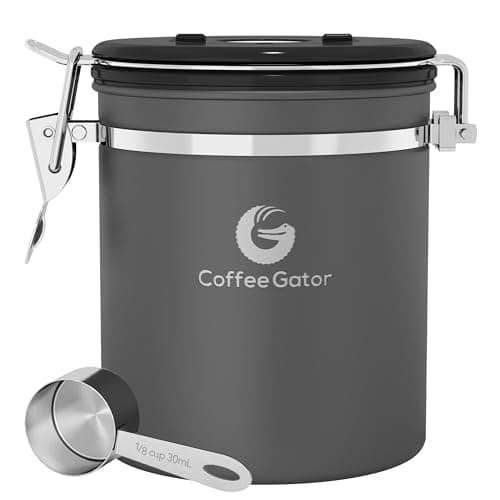
The Coffee Gator canister is the honest third option, and skipping it would be a disservice. It is stainless, opaque, airtight, and has a one-way valve to let the CO2that fresh beans off-gas escape without letting oxygen back in. What it does not do is reduce the headspace as you empty it — a half-empty Coffee Gator has half a canister of air in it, and that is the specific problem the other two solve. For a 12 oz bag you finish in a week or two, it genuinely does not matter, and the price difference is large.

The one-line answer by situation

Expensive beans, slow drinker, or several bags on rotation: Fellow Atmos. One big bag, no interest in a ritual: Airscape. Small bag, tight budget, want it better than the paper bag: Coffee Gator. For the wider field including vacuum-sealed and valve-bag options, see best coffee storage containers, and our full Airscape review and Fellow Atmos review go deeper on each.

The short answer

Quick picks

#ProductBest forScorePrice
01
Fellow Fellow Atmos Electric Vacuum Canister
Fellow Atmos Electric Vacuum Canister

The canister that vacuums itself — it senses the air and pumps it out automatically, no twisting.

The best-sealing canister
8.3
$69.95Amazon
02
Airscape Airscape Coffee Canister (2.2 lb)
Airscape Coffee Canister (2.2 lb)

The plunger canister — press the inner lid down to push the air out. Simple and effective.

Larger bags and simple sealing
8.0
$47.49Amazon
03
Coffee Gator Coffee Gator Stainless Steel Canister (16oz)
Coffee Gator Stainless Steel Canister (16oz)

The value canister with a one-way CO2 valve and a freshness date dial. Does the job for little money.

Best value airtight storage
8.3
$21.99Amazon

#ad · Live prices from the Amazon Product API, as of October 20, 2026. Where we have no verified live price, we show none — we would rather leave a gap than print a number that has rotted.

In detail

The picks, in full

01
Fellow Fellow Atmos Electric Vacuum Canister

The best-sealing canister

Fellow Atmos Electric Vacuum Canister

Automatic electric vacuumRechargeable (USB-C)Steel bodyReusable
8.3/10

The canister that vacuums itself — it senses the air and pumps it out automatically, no twisting.

Build quality
9
Does the job
9
Ease of use
8
Value
7

Pros

  • The electric pump removes air automatically, which slows the oxidation that turns coffee stale — the one canister that does more than 'airtight'
  • A handsome steel object that looks the part next to a grinder
  • Reusable, no consumables — recharge over USB-C

Cons

  • Pricier than a plain gasket canister that's 'good enough' for fast drinkers
  • The pump needs occasional recharging, unlike a passive lid

Don't buy this if…

…you finish a bag within a week. Beans that fresh barely oxidize — a cheap airtight jar is fine, and the vacuum is money you don't need to spend.

$69.95View on Amazon

Price as of October 20, 2026. Prices change — Amazon's is the one that counts.

#ad · we may earn a commission from this link to Fellow Atmos Electric Vacuum Canister

02
Airscape Airscape Coffee Canister (2.2 lb)

Larger bags and simple sealing

Airscape Coffee Canister (2.2 lb)

Plunger inner lidHolds 2.2 lbSteel bodyOne-way valve
8.0/10

The plunger canister — press the inner lid down to push the air out. Simple and effective.

Build quality
8
Does the job
8
Ease of use
8
Value
8

Pros

  • The inner plunger lid presses air out as you push it down, so the seal shrinks with the coffee
  • The 2.2 lb size swallows a big bag, which the small Fellow can't
  • Well-made steel that lasts for years

Cons

  • The plunger is manual pressure, not a true pulled vacuum
  • For a small bag, the big canister leaves a lot of headspace unless you use the plunger fully

Don't buy this if…

…you buy small 12oz bags. The 2.2 lb size is oversized for that — a smaller Fellow or Coffee Gator seals a small bag better.

$47.49View on Amazon

Price as of October 20, 2026. Prices change — Amazon's is the one that counts.

#ad · we may earn a commission from this link to Airscape Coffee Canister (2.2 lb)

03
Coffee Gator Coffee Gator Stainless Steel Canister (16oz)

Best value airtight storage

Coffee Gator Stainless Steel Canister (16oz)

One-way CO2 valveDate-tracker dialStainless steelIncludes scoop
8.3/10

The value canister with a one-way CO2 valve and a freshness date dial. Does the job for little money.

Build quality
8
Does the job
8
Ease of use
8
Value
9

Pros

  • The one-way valve lets fresh-roast CO2 escape without letting oxygen in — the right feature for recently roasted beans
  • A dial on the lid tracks when you opened the bag, which is genuinely useful
  • Cheap, and it comes with a scoop

Cons

  • A gasket-and-valve seal, not a true vacuum like the Fellow Atmos
  • Steel body hides how much coffee is left

Don't buy this if…

…you want the maximum seal for beans you keep for weeks. The vacuum-pulling Fellow Atmos protects long-stored beans better.

$21.99View on Amazon

Price as of October 20, 2026. Prices change — Amazon's is the one that counts.

#ad · we may earn a commission from this link to Coffee Gator Stainless Steel Canister (16oz)

What a canister can and cannot do

A canister controls two of coffee's four enemies well (air and light), one of them partly (moisture), and the fourth not at all (heat — that is where you put it, not what you put it in). It does not make old coffee fresh and it does not extend freshness indefinitely. What it does is stop you throwing away the back half of every bag.

The practical frame: the NCA's own numbers put roasted beans at one to three weeks at room temperature, and the difference between those two ends is largely how much oxygen the beans sat in. A good canister is the cheapest way to land at three weeks rather than one.

Opaque, always

Both of these are opaque, and that is not decoration. Light degrades coffee, which is why the NCA tells you to use opaque containers and to keep the pretty glass jars for display beans you are not going to drink. A clear canister on a sunny counter is an actively bad choice no matter how good its seal is.

The one-way valve, and why fresh beans need it

Coffee off-gasses carbon dioxide for days after roasting — that is what the valve on a roaster's bag is for. Seal very fresh beans in a truly rigid airtight container with no escape and you build up pressure. All three canisters here handle this: the Airscape and Coffee Gator with one-way valves, the Atmos by being a pump you can simply re-run. If you buy from a local roaster within days of the roast date, this is a real consideration rather than a theoretical one.

Size it to the bag, not to the counter

The single most common mistake is buying a canister much bigger than the bag you buy. A 2.2 lb Airscape holding 12 oz of coffee has the plunger most of the way down, which is fine. A fixed-volume canister that size holding 12 oz is mostly full of air, which is not. Match the capacity to your usual bag, and if you buy in bulk, consider keeping the working week's beans in the canister and the rest sealed in the freezer — can you freeze coffee beans covers how to do that without ruining them, because there is a right and a wrong way.

Do not grind ahead to fill it

A canister is for beans. Ground coffee has vastly more surface area exposed to oxygen and the NCA puts it at one to two weekseven at room temperature in good storage — and that is the optimistic reading. No canister rescues pre-ground coffee; grinding immediately before brewing is the free upgrade that beats any storage purchase. If you are still on pre-ground, a grinder under $100 will do more for your cup than either canister on this page.
How we picked

We do not run a testing lab

We compiled published manufacturer specifications, computed what each option costs to run where relevant, and cross-referenced aggregated owner reviews, then scored each product against a published rubric. The scores are judgments from documented research — they are not measurements we took, because we do not have a lab and we are not going to pretend we do. Where a number came from a manufacturer or a standard, we name it in Sources.

Questions

Frequently asked

Is the Fellow Atmos actually better than the Airscape?
At removing oxygen, yes — it pumps air out of a sealed container, where the Airscape displaces air by pressing a plunger onto the beans. A vacuum reaches a lower oxygen level than displacement can. Whether that makes it the better purchasedepends on you: the Atmos only wins if you re-pump it every single time you take beans out. The Airscape's advantage is that its correct use is unavoidable.
Does the Airscape really remove the air?
Most of it, by displacement rather than suction. The inner lid rides on a plunger with a one-way valve; pressing it down forces the air between the beans and the lid out through the valve, and the valve keeps it from returning. Because the plunger follows the coffee level down as you use the bag, the headspace stays small the whole way through — which is the thing a fixed-volume jar cannot do.
Do I need the electric Atmos or is the manual one fine?
The manual version pulls the same kind of vacuum; the electric one just does it for you at a button press. Buy electric if you think the extra friction of twisting it would stop you doing it, which is a real risk and the only way a vacuum canister fails. Buy manual if you are disciplined and want nothing to charge.
How long will coffee stay fresh in either one?
The NCA puts roasted whole beans at one to three weeksat room temperature in proper storage, and a good canister is what moves you toward the top of that window instead of the bottom. Neither canister extends coffee for months — for that you need the freezer, and freezing has its own rules.
Can I keep ground coffee in one of these?
You can, and it will be better than the bag, but it does not fix the underlying problem. Ground coffee stales in one to two weeks even stored well, because the surface area exposed to oxygen is enormously larger. The canister is worth buying for beans; for grounds, the real answer is to grind what you are about to brew.
Should I put the canister in the fridge?
No. The NCA puts refrigerated beans at about two weeks — worsethan the room-temperature range — because coffee absorbs moisture and odors from the air around it, and a fridge is humid and full of smells. A cool, dark cupboard beats a fridge every time.

Keep reading

Receipts

Sources

We do not run a testing lab, and we do not pretend to. Where a measured number came from a manufacturer spec sheet or a published standard, we name it and link it. Where we could not verify something, we say so on the page rather than quietly leaving it out. Read our full method.