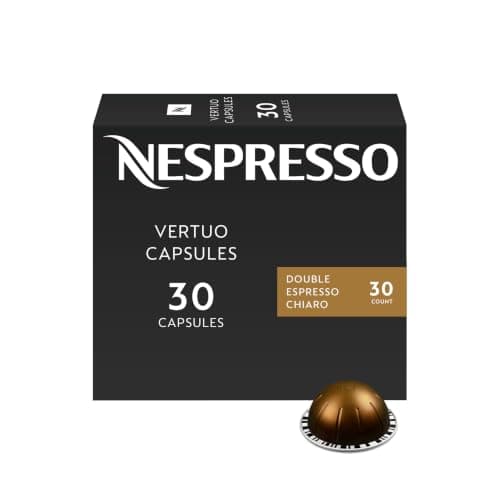
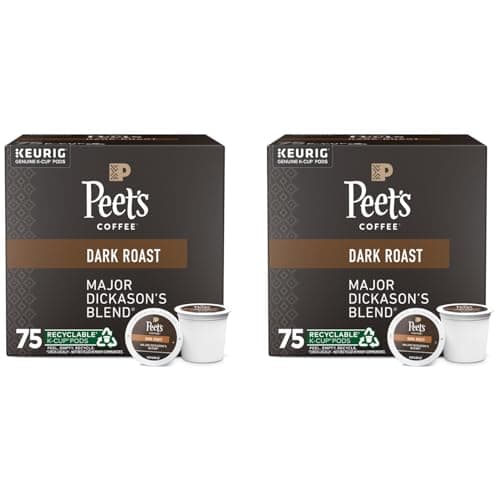
For a Keurig, buy Peet's Major Dickason's Blend K-Cups: it is a genuinely good dark roast blend rather than a pod-only product, and dark roast is what survives the format best. If a household shares the brewer, Caribou Blend is the medium nobody argues about, and Community Coffee Café Special is the one to buy when cost per cup is the deciding factor. For a Nespresso Original machine, Lavazza Espresso Maestro Classicois better value than Nespresso's own range and comes from an actual Italian roaster. For a Vertuo you have no real choice, and Nespresso's Double Espresso Chiaro is the size and roast to default to.
Everything on this page is organized around one fact that trips up most pod shopping: the three formats are not interchangeable, and only one of them is an open market. Get that wrong and you buy 80 pods that will not fit your machine.
First, which format does your machine take?
K-Cup (Keurig). The hard plastic cup with a foil lid. An open format with dozens of roasters making compatible pods, which is why it has the widest choice and the lowest prices. Everything from pick 1 to pick 8 below is a K-Cup.
Nespresso Original.The small cone-shaped capsule, pressed through at espresso pressure. Also effectively open — Lavazza, illy and many others make Original-compatible capsules, so you are not locked into Nespresso pricing. This is the format for people who want actual espresso out of a pod machine.
Nespresso Vertuo. The wide, domed capsule. Vertuo is a closed system by design: the machine reads a barcode printed on each capsule and uses it to set the water volume, temperature and spin rate for that specific coffee. No barcode, no correct brew — which is why third-party and refillable Vertuo pods essentially do not work, and why Nespresso states plainly that Vertuo capsules will not fit an Original machine and Original capsules will not fit a Vertuo. There is no adapter. Our Vertuo vs Original page goes through the two systems properly, and Keurig vs Nespresso covers choosing between them in the first place.
What a pod can and cannot do
A pod is pre-ground coffee in a sealed container, and the two things that follow from that are the whole story. The good part: it is flushed and sealed at the factory, so it is genuinely protected from oxygen until the moment you pierce it — often fresher than a bag of pre-ground coffee that has been open on your counter for three weeks. The bad part: the grind was set months ago, for an average machine, and you cannot change it. Grind is the main lever on extraction, so a pod hands you a fixed recipe and asks you to live with it.
That is why our picks skew toward medium and dark roasts. A light roast needs a finer grind and a longer, gentler extraction to give up its sweetness; a pod gives it a fast, hot, pressurized 30 seconds. Dark roasts are already soluble and already assertive, so they arrive in the cup more or less intact. There is exactly one light roast on this page and it is there because some people genuinely prefer it, with a caveat attached. If you want to understand what you are giving up, whole bean vs ground is the honest version of that argument.
The picks, by what you actually drink
1. Peet's Major Dickason's Blend — best overall K-Cup. Listed as 100% Arabica dark roast in a 75-pod box. This is the pick because the coffee existed and was good before anyone put it in a pod — we review the whole-bean version on its own page. Dark, round, chocolatey, and still recognizably itself at 8 oz. The cons: pushed to a 6 oz setting it concentrates the roast rather than the sweetness and can read ashy, and a 75-pod box means pods sitting in a cupboard for months.
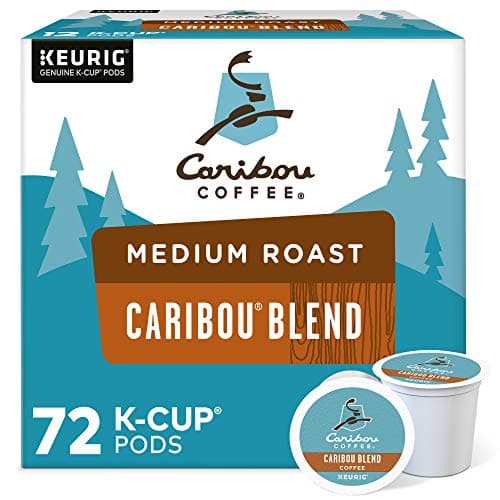
2. Caribou Blend — best everyday medium.Seventy-two pods of a medium roast built specifically to be uncontroversial. In a shared kitchen that is the feature, not a criticism: medium roast has enough body to survive the pod and enough sweetness to drink black or with milk. The cons are the flip side — nothing here will interest someone who grinds fresh beans the rest of the week, and because it is stocked everywhere it rarely gets discounted hard.
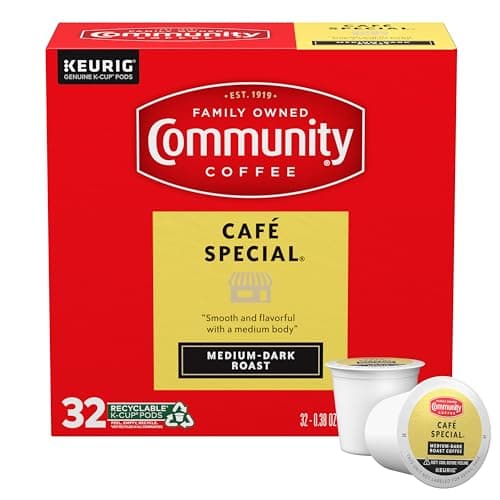
3. Community Coffee Café Special — best value. A medium-dark from a family-owned Louisiana roaster, in a 32-pod box that is consistently among the cheapest per pod here. Once a household is at three cups a day, cost per cup swamps every other consideration, and medium-dark is where pods do their best work. The cons: a 32-pod box runs out faster than the 72- and 96-counts, and medium-dark is a definite style rather than a crowd-pleaser.
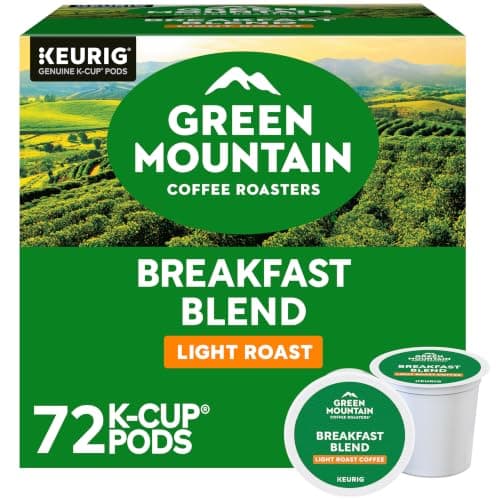
4. Green Mountain Breakfast Blend — best light roast.Listed as a light roast with toasted nutty and cocoa notes, 72 pods, from Keurig's own roasting arm — so compatibility across every Keurig generation is as safe as it gets. If dark roast tastes burnt to you, this is the page's answer. The caveat, stated plainly: light roast is where the format's limits show. Brew it long and it goes thin fast, so use the smallest cup size your brewer offers, and do not expect strength.
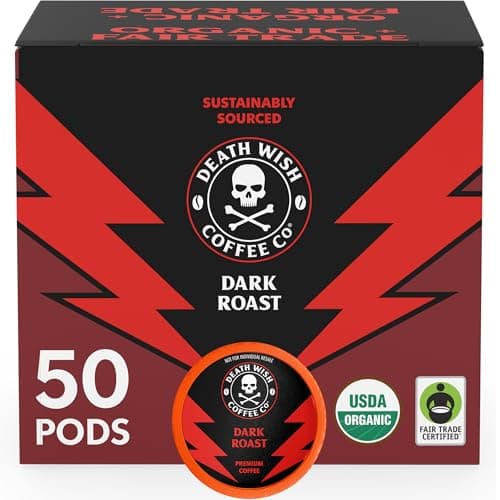
5. Death Wish Coffee Dark Roast Pods — strongest.Fifty pods, listed as organic and Fair Trade, and — the actual reason it works — a blend of Arabica and Robusta. Robusta carries more caffeine and more body than Arabica, which is precisely what a single-pod dose is short of. Listed notes are baker's chocolate and cherry with low acidity and a heavy body. The cons: it costs noticeably more per pod than the regional roasters, and a Robusta-forward dark roast is a hard, bitter style if strength is not what you want. Our Death Wish Coffee review covers the whole-bean version.
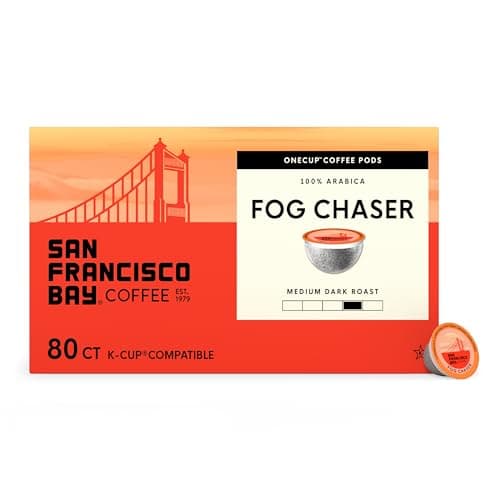
6. San Francisco Bay Fog Chaser — best compostable. Eighty pods, listed as commercially compostable single-serve pods, medium-dark. Fog Chaser is a real blend with a following rather than filler coffee wrapped in a green claim. Read the con carefully, because it is the whole point: commercially compostable is not home compostable and not curbside compostable. It needs an industrial facility, and most US households do not have access to one. Check what your municipality actually takes before you buy on that basis.
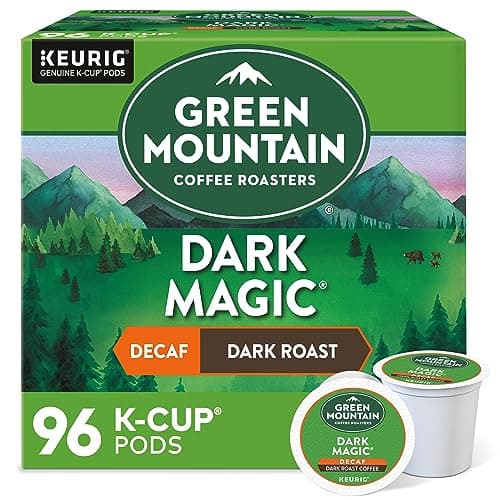
7. Green Mountain Dark Magic Decaf — best decaf.Ninety-six pods across four sealed boxes, dark roast. Dark is the right call for decaf: decaffeination strips aromatics, and a heavier roast puts body back. Splitting 96 pods into four boxes also means the last pod is fresher than one dug out of a single giant carton. The cons: decaf in a pod is a compromise twice over, and this roast reads bitter at small cup sizes. For better decaf, grind it — see best decaf coffee.
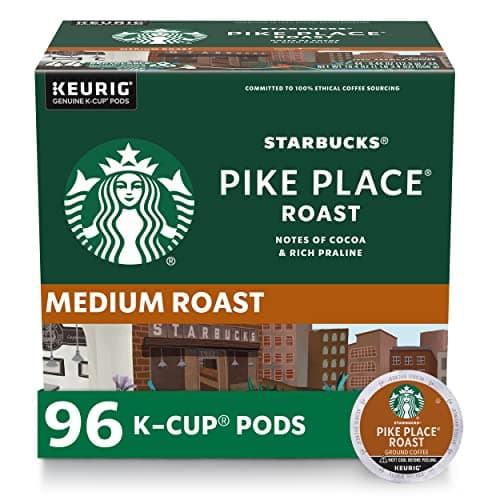
8. Starbucks Pike Place Roast — best big box.Ninety-six pods, listed for hot or iced. Buy this if you already like Starbucks house coffee: it tastes like the cafe version, which is the entire proposition, and it is the box most likely to be on promotion. The cons are honest — the Starbucks house style is roasty and bittersweet and a pod amplifies that, and you pay above the regional roasters for coffee that is not objectively better.
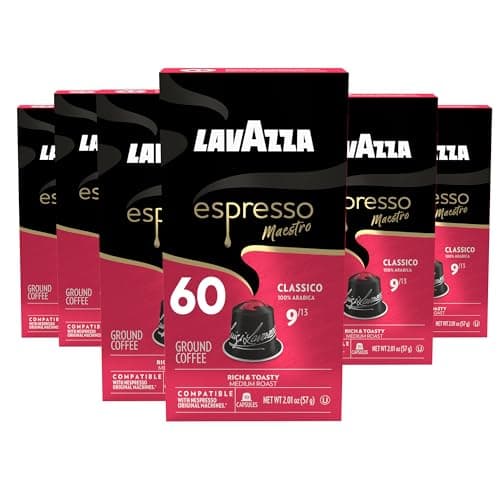
9. Lavazza Espresso Maestro Classico — best Nespresso Original.Sixty aluminum capsules, medium espresso roast, 100% Arabica, Original-line compatible. Lavazza is a roaster first and a capsule brand second, aluminum holds aroma better than plastic, and the price per shot sits well under Nespresso's own range. The cons: Original-line only, and third-party capsules vary slightly in fit so a tight one can need a firmer lever close. If you are still choosing a machine, see best Nespresso machines.
10. Nespresso Vertuo Double Espresso Chiaro — best Vertuo.Thirty pods, dark roast, 2.7 oz Double Espresso size. On a barcode-locked system, buying the maker's own pod is not a compromise, it is the only option that brews at the intended volume. Double Espresso is the most useful Vertuo size: strong enough for milk drinks, small enough not to dilute. The cons: the highest cost per cup on this page, and a closed system means no third-party price pressure at all.
The one-line answer by situation
Best overall: Peet's Major Dickason's. Shared household: Caribou Blend. Cheapest per cup: Community Café Special. You hate dark roast: Green Mountain Breakfast Blend. You find pods weak: Death Wish. Decaf: Dark Magic Decaf. Guilt about plastic: San Francisco Bay Fog Chaser, if you have commercial composting. Nespresso Original: Lavazza Espresso Maestro. Vertuo: Double Espresso Chiaro.
The recycling claim, stated accurately
This is the part of pod shopping where the marketing and the reality diverge most, so here is the whole picture. Keurig states that all of its K-Cup pods are made from recyclable polypropylene (#5 plastic), and its instructions are to peel and discard the lid, compost or bin the grounds, and recycle the empty cup. That is true as far as the material goes. Keurig's own page also carries the qualifier that acceptance varies by location because facilities differ, and its footnote says the pods are not recycled in many communities.
The reason to be careful with the stronger version of that claim is on the public record. On 10 September 2024 the Securities and Exchange Commission charged Keurig Dr Pepper over statements about K-Cup recyclability in its fiscal 2019 and 2020 annual reports, which described testing that validated the pods could be effectively recycled. The SEC said the company did not disclose that two of the largest recycling companies in the United States had raised significant concerns about the commercial feasibility of curbside recycling of the pods. Keurig Dr Pepper agreed to a $1.5 million civil penalty and a cease-and-desist order without admitting or denying the findings.
What that means for you, practically: "recyclable" describes the plastic, not your curbside bin. Many facilities reject anything smaller than a yogurt cup regardless of material. So before you choose a pod on environmental grounds, call or check your own municipality. If it does not take small #5 containers and has no commercial composting, the genuinely lower-waste option is a reusable filter you fill with your own coffee — see best reusable K-Cups. Nespresso's aluminum capsules, Original and Vertuo, go through the brand's own mail-back and drop-off recycling program rather than curbside, which is a different system with its own friction.
Work out your real cost per cup before you buy a box
Pod pricing is deliberately hard to compare, because boxes come in 12, 24, 30, 32, 50, 72, 75 and 96 counts. Do the arithmetic once: divide the live box price by the pod count. That single number is the only way to compare a 30-pod Vertuo sleeve against a 96-pod K-Cup carton, and it will usually surprise you — the bulk K-Cup boxes from regional roasters routinely land at a fraction of a branded 12-pack, for coffee that is at least as good. Then compare that number against a bag of whole beans at the same cup size; our espresso cost calculatordoes that comparison for you. Pods lose that comparison every time, and convenience is a real thing to pay for — but you should know the size of the premium rather than discover it at the end of the year.
How to make any pod taste better
Three things, in order of effect. Use the smallest cup size.A pod holds a fixed amount of coffee, so every extra ounce you ask your brewer for is dilution, not more coffee. If your machine offers 6, 8, 10 and 12 oz, the 12 oz setting is the one that makes people think pods are weak. Brew at 6 or 8 oz and add hot water if you want volume — you will get a better cup than brewing long.
Descale the machine.Scale on the heating element drops brew temperature, and a pod has no grind adjustment to compensate with, so a scaled brewer produces a sour, thin cup out of a perfectly good pod. This is the single most common cause of "my Keurig suddenly tastes bad." See how to descale a Keurig and how to descale a Nespresso.
Store the box closed and cool. Individual pods are sealed, but the lids are thin and they are not immune to time. Buy a box size you will actually finish in a couple of months rather than the biggest carton on offer, which is the real argument for the 32- and 50-pod boxes over the 96.
Pod strength, and why two pods is the wrong fix
A standard K-Cup holds somewhere around 10 to 12 grams of coffee, which is roughly the right dose for a 6 oz cup and clearly short for a 12 oz mug. People compensate by running two pods into one mug, which works but doubles your cost per cup — at which point a dedicated strong pod like the Death Wish Robusta blend is both cheaper and better, because strength built into the roast tastes different from strength built by brewing twice. If strength is your main complaint about pods generally, that is the pick, and how much caffeine is in coffee puts the numbers in context.
Where pods genuinely beat grinding, and where they do not
Pods win on three things and it is worth being honest about them: a cup in under a minute with no cleanup, zero waste when only one person in the house drinks coffee, and guests who each want something different. Those are real. What they lose is control over grind, freshness after the first month, cost per cup, and the ability to buy coffee from a roaster you like. If you drink one cup on weekdays and a proper pot at the weekend, owning both is a perfectly sensible answer — the mistake is using a pod machine as your only brewer and then wondering why coffee at home never tastes like coffee out. Keurig vs drip coffee and single-serve brewers cover that decision; if you have decided pods are for you, the K-Elite review is our pick of the machines.
What about refillable pods?
For a Keurig, they work well and they change the economics completely: you buy whole beans, grind medium-fine, fill, brew. Expect slightly less pressure and a slightly thinner cup than a factory pod, and expect to rinse something every morning — which is the convenience you were buying in the first place. For Nespresso Original, refillables exist and are fiddly. For Vertuo, the barcode system means refillables are not a practical option at all. Our reusable K-Cup roundup covers the ones worth owning, and if you go that route the grind matters again: best coffee brands is where to start buying beans.