If you want one answer: buy Stumptown. It is the specialty roaster whose flagship blend is good enough to impress and forgiving enough to drink every morning, and it is stocked widely enough that you can restock without planning ahead. If you would rather buy coffee on the same trip as your groceries, Peet's is the best brand you can reach without trying. For home espresso on a budget it is Lavazza; for certified-organic value it is Kicking Horse; for a specialty bean built specifically for the shot it is Intelligentsia; and if the point is caffeine, it is Death Wish.
A brand-level question deserves a brand-level answer, because what separates coffee companies is not really taste — taste is a roast level and an origin, and plenty of brands can hit the one you like. What separates them is how much they tell you, how recently the coffee was roasted when it reaches you, what the sourcing is backed by, and what you end up paying per pound rather than per bag. All four are checkable, so those are what this page ranks on.
The criteria, before the picks
1. Does the bag tell you when it was roasted?A roast date is the single most useful thing a coffee brand can print. A "best before" date a year out tells you when the bag stops being sellable, not when the coffee is good. The National Coffee Association puts roasted whole beans at one to three weeks of real freshness at room temperature and ground coffee at one to two weeks, and says plainly that coffee "begins to lose freshness almost immediately after roasting." Specialty roasters print the date because they turn stock over fast. Grocery brands mostly do not.
2. Can you check the sourcing?Certifications are not a flavor promise, but they are an auditable one. Kicking Horse carries organic and Fairtrade marks on its own storefront; Death Wish titles its own site "#1 Organic and #1 Fair Trade Coffee"; illy displays a B Corporation badge on its US store. Where a brand makes no claim, we say so rather than inferring one.
3. Does the range cover your brewer?A brand that only roasts dark is a bad fit if you brew light-roast pour-over, and an espresso blend built around robusta is the wrong bag for a V60. Match the brand to the machine you own before you compare prices — our coffee beans hub breaks the field down by brewer.
4. What does a pound cost, not a bag? This is where brands shuffle dramatically. A 2.2 lb bag of an Italian espresso blend and a 12 oz bag of specialty coffee can look like similar money on the shelf and differ by a factor of three per pound. Every price on this page is pulled live, so you can do that math today rather than trusting a number we typed last quarter.
The picks
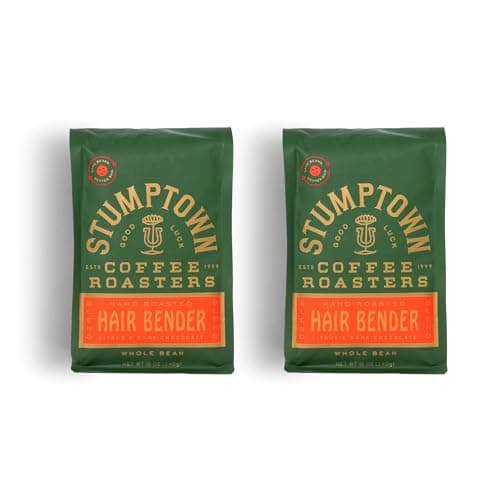
1. Stumptown — the best brand overall.Hair Bender is the blend that made the Portland roaster's name, and Stumptown's own listing puts it at roast level 7 with notes of citrus, dark chocolate and raisin, in 12 oz and 5 lb sizes. That profile is the useful middle: enough brightness to taste like a specialty coffee, enough chocolate body that it does not fall apart under milk, and versatile enough to pull as espresso or brew as pour-over. The honest cons: it costs more per ounce than any grocery blend here, and a brighter medium roast is less forgiving of sloppy espresso technique than a robusta crema blend. See the Hair Bender review.
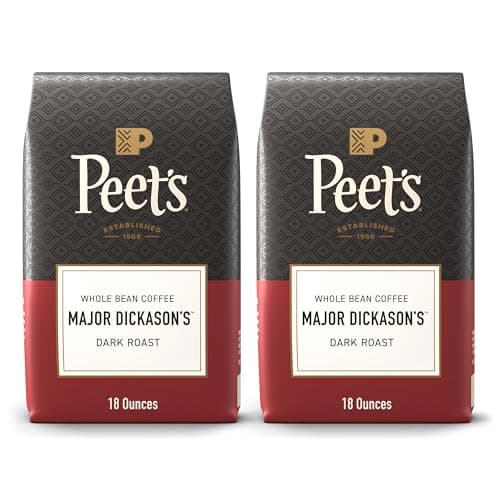
2. Peet's — the best brand you can buy anywhere.Peet's dates itself to 1966 on its own masthead and leads with dark roast, and Major Dickason's Blend is described there as its all-time best seller. That is the brand in one line: a deep, rich, full-bodied dark roast that behaves predictably in a drip machine, a press or a milk drink, sold in essentially every supermarket in the country at a sane price. The cons are the cost of that reach. Dark roasting flattens origin character, so you taste the roast more than the bean, and Peet's makes no roast-date or freshness promise on its storefront — the bag you grab may have been on the shelf a while. Full Major Dickason's review here.
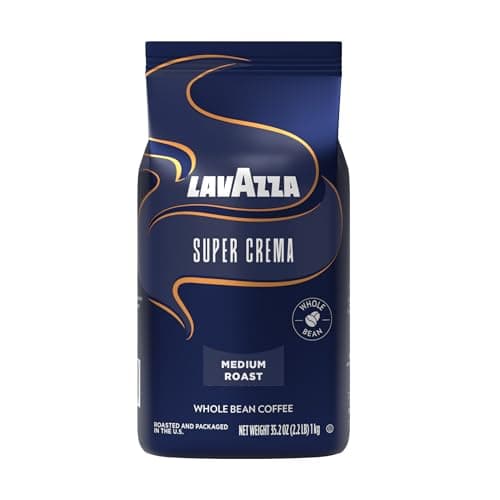
3. Lavazza — the best brand for home espresso.Super Crema is still a current line on Lavazza's US store, and it is the bag we hand almost every new espresso owner: an arabica-and-robusta blend in a 2.2 lb bag that produces thick, stable crema and a mild, nutty shot while your technique is still rough. The robusta is doing that work on purpose — the NCA describes robusta as bolder with bitter undertones and carrying roughly 50 to 60 percent more caffeine than arabica, used mainly in blends, which is exactly the role it plays here. The cons: mellow by design, so it lacks the character of a specialty single origin, and supermarket bags can sit, so check the date where one is printed. See the Super Crema review and, if you are weighing the other Italian default, Lavazza vs illy.
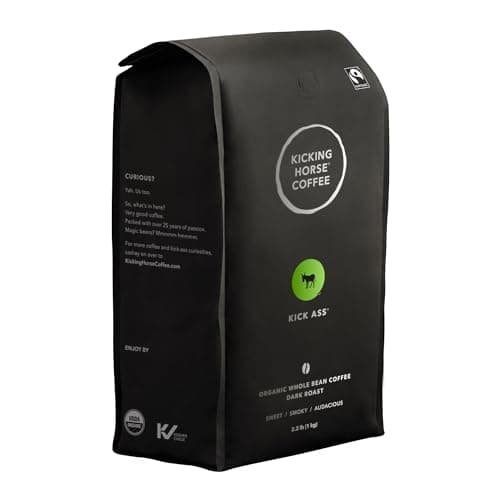
4. Kicking Horse — the best certified-organic brand.Kicking Horse's own storefront carries organic, Fairtrade and "roasted in Canada" marks, and Kick Ass is its listed top seller. In a 2.2 lb bag it is one of the cheapest ways to drink certified coffee without going bulk, and the cup is a bold, chocolatey dark roast that works from drip to espresso. Cons: it is firmly dark, so light-roast drinkers should look elsewhere, and it is bold enough that under-dosing leaves it tasting harsh rather than strong. See the Kicking Horse review and the wider best organic coffee field.
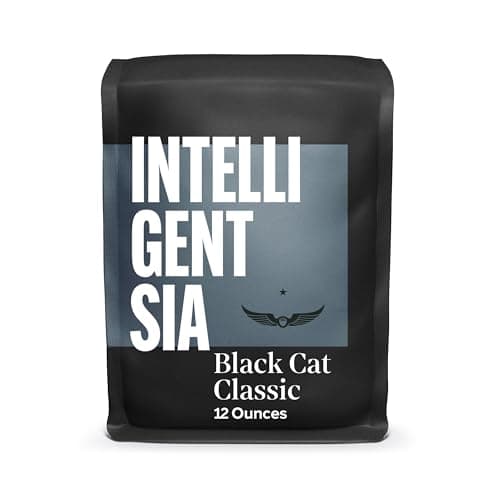
5. Intelligentsia — the best specialty espresso brand.Black Cat Classic Espresso is a 100% arabica blend built for the shot rather than adapted to it, which is why it comes out sweet and syrupy instead of sour or ashy on a dialed-in machine. If you have bought a decent grinder and you are tired of blends that only taste good under milk, this is the upgrade. Cons: it is less forgiving than a robusta crema blend, and it is freshness-sensitive — at its best within a few weeks of roasting, which means buying smaller bags more often.
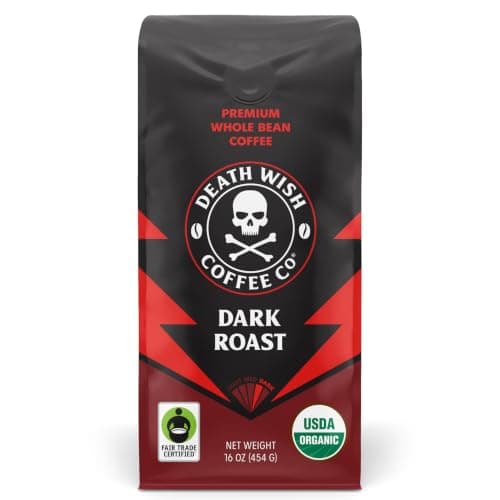
6. Death Wish — the best brand for caffeine.Death Wish built its business on strength, and its own site badges itself "#1 Organic and #1 Fair Trade Coffee." The blend is put together for a bigger caffeine hit than a standard dark roast, and the flavor holds up better than the skull on the bag suggests. Two honest caveats. The brand does not publish a milligrams-per-serving figure on its homepage, so we are not going to quote one. And strength is what the premium buys — if caffeine is not the point, Peet's or Stumptown give you more flavor per dollar. The Death Wish review has the detail, and best high-caffeine coffee covers the category.
Brands worth knowing that did not make the six
illyis the other Italian default, and its argument is consistency: the same medium-roast 100% arabica cup every time, with a B Corporation badge on its US store. It costs more per pound than Lavazza and makes a thinner crema — our Classico review and the head-to-head cover which one suits your machine. La Colombe is the pick if you want dark roast with specialty sourcing: Corsica is deep and chocolatey without the charred edge of commodity dark blends. Lifeboostis the brand to try if coffee upsets your stomach — organic, single origin and third-party tested, at a real premium per ounce (review, low-acid roundup). Volcanica is the one to know for single origins you will not find in a supermarket, and Cafe Don Pablo(Subtle Earth) is the organic value play if your household drinks enough to finish a 5 lb bag inside a month — see best single-origin coffee and best cheap coffee beans.
The one-line answer by situation
One brand for everything: Stumptown. Buying coffee with the groceries: Peet's. Learning espresso: Lavazza. Certified organic, sane money: Kicking Horse. Espresso that tastes like specialty coffee: Intelligentsia. Maximum caffeine: Death Wish. The same cup every single time: illy.
How to read a bag of coffee in ten seconds
Look for a roast date first. If there is one, you want weeks, not months. If the bag only carries a "best before" date, treat it as a shelf-life marker and assume the coffee is older than you would like. Then check the grind: a bag that says whole beanis the one to buy, because the NCA's freshness table gives ground coffee one to two weeks against one to three for beans — grinding multiplies the surface area exposed to oxygen. Whole bean vs ground has the trade-off in full, and how long coffee beans last covers the storage math.
Then the quantity. The NCA's advice is to "buy smaller batches more frequently—enough for one or two weeks." That single habit does more for your cup than moving up a brand tier, and it is why a 5 lb bag is a false economy for a one-person household no matter how good the per-pound price looks. Keep what you buy in an airtight, opaque container — the NCA notes that clear canisters let light in, which compromises taste. Our coffee storage container roundup covers the ones worth owning.
What the certifications actually buy you
Organic and Fairtrade marks are about how the coffee was grown and traded, not how it tastes. They are worth paying for if that is what you want to support, and they are genuinely auditable, which is more than most brand claims manage. What they do not tell you is roast date, origin quality or blend composition. Of the brands here, Kicking Horse and Death Wish display those marks on their own storefronts and illy displays a B Corporation badge. If certification is your priority, start with best organic coffee rather than with a brand you already like.
Grocery brand, specialty roaster, or subscription?
Grocery brands win on price per pound and on never being out of stock. Specialty roasters win on roast date, origin information and ceiling — the best cup you can get from a supermarket blend sits below the average cup from a good roaster. Subscriptions sit in between: they solve freshness by shipping recently roasted coffee on a schedule, and they cost more per pound than either. A sensible pattern for most households is one grocery brand for the everyday pot and one specialty bag for the weekend, which is why this list deliberately mixes the two.
Brand matters less than your grinder
This is the uncomfortable part of a brand roundup. If you are brewing with pre-ground coffee or a blade grinder, the difference between a good brand and a great one is mostly lost before the water hits the bed. A blade grinder produces dust and boulders at the same time; the dust over-extracts into bitterness and the boulders never extract at all, and no roaster can fix that for you. Burr vs blade is the full argument, and if you brew drip, the best grinders for drip coffee is where to spend before you trade up a brand tier.
Match the brand to the brewer
For espresso, a blend built for espresso beats a great filter bean: start with Lavazza while you learn, move to Intelligentsia once your shots are repeatable, and see best coffee beans for espresso. For drip, a medium roast with body is the safe middle — best coffee for drip. For French press, a darker roast holds up to a long immersion (press beans), and for pour-over a brighter light-to-medium roast is the point (pour-over beans). If you are not sure which roast you actually like, light vs dark roast is the shortest way to find out.
What we will not tell you
We have not cupped these brands side by side in a lab, because we do not have one. Every judgment here comes from published roaster information, the specifications on the live listings we link, cost-per-pound math and aggregated owner reviews, scored against a published rubric. Where a brand does not publish a number — Death Wish's caffeine content is the obvious one — we leave the gap visible instead of filling it.