Flavored coffee is the most misunderstood shelf in the coffee aisle. To a lot of drinkers it means a cheap, syrupy, artificial cup — and some of it is exactly that — but done well, flavored coffee is a real whole-bean coffee carrying a clean layer of aroma on top. The trick is knowing how it's made, buying whole bean so the base coffee stays fresh, and picking a flavor that reads as a treat rather than a chemistry set. Get those right and a bag of flavored coffee is one of the most crowd-pleasing, giftable things you can brew.
We ranked these three on the things that actually separate a good flavored coffee from a gimmick: the quality of the base bean first, because flavoring can't rescue stale or harsh coffee; then how natural and balanced the flavor tastes rather than chemical or cloying; then value and how the bag fits everyday drinking or gifting. All three are whole bean and 100% Arabica, which matters more than it sounds — and prices render live, so every value call tracks what a bag costs today rather than a number typed once and left to go stale.
Here is what actually happens in the bag. Flavored coffee starts as ordinary roasted coffee; the flavor is added afterward, once the beans have cooled, by tumbling them with flavoring oils that coat the outside of the bean. Those oils can be natural — derived from real spices, nuts, or extracts — or artificial, lab-made compounds engineered to taste like caramel, hazelnut, or cinnamon, and most commercial flavored coffees use a mix of both. Nothing is injected into the bean and nothing is brewed in; the flavor lives on the surface, which is why flavored beans look slightly glossy and why the aroma hits you the moment you open the bag. It also means the coffee underneath is just coffee: a good flavored bag is a good bean wearing a scent, and a bad one is a mediocre bean hiding under it.
One thing flavored coffee is not: sweet. This surprises people. The caramel, vanilla, and cinnamon-roll aromas trick your nose into expecting sugar, but the flavoring oils add almost no calories and no actual sweetness — the cup tastes of dessert while staying black-coffee light. That is the quiet superpower of a good flavored coffee: it scratches the sweet-tooth itch without a spoon of sugar or a pump of syrup, so it's genuinely useful if you're cutting back on either. Add what you like if you want it sweeter still, but many people find the aroma alone does the job.
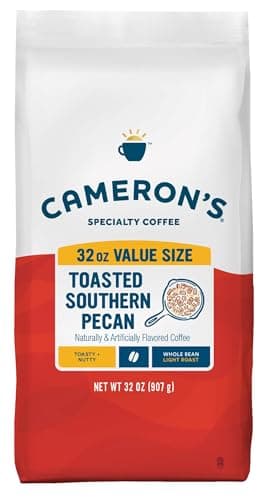
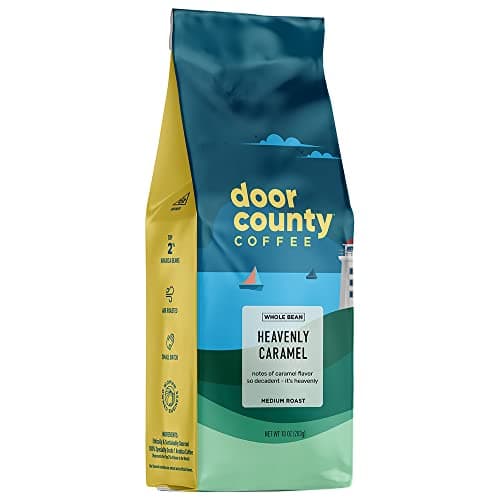
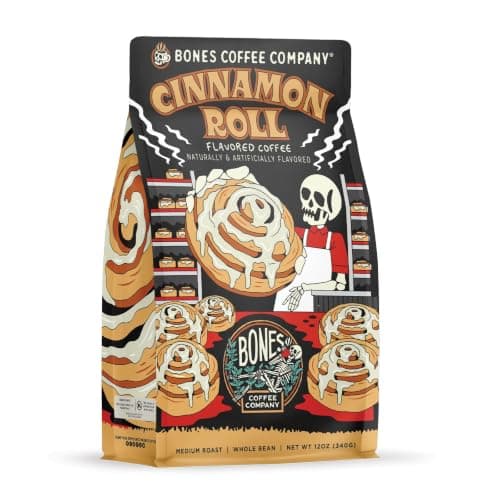
Bones Coffee Cinnamon Rolltakes the top spot as the flavored coffee for people who actually want to taste the flavor: it's a cult brand for a reason, with big, aromatic, unapologetic flavors layered over a decent 100% Arabica medium. Open the bag and the room smells like a bakery. Cameron's Toasted Southern Pecanis the value everyday pick — smooth and easy-drinking, with a flavor that's clearly present but never overpowering, at a price per bag that undercuts most of the flavored aisle. It's the one to buy by the bag for daily drinking. Door County Heavenly Caramel is the dessert-style treat: sweeter and more indulgent on the nose, closer to a caramel dessert than a plain cup, in a smaller bag that suits an occasional splurge or a gift more than an everyday habit.
For flavored coffee, buying whole bean matters even more than it does for regular coffee, and here's the counterintuitive reason: those surface oils that carry the flavor also carry the aroma, and aroma is the first thing to escape once coffee is ground. Pre-ground flavored coffee smells fantastic in the bag and noticeably flatter by the time you brew it, because grinding blasts that fragrant oil coating into the air. Buy whole bean, grind right before you brew with a burr grinder, and the flavor arrives in the cup instead of evaporating in a warehouse. Our whole bean vs ground guide works through the freshness math, and it applies double to anything flavored.
One practical note flavored-coffee fans learn the hard way: the flavoring oils can leave a residue in your grinder and your brewer, and that residue can carry the flavor into the next, unflavored pot. If you brew both, it's worth wiping the grinder and rinsing the basket between them, or keeping flavored coffee to a method you don't mind dedicating to it. It's a small housekeeping cost, not a dealbreaker, but it's the honest downside nobody prints on the bag.
Flavored coffee is also the easiest coffee to give as a gift, and these three are built for it. A named, dessert-style flavor is approachable in a way a single-origin light roast never is — nobody needs to know their palate to enjoy Cinnamon Roll or Heavenly Caramel — so it lands with casual coffee drinkers, office swaps, and stocking stuffers alike. Bones in particular has turned its huge flavor range into a following, which makes a bag feel like a fun, specific choice rather than a generic present.
The honest limits, pick by pick. Bones is deliberately loud — the flavor dominates the bean, which is the whole point, but it's too much for anyone who wants to actually taste the coffee, and as a medium flavored roast it's built for drip and mugs, not for pulling a serious espresso. Cameron's flavoring is subtler, which is a feature for everyday drinking but a letdown if you came for a big, bold hit — and it, too, is a mild drip coffee rather than an espresso bean. Door County runs in smaller bags, so the effective cost per cup is higher, and its sweet, dessert profile is a niche treat, not an all-day all-rounder. And all three share the same ceiling: flavored coffee is not for purists, and no amount of flavoring makes a coffee complex — it makes it fun.
Which brings us to the honest bottom line: if you love flavored coffee, buy the one whose flavor style fits you — Bones for bold, Cameron's for smooth everyday value, Door County for a sweet dessert treat — and buy it whole bean so the aroma survives to the cup. And if you're a purist who wants to taste the bean itself, that's completely fine: skip this category and go straight to our best single-origin coffee, where the whole point is a bean with nothing added. Neither camp is wrong. Flavored coffee just isn't trying to be the same thing, and the drinkers who love it know exactly what they're there for.
How to choose a flavored coffee
Buying flavored coffee well is mostly about not getting fooled — by a great smell hiding a poor bean, or by pre-ground convenience that throws away the flavor you paid for. Here is what actually decides the cup.
1. Judge the base bean first
Flavoring is a coat of paint; it can't fix a rotten wall. A flavored coffee is only as good as the coffee underneath, so favor bags that start from a decent 100% Arabica bean — all three picks here do. If the base is harsh, stale, or bitter, no amount of caramel aroma saves it; it just tastes like harsh coffee with a perfume on top. Read what the roaster says about the coffee itself, not only the flavor name.
2. Understand natural vs artificial flavoring
The flavor is added to the roasted bean as an oil, and it's either natural (from real spices, nuts, and extracts) or artificial (engineered compounds), with most brands using some of each. Neither is unsafe, and honestly, blind, most people can't reliably tell them apart. Natural flavorings tend to read a touch rounder and less candy-like, so if the artificial edge bothers you, look for "naturally flavored" on the label — but don't assume artificial means bad. It mostly means consistent.
3. Buy whole bean — the aroma depends on it
This is the rule flavored-coffee drinkers break most and regret most. The flavoring oils that make the cup live on the surface of the bean, and grinding scatters them into the air, so pre-ground flavored coffee fades fast. Buy whole bean and grind right before you brew with a burr grinder; the difference in how much flavor reaches the cup is dramatic. Our whole bean vs ground guide lays out why freshness matters even more here than for plain coffee.
4. Don't expect sweetness
The single most common surprise: flavored coffee smells sweet but isn't. The oils add aroma, not sugar, so a cup of Heavenly Caramel is still essentially black coffee in calories. That's a genuine advantage if you're trying to cut sugar or skip a syrupy café drink — you get the dessert impression without the spoonful. If you want real sweetness, add it yourself, but taste it plain first; you may not need to.
5. Match the flavor style to how you'll drink it
Bold, everyday, or dessert — pick for the occasion. A loud flavor like Bones' Cinnamon Roll is exciting but can tire your palate on a daily pot; a subtler everyday flavor like Cameron's Southern Pecan wears better cup after cup; a sweet dessert flavor like Door County's caramel is a treat or a gift more than a morning staple. Buy the bold and the dessert flavors in smaller amounts and keep a smoother one for daily drinking.
6. Mind your grinder and brewer
Flavoring oils leave residue, and residue transfers. If you also brew unflavored coffee, the next pot can pick up a ghost of the flavor unless you clean the grinder burrs and rinse the basket in between. It's not a reason to avoid flavored coffee — just budget a minute of cleanup, or keep a separate, simple brewer for it. Flavored coffee suits a drip makeror a mug far better than a precious espresso setup you'd rather keep clean.
7. Store it airtight and buy a size you'll finish
Aromatic coffee has more to lose, so storage matters. Keep the bag airtight, away from light and heat, and buy a size you'll get through in a month or so — the flavor fades along with the coffee, and a giant bag of flavored beans that goes flat is a double disappointment. This is part of why the smaller dessert bags aren't as poor a value as they look: you finish them while they're still vivid.