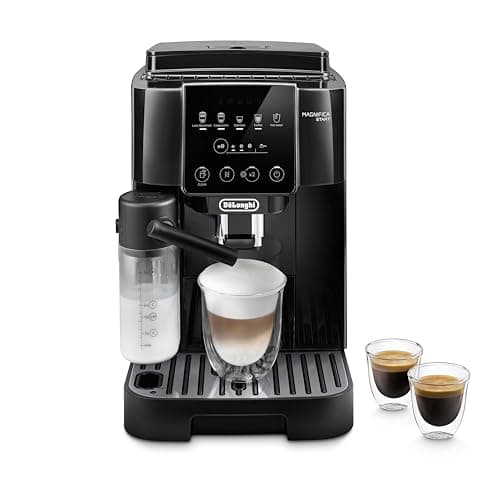
The De'Longhi Magnifica Start is the machine to buy when you want fresh-ground, bean-to-cup coffee with as little complication as possible. De'Longhi effectively built the mainstream super-automatic category, and the Magnifica line is its most widely owned platform in the US — which means the Start's biggest strengths are the boring, important ones: it is simple to use, it is dependable, and if anything ever goes wrong, parts and help are everywhere. For a lot of households, that is worth more than a longer feature list.
Simplicity is the whole design brief. You pour beans in the hopper and water in the tank, and the machine grinds, doses, tamps, and brews espresso or coffee with a couple of physical controls and no menu to learn. There is no touch screen full of drinks to scroll through and no app — just make coffee. For an older relative, a shared office kitchen, or anyone who finds a menu-driven machine intimidating, that plainness is a genuine feature. The steel conical burrs grind fresh for every cup, and the body is narrower than most bean-to-cup machines, so it fits counters that the wide super-automatics won't.
The defining choice on the Start is the milk. Unlike a carafe machine such as the Philips 3200 LatteGo, the Magnifica Start keeps a manual frother wand. That is a two-sided trait, and being honest about it is the whole point of this review. On the plus side, a manual wand hands you control: you texture the milk yourself, so you can get closer to proper microfoam and learn a real skill. On the minus side, it is not hands-off — you steam the milk by hand every time, which is a small chore if what you wanted was a one-touch cappuccino. If you want the milk automated, this is the wrong machine and the Philips is the right one; if you want push-button espresso but prefer to make the milk yourself, the Start is oddly perfect. Our steaming guide will get you there fast.
The honest limits are the price of that simplicity. There are fewer preset drinks and no touch screennext to the Philips or the pricier De'Longhi models — it makes espresso and coffee well, not a menu of specialty drinks at a tap. And because the frother is manual, there is no truly hands-off milk drink here at all. None of that is a flaw so much as a deliberate stripping-back: De'Longhi built the Start to be the affordable, dependable, no-nonsense entry to bean-to-cup, and it hits that brief cleanly. If you want more drinks, a nicer interface, or an automatic milk carafe, you step up the line — which is exactly what the rest of this review is about.
What is it like to live with? Reassuringly unremarkable, in the best way. The controls are obvious enough that you never reach for a manual, the brewing unit is the well-proven Magnifica mechanism that has made these machines a byword for reliability, and front-loading maintenance keeps cleaning simple. The manual wand adds a small ritual to milk drinks — thirty seconds of steaming and a quick purge — that some owners enjoy and others tolerate. The narrow body is a quiet daily win if your counter is tight. It is not an exciting machine; it is a dependable one, and for bean-to-cup that is precisely the right personality.
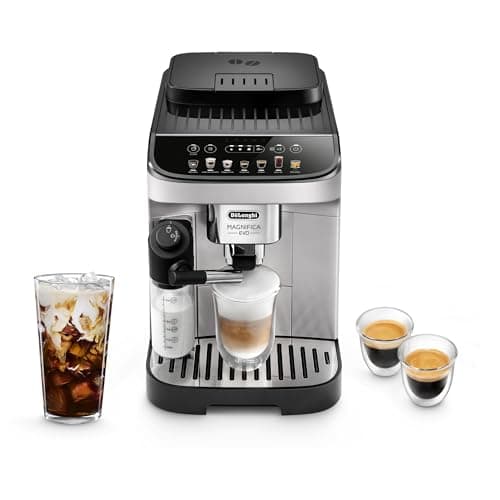
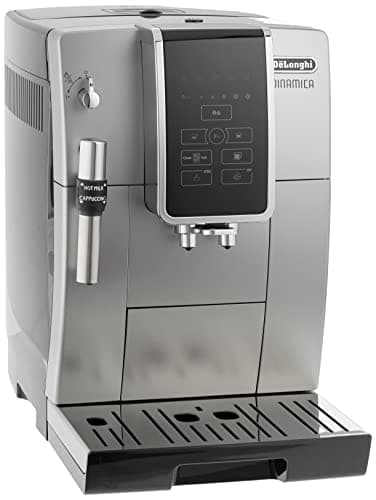
Where it sits in the De'Longhi range matters, because the Magnifica name spans several machines. The Magnifica Evo is the updated sibling: more drink options and a cleaner soft-touch interface, on the same dependable brewing unit, for a bit more money. The Dinamicais the feature step-up: a bigger recipe menu, a larger water tank, and De'Longhi's genuinely useful iced and long-coffee routines, for more again. All three share the platform's reliability; they differ in how much menu, interface, and variety you want to pay for. We settle who should buy which below.
As always, we did not lab-test the Start. We worked from De'Longhi's published specifications, the long and well-documented reliability record of the Magnifica platform, and priced everything live. Where a claim is the manufacturer's — the steel burrs, the brewing-unit durability — we report it as such rather than as our own measurement, per our research method.
Who should buy the Magnifica Start — and who shouldn't
Buy it if you want the simplest, most dependable way into fresh-ground bean-to-cup coffee, you value a huge parts-and-service network over a long feature list, and you are happy to froth milk by hand for the control it gives. For a first super-automatic, an older relative, or anyone who wants coffee without a menu, it is close to ideal — and its narrow body is a real bonus on a tight counter.
Skip it ifyou want milk drinks made entirely hands-off — the Start's wand is manual, so for a one-touch cappuccino the Philips 3200 LatteGois the fit. Skip it too if you want a big menu of specialty drinks, iced coffee, or a touch screen: those live further up the De'Longhi range, on the Evo and Dinamica, and it is worth knowing exactly what each step adds before you decide the Start is too basic.
Magnifica Start vs Magnifica Evo
The Evo is the refined version of the same idea. It pulls the same shots on the same well-proven brewing unit, but adds more drink options and a cleaner soft-touch interface, and it comes in both manual and automatic-frother configurations. If a nicer interface and a few more one-touch drinks are worth a modest premium to you — and especially if you want the option of an automatic frother without leaving the Magnifica family — the Evo is the buy. If you only ever make an espresso or a coffee and froth milk by hand anyway, the Start does the identical core job for less, and the extra spend on the Evo is mostly interface and menu rather than a better cup.
Magnifica Start vs Dinamica
The Dinamica is the feature step-up, not just a nicer Magnifica. It brings a bigger recipe menu, a larger water tank, and De'Longhi's iced and long-coffee routines, which add genuine variety if you drink more than straight espresso and cappuccino. The base Dinamica still uses a manual adjustable frother rather than an automatic milk carafe, so it is not the hands-off-milk answer — it is the more-drinks answer. Buy it if the extra recipes and bigger tank match how you actually drink coffee; if you only make an espresso or a black coffee, the Dinamica's extras are money spent on variety you won't use, and the Start is the smarter buy.
Why the platform's reliability is the real selling point
It is easy to shop these machines on features and miss the thing that matters most over five years: the Magnifica brewing unit is one of the most proven in home coffee, and De'Longhi has the deepest parts-and-service network of any automatic brand in the US. A super-automatic is a complex appliance with a lot to go wrong, so "can this be fixed when it eventually fails?" is a fairer question than any spec. On this platform the answer is yes, widely and affordably, which is a quiet but real reason it ranks where it does. Buy the machine you can keep running, not just the one with the longest feature list on the box.
What to pair it with
Like any bean-to-cup machine, the Start needs little, but two things help. Fresh beans for espressoare the one input that decides the cup — the machine grinds on demand, so stale beans waste its main advantage. And if your water is hard, a water filter and regular descaling keep the brewing unit healthy for the long haul. You won't need a separate grinder, tamper, or scale — the Start folds all of that into the box. If you want to get more out of the manual wand, our latte guide covers the milk technique.