Skip to content
Bean & Burr

HUB 01 · Espresso Machines

Philips 3200 Series LatteGo Review

The bean-to-cup all-rounder most people should buy — one-touch lattes from an auto milk carafe, ceramic burrs, and a touch screen. Reviewed on what the convenience costs.

By Stephen V.Updated How we research
#ad

We earn a commission when you buy through our Amazon links, at no extra cost to you. It never affects our rankings, and we say so when the cheaper product is the better buy. How this works.

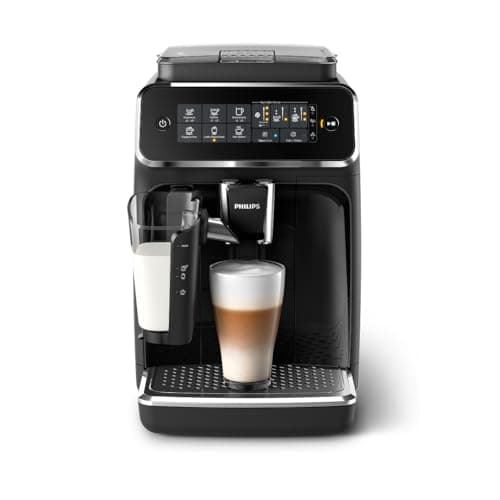
The Philips 3200 Series LatteGo is the machine we point most people to when they say they want "a coffee machine, not a hobby." It is a true bean-to-cup super-automatic: you pour whole beans in the top, water in the tank, milk in the carafe, and it grinds, doses, tamps, brews, and froths a latte or cappuccino at a single button press. The whole appeal of the category is convenience, and the 3200 delivers it more completely — and cleans up more easily — than most machines at its price.

The star of the machine is the LatteGo milk system. It is a two-part carafe with no tubes and no internal mixing chamber, which is the detail that matters: it froths milk into your cup automatically and then comes apart and rinses in a couple of clicks under the tap. Anyone who has owned a milk-carafe machine with a tangle of tubes to clean will understand why that is the feature, not a footnote. It is the difference between a machine you use every day and one you resent by the second week. The milk it makes is light and airy — a genuinely good cappuccino topper — rather than the dense microfoam a steam wand pulls, which is the honest limit of every automatic carafe, not a fault specific to Philips.

Underneath the milk, the fundamentals are sound. Philips fits a 100% ceramic grinder that it rates to run cooler and last longer than steel, with twelve grind settings, so you get fresh-ground espresso on demand with a little adjustability. A touch display offers five drinks at a button, and the AquaClean filter reduces how often you have to descale — a real quality-of-life gain in a hard-water home. Put together, it is a machine that asks almost nothing of you day to day: press a button, drink a latte, rinse the carafe, repeat.

The honest limits are the limits of the whole super-automatic idea. There is no latte-art control and no dialing in the shot— the machine hides every variable by design, which is exactly why it is easy and exactly why an enthusiast will find it frustrating. You get consistency and convenience; you give up the craft. And the LatteGo's airy foam, while excellent for a cappuccino, is thinner than what a manual wand produces, so if proper microfoam is the goal, this is the wrong tool. None of that is a defect. It is the deal the category offers, and the 3200 is one of the best-value ways to take that deal. If the craft is what you want instead, our Barista Express review covers the semi-automatic path.

What is it actually like to live with? Effortless, and that is the point. A morning latte is a button press and a thirty-second carafe rinse, with no wand to purge, no portafilter to knock out, and no grinder to keep beside it. The machine handles its own brew-group cleaning and prompts you when it needs a descale, and the AquaClean filter stretches those intervals out. The touch screen keeps the five drinks obvious rather than buried in a menu, so a house full of people who don't care how espresso works can all get the drink they want without a lesson. For a shared kitchen, that low-friction consistency is worth more than the last ten percent of shot quality a manual machine could theoretically reach.

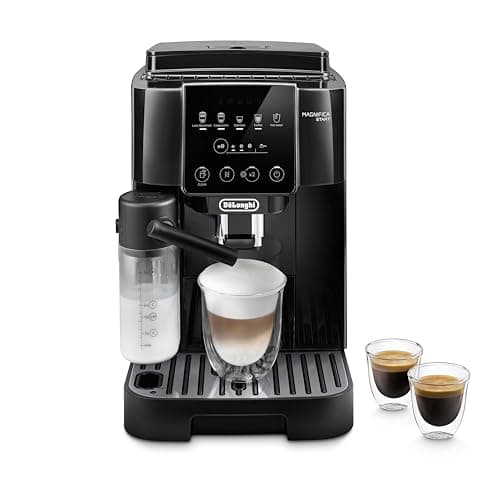
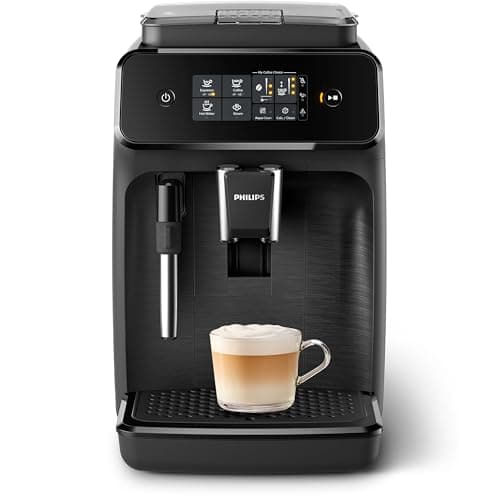
Where does it sit against its siblings and rivals? Below it, the Philips 1200 Series is the same core bean-to-cup machine with the extras stripped out — a classic frother wand instead of the LatteGo carafe, two presets instead of a touch screen of five, and no iced mode — for meaningfully less money. Beside it, the De'Longhi Magnifica Start is the other obvious bean-to-cup pick, and it makes a different trade: it keeps a manual frother wand, so the milk is hands-on while the shot is automatic, on the most widely serviced automatic platform in the US. We break down both comparisons below and settle who should buy which.

As with everything on this site, we did not lab-test the 3200. We worked from Philips's published specifications, the well-documented behavior of automatic milk carafes, and the machine's long ownership record, and we priced it live. Where the marketing leans on the "ceramic burrs" and "AquaClean" claims, we report them as Philips's ratings rather than measurements of our own, in line with our research method.

The short answer

Quick picks

#ProductBest forScorePrice
01
Philips Philips 3200 Series LatteGo (EP3241)
Philips 3200 Series LatteGo (EP3241)

The bean-to-cup all-rounder most people should buy — auto milk, ceramic burrs, one touch.

The best all-round super-automatic
8.4
$569.00Amazon
02
De'Longhi De'Longhi Magnifica Start (ECAM22020)
De'Longhi Magnifica Start (ECAM22020)

The simplest, most reliable way into bean-to-cup, from the brand that owns the category.

Simple, dependable one-touch coffee
8.0
$599.95Amazon
03
Philips Philips 1200 Series (EP1220)
Philips 1200 Series (EP1220)

The cheapest real bean-to-cup machine worth owning. Fresh-ground espresso at one button.

The budget bean-to-cup entry
7.4
$464.99Amazon

#ad · Live prices from the Amazon Product API, as of Jul 29, 2026. Where we have no verified live price, we show none — we would rather leave a gap than print a number that has rotted.

In detail

The picks, in full

01
Philips Philips 3200 Series LatteGo (EP3241)

The best all-round super-automatic

Philips 3200 Series LatteGo (EP3241)

Bean-to-cupLatteGo auto milk100% ceramic grinderTouch display, 5 drinks
8.4/10

The bean-to-cup all-rounder most people should buy — auto milk, ceramic burrs, one touch.

Shot quality
7
Steam & milk
8
Ease of use
10
Build quality
8
Value
9

Pros

  • The LatteGo carafe froths milk and then rinses in two clicks with no wand technique — the feature that makes a super-automatic worth it
  • Philips rates the ceramic burrs to run cooler and last longer than steel, and there are 12 grind settings
  • The AquaClean filter cuts how often you descale, and the touch display gives five drinks at a button

Cons

  • It is a convenience machine, not a barista tool: no latte-art control and no dialing in the shot
  • The LatteGo makes light, airy foam rather than the tight microfoam a steam wand can pull

Don't buy this if…

you want to learn espresso and pour latte art. A super-automatic hides every variable by design — if the craft is the point, a semi-automatic like the Barista Express is the machine, not this.

$569.00View on Amazon

Price as of Jul 29, 2026. Prices change — Amazon's is the one that counts.

#ad · we may earn a commission from this link to Philips 3200 Series LatteGo (EP3241)

02
De'Longhi De'Longhi Magnifica Start (ECAM22020)

Simple, dependable one-touch coffee

De'Longhi Magnifica Start (ECAM22020)

Bean-to-cupManual milk frother wandSteel conical burrsCompact width
8.0/10

The simplest, most reliable way into bean-to-cup, from the brand that owns the category.

Shot quality
7
Steam & milk
7
Ease of use
9
Build quality
8
Value
9

Pros

  • De'Longhi's automatic platform is the most widely owned and serviced in the US, so parts and help are everywhere
  • Genuinely simple controls — it makes espresso and coffee without a menu to learn
  • The steam wand froths milk with a little technique, so you keep some control, and the body is narrower than most bean-to-cup machines

Cons

  • The frother is manual, so you steam milk yourself — a plus for control, a minus if you wanted pure hands-off
  • Fewer preset drinks and no touch screen next to the Philips

Don't buy this if…

you want milk drinks made entirely hands-off. The Start's wand is manual — for one-touch cappuccino, the Philips 3200 LatteGo is the fit.

$599.95View on Amazon

$749.9520% off

Price as of Jul 29, 2026. Prices change — Amazon's is the one that counts.

#ad · we may earn a commission from this link to De'Longhi Magnifica Start (ECAM22020)

03
Philips Philips 1200 Series (EP1220)

The budget bean-to-cup entry

Philips 1200 Series (EP1220)

Bean-to-cupClassic milk frother100% ceramic grinder2 drink presets
7.4/10

The cheapest real bean-to-cup machine worth owning. Fresh-ground espresso at one button.

Shot quality
6
Steam & milk
6
Ease of use
9
Build quality
7
Value
9

Pros

  • The lowest price for a genuine grind-brew-froth automatic, so it undercuts every other machine here
  • Same 100% ceramic grinder as the pricier Philips models
  • Froths milk through a simple classic wand for cappuccinos

Cons

  • Only two presets and no touch screen — it makes espresso and coffee, not a menu of drinks
  • The classic frother aerates foam rather than making microfoam, and there's no iced mode

Don't buy this if…

you want iced drinks, several milk drinks at a touch, or a display. This is the stripped-back entry — the 3200 LatteGo adds all of that.

$464.99View on Amazon

$549.9915% off

Price as of Jul 29, 2026. Prices change — Amazon's is the one that counts.

#ad · we may earn a commission from this link to Philips 1200 Series (EP1220)

Who should buy the Philips 3200 LatteGo — and who shouldn't

Buy it if you want café-style milk drinks at a button press with the least possible fuss, you value a milk system that actually rinses clean in seconds, and you are happy to trade shot control and microfoam for consistency and convenience. For a busy household where several people just want a good latte or cappuccino without learning anything, it is close to the ideal machine, and it is our top pick in the super-automatic roundup for exactly that reason.

Skip it ifyou want to learn espresso, pour latte art, or dial in a shot — a super-automatic hides every variable by design, so the craft simply isn't on offer here. If that is you, a semi-automatic like the Barista Express is the machine, not this. Skip it too if dense microfoam matters more to you than convenience: the LatteGo makes light, airy foam, and no automatic carafe will match a steam wand for texture.

Philips 3200 vs Philips 1200 — how far down can you go?

The 1200 Series is the same fundamental bean-to-cup machine with the same 100% ceramic grinder, for less money — so the question is only what you give up. You lose the LatteGo carafe (the 1200 uses a simpler classic frother wand that aerates foam rather than pouring milk for you), you drop from a five-drink touch screen to two presets, and there is no iced mode. If you drink mostly straight espresso or the occasional cappuccino and don't mind a manual frother, the 1200 is the value buy. If milk drinks are the whole reason you're buying a super-automatic, the 3200's auto carafe is worth the step up — it is the single feature that makes the category worth it.

Philips 3200 vs De'Longhi Magnifica Start

These are the two bean-to-cup machines most first-time buyers cross-shop, and they split on the milk. The 3200's LatteGo carafe froths and pours automatically — fully hands-off, airy foam. The Magnifica Startkeeps a manual frother wand, so you steam the milk yourself: more control and a little skill required, on De'Longhi's enormous and well-serviced automatic platform. Choose the Philips if you want the milk automated too; choose the Magnifica if you want push-button espresso but prefer to texture the milk by hand, or if the reassurance of the most widely owned automatic platform in the country matters to you. Both make excellent everyday coffee.

What to pair it with

A super-automatic needs less than a semi-automatic, but two things still lift it. First, fresh beans for espresso — the machine grinds on demand, so stale beans are the one thing that undoes its work, and a medium or medium-dark roast suits the automatic extraction well. Second, if your water is hard, keep the AquaClean filter stocked; it is the cheapest way to stretch out descaling and protect the machine. You will not need a separate grinder, a scale, or a tamper — the whole point of the 3200 is that it removes all of that.

Living with the milk system

The LatteGo is the reason to buy this machine, so treat it right. Because it has no tubes, a quick rinse under the tap after each session is genuinely all it needs, and both halves are dishwasher-safe for a deeper clean. Use cold milk straight from the fridge for the best foam, and expect an airy, cappuccino-style texture rather than latte-art microfoam — that is the system working as designed, not a fault. If you find yourself wishing for denser milk over time, the honest fix isn't a different super-automatic; it's a machine with a real steam wand, which is a different kind of purchase entirely.
How we picked

We do not run a testing lab

We compiled published manufacturer specifications, computed what each option costs to run where relevant, and cross-referenced aggregated owner reviews, then scored each product against a published rubric. The scores are judgments from documented research — they are not measurements we took, because we do not have a lab and we are not going to pretend we do. Where a number came from a manufacturer or a standard, we name it in Sources.

Questions

Frequently asked

Is the Philips 3200 LatteGo worth it?
For someone who wants easy, consistent milk drinks, yes — it's one of the best-value super-automatics you can buy. The LatteGo carafe froths automatically and rinses in a couple of clicks, the ceramic grinder delivers fresh-ground espresso on demand, and the touch screen gives five drinks at a button. What you're paying for is convenience and consistency, not shot control or microfoam. If that's the trade you want, it's absolutely worth it; if you want to learn espresso or pour latte art, a semi-automatic is the better spend.
What's the difference between the Philips 3200 and 1200?
The 3200 adds the LatteGo automatic milk carafe, a five-drink touch screen, and an iced mode; the 1200 is the same core bean-to-cup machine with a simpler classic frother wand and two presets, for less money. Both share the same 100% ceramic grinder, so the espresso base is similar. If milk drinks are the point, the 3200's auto carafe is the reason to pay up; if you mostly drink espresso or don't mind frothing by hand, the 1200 is the value pick.
Does the Philips 3200 make good milk foam?
It makes good, light, airy foam — ideal on a cappuccino and fine for an everyday latte — but not the dense microfoam a steam wand produces. The LatteGo carafe aerates milk automatically, which is why it's so easy, but automation and true microfoam don't go together. If latte art and silky texture are your goal, you want a machine with a real steam wand; see our best machines for lattes for those.
Can you dial in the espresso on a Philips 3200?
Only loosely. You can adjust the grind across twelve settings and change the shot length and strength, but you can't control extraction the way a semi-automatic lets you — no pressure control, no shot timing, no puck prep. That's true of every super-automatic: it hides the variables to stay easy. It makes a consistent, good shot, but if dialing in and chasing the perfect extraction is what you want, this is the wrong category of machine.

Keep reading

Receipts

Sources

We do not run a testing lab, and we do not pretend to. Where a measured number came from a manufacturer spec sheet or a published standard, we name it and link it. Where we could not verify something, we say so on the page rather than quietly leaving it out. Read our full method.