Here is the thing most people do not expect: a good hand grinder can grind for espresso as well as electric grinders costing two or three times as much. The burrs in a modern manual grinder are the same quality as those in a mid-range electric one, and because you are not paying for a motor, a chassis, and a hopper, more of your money goes into the part that matters. The trade you make for that value is effort — you turn the crank yourself, and grinding fine enough for espresso is genuinely harder work than grinding coarse for filter. This guide ranks the four hand grinders we would actually consider for espresso, and it is honest about which one you should not buy at all.
Espresso is the hardest job you can hand any grinder, and it is where cheap ones fall apart. A shot forces near-boiling water through a tightly packed puck under pressure in about twenty-five seconds, so the grind is the single biggest lever on whether it runs sweet and balanced or gushes sour or chokes bitter. That puts three specific demands on a hand grinder that filter never does. First, it must reach a genuinely fine grind — finer than any filter setting, and finer than a cheap grinder can hold steady. Second, it needs fine, repeatable steps through that fine range, because espresso lives in a razor-thin band where one step too coarse gushes and one too fine chokes; we walk through why in espresso grind size. Third, it wants consistency — a tight particle spread, because a scatter of fines and boulders channels water and wrecks the shot no matter how carefully you dialed in.
The feature that separates a pleasant espresso hand grinder from a frustrating one is external, numbered adjustment. Cheaper hand grinders adjust from the inside — you pull the burr assembly apart and turn a nut by feel, which is fine for filter but miserable for espresso, where you tweak the setting constantly to dial a shot in. A grinder with an external numbered dial lets you count clicks, record the setting that worked, and return to it exactly — turning dial-in from guesswork into a repeatable routine. The two grinders at the top of this list, the 1Zpresso J-Ultra and the KINGrinder K6, both put that dial on the outside, and it is a large part of why they are worth their price for espresso specifically. Our step-by-step how to dial in espresso shows the routine that external adjustment rewards.
Then there is the physical effort, which no marketing page will tell you about honestly. Grinding at an espresso setting means the burrs are close together, so the beans resist harder and each dose takes more turns and more force than a coarse filter grind. For a single shot in the morning it is a pleasant thirty-second ritual; for two or three shots, or a round of milk drinks for guests, it becomes a real arm workout — and that is the honest reason we keep pointing volume-heavy drinkers toward an electric grinder. If you pull one or two shots a day and like the ritual, a hand grinder is a superb, affordable way to get espresso-grade grinding. If you make espresso all morning, be clear-eyed that you will get tired of it, and read our hand grinder vs electric guide before you commit.
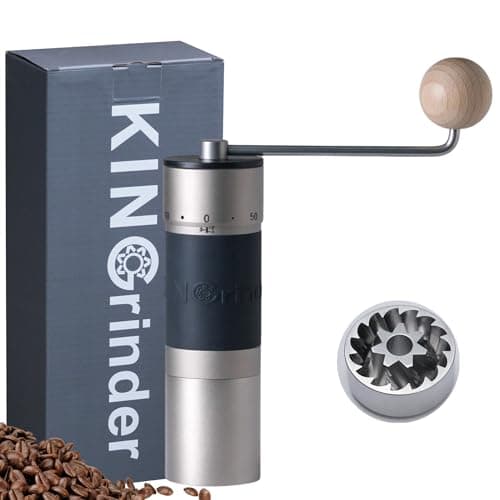
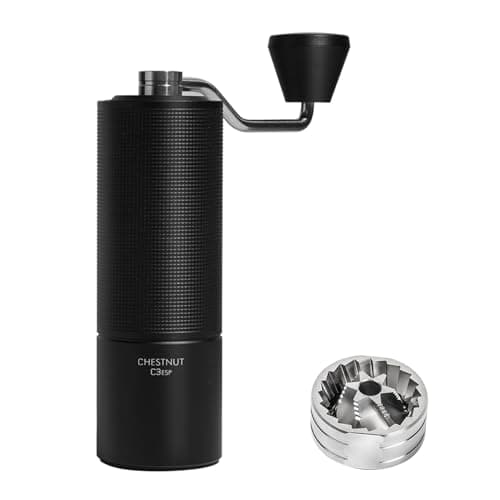
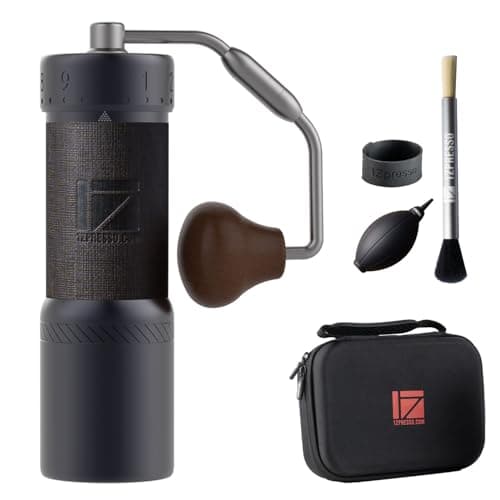
Our top pick is the 1Zpresso J-Ultra, and it is the premium choice for a reason: excellent consistency genuinely good enough for dialed-in espresso, an external numbered dial that makes repeating a setting fast and precise, and a machined build that feels like it will last for years — the long version is in our J-Ultra review. The KINGrinder K6 is the value play that gets you most of the way there: external numbered adjustment and espresso-fine steps for meaningfully less money, at the cost of a thinner brand track record. The TIMEMORE Chestnut C3 (in ESP trim) is the best all-rounder and travel grinder — espresso-capable and astonishing value, though its internal adjustment is a little less espresso-friendly than the top two.
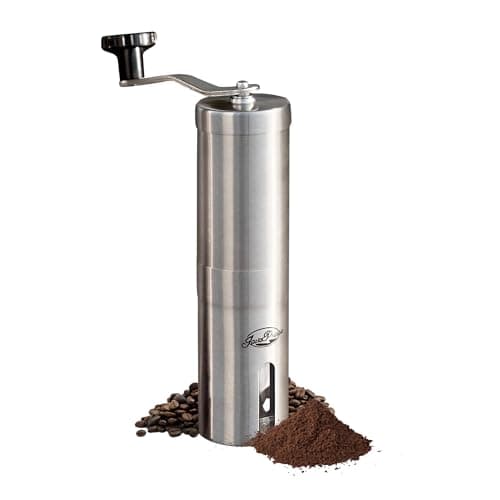
The fourth entry is a deliberate warning. The JavaPresse Manual Coffee Grinder is a genuinely good, dirt-cheap hand grinder — for filter. Its consistency and espresso-fineness lag well behind the other three, and its stepped ceramic adjustment is too coarse to reliably find the espresso sweet spot, so a shot ground on it tends to gush or choke with little in between. We include it precisely because its low price tempts espresso beginners who then get frustrated at the machine rather than the grinder. For press and drip it is a fine, affordable step up from a blade grinder — see the hand grinder guide— but for espresso it is the wrong tool, and we say so plainly. None of these four passed through our hands; we compiled the makers' published specifications, reasoned through what each burr and adjustment design does to a shot, and priced everything live, per our research method.
The short answer
Quick picks
#ad · Live prices from the Amazon Product API, as of Sep 16, 2026. Where we have no verified live price, we show none — we would rather leave a gap than print a number that has rotted.
In detail
The picks, in full
Serious manual espresso
1Zpresso J-Ultra Manual Grinder
Conical burrsExternal numbered adjustEspresso-fine stepsManual
A premium hand grinder built for espresso — external numbered dial, fine steps, and a consistency that rivals grinders costing far more.
- Grind consistency
- 9
- Grind range
- 9
- Ease of use
- 7
- Build quality
- 9
- Value
- 7
Pros
- +Grind consistency is excellent — genuinely good enough for dialed-in espresso, not just filter
- +The external numbered dial makes repeating and tweaking an espresso setting fast and precise
- +Machined build quality feels premium and should last for years
Cons
- −Hand-grinding fine enough for espresso takes real effort, dose after dose
- −It's a premium price for a manual grinder — the value only makes sense if you'll use the espresso range
Don't buy this if…
…you mostly brew filter or want an electric grinder. For pour-over the range is overkill, and a cheaper hand grinder like the KINGrinder K6 covers espresso for far less.
Manual espresso on a budget
KINGrinder K6 Manual Grinder
Stainless burrsExternal numbered adjustEspresso-fine stepsManual
A lot of hand grinder for the money — external adjustment and espresso-fine steps.
- Grind consistency
- 8
- Grind range
- 8
- Ease of use
- 6
- Build quality
- 7
- Value
- 9
Pros
- +External numbered adjustment makes dialing in espresso far easier than grinders you set from inside
- +Fine, repeatable steps genuinely suited to espresso, not just an afterthought
- +Undercuts pricier hand grinders while matching a lot of their capability
Cons
- −Manual grinding for espresso is hard work, same as any hand grinder
- −Brand support and long-term reputation are thinner than TIMEMORE or 1Zpresso
Don't buy this if…
…you value a proven brand and resale value. TIMEMORE has the longer track record — the K6 is the value play, not the safe-brand play.
The best-value manual grinder
TIMEMORE Chestnut C3 ESP Hand Grinder
Stainless S2C burrsEspresso to French pressFoldable handlePortable
The hand grinder that punches absurdly above its price. Espresso-capable, and it feels premium.
- Grind consistency
- 8
- Grind range
- 8
- Ease of use
- 6
- Build quality
- 8
- Value
- 10
Pros
- +The stainless burrs and tight build give a consistency that shames electric grinders twice its price
- +The ESP version adjusts fine enough for real espresso, not just filter
- +Light, tough, and travel-friendly — a legitimate main grinder that also packs for trips
Cons
- −It's manual — grinding a fine espresso dose by hand is a genuine arm workout
- −Small single-dose capacity, so it's a one-or-two-cups-at-a-time tool
Don't buy this if…
…you make several espressos every morning. Hand-grinding fine, daily, gets tiring fast — an electric grinder like the Baratza Encore ESP is worth it for volume.
The lowest-cost step up from a blade grinder
JavaPresse Manual Coffee Grinder
Ceramic burr18 settingsHand crankVery portable
The cheap hand grinder that beats any blade grinder. Fine for filter, a stretch for espresso.
- Grind consistency
- 6
- Grind range
- 6
- Ease of use
- 6
- Build quality
- 6
- Value
- 9
Pros
- +A true burr grind for pocket money — an enormous improvement over the blade grinder most people start with
- +Tiny and packable, so it's a great camping or travel grinder
- +Ceramic burrs won't rust and stay sharp a long time
Cons
- −Consistency and espresso-fineness lag well behind the TIMEMORE and KINGrinder
- −The stepped ceramic adjustment is coarse — good enough for press and drip, marginal for espresso
Don't buy this if…
…you make espresso or grind for several cups daily. Its consistency and speed give out fast — the TIMEMORE C3 is the small step up that changes everything.
How to choose a hand grinder for espresso
Espresso narrows the field fast — most hand grinders are built for filter and only pretend at espresso. Four things tell you which ones are real, in the order that matters.
1. Fine, repeatable steps through the espresso range
This is the whole ballgame. The grinder must reach a genuinely fine setting and give you small steps through it, so you can settle between a gushing shot and a choked one on the roasts you drink. Coarse, jumpy steps jump straight over the sweet spot and will frustrate you every morning — which is exactly why the JavaPresse, fine as it is for filter, does not belong here. The J-Ultra, K6, and C3 ESP all offer espresso-appropriate fine steps; treat that as the entry requirement and everything else as secondary. The theory of why the band is so unforgiving is in espresso grind size.
2. External, numbered adjustment
For espresso specifically, an external numbered dial is close to essential. Dialing in means changing the grind repeatedly and remembering what worked, and a dial you can count and record — rather than an internal nut you set by feel — turns that from a chore into a routine. The J-Ultra and K6 both adjust externally, which is a big part of why they lead this list; the C3 adjusts internally, which is workable but slower to dial. If you plan to switch between espresso and filter often, external adjustment saves you real time every time you move between them.
3. Consistency and build
A tight particle spread is what lets your carefully dialed setting actually behave in the basket instead of channeling around a mess of fines, and better burrs plus a rigid, well-machined body are what deliver it. A wobbly axle or flexy chassis lets the burrs shift under load, which shows up as inconsistency at the fine end where it hurts most. This is where the J-Ultra's machined build earns its premium and the K6 and C3 punch above their price. Keep the burrs clean, too — oily espresso roasts leave residue that dulls both flavor and consistency, so follow our grinder cleaning guide.
4. Be honest about the effort
The one thing a hand grinder cannot solve is that you are the motor. A fine espresso dose takes more turns and more force than a coarse filter grind, so one or two shots a day is a pleasant ritual and a morning of milk drinks for guests is a workout. If you pull espresso in volume, an electric grinder is the saner buy — compare the two in our hand grinder vs electric guide, or jump to the best espresso grinders if you would rather plug in. A hand grinder is about value, portability, and ritual, not convenience.
The four picks, in brief
1Zpresso J-Ultra — our top pick and the premium choice. Excellent consistency, an external numbered dial that makes espresso dial-in fast and repeatable, and a build that feels made to last. Buy it if you are serious about manual espresso and will use the fine range; skip it if you mostly brew filter, where it is overkill. The full case is in the J-Ultra review.
KINGrinder K6 — the value pick. External numbered adjustment and espresso-fine steps for meaningfully less than the J-Ultra, matching much of its capability. The trade-offs: brand support and long-term reputation are thinner than 1Zpresso or TIMEMORE, so it is the value play rather than the safe-brand play. More in the K6 review.
TIMEMORE Chestnut C3 — the best all-rounder and travel grinder. Stainless burrs and a tight build give it consistency that shames electric grinders twice the price, and the ESP trim reaches espresso; it is also the best value here for someone who wants one grinder for espresso and filter. Its internal adjustment is a touch less espresso-friendly than the top two, and its capacity is small. See the C3 review.
JavaPresse Manual Coffee Grinder — the cautionary entry. A great, dirt-cheap step up from a blade grinder for press and drip, but its consistency and coarse stepped adjustment make it a poor espresso tool that tends to gush or choke. Buy it for filter on a budget, not for espresso; if espresso is the goal, spend up to the C3 or K6.
How we picked
We do not run a testing lab
We compiled published manufacturer specifications, computed what each option costs to run where relevant, and cross-referenced aggregated owner reviews, then scored each product against a published rubric. The scores are judgments from documented research — they are not measurements we took, because we do not have a lab and we are not going to pretend we do. Where a number came from a manufacturer or a standard, we name it in Sources.
Questions
Frequently asked
Can a hand grinder really make good espresso?+
Yes — a good one can grind for espresso as well as electric grinders costing two or three times more, because your money goes into the burrs rather than a motor. The 1Zpresso J-Ultra, KINGrinder K6, and TIMEMORE C3 ESP all reach a genuinely fine, repeatable setting. The catch is effort: grinding fine for espresso by hand is real work, so volume drinkers should read our
hand grinder vs electric guide first.
Why does external adjustment matter for espresso?+
Dialing in espresso means changing the grind repeatedly and remembering what worked. An external numbered dial lets you count clicks and return to a setting exactly, which turns dial-in from guesswork into a routine. Grinders that adjust from the inside by feel — like the JavaPresse — are fine for filter but slow and imprecise for espresso. The J-Ultra and K6 both put the dial on the outside, which is why they lead this list.
Is grinding espresso by hand a lot of effort?+
More than filter, yes. At an espresso setting the burrs sit close together, so the beans resist harder and each dose takes more turns and force. One or two shots a morning is a pleasant thirty-second ritual; two or three shots, or milk drinks for a group, becomes a genuine arm workout. If you pull espresso in volume, an
electric grinder is the saner buy.
Why not just buy the cheapest hand grinder for espresso?+
Because the cheapest ones, like the JavaPresse, cannot grind fine enough or hold a consistent grind at the espresso end, and their coarse stepped adjustment jumps over the sweet spot so shots gush or choke. They are excellent value for French press and drip, but for espresso they cause exactly the frustration people blame on their machine. Spend up to the TIMEMORE C3 or KINGrinder K6 if espresso is the goal.
Receipts
Sources
We do not run a testing lab, and we do not pretend to. Where a measured number came from a manufacturer spec sheet or a published standard, we name it and link it. Where we could not verify something, we say so on the page rather than quietly leaving it out. Read our full method.