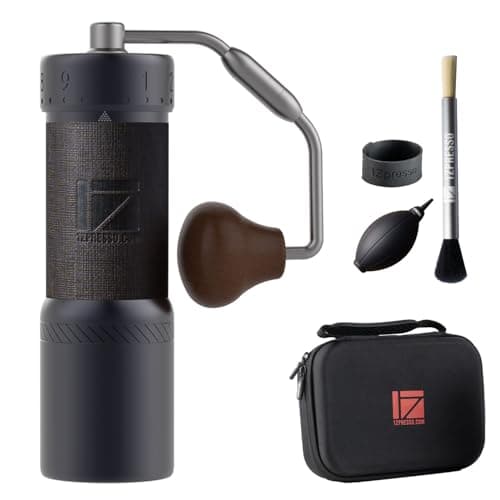
There is a point in a manual-espresso hobby where you stop wondering whether a hand grinder can pull a serious shot and start wanting the best one that can. The 1Zpresso J-Ultra is the grinder for that moment. It is a premium hand grinder built specifically for espresso, and it does the two things a shot demands better than almost anything you can turn by hand: it reaches a genuinely fine grind with small, repeatable steps, and it lets you record and return to a setting precisely. It is our pick for the best premium hand grinder, and this review is about who should spend up for it — and who should not.
The feature that defines it is the external numbered adjustment. Instead of pulling the burrs apart and turning a nut by feel — how cheaper hand grinders work — the J-Ultra adjusts from a numbered dial on the outside, so you can count clicks, note the setting that pulled a great shot, and come straight back to it tomorrow. That sounds minor until you have dialed in espresso, where you change the grind constantly to chase the sweet spot and the ability to log and repeat a setting is the difference between a routine and a guessing game. Paired with fine steps through the espresso range, it makes the J-Ultra feel less like a manual grinder and more like a precision instrument you happen to power by hand. Our how to dial in espresso guide is the routine this grinder is built to reward, and espresso grind size explains why that fine resolution matters so much.
Underneath the dial sit conical burrs that grind with a consistency 1Zpresso positions at the espresso end of its range, and consistency is the quiet reason the J-Ultra earns its keep. A tight, uniform particle spread is what lets your carefully chosen setting behave predictably in the basket instead of channeling around a scatter of fines — it is the spec that separates a grinder good enough for dialed-inespresso from one that only grinds fine on paper. The J-Ultra's grind is genuinely good enough for the former, not just filter, which is the whole point of buying it over a cheaper hand grinder. That it does this without a motor, at a fraction of the size of an electric espresso grinder, is what makes a serious manual setup viable at all.
Living with it is a pleasure in the way a well-made tool is. The machined build feels premium and rigid — which is not just about feel, since a stiff body keeps the burrs from shifting under the load of a fine grind, protecting the very consistency you paid for. It packs small enough to travel, needs no power, and has almost nothing to fail, so with routine cleaning it should last for years; keep the burrs clear of oily espresso residue with our grinder cleaning guide and it stays sharp. It pairs naturally with a lever or entry espresso machine for a compact, powerless setup that punches far above its footprint — and with the fresh espresso beans that a grinder this precise actually lets you taste the difference between.
Now the honest cons, because a premium specialist earns trust by owning its limits. First, the effort: grinding fine enough for espresso takes real work, dose after dose, and the J-Ultra cannot change that — one or two shots a morning is a fine ritual, but a round of milk drinks for guests is an arm workout, and daily volume is exactly where an electric grinder wins. Second, the price: this is a premium outlay for a manual grinder, and the value only makes sense if you will actually use the espresso range. If you mostly brew pour-overor press, the J-Ultra's fine resolution is overkill and your money is better spent elsewhere. Third, it is a single-dose, one-or-two-cups-at-a-time tool by nature — that is the trade every hand grinder makes, and it is not the workflow for a busy household.
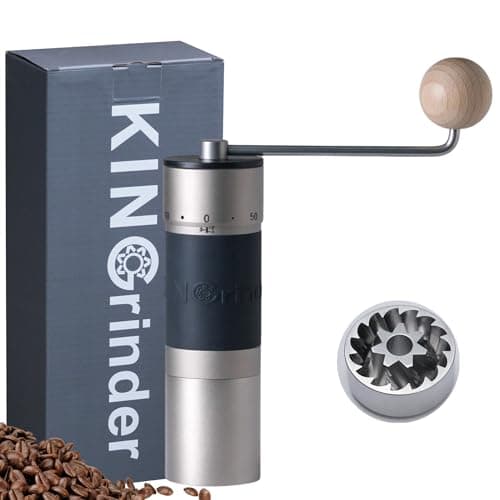
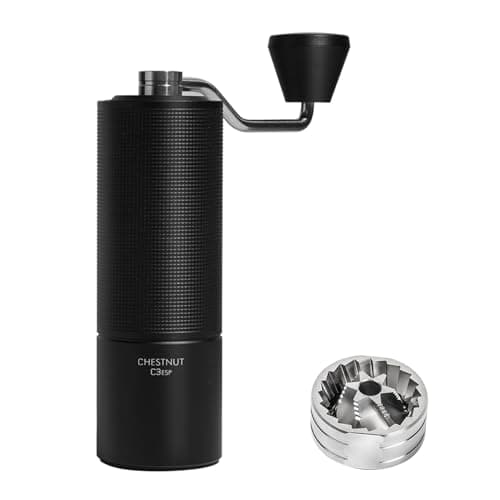
Where does it sit against its rivals? The KINGrinder K6is the value alternative and the most direct comparison: it also offers external numbered adjustment and espresso-fine steps, and it covers real manual espresso for meaningfully less money. What you give up stepping down is a little polish and, more importantly, brand track record — 1Zpresso's reputation and resale are stronger, so the K6 is the value play, not the safe-brand play; the full story is in our K6 review. The TIMEMORE Chestnut C3is the step further down and the better buy for a do-everything grinder: astonishing value, espresso-capable in ESP trim, and a superb travel grinder, but its internal adjustment is slower and less precise to dial for espresso than the J-Ultra's external dial — see the C3 review. Buy the J-Ultra when espresso precision is the priority and you will use it; step down to the K6 for most of the capability for less, or the C3 for value and versatility. Our full method is on how we research.
Who the 1Zpresso J-Ultra is right for
Buy it if espresso is your focus, you want the most precise, repeatable hand grinder you can get, and you will genuinely use the fine range. The external numbered dial and consistent grind make dialing in fast and repeatable, the machined build should last for years, and it does all of it with no motor and a footprint you can travel with. It is the natural top of our best hand grinders for espresso list for a reason.
Skip it if you mostly brew filter, want an electric grinder, or pull espresso in real volume. For pour-over and press its espresso-fine resolution is overkill, and a cheaper hand grinder or a good filter grinder does that job for less. For several shots a morning, hand-grinding fine gets tiring fast and an electric espresso grinder is the saner buy. And if the premium price is a stretch, the KINGrinder K6 covers espresso for far less.
Why external numbered adjustment is the headline
Espresso lives in a razor-thin band of fineness, and dialing a shot in means nudging the grind repeatedly until it tastes right. A grinder you adjust by feel from the inside makes that slow and unrepeatable; the J-Ultra's external numbered dial lets you count clicks, record the winning setting, and return to it exactly — even after switching to a coarser filter grind and back. That repeatability is what makes a disciplined dial-in routine actually work on a hand grinder, and it is the single biggest reason to choose the J-Ultra over cheaper manual grinders.
Consistency, build, and why they go together
The J-Ultra's grind is consistent enough for dialed-in espresso rather than just filter, and its machined, rigid body is part of why: a stiff chassis keeps the burrs from flexing under the resistance of a fine grind, which is where lesser grinders lose their consistency. That combination — good burrs held steady — is what lets a careful setting behave predictably in the basket. It also means the grinder should endure years of use, so keep it clean of oily residue with our cleaning guide and it holds its edge.
The honest cost: effort and price
Two things temper the J-Ultra, and both are inherent, not flaws. The first is effort — grinding fine for espresso by hand is real work every dose, so this suits low-volume drinkers who enjoy the ritual, not anyone pulling shots all morning. The second is price: it is a premium outlay for a manual grinder, justified only if you use the espresso range. If either gives you pause, weigh the trade in our hand grinder vs electric guide before you spend.
J-Ultra vs K6 vs C3
Against the KINGrinder K6, the J-Ultra is the polish-and-pedigree upgrade — both offer external numbered adjustment and espresso-fine steps, but the K6 costs less and carries a thinner brand and resale story, making it the value play. Against the TIMEMORE Chestnut C3, the J-Ultra is the espresso specialist while the C3 is the do-everything value and travel grinder; the C3 adjusts internally, which is workable but slower and less precise for espresso than the J-Ultra's external dial. Choose the J-Ultra for espresso precision, the K6 for most of it for less, the C3 for value and versatility — and see all three in the hand grinders for espresso roundup and the wider hand grinder field.