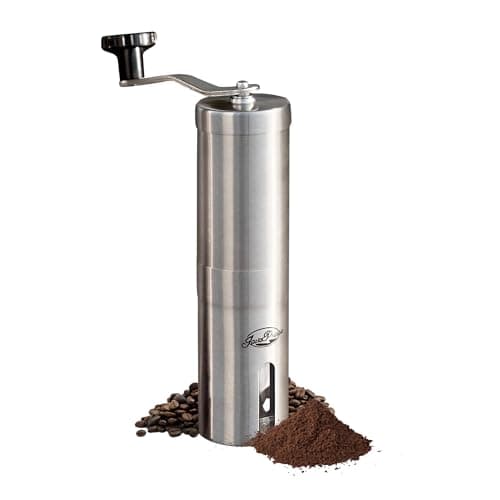
The JavaPresse Manual Coffee Grinder is the grinder people buy when they want to stop using a blade grinder and spend as little as humanly possible doing it — and for that one job it is genuinely good. It is a hand-crank grinder built around real ceramic burrs, and for the filter coffee most people actually make — drip, French press, pour-over — it is a real upgrade over the blade grinder or pre-ground bag it replaces. This review is about exactly what that pocket-money price buys, where the JavaPresse quietly draws its line, and the one job you must not ask it to do. It earns our nod as the cheapest usable hand grinder, and that word — usable — is doing deliberate work: it is honest about being fine for filter and travel, and honest that it is not the tool for espresso. If a shot is anywhere in your plans, skip to the best hand grinders for espresso instead.
Start with the thing that matters most, which is that the JavaPresse uses burrs, not blades. A blade grinder is a propeller that chops beans at random into a chaotic mix of dust and boulders; the dust over-extracts into bitterness while the boulders under-extract into sourness, and no brewing skill rescues a cup made from both at once. The JavaPresse's ceramic conical burrs instead crush beans between two abrasive surfaces set a fixed distance apart, so a bean cannot pass until it is small enough to fit the gap. The result is a far more uniform grind that extracts more evenly and can be repeated from one day to the next. That single change is the most audible improvement in home coffee, and the JavaPresse delivers a version of it for pocket money — the full contrast is in our burr vs blade explainer.
Living with it is where the JavaPresse charms. It is tiny and packable, so it slips into a bag for camping, hotels, or the office, and it needs no power — you supply the crank. JavaPresse builds it around ceramic burrs, which the maker notes will not rust and hold their edge a long time, so it survives the rough life a travel grinder leads. For a filter household on a strict budget, or anyone who wants fresh grounds away from the kitchen, it does the job cheaply and reliably: it pairs naturally with a pour-over or a drip coffee maker, and it will make fresh beans taste far better than any blade grinder ever let them. As a first step off pre-ground coffee, or as a knock-about travel grinder, it is hard to beat for the money.
Now the honest limit, because a budget grinder earns trust by owning what it cannot do. The JavaPresse is a filter grinder, and it is not precise or repeatable enough for espresso — this is the single most expensive mistake people make with it. Espresso forces hot water through a tightly packed puck in about twenty-five seconds, which demands a genuinely fine grind, the ability to nudge that grind in tiny steps, and the consistency to repeat a winning setting exactly. The JavaPresse reaches none of them well enough: its stepped ceramic adjustment is coarse— fine for the press-and- drip band, marginal at the fine end — and its consistency and espresso-fineness lag well behind the dedicated hand grinders below. Ask it for espresso and you will chase a shot that gushes one attempt and chokes the next, blame your machine for a problem that is entirely the grinder's, and end up buying a second grinder anyway. Our espresso grind size guide explains why that band is so unforgiving.
Two smaller cons round out the honest picture. First, it is manual and slow: the hand crank is fine for one or two cups but a chore when you are grinding for several, and it is not the tool for a busy household that wants a pot in a hurry. Second, even within filter its consistency is good rather than great — a real burr grind and a huge step up from blades, but not the tight, uniform particle spread the pricier hand grinders produce, so the very fussiest pour-over drinker will hear the difference. For the price and the intended job — cheap, portable, filter — neither is a dealbreaker; they are simply the trade you make to spend this little. Whatever grinder you own, keep the burrs clean of stale oils with our grinder cleaning guide.
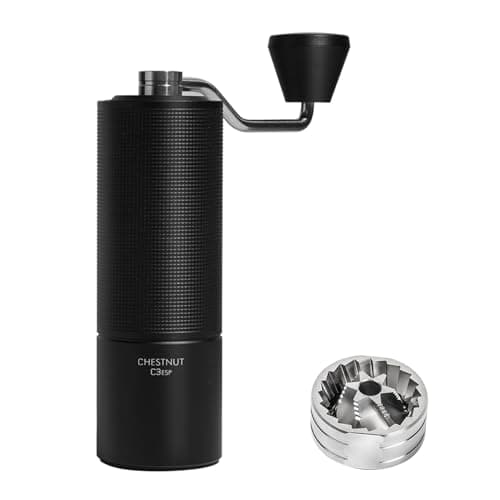
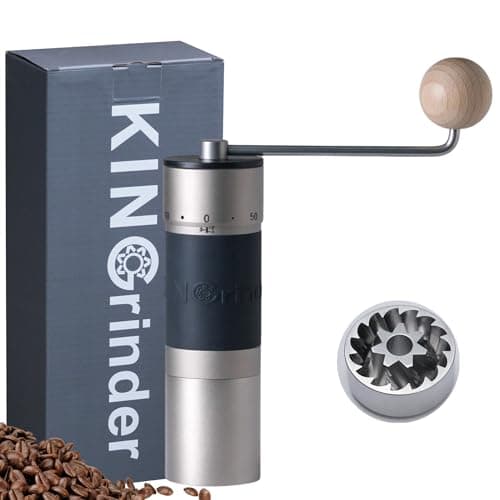
Where does it sit against its rivals? The moment espresso enters the picture — or you find yourself grinding for more than a cup or two a day — you have outgrown it, and there are two clear steps up. The TIMEMORE Chestnut C3 is the value all-rounder: a stainless-burr hand grinder with a consistency that shames electric grinders twice its price, and in its ESP trim it adjusts fine enough for real espresso, not just filter — one grinder that does both and still travels. If manual espresso is specifically the goal, the KINGrinder K6 adds an external numbered dial and espresso-fine steps that make dialing in a shot far easier than any grinder you set by feel. Both are a small step up in price that changes what the grinder can do; the cases are in our C3 review and K6 review. Buy the JavaPresse precisely when the lowest possible price and filter-or-travel use are the whole point — and step up the moment espresso is. None of these passed through our hands; we compiled the makers' published specifications, reasoned through what each burr and adjustment design does in the cup, and priced everything live, per our research method.
Who the JavaPresse is right for
Buy it if you want the cheapest possible way off a blade grinder for filter coffee, or a knock-about grinder for travel and camping. Real ceramic burrs turn stale, uneven grounds into fresher, more uniform ones — the single upgrade that changes every cup — and it packs anywhere and needs no power. For a budget filter household or a bag you throw in luggage, it does exactly what it should for pocket money.
Skip it if there is any chance you make espresso, or you grind for several cups every day. The JavaPresse is not precise or repeatable enough for espresso, its stepped ceramic adjustment is too coarse to dial a shot, and the hand crank gets tiring in volume. If espresso is even a maybe, step up to the TIMEMORE C3 or the KINGrinder K6 from the start, or read the hand-grinder espresso guide first.
1. Consistency for filter — the whole reason to buy it
Uniform grounds extract evenly, so the cup tastes balanced instead of sour and bitter at once — and that uniformity is exactly what a burr grinder delivers and a blade grinder cannot. The JavaPresse's ceramic burrs produce a real, even filter grind across the press-and-drip band, which is a large upgrade over any blade grinder. It is not the tightest particle spread on the market — the pricier hand grinders edge it — but for everyday filter that difference is far smaller than the gap between the JavaPresse and the blade grinder it replaces. Treat filter consistency as the box it needs to tick, and for the money it ticks it.
2. Grind range and stepped ceramic adjustment
The JavaPresse adjusts in steps via a ceramic mechanism, and its range is tuned for filter: it reaches the coarse settings a French press wants and the medium of drip and pour-over. Within that world the stepped adjustment is workable and repeatable enough for casual brewing. What it does not have is the very fine, finely divided range espresso demands — the steps are too coarse and the fine grind too imprecise to ever settle a shot between gushing and choking. Match the range to how you brew before you buy: if the answer is filter and travel, it fits; if the answer includes espresso, it does not.
3. Portability, ceramic burrs, and daily workflow
Portability is the JavaPresse's real edge. It is small, light, and needs no power, so it is a natural travel and camping grinder, and JavaPresse notes its ceramic burrs resist rust and hold their edge, which suits the rough life a bag grinder leads. The trade is speed: the hand crank is pleasant for one or two cups and a chore for more, so it is a one-or-two-drinks tool, not a grinder for a busy morning pot. As a portable, power-free filter grinder for a budget or a backpack, it is exactly right; as a daily driver for a household, it runs out of patience.
4. When to step up — the C3 or the K6
The JavaPresse is the floor of usable hand grinding, and two grinders are the natural steps up when you outgrow it. The TIMEMORE C3 is the value all-rounder: far better consistency and, in ESP trim, a fine enough grind for real espresso as well as filter — one grinder for both that still packs for trips. The KINGrinder K6 is the manual espresso specialist on a budget, with an external numbered dial and espresso-fine steps that make dialing in a shot genuinely easy. Either is a small price step that unlocks espresso and better filter consistency; see them ranked in our hand grinder guide and best grinders under $100 roundup.
The verdict, in brief
Buy the JavaPresse if you want the cheapest usable hand grinder for filter coffee and travel and you accept it is not for espresso — for that job, and at that price, it is hard to beat. Step up to the TIMEMORE C3 if you want one grinder that does filter and espresso and travels, or the KINGrinder K6 if manual espresso on a budget is the goal. See the wider field in our hand grinders guide and the burr vs blade explainer.