Skip to content
Bean & Burr

HUB 06 · Learn

Espresso Shot Size, Explained

A single is about 1 oz, a double about 2 oz - but volume is the wrong way to measure a shot, and here is the number cafes actually use instead.

By Stephen V.Updated How we research
#ad

We earn a commission when you buy through our Amazon links, at no extra cost to you. It never affects our rankings, and we say so when the cheaper product is the better buy. How this works.

A single espresso is about 1 oz (30 ml) in the cup. A double— which is what almost every machine and cafe actually pulls, and what you get when you order "an espresso" in most of the US — is about 2 oz (60 ml). A ristretto is a restricted double at roughly 1 to 1.5 oz, and a lungo is a long one at about 3 oz. Those are the numbers people are looking for, and they are useful as a rough guide.

Here is the complication, and it is the reason this page is longer than four numbers: volume is a bad way to measure espresso.A shot is part liquid and part crema, and crema is foam — its volume depends on how fresh your beans are, how much Robusta is in the blend, and how hard your machine pushes. Two shots of identical strength can read 1.5 oz and 2.5 oz in a glass purely because one bean produced more foam. That is why cafes stopped measuring shots by volume and started weighing them.

The number baristas use: the brew ratio

Modern espresso is specified as a ratio of dry coffee in to liquid espresso out, by weight. The standard starting point is 1:2— so a typical double is around 18 g of coffee in, 36 g of espresso out, pulled in roughly 25 to 30 seconds.

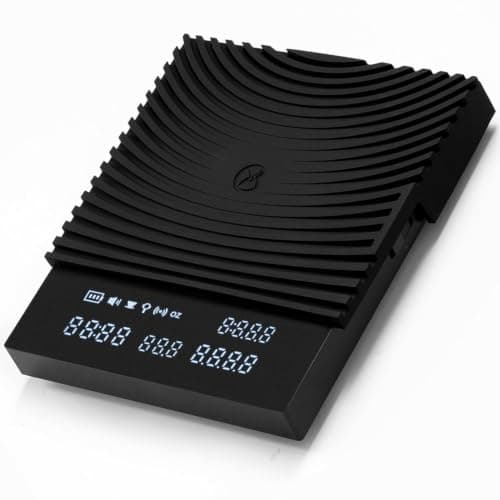
Grams of espresso rather than millilitres, because weight is not affected by foam. Thirty-six grams out is thirty-six grams out whether the crema is thick or thin, which makes it a recipe you can repeat tomorrow. This is the single biggest reason a scale with a timeris the most valuable cheap accessory in espresso — it converts "about two ounces" into a number you can hit again.

The ratios in common use, all by weight:

Ristretto, 1:1 to 1:1.5— 18 g in, 18 to 27 g out. Shorter, thicker, sweeter, less of the harsher compounds that come out late in an extraction. Excellent in milk. Normale, 1:2 — the default, and the one to learn first. Lungo, 1:3 to 1:4— 18 g in, 54 to 72 g out. More volume, more caffeine extracted, and more bitterness, because you are pulling water through grounds that have already given up the good part. Ristretto vs lungo vs espresso goes deeper on how each one tastes.

Why your machine's "single" button is misleading

Most home machines ship with 54mm or 58mm double baskets and a preset single and double button that controls volume of water pushed, not the ratio. Three things follow from that. A "single" on a double basket under-doses the basket and pulls a thin, fast shot. A preset double is calibrated for whatever dose the factory assumed, not yours. And the preset knows nothing about your grind, so the same button produces a different drink when you change beans.

The fix is not a different machine, it is weighing. Dose the basket to its rated weight — most home double baskets are 18 g, some Breville baskets are rated 18 to 22 g — put the cup on a scale, and stop the shot at your target yield rather than when the machine decides. How to dial in espresso is the full procedure.

Shot size in the drinks you actually order

Almost no one drinks espresso neat every day, so the practical question is how many shots go in each drink. A cortado or flat whiteis a double in a small amount of milk — around 4 to 6 oz total — which is why they taste most strongly of coffee. A cappuccino is a double in about 6 oz. A latte is a double in 8 to 12 oz, and at 16 oz you want two doubles or it will taste like warm milk. An americano is a double with hot water added, usually 6 to 8 oz total. Espresso drinks explained has the whole menu, and latte vs cappuccino vs flat white covers the three people confuse most.

What to buy, if anything

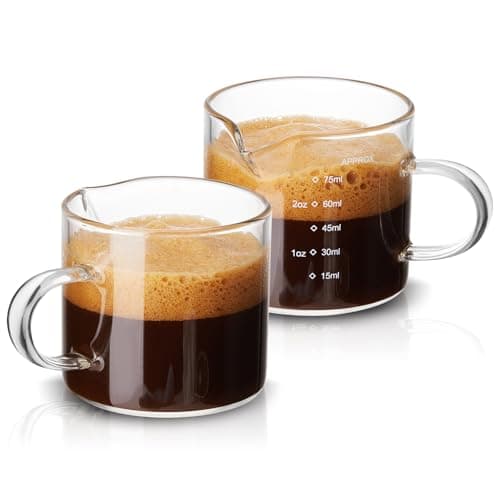
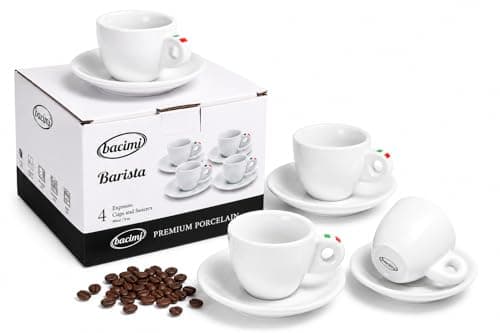
You do not need equipment to understand this page. If you want to measure properly, a 0.1 g scale with a timeris the purchase that matters — weight and time are the two numbers that turn espresso from guesswork into a recipe. Marked shot glassesare a cheap, genuinely useful visual while you are learning, because clear glass also shows the shot's color and tiger-striping, which tells you something about extraction; just know that a scale beats them for accuracy. Proper espresso cupsare a real functional item rather than a nicety — thick porcelain at around 3 oz holds heat so a small shot does not go lukewarm, which oversized mugs cannot do.

The short answer

Quick picks

#ProductBest forScorePrice
01
Generic Espresso Shot Glasses with Handle (Set of 2)
Espresso Shot Glasses with Handle (Set of 2)

Measuring shot glasses so you can see your yield. A cheap, genuinely useful dialing-in tool.

Watching your shot volume while you dial in
7.5
$5.99Amazon
02
TIMEMORE TIMEMORE Black Mirror Basic 3 Coffee Scale
TIMEMORE Black Mirror Basic 3 Coffee Scale

A slim, accurate espresso scale with a built-in timer — the two numbers that turn guesswork into a repeatable recipe.

Dialing in espresso by weight and time
8.3
$59.00Amazon
03
Bacimi Bacimi Espresso Cups & Saucers (Set of 4)
Bacimi Espresso Cups & Saucers (Set of 4)

Thick porcelain espresso cups that keep a shot hot. The detail that makes home espresso feel real.

Serving espresso properly
8.3
$29.95Amazon

#ad · Live prices from the Amazon Product API, as of October 11, 2026. Where we have no verified live price, we show none — we would rather leave a gap than print a number that has rotted.

In detail

The picks, in full

01
Generic Espresso Shot Glasses with Handle (Set of 2)

Watching your shot volume while you dial in

Espresso Shot Glasses with Handle (Set of 2)

~2.5 oz (75 ml) glassVolume markingsHandleSet of 2
7.5/10

Measuring shot glasses so you can see your yield. A cheap, genuinely useful dialing-in tool.

Build quality
6
Does the job
7
Ease of use
8
Value
9

Pros

  • The volume markings let you see exactly how much espresso you're pulling — useful for hitting a ratio when you're learning
  • Clear glass shows the shot's color and the tiger-striping, which tells you a lot about extraction
  • Cheaper than almost any other coffee tool and doubles as a serving glass

Cons

  • A scale measures yield more accurately by weight than these do by volume
  • Thin glass doesn't hold heat like a porcelain cup

Don't buy this if…

…you already weigh your output on a scale. Weight beats volume for accuracy — these are a nice visual, not a second measuring system you need.

$5.99View on Amazon

Price as of October 11, 2026. Prices change — Amazon's is the one that counts.

#ad · we may earn a commission from this link to Espresso Shot Glasses with Handle (Set of 2)

02
TIMEMORE TIMEMORE Black Mirror Basic 3 Coffee Scale

Dialing in espresso by weight and time

TIMEMORE Black Mirror Basic 3 Coffee Scale

0.1g resolutionBuilt-in timerUltra-thinEspresso-tray size
8.3/10

A slim, accurate espresso scale with a built-in timer — the two numbers that turn guesswork into a repeatable recipe.

Build quality
8
Does the job
9
Ease of use
8
Value
8

Pros

  • 0.1g resolution plus a timer is the single biggest consistency upgrade in coffee — repeatable ratios instead of guesswork
  • Ultra-thin and small enough to sit on the drip tray under a portafilter
  • Clean, responsive, and nicely built for the price

Cons

  • Not fully sealed against drips — keep it dry to protect it
  • The auto-off can trigger mid-brew if you pause too long

Don't buy this if…

…you already own any 0.1g scale with a timer. It'll do the same job — this is the nicer, coffee-shaped version, not a must-have upgrade.

$59.00View on Amazon

Price as of October 11, 2026. Prices change — Amazon's is the one that counts.

#ad · we may earn a commission from this link to TIMEMORE Black Mirror Basic 3 Coffee Scale

03
Bacimi Bacimi Espresso Cups & Saucers (Set of 4)

Serving espresso properly

Bacimi Espresso Cups & Saucers (Set of 4)

3 ozThick porcelainSet of 4 + saucersDishwasher & microwave safe
8.3/10

Thick porcelain espresso cups that keep a shot hot. The detail that makes home espresso feel real.

Build quality
8
Does the job
8
Ease of use
9
Value
8

Pros

  • Thick porcelain holds heat, so a small shot doesn't go lukewarm before you drink it — a real functional reason, not just looks
  • 3 oz is the correct size for a single or double espresso, unlike oversized mugs that make a shot look sad
  • A set of four with saucers covers guests and looks the part

Cons

  • Porcelain chips if you're careless stacking them
  • Purely a serving vessel — it does nothing for the coffee itself

Don't buy this if…

…you drink everything as a big milk latte. Espresso cups are for short drinks — a set of these is wasted if a mug is always your endpoint.

$29.95View on Amazon

Price as of October 11, 2026. Prices change — Amazon's is the one that counts.

#ad · we may earn a commission from this link to Bacimi Espresso Cups & Saucers (Set of 4)

Ounces, millilitres and grams, side by side

For liquid espresso the three units are close enough to convert casually: 1 fl oz is about 30 ml, and a millilitre of espresso weighs very slightly more than a gram (it is denser than water because of the dissolved solids), so 30 ml is roughly 30 gfor everyday purposes. That is why 36 g out and "a bit over an ounce and a quarter" describe the same shot.

Where the units stop agreeing is the crema. A freshly roasted, Robusta-containing blend can add half an ounce of foam to the top of a shot, and foam weighs almost nothing. So the glass says 2.5 oz, the scale says 36 g, and the scale is the one telling you about the coffee. If you have ever wondered why your shots look different day to day while tasting the same, that is the answer — what is crema explains what the foam is made of.

The Italian definition, for context

Espresso's traditional Italian specification is a 7 g single pulled to about 25 to 30 ml in 25 to 30 seconds at around 9 bar of pressure. Most of the world, including the US, now works in doubles, with 14 to 18 g doses depending on the basket, and modern specialty baskets are built around 18 g. Both are legitimate; the Italian numbers simply predate double baskets being the default.

How to use volume if you have no scale

It is workable, with two habits. First, judge the liquid, not the foam— let the shot settle for ten seconds and read the dark liquid level rather than the crema line. Second, watch the time: a double that takes 25 to 30 seconds to reach about 2 oz is in the right ballpark, and if it hits 2 oz in 12 seconds your grind is too coarse, while 50 seconds means it is too fine. Time plus settled volume gets you most of the way there, which is how everyone did it before cheap scales existed.

When to change your shot size on purpose

Shortening the ratio toward ristretto is the first thing to try if your espresso tastes bitter or harsh— you are stopping before the late, harsher compounds arrive. Lengthening it toward 1:2.5 is worth trying if your shots taste thin and sour, since under-extraction often needs more water through the bed, not less. But check grind first in both cases: sour vs bitter espresso explains which symptom points at which cause, and espresso grind size covers the dial that does the most work.

Caffeine, since it always comes up

A single espresso contains roughly 60 to 75 mg of caffeine and a double roughly 120 to 150 mg, varying with the bean and the roast. A lungo extracts somewhat more caffeine than a normale from the same dose because more water passes through the grounds; a ristretto somewhat less. Per ounce espresso is far more caffeinated than drip coffee, but a mug of drip is many ounces, so a large drip coffee usually wins on total caffeine — how much caffeine is in espresso has the full comparison.
How we picked

We do not run a testing lab

We compiled published manufacturer specifications, computed what each option costs to run where relevant, and cross-referenced aggregated owner reviews, then scored each product against a published rubric. The scores are judgments from documented research — they are not measurements we took, because we do not have a lab and we are not going to pretend we do. Where a number came from a manufacturer or a standard, we name it in Sources.

Questions

Frequently asked

How many ounces is a shot of espresso?
A single is about 1 oz (30 ml) and a double is about 2 oz (60 ml) in the cup. A ristretto is a restricted double at roughly 1 to 1.5 oz and a lungo is about 3 oz. Treat these as approximations: part of a shot is crema, which is foam, and foam volume varies with bean freshness and blend - which is why cafes weigh shots rather than measuring them.
Is a double shot 2 oz or 3 oz?
About 2 oz. Three ounces from a double basket is a lungo — a longer pull that extracts more volume, more caffeine and more bitterness from the same dose of coffee. If your machine's double button gives you 3 oz, it is pulling a lungo, and shortening it is usually the single easiest improvement to the taste. See ristretto vs lungo vs espresso.
How many grams should a double shot of espresso be?
Around 36 g out from 18 g in — a 1:2 brew ratio by weight, pulled in roughly 25 to 30 seconds. Weight is the standard because it is unaffected by crema volume, so it is a recipe you can actually repeat. Adjust the ratio to taste: 1:1 to 1:1.5 for a sweeter, thicker ristretto, 1:3 or longer for a lungo. Our dialing-in guide has the method.
Why do baristas weigh espresso instead of measuring the volume?
Because a shot is part liquid and part foam, and foam volume is unpredictable. Fresher beans and Robusta-containing blends throw more crema, so two shots of identical strength can fill a glass to visibly different levels. Weight ignores the foam, which makes the recipe repeatable. It is also why a 0.1 g scale with a timer is the highest-value cheap accessory in espresso.
How much coffee goes into a double shot?
Most home double baskets are rated at 18 g, and some Breville baskets are rated 18 to 22 g. Dose to what your basket is rated for rather than to a number you read somewhere - an under-dosed basket leaves too much headroom and pulls a thin, fast shot. The traditional Italian single was 7 g, but double baskets are the modern default worldwide.
How many shots are in a latte?
One double for a 10 to 12 oz latte, and two doubles if the cup is 16 oz — otherwise it tastes like warm milk. A flat white or cortado is one double in only 4 to 6 oz total, which is why it tastes strongest of the three. Our latte vs cappuccino vs flat white guide lays out the ratios for each drink.
Does a bigger shot have more caffeine?
Slightly, if you mean a lungo from the same dose — more water through the same grounds extracts a little more caffeine, along with more bitterness. But the dose is what really sets caffeine content: a double has roughly twice the caffeine of a single because it uses roughly twice the coffee. Full numbers are in how much caffeine is in espresso.

Keep reading

Receipts

Sources

We do not run a testing lab, and we do not pretend to. Where a measured number came from a manufacturer spec sheet or a published standard, we name it and link it. Where we could not verify something, we say so on the page rather than quietly leaving it out. Read our full method.