A grind-and-brew coffee maker puts a grinder and a drip brewer in one box: you fill a hopper with whole beans, the machine grinds a dose straight into the basket, and it brews. The appeal is real and it is not just laziness — coffee starts losing aroma within minutes of being ground, so grinding immediately before brewing is the single cheapest upgrade available to anyone still buying pre-ground. The catch is that a good grinder and a good brewer are two different engineering problems, and a machine that costs about what one decent brewer costs has to compromise on at least one of them. This guide is about finding the machines where the compromise lands somewhere you can live with.
Before the picks, a caveat that matters more here than in any other category we cover: this shelf has emptied out. When we resolved live listings for this guide in August 2026, the names that used to define grind-and-brew — Breville's Grind Control, the KRUPS KM785D50, Cuisinart's DGB-800 and DGB-900 — came back either unpriceable or flagged currently unavailable. We are not going to rank a machine we cannot confirm you can buy, so they are not in this list. That is why this is a four-machine guide rather than a ten-machine one, and it is worth knowing before you go looking for an old favorite that reviews still recommend.
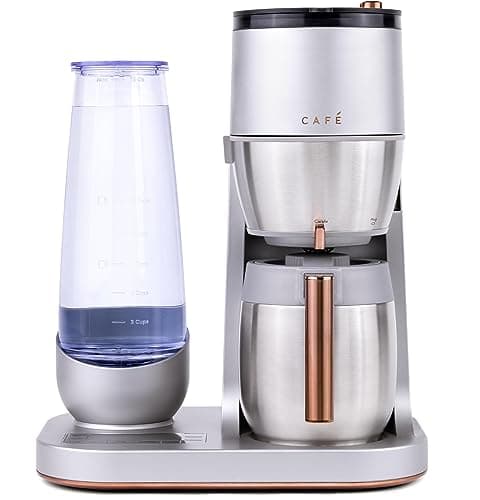
The first criterion, as in every brewer guide we write, is brew temperature. The Specialty Coffee Association's standard puts proper extraction in a roughly 195-205°F window; brew below it and coffee comes out thin and sour, and most cheap drip machines never get there. This is the spec that decides how the coffee tastes, and it is the spec grind-and-brew makers are least likely to publish, because the grinder is the feature on the box. Of the four here, exactly one — the Café Specialty Grind and Brew — carries an SCA certification, which is why it wins. The others make no temperature claim we can verify, and we say so on each rather than assume the best. If you want the field where this spec is taken seriously across the board, that is our best drip coffee makers guide.
The second criterion is burr or blade. A burr grinder crushes beans between two shaped surfaces at a set distance, so the grounds come out a consistent size; a blade grinder is a propeller that smashes beans into a mix of dust and boulders. The difference is not subtle in the cup — the dust over-extracts into bitterness while the boulders under-extract into sourness, and you taste both at once. Plenty of cheap machines advertised as "grind and brew" hide a blade, and the listing will often just say "grinder" and leave it there. All four machines here are burr machines, and that is the main reason the list is short. We explain the mechanism in full in burr vs blade grinders.
The third criterion is the one no spec sheet mentions and every owner eventually meets: the chute. In a grind-and-brew, ground coffee has to travel from the burrs to the brew basket through a passage, and freshly ground coffee is statically charged and slightly oily — so some of it sticks. Over weeks that residue builds up, doses drift lighter than what you asked for, and the coffee quietly gets weaker without anything obviously breaking. This is the number one real-world complaint about the whole category, and no machine is immune. What separates the good ones is how easily you can get in and clean it — the Café's grinder is designed to be brushed out and its burr is a replaceable part, which is the single most useful thing on its spec sheet.
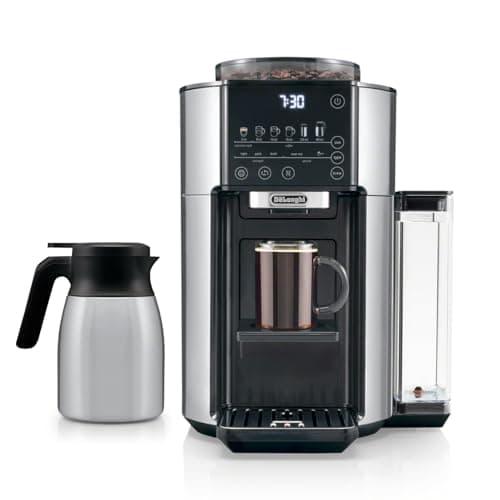
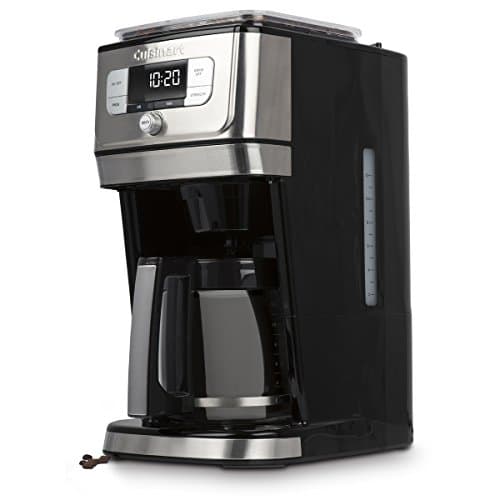
The fourth criterion is what happens when the grinder is not what you want. Sometimes you have pre-ground coffee, or decaf for a guest, or you simply want to brew without waking the house at six in the morning — grinding is loud. A machine that lets you bypass its own grinder is far more useful than one that does not, and the Café is the most flexible here: its listing states you can use either pre-ground coffee or whole beans, and it will brew a single mug as well as a full carafe. The De'Longhi TrueBrew, by contrast, is built around whole beans and a permanent filter, which is elegant when it suits you and inflexible when it does not. The Cuisinart DGB-800C publishes strength settings but says nothing about a grind-off path, so treat pre-ground as unconfirmed on it.
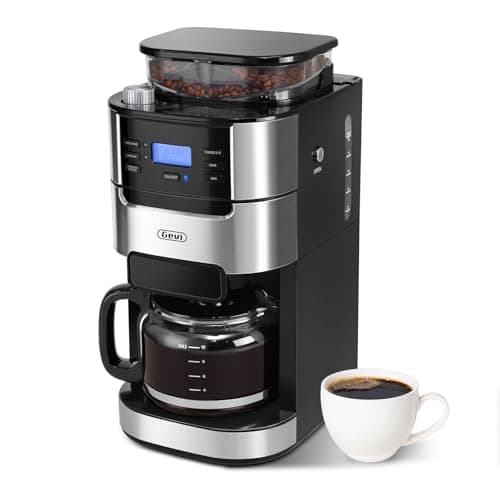
The fifth criterion is the carafe, and it is where the budget end gives itself away. A thermal carafe holds coffee hot by insulating it; a glass carafe sits on a heated plate that keeps cooking the coffee, and after twenty minutes you can taste it. The Café and the TrueBrew both use thermal carafes. The Gevi uses glass on a keep-warm plate, and its two-hour warm cycle is exactly the thing that stews a pot. If you drink a whole carafe within fifteen minutes this barely matters; if you nurse a pot through the morning, it is the difference between good coffee and a burnt one, and it is worth reading our note on thermal carafe machines before you decide.
The sixth criterion is repairability, and it is the quiet argument against the entire category. Two appliances in one housing means two things that can fail, and in most grind-and-brew machines a dead grinder means a dead coffee maker — the brewer half is fine and the machine still goes in the bin. Only the Café publishes a replaceable burr among these four. Compare that with a separate grinder like the Baratza Encore, where every part is sold individually, and you can see what the convenience actually costs you over ten years.
Which brings us to the honest verdict, and it is not the one a page like this usually gives. For the same money as any machine here, a good standalone burr grinder next to a good plain brewer will make better coffee, grind more consistently, adjust more finely, survive longer, and be repairable when one half dies. If cup quality is your actual goal, buy separates: our best burr grinders and best drip coffee makers guides together cost you two purchases and one extra square foot of counter. Buy a grind-and-brew when counter space, a single power outlet, or simply not wanting to run two machines before coffee is worth more to you than the last increment of cup quality. That is a completely reasonable thing to want. It is just worth knowing that it is what you are buying.
So: the Café Specialty Grind and Brew is our pick for most people, because it is the only one that certifies the temperature and the only one whose burr you can replace. The De'Longhi TrueBrew is the one to buy if you want the whole job automated from beans to cup with no paper filter and you will pay a real premium for it. The Gevi is the cheap way to find out whether you like grind-and-brew at all, with the caveats about temperature and the hot plate stated plainly. The Cuisinart DGB-800Cis the one to buy if you need a full 12-cup pot ground to order — it is Cuisinart's current burr grind-and-brew, it is the largest batch here, and it ranks last because it costs more than the Café while publishing less: no brew temperature, no certification, and a listing that cannot keep its own story straight about whether the carafe is glass or thermal.
None of these machines has been in our hands. We compared published manufacturer specifications, checked each listing was live and priced through the Amazon Creators API on the day this was written, applied the SCA's published brewing standard, and cross-referenced aggregated owner reports for the failure patterns — the chute clogging, the dose drift — that specs never mention. Where a claim is a manufacturer's rather than ours (Café's SCA certification, De'Longhi's brew styles, Gevi's eight grind levels), we attribute it, and where a number simply is not published, we say it is not published rather than guess. That is the method we describe on how we research.
How to choose a grind-and-brew coffee maker
The marketing for this category leads with the grinder, because the grinder is the difference. The buying decision, though, mostly turns on things the box does not mention. Here they are in the order that actually changes which machine you should own.
First, decide whether you want one at all
The strongest argument against a grind-and-brew is arithmetic. Split the same budget between a standalone burr grinder and a plain drip brewer and you get a grinder with more settings and better consistency than any built-in unit, a brewer chosen purely on how well it brews, and — critically — two independent machines, so one failure does not retire both. You also get a grinder you can use for a French press or a pour-over on a weekend, which a machine with the grinder sealed inside it can never do.
The arguments for buying one anyway are just as legitimate. It is one machine, one plug and one footprint. It is one button in the morning instead of a grind, a transfer, and a spill. And for someone currently buying pre-ground coffee, it is a genuine leap in freshness that they will actually keep using, which beats a better setup that feels like a chore. Convenience you use is worth more than quality you avoid. Just make the trade knowingly.
Brew temperature: the spec that decides the taste
The Specialty Coffee Association puts correct extraction at roughly 195-205°F. Under-heated water does not dissolve the compounds that make coffee taste sweet and full, which is why cheap drip coffee tastes thin and sour no matter how good the beans were. An SCA certification is a manufacturer paying to have that verified, and among these four only the Café carries one. That is not proof the others brew cold — it is an absence of evidence, and we treat it as exactly that. If you would rather not gamble on an unpublished number, the certification is the reason to buy the Café, and the same logic drives the ranking in our drip machine guide.
Burr or blade, and why the listing may not say
Burrs crush to a set size; blades chop to whatever happens. Uneven grounds extract unevenly, and the result is a cup that is bitter and sour at the same time — a flavor most people blame on their beans. Under about the price of a decent standalone grinder, a machine advertising "grind and brew" is quite likely to contain a blade, and the listing will often say only "built-in grinder." Treat the absence of the word "burr" as a no. Every machine in this guide is a burr machine, which is most of the reason the list is four long and not fourteen. The mechanism, and why it matters more than almost anything else you can buy, is in burr vs blade.
The chute is the real failure point
Ask owners of any grind-and-brew what went wrong and you will hear the same story: grounds building up in the passage between the burrs and the basket. Fresh grounds carry a static charge and a little oil, so they cling; the buildup then eats part of each dose, and the coffee gets weaker over weeks without any single day being obviously wrong. Nothing prevents this. What matters is access — whether you can get a brush into the grind path without tools, and whether the burr itself can be pulled and replaced when it dulls. Café publishes a replaceable burr and includes a cleaning brush; the others are more sealed. Budget five minutes a month for this on whichever machine you buy, and see our grinder cleaning guide for the routine.
Can you bypass the grinder?
There will be mornings you want decaf, or a bag of pre-ground someone gave you, or silence. A grind-off or pre-ground path turns the machine into an ordinary drip brewer on those days; without one you are committed to whatever is in the hopper. The Café is the most accommodating machine here: its listing states it takes whole beans or pre-ground. The TrueBrew is the least — it is a bean-to-cup design and it wants beans, and the Cuisinart simply does not say. Neither is wrong; they suit different households, and if pods are genuinely part of your morning, compare against the field in our single-serve guide before committing.
Thermal carafe or hot plate
A glass carafe on a warming plate keeps applying heat to coffee that has finished brewing. Extraction does not stop politely at the end of the cycle; the coffee continues to change, and after half an hour on a plate it tastes scorched and flat. A double-walled thermal carafe insulates instead, holding temperature without cooking. The Café and the TrueBrew are thermal. The Gevi is glass with a two-hour keep-warm, which is fine if the pot empties fast and genuinely bad if it does not. This is the least glamorous spec on the page and one of the most reliable predictors of whether your second cup tastes like your first.
What you are actually paying for, by buyer
Buy the Café if you want one machine that will not embarrass itself on temperature and can be serviced rather than replaced — it is the pick for most people here. Buy the TrueBrew if full automation is the point, you want every size from a single cup to a carafe, and the premium over everything else on this page is genuinely worth it to you. Buy the DGB-800C if you need twelve cups ground to order and Cuisinart is the brand you trust to still sell you a carafe in five years. Buy the Gevi if the honest goal is to try grind-and-brew cheaply, with your eyes open about the unpublished brew temperature and the warming plate. And if, having read all that, the trade sounds bad — buy a grinder and a brewer separately. That is the better coffee, and we would rather tell you so.