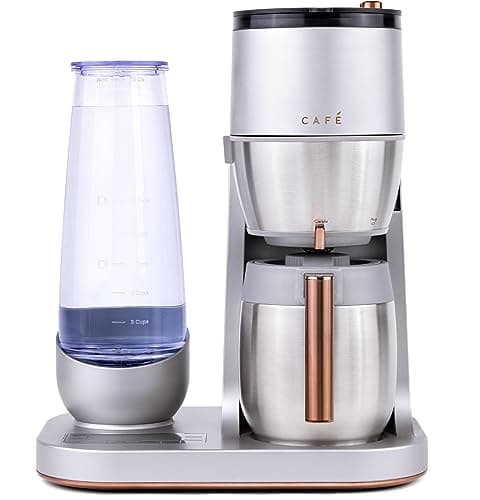
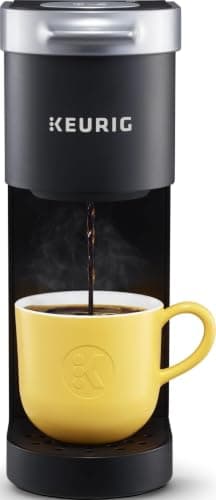
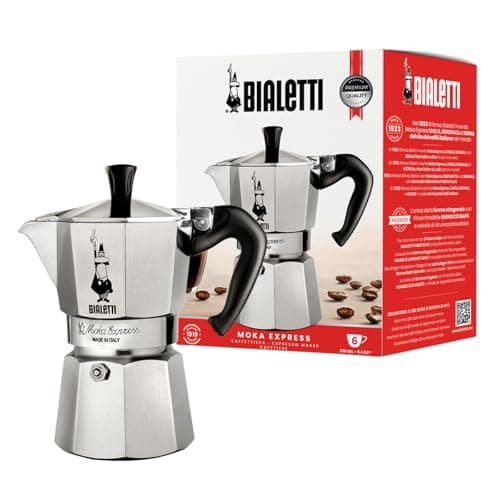
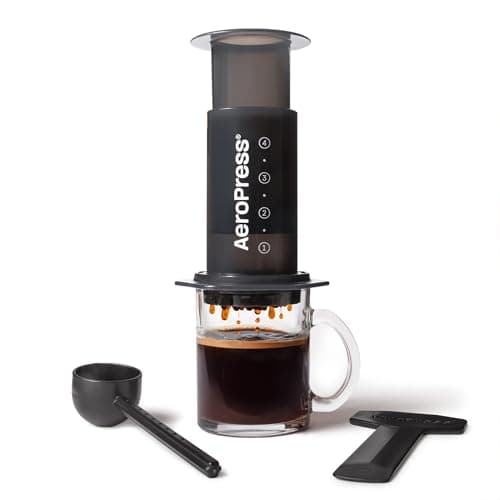
If you are brewing for yourself and want the best cup for the least money, buy an AeroPress Original: it is cheap, it makes genuinely excellent single cups, it cleans in seconds, and there is nothing in it to break. If you want a machine that does it for you, the Café Specialty Grind and Brewgrinds fresh beans and brews bean-to-cup straight into a mug at the push of a button — at a price that only makes sense if you want one machine that can also serve a table. If convenience outranks everything, the Keurig K-Mini is the smallest sensible pod machine. And the Bialetti Moka Express is the one to buy if you want something strong and espresso-adjacent with no electricity and no filters, ever.
The mistake worth avoiding first: a big drip machine does not scale down. A 12-cup brewer making one cup puts a small amount of water through a shallow bed of grounds, the hot plate then cooks what little coffee it made, and the result is weak and bitter at once. Brewers are designed around a batch size and they brew badly outside it. That is the entire reason this page exists as a separate question from best drip coffee makers.
What "for one person" actually demands
Four things, in this order. Right batch size— it has to be designed to brew 8 to 12 oz, not to tolerate it. Low cleanup— the thing that kills a daily brewing habit for one is the washing-up, not the brewing. Small footprint, because one-person kitchens are usually small kitchens. And cost per cup, where pods are three to five times the price of whole bean and that gap compounds daily.
The picks
AeroPress Original.The best cup per dollar on this page by a wide margin, and the one we would pick for ourselves. It brews under gentle pressure through a paper filter, which gives you a clean, concentrated cup with none of the sediment of a press, and the plunge pushes the grounds into a single dry puck you knock straight into the bin. Total cleanup is about ten seconds under a tap. It is designed around one or two cups, so you are brewing it at its designed size rather than at the bottom of a machine's range. The honest cons: it is manual, so there is no walking away while it brews, and paper filters are a small recurring cost. If travel matters, the AeroPress Go packs into its own cup; our AeroPress comparison covers the range.
Café Specialty Grind and Brew.The automatic answer, and the one that changed since we first wrote this page: the machine we used to rank here, Cuisinart's Grind & Brew Single-Serve (DGB-2), has been discontinued, and every cheap single-serve grind-and-brew that replaced it on Amazon uses a blade grinder. The Café does the same job properly. Its listing states a single-serve mode that brews freshly ground, bean-to-cup coffee directly into a travel mug with no pod, an adjustable burr grinder with six settings, and SCA certification — so you get the single biggest quality upgrade available (grinding immediately before brewing) at a brew temperature somebody independent has checked. The cons are real and they are about fit, not quality: it is by a wide margin the most expensive machine on this page, and it is a full-size 10-cup brewer on your counter, so it only makes sense if you occasionally brew for other people too. If that is not you, the AeroPress above plus a hand grinder makes a better cup for a tenth of the money, and the grind chute on any grind-and-brew needs cleaning or it clogs with oily beans.
Keurig K-Mini. We rank pods honestly: the coffee is worse and it costs more per cup. But the K-Mini earns its place because it solves a specific case completely. It is narrow enough for a dorm shelf or an office corner, there is no carafe to wash, no grinder to clean, and no technique to learn. If the realistic alternative is not drinking coffee at home at all, this beats it. If you want to improve the cup later without changing machines, a reusable K-Cup lets you put your own fresh-ground coffee in it, which closes much of the quality gap and most of the cost gap. See K-Elite vs K-Mini if you are deciding between Keurigs.
Bialetti Moka Express (6-cup).Not espresso, despite what the internet says — it brews at a fraction of espresso pressure — but it makes a strong, syrupy, concentrated coffee that is excellent with milk and costs almost nothing to run. No filters, no electricity, no moving parts, and the design has not needed changing in decades. Buy the smallest size for one person: a moka pot has to be filled to its design volume to work properly, so a big one is not a flexible one. The cons are that it demands some attention at the stove and that aluminium versions should not go in the dishwasher. Moka pot vs espresso machine is the honest comparison if that is what you are weighing.
The one-line answer by situation
Best cup, lowest cost, do not mind two minutes of hands-on: AeroPress. Want it automatic with fresh-ground beans:Café Specialty Grind and Brew. Want zero effort and zero cleanup: Keurig K-Mini (with a reusable pod). Want strong coffee for milk drinks with no power: Bialetti Moka Express.
Cost per cup, honestly
This is where brewing for one differs most from brewing for a family, because you are buying every cup yourself. Whole-bean coffee at a normal retail price lands well under a dollar for a strong 10 oz cup. Pods land several times higher for the same volume, and that is the real long-run cost of the convenience, not the machine price. Over a year of one cup a day the gap is larger than any brewer on this page. A reusable pod is the cheapest way to keep a pod machine and stop paying pod prices.
Buy for the batch size you actually brew
Every brewer has a designed dose and brews worst at the edges of it. An AeroPress is built around 11 to 18 g of coffee. A moka pot wants its basket filled level and its boiler filled to the valve — half-filling one makes bad coffee, not less coffee. A single-serve machine is built around one mug. The general rule: pick the brewer whose designed size is your usual size, rather than a bigger one you will run at a quarter capacity.
The grinder question for one person
If you brew one cup a day, a hand grinder stops being a compromise. Cranking 15 to 18 g of coffee takes well under a minute, and a good hand grinder costs a fraction of an electric one with comparable consistency — see hand grinder vs electric. The whole objection to hand grinding is volume, and at one cup there is no volume. This is the single highest-value purchase next to the brewer itself, because the NCA recommends burr over blade and a blade grinder will undo whichever brewer you buy.
Cleanup is the feature that decides whether you keep using it
Rank the options honestly by washing-up: a pod machine has none, an AeroPress has about ten seconds, a moka pot needs a rinse and a dry (and the gasket checked occasionally), and a grind-and-brew machine needs its basket and grind chute kept clean. Brewing for one happens on a weekday morning. Whatever you can do half-asleep is the one you will still be using in six months.
What about a small drip machine?
A properly small drip machine — one designed for 4 to 5 cups rather than a 12-cup machine run at a quarter — is a reasonable choice if you want to brew two mugs and keep them hot. What we would avoid is a large machine bought on the assumption it will scale down, for the reasons at the top of this page. If you want the drip format at a small size, our cheap coffee makers roundup covers the small end, and single-serve machines covers the pod field in full.