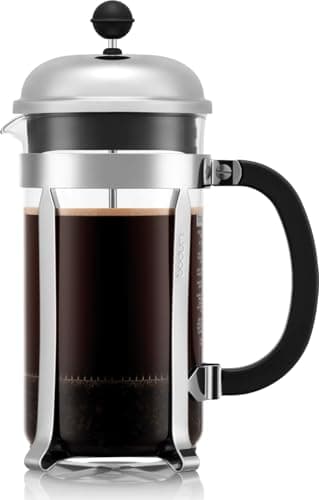
French press versus drip is really a choice between two philosophies of coffee, not two gadgets. A French press steeps the grounds in hot water and strains them through a metal mesh, so the oils and fine particles stay in the cup — you get a heavy, full-bodied, textured brew. A drip machine rains hot water through a paper filter, which traps most of those oils and fines, so you get a cleaner, lighter, more consistent cup with almost no effort. Neither is better in the abstract. The right answer depends entirely on which cup you want and how much you want to do to get it, and this comparison walks through both so you can pick with your eyes open.
Flavor: body and oils versus clarity
Start with the cup, because it is the whole reason the two methods exist. A French press like the Bodum Chamborduses full-immersion brewing and a metal filter, and that metal mesh lets the coffee's natural oils and a fine haze of sediment pass straight into the cup. The result is heavy and full-bodied — a rounder, weightier, more velvety mouthfeel that many people love, with the oils carrying a lot of aroma and richness. The honest trade is that the same mesh lets fine grit through, so the last sip carries a little sediment, and press coffee left sitting on its grounds keeps extracting and can turn bitter.
A drip machine like the OXO Brew 9-Cupworks the opposite way. It filters the brew through paper, which absorbs the oils and catches the fines, so the cup comes out clean, bright, and free of sediment — the clarity that lets a delicate, well-roasted coffee show its more subtle notes. It is lighter in body by design; the paper is deliberately removing the weight that a press keeps. Which of these you prefer is genuinely a matter of taste, not quality: if you love a thick, rich, rounded mug, the press wins; if you love a clean, crisp, articulate cup with no grit, drip wins. There is no wrong answer, only your answer.
Effort: a hands-on ritual versus press-a-button
The day-to-day effort could hardly be more different, and for many people this decides it. A French press is a short hands-on ritual: heat the water yourself, add grounds, pour, wait about four minutes, and press the plunger down — then rinse the grounds out of the carafe afterward, which is a slightly messier cleanup than a paper filter. It is not hard, but it asks for your attention and a few minutes every time. Our French press guide and cleaning guide cover the method and the washing-up.
A drip machine is the opposite of a ritual: fill the reservoir, add grounds and a paper filter, press a button (or let a timer do it while you sleep), and walk away. Cleanup is lifting out one paper filter full of spent grounds and binning it. If you want coffee to happen with as little of your involvement as possible — ready when you wake, no watching, no plunging, minimal washing — drip is the clear winner, and a programmable machine like the OXO makes coffee before you are even in the kitchen. The press repays attention with a better-tasting cup for some drinkers; drip repays you with your morning back.
Cost, batch size, and consistency
On running cost, the French press has a real edge: it uses a permanent metal filter, so there are no paper filters to buy, ever, and the press itself is inexpensive. A drip machine keeps costing a little for paper filters, and a good SCA-grade machine costs meaningfully more up front than a press. On batch size, it depends on the model: the Chambord we reference brews about 34 ounces — a few mugs — while a drip maker like the OXO brews nine cups and bigger machines brew fourteen, so for a crowd or an office, drip scales more easily and can do it on a timer. On consistency, drip wins clearly: an automatic machine repeats the same brew every time, whereas a press's cup depends on your water temperature, your timing, and how coarsely you grind, so it rewards a little care and punishes carelessness.
One thing both methods share is that the grind and the beans matter more than the brewer. A French press wants a coarse, even grind — too fine and you get a muddy, over-extracted cup and far more sediment — while a drip machine wants a medium grind. Either way, a burr grinder lifts the cup more than the choice between the two methods does; a grinder for press especially needs to grind coarse and evenly. And both brew far better in the SCA temperature window: a good drip machine hits it automatically, while a press relies on you pouring water just off the boil. Fresh, well-ground coffee and hot enough water are the constants; the brewer is the variable.
The verdict, by drinker
Here is the plain call. Buy a French pressif you love a heavy, full-bodied, oily cup, you do not mind a few minutes of hands-on brewing and a slightly messier cleanup, you want the lowest running cost with no paper filters, and a little sediment in the last sip does not bother you. The Bodum Chambord is the default press for exactly this drinker — inexpensive, classic, and it makes the rich cup the method is famous for. It is the choice of someone who enjoys making coffee as much as drinking it.
Buy a drip machineif you want a clean, consistent cup with essentially no effort, especially on a timer so it is ready when you wake; if you brew for several people or need volume; or if you dislike any grit in your coffee. A machine like the OXO Brew 9-Cup gives you an SCA-grade brew, a thermal carafe, and a programmable start — the hands-off, repeatable option for a busy household. And if you cannot choose, the honest truth is they cost little enough that plenty of people own both: a drip machine for weekday convenience and a press for a slow, rich weekend cup. Match the tool to the morning and you will be happy with either.
A couple of honest "don't buy this" notes to close. Do not buy a French press if you are chasing a clean, sediment-free, hands-off cup — you will fight the method every morning, and a paper-filtered drip or a pour-overis what you actually want. And do not buy a drip machine expecting the thick, oily body of a press — the paper filter is designed to strip exactly that out, so if body is the point, no drip machine will give it to you. Buy the method whose cup and whose effort level you genuinely want, not the one that sounds fancier, and the coffee follows.
Choosing between French press and drip
Four questions settle it. Answer them honestly and the winner is usually obvious.
1. Which cup do you actually like?
This is the biggest question, so answer it first. If you like a heavy, rich, full-bodied mug with real texture, the French press is built for it — the metal filter keeps the oils and body a paper filter removes. If you like a clean, bright, grit-free cup that shows a coffee's subtler notes, drip is built for that instead. Taste them side by side if you can, because this is a preference, not a quality gap, and it decides everything downstream. If you already know you love one style, the rest of the decision is just confirming it.
2. How much effort do you want to spend?
Be honest about your mornings. A French press is a four-minute hands-on ritual with a slightly messier cleanup; a drip machine is a button (or a timer) and one paper filter to bin. If you enjoy making coffee and have the few minutes, the press rewards it; if you want coffee to appear with no involvement — especially ready before you reach the kitchen — drip wins decisively. There is no shame in choosing convenience; a great cup you never make is worse than a very good one you make every day.
3. How many people, and how much at once?
Match the batch to your household. A French press like the Chambord makes a few mugs at a time and is perfect for one or two drinkers; if you need more, you brew again. A drip machine scales more easily — nine cups from an OXO, fourteen from a big Cuisinart — and can brew the whole batch on a timer, which is why offices and larger households lean drip. If you routinely caffeinate a crowd, that alone can decide it in drip's favor.
4. Cost, consistency, and grind
Finally, weigh the practical details. The press is cheaper up front and has no paper-filter cost ever; a good drip machine costs more and keeps buying filters, but it repeats the same cup automatically where a press depends on your technique. Both need a burr grinderto shine — coarse and even for the press, medium for drip — and both want water in the SCA temperature window, which a good drip machine hits on its own and a press relies on you to pour. If consistency and walk-away ease matter most, drip; if body, low cost, and ritual matter most, the press. Our French press roundup and drip roundup pick the best of each.