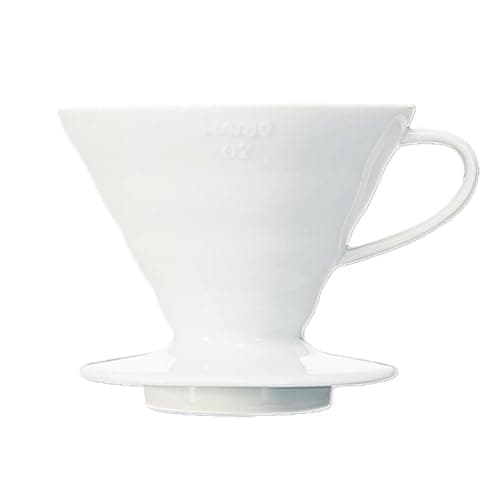
If pour-over coffee has a default object, it is the Hario V60. The name is the shape: a cone with a 60-degree angle, deep spiral ribs running up the inside, and a single large hole at the bottom. Those three features are the entire design, and together they hand you something no other cheap brewer does — near-total control over how fast the water moves through the coffee, and therefore over how the cup tastes. It costs about as much as a couple of coffees, pairs with cheap paper filters, and has become the enthusiast standard for good reason. This is our review of the ceramic 02 model, the size most people should start with.
Here is why the geometry matters. In a French press the grounds simply soak; in a flat-bottom dripper the water pools. In the V60, the steep cone funnels everything toward one big opening, and the spiral ribs lift the paper off the wall so air can escape and water can flow freely down the sides. The result is that you set the flow rate with your pour. Pour slowly and in stages and the water lingers, extracting more; pour fast and it rushes through, extracting less. That is the lever every pour-over recipe pulls, and the V60 gives you the widest, most responsive version of it.
The cup that comes out is the V60's calling card: clean, bright, and articulate. Paper catches the oils and fine particles that a metal mesh lets through, so the coffee is clear and light-bodied, and the cone's control lets you coax out the delicate, tea-like, fruity notes that make a good single-origin worth buying. If you have invested in fresh, interesting beans, this is the brewer that shows them off. It is the opposite end of the spectrum from a press: where the press is heavy and round, the V60 is crisp and defined.
The honest catch: control cuts both ways
That control is also the V60's only real drawback. Because the flow depends on your pour, a sloppy pour makes a mediocre cup — dump the water in and you channel straight through for a thin, sour result, or drown the bed and over-extract into bitterness. The V60 rewards, and quietly demands, two pieces of kit. The first is a gooseneck kettle, whose narrow spout lets you lay down the slow, aimed stream the cone is built for; pouring from a normal kettle is the most common reason a home V60 disappoints. The second is a scale, so you can weigh coffee and water to a repeatable ratio instead of guessing. Add an even, medium-fine grind from a burr grinder and the V60 is transformed; skip all three and it will frustrate you.
None of that is a knock so much as a description of what pour-over is: a hands-on, two-to-three minute ritual. If that sounds like a chore rather than a pleasure, the V60 is the wrong tool, and a French press or a drip machine that you can walk away from will make you happier. If it sounds like the good part of the morning, few objects reward attention like this one — and the cost of entry is tiny.
One small habit is worth building from the very first brew: rinse the paper filter with hot water before you add the coffee. It washes out the faint papery taste a dry filter can leave, and it pre-heats both the ceramic cone and the mug underneath, so the brew does not shed temperature the moment it lands. It costs ten seconds, it is the cheapest improvement you can make to a V60 cup, and it is exactly the kind of small detail the dripper rewards precisely because it hands you so much control over everything else.
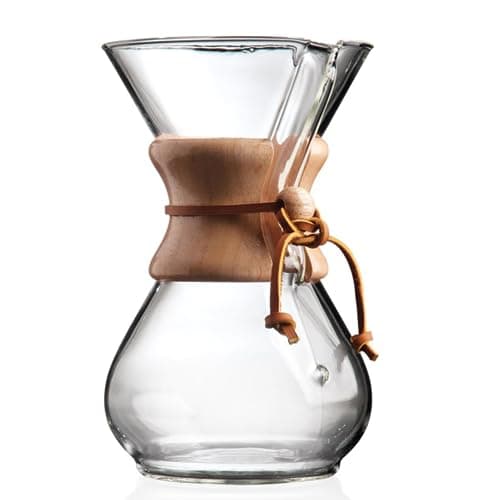
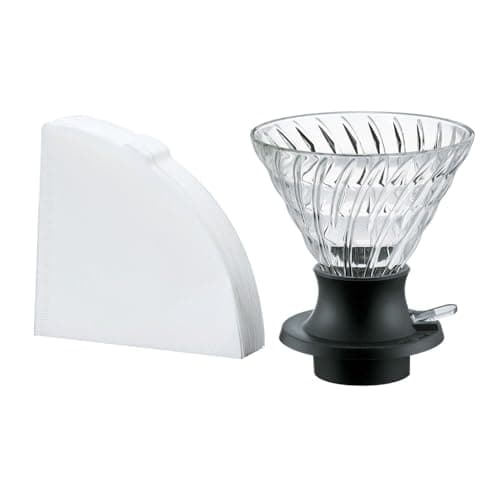
The two products alongside it in the picks answer the V60's two limits. The Chemex Classicis the choice when you want to brew for more than one and want the cleanest possible cup: its thick, bonded filters strip more oils and fines than any other paper here, and the one-piece glass brews and serves a carafe's worth at once. You pay for proprietary filters and lose some body, but you gain a genuinely beautiful decanter and an easier pour to get right. The Hario Switch is the answer to the technique demand: it is essentially a V60 with a ball valve in the base, so you can steep the coffee like a press and then release it through a paper filter. That gives you body and a clean cup, and it is far more forgiving because the steep does the work instead of your pour — the closest thing to a foolproof pour-over, using the same standard V60 filters.
Who the Hario V60 is for
Buy it if you want the classic pour-over experience, you like a clean, bright, nuanced cup, and you enjoy — or are willing to learn — a short hands-on ritual each morning. It is the cheapest way into serious filter coffee and the brewer the entire recipe community is written around, so help is everywhere. Just buy it knowing it works best as part of a set: a gooseneck kettle, a scale, and a burr grinder alongside it.
Buy the Chemex instead if you regularly brew for two or more, or you want the very cleanest cup and a carafe you can serve from — it scales past the single-cup V60 and looks the part doing it. Buy the Hario Switch instead if you love the idea of pour-over but do not want to master the pour: its valve lets you steep like a press and drain like a V60, which is dramatically more forgiving while still using standard filters. And if you want a heavy, full body rather than a clean one, the V60 is simply the wrong end of the spectrum — a French press is the tool for that.
Get the most out of it
Three habits do almost all the work. First, grind medium-fine and, above all, even — an uneven grind from a blade grinder is the number-one reason a V60 tastes muddy, so a burr grinder matters here as much as the dripper itself. Second, pour from a gooseneck kettlein the SCA's 195-205 degrees F window: wet the grounds and let them bloom for thirty to forty-five seconds, then pour in slow, even circles. Third, weigh everything to a consistent ratio so you can repeat a good cup and adjust a bad one. Our pour-over guide walks through the full recipe.