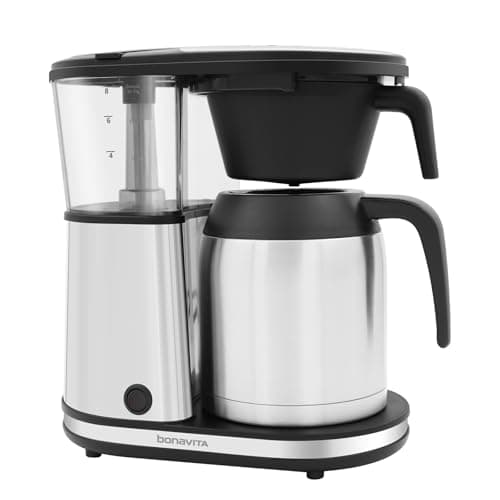
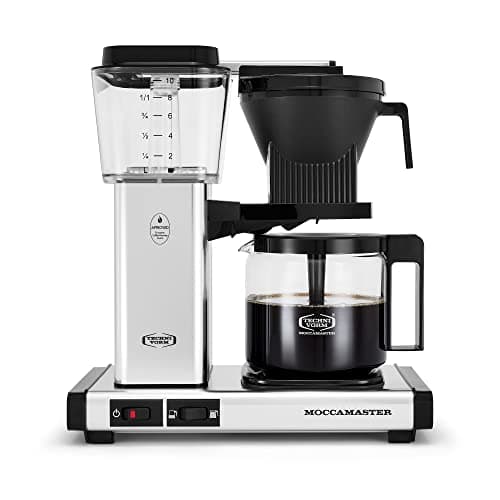
If you want the best coffee per dollar, buy the Bonavita Connoisseur 8-Cup: one button, the correct brew temperature, a pre-infusion bloom and a thermal carafe, for a fraction of the Moccamaster's price. If you want the machine you will still own in ten years and you care that it can be repaired rather than replaced, buy the Technivorm Moccamaster KBGV Select. The cup these two produce is far closer than the price gap suggests — because they both do the one thing that actually decides drip coffee.
That one thing is brew temperature. The useful window is roughly 195 to 205°F, and the reason most cheap drip machines make weak, sour coffee is that they never get there. They dribble 170°F water over the grounds, under-extract the coffee, and no amount of beans or grind fixes it. Both machines here brew inside the window: Technivorm rates the Moccamaster at 196 to 205°F, and the Bonavita is certified to the same standard. Once you are both inside the window, you are arguing about everything else.
What the Moccamaster premium actually buys
Three real things, none of which is "better coffee" in a blind cup.
Repairability.The Moccamaster is hand-built in the Netherlands and Technivorm sells parts individually — element, carafe, basket, switch. It is designed to be fixed, not binned, and it carries a 5-year warranty that the build quality backs up. Over a decade this is a genuine argument, and it is the main one.
The copper element and the output rate.The Moccamaster's element brings water to temperature quickly and delivers it at a rate that finishes a full 10-cup batch in about six minutes, which keeps the contact time in a sensible range rather than stewing the bed.
It will be the same machine in year eight. Thermostats drift and plastic waterways scale up; a machine built to be serviced ages differently from one that is not.
What the premium does notbuy: a programmable timer (the KBGV Select has none), any kind of automation, or a bigger temperature advantage over the Bonavita. It is also a glass-carafe-on-a-hotplate machine in its common configuration, and a hot plate slowly cooks coffee — which is precisely the thing the Bonavita's thermal carafe avoids.
What the Bonavita gets right for the money
The Connoisseur is the no-nonsense version of the same idea. One button. Correct temperature. A pre-infusion mode that wets the grounds and lets them degas before the main pour, which is the same bloom step that manual pour-over technique uses and which meaningfully evens out extraction. And a double-wall thermal carafe, so the coffee sits insulated instead of being slowly caramelized on a warming plate.
Its limits are honest and worth knowing. There is no programmable wake-up timer, so you start it when you are up. It is an 8-cup machine, not a 10-cup one. And the build and support are plainer — this is a good appliance, not an heirloom.
The two machines that complicate the choice
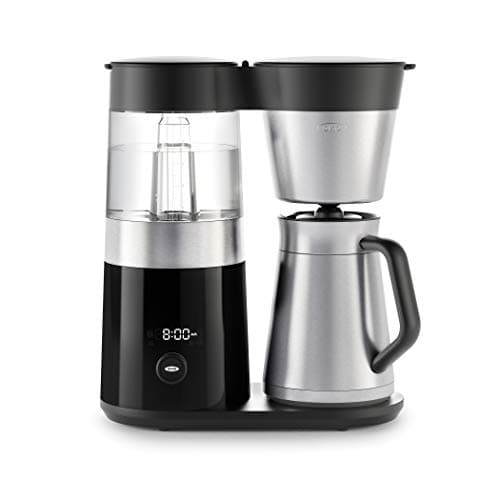
The OXO Brew 9 Cupis the machine that makes the Moccamaster hardest to justify. It hits the SCA temperature window, it is fully programmable so coffee is ready before you are out of bed, it has a thermal carafe, and its Rainmaker shower head saturates the bed evenly instead of drilling a hole through it. It is not built to be repaired the way a Moccamaster is, and the single-dial interface takes a minute to learn — but if your priority is good coffee on a schedule, this is the one that fits a real morning.
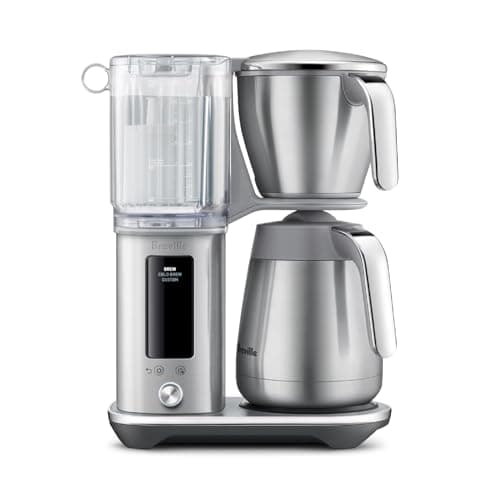
The Breville Luxe Brewer Thermal (BDC465)is the opposite argument: spend the Moccamaster money, but on features instead of longevity. It is SCA-certified, has a real double-wall carafe that Breville rates above 150°F for up to four hours, a 24-hour programmable timer, and a Custom Brew mode that exposes bloom volume, bloom time, brew temperature and flow rate. If you want to tune drip coffee rather than just brew it, this is the machine on this page that lets you. It is also the most expensive, and most owners never open the Custom menu they paid for.
The verdict
Bonavita if you want the most cup quality per dollar and you do not need a timer. OXO if you want the same cup quality on a schedule. Moccamasterif buy-it-once-and-repair-it is a value you are willing to pay for — it is a legitimate position, just not a flavor one. Breville Luxe if you want certified coffee plus dials to turn. All four clear the bar that 90% of drip machines fail, which is why any of them is a bigger upgrade than switching beans. For the full field, see our best drip coffee makers roundup.
Brew temperature is the whole ballgame
The National Coffee Association puts the right brewing window at 195 to 205°F, and the Specialty Coffee Association certifies home brewers partly on whether they hold it. Below that range, water does not dissolve enough of the coffee's soluble material and you get under-extraction: thin body, sour and salty taste, a cup that seems weak no matter how much coffee you use. Above it, you push into harsh, drying compounds.
Almost every drip machine under about $60 brews cold. That is the real difference between a $40 machine and any machine on this page, and it is why upgrading the brewer changes your coffee more than upgrading the beans does if you are currently brewing at 170°F.
Hot plate versus thermal carafe
A glass carafe on a warming plate keeps coffee hot by continuing to cook it. Within thirty minutes you get flat, bitter, stewed coffee — the taste most people associate with office coffee. A double-wall thermal carafe takes the heat source away and holds temperature by insulation instead, which is strictly better for anyone who does not drink the pot immediately.
This is one place where the cheaper machines on this page beat the most expensive one. The Bonavita, the OXO and the Breville Luxe all use thermal carafes. If you drink one cup and come back for a second an hour later, that matters more to your actual experience than the Moccamaster's build quality does.
The things that still decide your cup after the machine
Grind.A flat-bottom basket wants a medium grind and an even one. This is where a burr grinder earns its keep — see best grinders under $100 and burr vs blade, because a blade grinder produces a mix of dust and boulders that extract at different rates no matter how perfect your brew temperature is.
Ratio. Around 60 g of coffee per litre of water is the standard starting point, which works out to roughly two tablespoons per 6 oz cup. Our coffee to water ratio guide has the arithmetic and the common mistakes.
Water. Scale is what kills drip machines, and hard water also changes extraction. Filtered water is the cheapest maintenance there is, and how to clean a coffee maker covers the descaling routine that keeps either machine in the temperature window it was certified in.
Capacity, honestly
Drip machines brew badly at the bottom of their range. A 10-cup machine making two cups has too little coffee in a large basket and too short a contact time, and it tastes thin. If you routinely brew one or two cups, you are better served by a smaller machine or by a pour-over or French press, both of which scale down gracefully. The Bonavita's 8 cups and the OXO's 9 are more realistic household sizes than they look next to a 10 or 12-cup machine.
What a 5-year warranty is worth
Less than the repairability, frankly. The warranty covers the first five years; the parts catalogue covers the next fifteen. If you are the kind of person who would actually order a replacement element rather than buy a new machine, the Moccamaster's economics work out and the premium is rational. If you would replace the whole thing, you are paying for an option you will never exercise — and the Bonavita or OXO is the better buy.