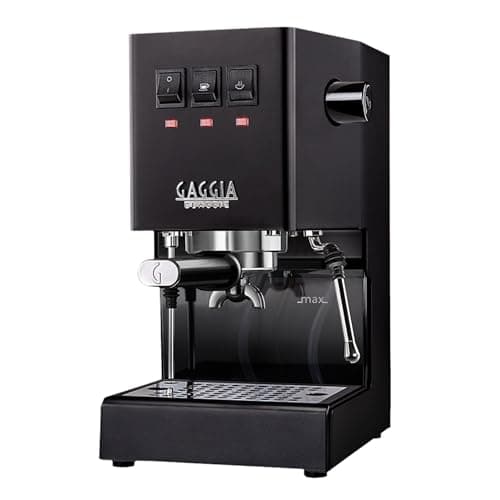
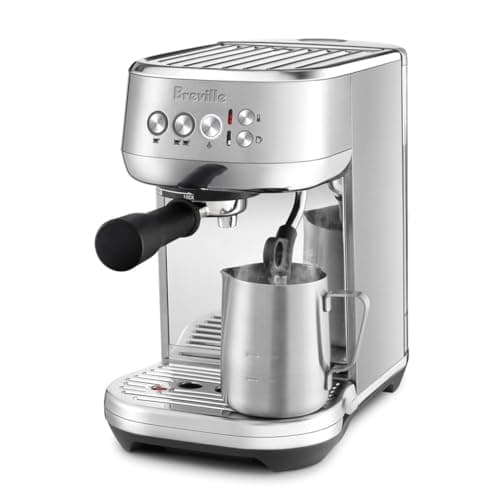
Buy the Breville Bambino Plus if you want good espresso with the least friction possible: Breville rates it ready in about three seconds and it textures milk for you, which makes it the right machine for a weekday morning and for anyone who does not want espresso to be a hobby. Buy the Gaggia Classic Evo Pro if you want to learn espresso properly: its 58mm commercial portafilter and real steam wand give you a higher ceiling, a deeper accessory ecosystem, and skills that transfer to any machine you ever move up to. Neither is better. They are built for different people, and this page is about telling which one you are.
The comparison comes up constantly because the two machines land at similar money and nothing else about them matches. Both are grinder-less, so both assume you own or will buy a burr grinder — factor that into either price before you compare anything else. Past that, every design decision diverges.
The specs that actually differ
Figures as the makers list them on each machine's live listing. We have not measured them — how we research says what we do instead.
| Spec | Bambino Plus (BES500) | Gaggia Classic Evo Pro |
|---|
| Portafilter | 54mm (Breville size) | 58mm commercial |
| Heat-up | Breville rates ~3 seconds | Single boiler, minutes to settle |
| Milk | Automatic texturing to a set temperature | Commercial-style manual wand |
| Body | Compact, small footprint | Metal body |
| Grinder | None | None |
| Modding | Essentially none | Extensive, long documented |
Why the basket size is the real decision
It looks like trivia and it is not. 58mm is the size commercial machines use, which means the entire aftermarket — tampers, distributors, WDT tools, puck screens, bottomless baskets, precision baskets — is cheapest and most plentiful in that size, and anything you buy for a Gaggia keeps working if you later move to a prosumer machine. Breville's 54mm is perfectly good coffee and a thinner accessory market. If you can already imagine yourself buying puck prep tools, that asymmetry compounds over years.
The flip side is that the Gaggia asks for those tools. A 58mm machine with a non-pressurized basket gives you no help at all: a bad grind channels, a sloppy tamp channels, and the shot comes out sour or gushing. That is a feature if you want the feedback and a liability if you wanted coffee. Our guides to dialing in espresso and reading a sour versus bitter shot are written for exactly this machine.
Milk: the button versus the skill
The Bambino Plus's automatic texturing is the most underrated feature at this price. You set a temperature and a foam level, drop the wand in, and it delivers usable microfoam with no technique — which means your first latte is drinkable and your hundredth is identical. For a household where more than one person makes drinks, that consistency is worth more than any shot-quality difference on this page.
The Gaggia's wand is a real one, and it teaches you. Texturing milk by hand is about twenty minutes of practice and then a skill you keep forever — how to steam milkis the whole lesson. It also gives you control the Bambino cannot: latte-art-grade microfoam, non-dairy milks behaving differently, a jug temperature you choose. The Gaggia's honest weakness here is the mirror of Breville's: as a single boiler with a well-documented temperature-stability quirk, it wants you to manage the switch between brewing and steaming rather than ignoring it.
Speed, and what it does to a weekday
Breville rates the Bambino Plus at a three-second heat-up, and it changes behavior. Espresso stops being a thing you plan for and becomes a thing you do while the toast is in — which, in practice, is the difference between a machine you use daily and a machine you use at weekends. The Gaggia wants a proper warm-up to be at its best; the community's temperature-management habits exist because of that single boiler. If the machine lives in a house where the morning is measured in minutes, this is not a small difference.
So: which one
Buy the Bambino Plusif your honest description of yourself is "I want good coffee, quickly, with the machine helping"; if more than one person will use it; if milk drinks are most of what you make; or if the counter is small. Add a grinder and you are done.
Buy the Gaggia Classic Evo Proif your honest description is "I want to get good at this"; if straight espresso is the main event; if you intend to buy puck prep tools and a better grinder over time; or if you want a metal-bodied machine on a platform with a decade of documented mods and a community that will answer every question you have.
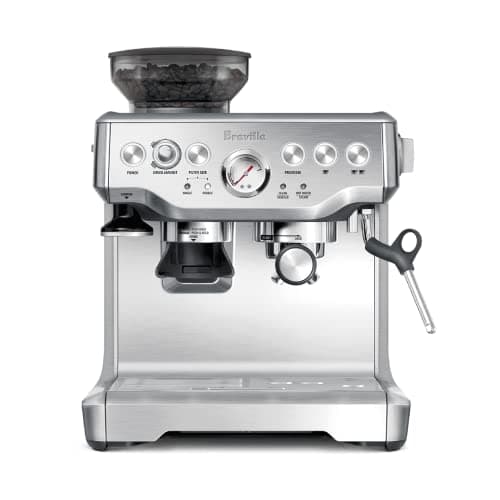
And buy neither if you do not already own a burr grinder and do not want to buy one as a separate purchase. In that case the honest third option is the Breville Barista Express, which puts a grinder in the same box and usually lands near the all-in cost of either machine above plus a decent standalone grinder. It gives up the Gaggia's 58mm ecosystem and the Bambino's speed, and it buys you one purchase instead of two. We rank it first on both the Breville line and espresso machines with a grinder for that reason.
If this matchup has not settled it, the two nearest comparisons on the site both bear on it: Gaggia Classic Pro vs Barista Express takes the grinder question head-on, and Gaggia Classic Pro vs Rancilio Silvia is the next step up the enthusiast ladder if the Gaggia already appeals.
Four things to settle before you order either one
1. Your grinder, decided and priced
Both machines are grinder-less and both are ruined by pre-ground coffee. Espresso wants a very fine grind adjusted in small increments, and the Gaggia's non-pressurized basket is especially unforgiving — it will not manufacture crema to cover a bad grind the way a dual-wall basket does. Our best espresso grinders under $500 is the realistic pairing list for either machine.
2. How many milk drinks, back to back
Both are single-circuit machines, so both make you switch between brewing and steaming. For one or two drinks that is a non-issue. If you are making four in a row every morning, neither of these is the right machine and you are looking for a dual boiler — boiler types explains why.
3. Whether you want a project
The Gaggia is a platform: PID kits, pressure adjustments, basket and shower-screen swaps, all extensively documented by its community. That is genuinely fun for the right person and an unwelcome invitation for everyone else. The Bambino Plus is a closed appliance and makes no such demand. Be honest about which sentence describes your weekend.
4. Counter space and the water tank
The Bambino Plus is the smaller machine by a clear margin, which is part of its appeal, and its small tank is the price — several drinks a day means frequent refills. The Gaggia is heavier, deeper and metal-bodied. Measure the gap under your cabinets before you decide anything, because a machine that does not fit is not a compromise, it is a return.