For most people buying their first real espresso machine, the answer is the Breville Barista Express (BES870XL)— because it is the cheapest Breville that comes with a grinder, and a grinder is not optional. If you already own a good grinder, buy the Bambino Plus instead and put the difference toward beans. Those two machines cover the overwhelming majority of Breville buyers. The other five on this page exist for narrower reasons, and we say plainly what each one is.
Breville's espresso line is genuinely confusing, and not by accident: seven machines, four of them sharing most of their internals, described on the box in nearly the same words. "15 bar Italian pump" appears on almost all of them and tells you nothing, because every pump espresso machine sold in the US claims the same figure and the shot is brewed at about 9 bar regardless. So ignore the marketing and ask two questions in this order.
Question one: is there a grinder in the box?This is the expensive question, and it is the one people get wrong. Espresso needs coffee ground within minutes of brewing, adjusted in very fine increments, and pre-ground supermarket coffee cannot make a decent shot in any machine at any price. Breville splits its line exactly here. The Barista Express, Barista Pro, Barista Touch and Oracle have a conical burr grinder built in. The Bambino and Bambino Plus do not, and expect you to supply one; the Dual Boiler is sold here bundled with a separate Smart Grinder Pro. If you do not already own a burr grinder, a grinder-less machine is not cheaper — it is half a purchase. Our best espresso grinders page is the other half of that bill.
Question two: how much do you want the machine to do for you?This is the cheap question, and it is where Breville makes most of its money. Every machine here pulls a comparable shot from the same basic recipe. What climbs with price is automation: a screen that walks you through the drink, a wand that textures milk to a set temperature on its own, a grinder that doses and tamps for you. None of that makes the espresso better. It makes the espresso easier, which for a lot of households is worth real money — just buy it knowing that is what you are buying.
The Breville line at a glance
Every figure below is as Breville lists it on the machine's live retail listing. We have not measured any of them, because we do not have a lab — how we research sets out exactly what we do instead.
| Model | Grinder | Heating | Basket | Milk |
|---|
| Barista Express (BES870XL) | Built in | 1600W ThermoCoil | 54mm | Manual wand |
| Barista Pro (BES878) | Built in | ThermoJet, ~3 sec | 54mm | Manual wand |
| Barista Touch (BES880) | Built in | ThermoJet | 54mm | Automatic texturing |
| Bambino (BES450) | None | ThermoJet, ~3 sec | 54mm | Manual microfoam wand |
| Bambino Plus (BES500) | None | ~3 sec | 54mm | Automatic texturing |
| Dual Boiler (bundled) | Smart Grinder Pro in box | Dual boiler + PID | 58mm | Manual wand, simultaneous |
| Oracle (BES980XL) | Built in, auto-tamps | Dual boiler | 58mm | Automatic texturing |
Two columns in that table deserve a sentence each. Basket sizeis the quiet one: five of these machines use a 54mm portafilter, which is Breville's own size, while the Dual Boiler and Oracle use the 58mm standard that commercial machines and almost every aftermarket tamper, puck screen and bottomless basket are built around. If you expect to buy accessories, or to move up to a prosumer machine later, 58mm is the size your gear keeps working with. Heating is the one that changes daily life: the ThermoJet machines are usable in seconds, the ThermoCoil Barista Express wants a short warm-up, and the dual-boiler machines want several minutes but then hold temperature far more steadily shot after shot.
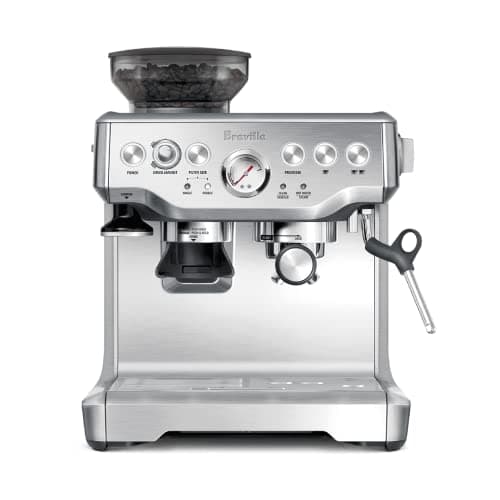
The Barista Expresswins this page on the strength of that one spec: grinder included. It is the cheapest complete grind-to-shot Breville, the dose, grind size and shot volume are all adjustable so you can genuinely dial in, and Breville's US parts and service network is the least painful in the category. The honest cons: the built-in grinder is good rather than great, and the single-boiler ThermoCoil means a short wait between pulling a shot and steaming milk. If you own a grinder already, this is the wrong machine — you would be paying for one you do not need. The full Barista Express review goes deeper, and Bambino Plus vs Barista Express settles the grinder question on its own page.
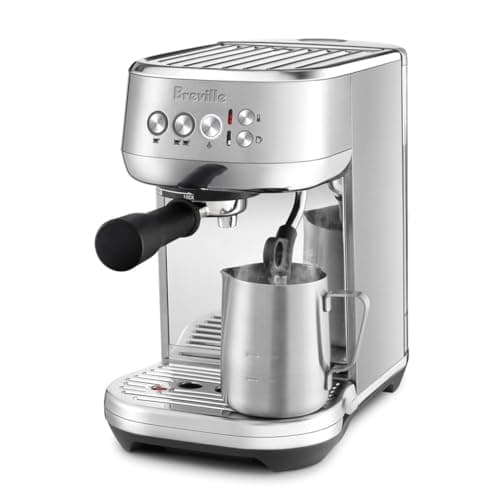
The Bambino Plusis the pick for anyone who already grinds. Breville rates it at a three-second heat-up, so it is genuinely ready before a kettle boils, and the automatic milk-texturing wand froths to a set temperature and texture with no technique at all — the single feature on this page a beginner benefits from most. It is small enough for a counter the Barista Express will not fit. The limits are a small water tank and, again, no grinder: buy it without one and you will make bad coffee with a good machine.
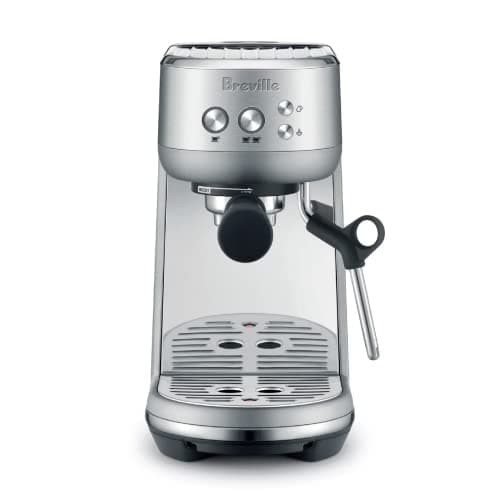
The Bambino(no "Plus") is the same idea one rung cheaper: same near-instant ThermoJet heat-up, same 54mm basket, same genuinely good shot, but a manual steam wand instead of the automatic one. It is the right buy if you want to learn to texture milk yourself and the wrong buy if you wanted the machine to do it. See Bambino vs Bambino Plus for the head-to-head.
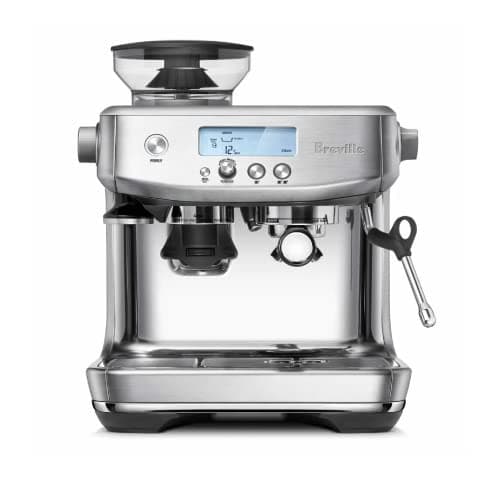
The Barista Prois the Barista Express with Breville's ThermoJet heater and an LCD. Both are real improvements — no warm-up wait, and grind size and shot timing become visible instead of guesswork — but it is still a single-boiler machine pulling the same shot, for meaningfully more money. It is a comfort upgrade, not a capability one. Barista Express vs Barista Pro prices that comfort out.
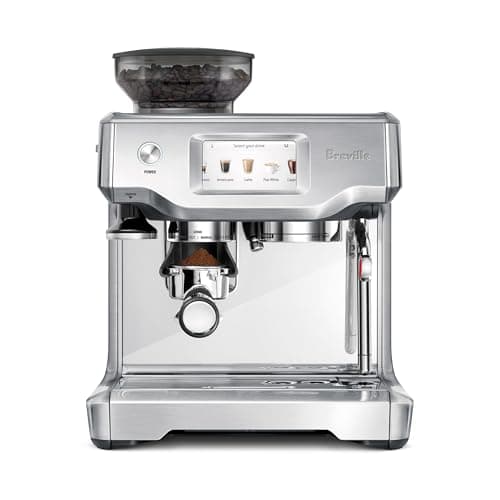
The Barista Touchadds a color touchscreen and automatic milk texturing on top of the Pro's improvements. If you want a guided machine that will hand a cappuccino to someone who has never used an espresso machine, this is the Breville that does it. You are paying a real premium for the screen and the auto-steam rather than for a better shot, and the auto-steam gives you less control than learning the wand.
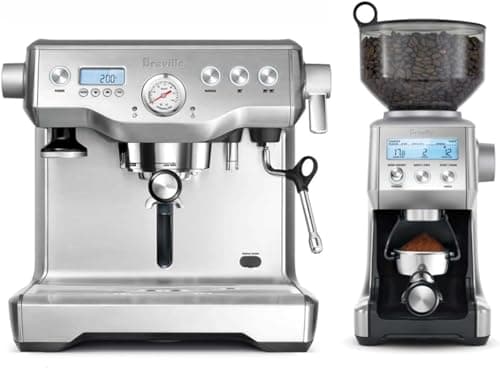
The Dual Boiler is the jump that actually changes the espresso rather than the experience. Two independent boilers mean you extract and steam at the same time with no temperature compromise, and PID control holds the brew water steady shot to shot in a way no single-boiler machine can. It uses the 58mm standard basket, and this package ships with the Smart Grinder Pro, so it is a complete upgrade in one box. It is expensive, large, and wasted on a beginner.
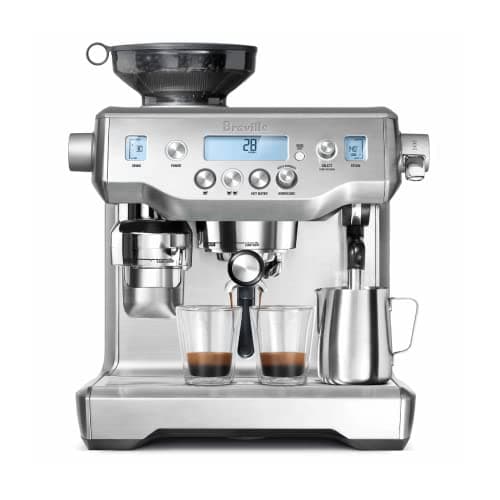
The Oracle is the odd one out, and the most expensive: a 58mm dual-boiler machine that also grinds, doses, tamps and textures milk for you. That combination barely exists elsewhere, and it is the machine to buy if you want prosumer shots with super-automatic convenience and the budget is not the constraint. Enthusiasts who want to control puck prep will find the automation gets in the way, and there is more mechanism to service over time. Our Oracle review is the long version.
What we did not rank.Breville's drip brewers and grind-and-brew coffee makers are a different category — they are covered under best drip coffee makers and the Luxe Brewer review, not here. We also have not ranked Breville's discontinued Infuser and Duo-Temp Pro: both turn up on Amazon through third-party sellers at unpredictable prices, and we will not rank a machine whose live availability we cannot verify.
How to choose between seven near-identical machines
1. Price the grinder, not the machine
The only honest way to compare a Bambino Plus with a Barista Express is to add a grinder to the Bambino's price. Do that arithmetic before you decide anything else, because it frequently reverses the answer: a grinder-less machine plus a decent burr grinder usually lands near or above the Barista Express, and you end up with two boxes instead of one. The case for going that way is that a separate grinder is better than a built-in one and can be upgraded independently. The case against is counter space and money today.
2. Decide whether you want to learn the steam wand
Automatic milk texturing (Bambino Plus, Barista Touch, Oracle) heats and froths to a set temperature with no skill required. A manual wand (Barista Express, Barista Pro, Bambino, Dual Boiler) does what you tell it, which is better once you can do it and worse until then. There is no quality argument here, only an effort one — and if you mostly drink straight espresso, you are paying for a feature you will rarely use. Our guide to how to steam milk is what the manual wand asks of you; it is about twenty minutes of practice, not a talent.
3. Treat 54mm vs 58mm as an accessories decision
Breville's 54mm basket is fine — it pulls good espresso and Breville sells what you need for it. But the aftermarket in this category is built around 58mm: tampers, distributors, WDT tools, puck screens and bottomless baskets are all most plentiful and cheapest in that size. If you can already see yourself buying puck prep tools, the 58mm machines keep every one of those purchases useful if you upgrade later.
4. Single boiler versus dual boiler is about milk, not shots
A single-boiler machine heats one water circuit and switches it between brewing and steaming, so you pull the shot and then wait for the machine to climb to steam temperature. For one or two drinks that wait is seconds and nobody cares. For four milk drinks back to back it is the difference between a pleasant ten minutes and a chore, which is the real reason dual boilers exist. Espresso machine boiler types explains the mechanism properly.
5. Buy the machine for the drink you actually make
The single best predictor of satisfaction here is honesty about the drink. If the answer is two straight espressos a day, the Bambino plus a grinder is more machine than you need and the Oracle is absurd. If the answer is four lattes before school, automatic milk texturing and dual boilers stop being luxuries. And if the answer is "a big mug of coffee, mostly", the honest recommendation is that you do not want an espresso machine at all — a good drip brewer will make you happier for a fraction of the money.