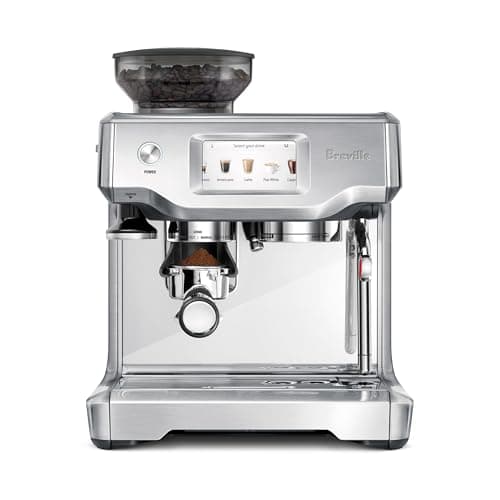
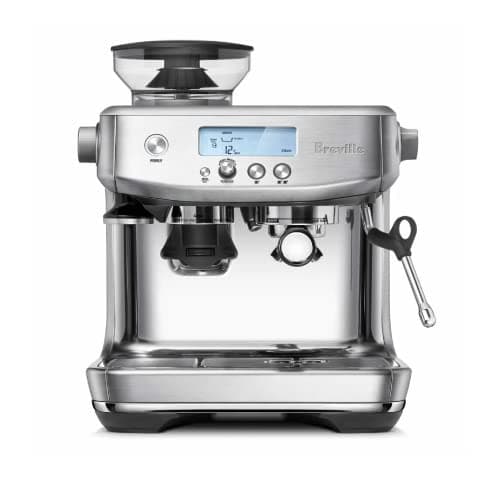
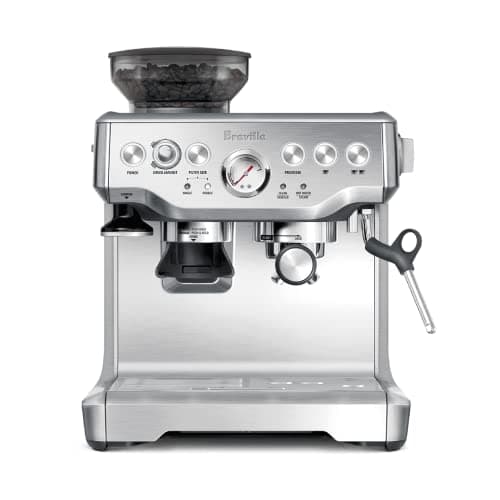
The Breville Barista Express and the Barista Touch are the same idea sold twice: a grind-to-cup espresso machine with a built-in burr grinder and a real 54mm portafilter, so one box takes you from beans to a shot. The only question worth answering is what the extra spend over the Express actually buys, because the Touch costs a real premium and it does not pull a better shot for it. What it adds is a color touchscreen, automatic milk texturing, and saved drink profiles — convenience, not capability. Between the two sits the Barista Pro, which keeps the manual wand but speeds up the heat-up and swaps the dials for a screen. This compares all three, criteria first, so you can see exactly where your money goes.
Start with what they share, because it's most of the machine. All three are built around the same built-in conical burr grinder, the same 54mm portafilter, and the same 15-bar pump, and all three are single-boilermachines — so none of them extracts a shot and steams milk at exactly the same moment; you pull, then switch to steam. The espresso itself is fundamentally the same across the line: dose, grind, and shot volume are adjustable on each, so any of the three can be dialed in to a genuinely good cup. If the shot were the deciding factor, the cheapest machine would win outright. It largely isn't — the differences are in heat-up, milk, and how the machine talks to you — so those are where this comparison lives. The full case for the base machine is in our Barista Express review.
The first real difference is heat-up time, and it splits the line cleanly. Breville builds the Barista Express around a ThermoCoilheating system, which means a short warm-up wait from cold before you can pull. The Barista Touch and the Barista Pro both use Breville's ThermoJetsystem instead, which the company rates to reach extraction temperature in around three seconds — effectively no warm-up wait at all. If your mornings are rushed and the few extra seconds of the Express genuinely grate, that's a concrete reason to move up. It's worth being honest about scale, though: this is seconds, not minutes, and for many people the wait is a non-issue once the machine is part of a routine.
The second difference is milk, and it's the one that most often justifies the Touch. The Barista Express and the Barista Pro both have a manual steam wand: you texture the milk yourself, which is a skill that rewards practice with dense, latte-art-grade microfoam but takes real time to learn. The Barista Touch adds automatic milk texturing— Breville lists it as steaming to a set temperature and texture on its own, so you attach the jug, choose a setting, and it stops itself. For a household that wants a consistent cappuccino every morning with no technique, that automation is the single biggest reason to pay the Touch premium. The trade is control and ceiling: an automatic wand is more forgiving but caps lower than a practiced hand, and it's another system that can eventually need service. If you want to learn milk properly, our guide to steaming milk shows what a manual wand on the Express or Pro can do.
The third difference is the interface, and it's where the three machines feel most distinct. The Barista Express is analog: physical dials and a pressure gauge, which is simple, robust, and a little more guesswork. The Barista Pro replaces those with an LCD that makes grind size and shot timing visible instead of felt. The Barista Touch goes furthest with a color touchscreen that guides you through each drink step by step and stores saved drink profiles, so different people in the house can pull their own recipe with a tap. If a near-zero learning curve and a shareable, guided workflow matter to you, the touchscreen is the reason the Touch exists — and it ranks well for exactly that in our best machines for lattes.
The fourth difference is grinder and footprint, and here they're closer than the price gap suggests. All three carry a built-in conical burr grinder of the same broad class, so grinding convenience is a wash — none of them saves you from eventually wanting a dedicated grinder if you get serious, and all three keep you off pre-ground coffee, which is the point. On the counter, all three are substantial machines that need real space and hopper clearance; the differences between them are modest, so footprint rarely decides between these three specifically (it matters more against a compact machine). If a built-in grinder is your non-negotiable, any of the three qualifies, and the wider field is in our best espresso machines with a grinder guide.
The fifth criterion is value, and it decides the ranking. The Barista Express is the cheapest of the three and does the core job — grind, dial in, pull, and steam by hand — for the least money, which is why it's our top pick here and the default first real machine for most people. The Barista Touch commands a real premium, and every dollar of it buys convenience (the touchscreen, the auto-milk, the profiles) rather than a better shot; it's worth it only if that hands-off, guided experience is genuinely what you want. The Barista Pro sits in the middle both in price and in what it offers: the fast ThermoJet heat-up and the screen of the Touch, but the manual wand and lower price of a machine closer to the Express. On a fixed budget, the savings from choosing the Express can go straight into a better grinder or fresher beans, which improve the cup more than any of these upgrades do.
So the verdict comes down to the buyer. Choose the Barista Expressif you're building skill or buying on value — it pulls the same quality shot, and the manual wand is the tool you learn milk on. Choose the Barista Touchif you want the milk handled for you and a guided, shareable touchscreen, and you'll happily pay a premium for that hands-off experience; the full case is in our Barista Touch review. Choose the Barista Proif the Express's warm-up wait is the one thing you want to fix and you like a screen, but you don't want to pay the touchscreen-and-auto-milk premium — it's the fast-heat middle ground, reviewed in full in our Barista Pro review. If your choice is really Express versus Pro rather than the Touch, we settle that head to head in the Barista Express vs Barista Pro comparison.
None of these machines was in our hands. We compared Breville's published specifications, the well-documented behavior of single-boiler ThermoCoil and ThermoJet heating and of manual versus automatic milk texturing, and aggregated owner reports, and we priced all three live. Where a point rests on a maker's claim — the roughly three-second ThermoJet heat-up on the Touch and Pro, the automatic milk texturing on the Touch, the built-in grinder on all three — we say so rather than claim a measurement we didn't make, in line with our research method.
Barista Express vs Barista Touch: the decision in detail
Because these machines share a grinder, a basket, and a shot, choosing well means understanding exactly where they differ and which buyer each difference favors — in the order that changes the decision. The Barista Pro is folded in throughout as the middle option.
What's identical — and why it matters
All three have the same built-in conical burr grinder, the same 54mm portafilter, the same 15-bar pump, and a single boiler. That means the espresso is fundamentally the same, all three are adjustable enough to dial in, and none of them can extract and steam at the exact same moment. If the shot is all you care about, the cheapest machine wins and the rest of this guide is about paying for convenience. It also means that if you want simultaneous brew-and-steam or a 58mm commercial group, none of these three is the answer — that's a dual-boiler machine one tier up, in our under-$1,000 guide.
Heat-up time
The Barista Express uses a ThermoCoil heater with a short warm-up wait; the Barista Touch and Barista Pro use ThermoJet, which Breville rates at around a three-second heat-up. If a rushed morning makes the Express's warm-up genuinely annoying, that's a real, concrete reason to move up to the Pro or Touch. But keep the scale honest — this is seconds, and once the machine is part of a routine most people stop noticing. Don't pay the Touch premium for heat-up alone; if fast heat is the only thing you want, the Pro gives you ThermoJet for less.
Milk: manual microfoam vs automatic steam
This is the pivotal difference. The Express and the Pro have a manual steam wand — you texture the milk yourself, which rewards practice with denser microfoam and latte art but takes time to learn. The Touch adds automatic milk texturing that steams to a set temperature and texture hands-free, which is the closest thing to a cafe cappuccino with no skill. Decide honestly which person you are: if you want to learn the craft, the manual wand is a feature, not a lack, and our steaming guidegets you there. If you want the milk done for you every morning with no technique, the Touch's auto-steam is the single best reason to pay its premium.
Interface: dials, LCD, or touchscreen
The Express is analog dials and a gauge — simple and robust, with a little more guesswork. The Pro adds an LCD that makes grind size and shot timing visible. The Touch adds a color touchscreen that guides each drink and stores saved profiles, so multiple people can pull their own recipe with a tap. If a near-zero learning curve and a shareable, guided workflow are the point, the touchscreen justifies itself; if you'd rather learn the numbers yourself, the dialing-in guide does the same job on the cheaper machines. Interface preference is largely taste — pay for it only if it genuinely matches how you want to make coffee.
Grinder, footprint, and the rest of the setup
All three carry a built-in grinder of the same broad class, so grinding convenience doesn't separate them, and all three are large machines that need real counter space and hopper clearance — the footprint differences among these three are modest. What actually improves the cup once you've chosen is the same for all of them: fresh beans for espresso, a repeatable recipe, and — eventually — a dedicated grinder that outperforms the built-in one. A scale to weigh dose and yield does more for consistency on any of the three than the jump between models does.
Value and the verdict by buyer
The Express is the value pick and our number one here: it pulls the same shot for the least money and leaves budget for a grinder or beans. The Touch is worth its premium only if hands-off milk and a guided touchscreen are genuinely what you want — you're paying for convenience, not a better cup. The Pro is the middle ground: ThermoJet speed and a screen without the touchscreen-and-auto-milk premium, for the buyer who wants faster heat-up but is happy to steam by hand. Match the machine to the buyer you actually are, not the feature list that looks best on paper, and read the full Express review before you decide.