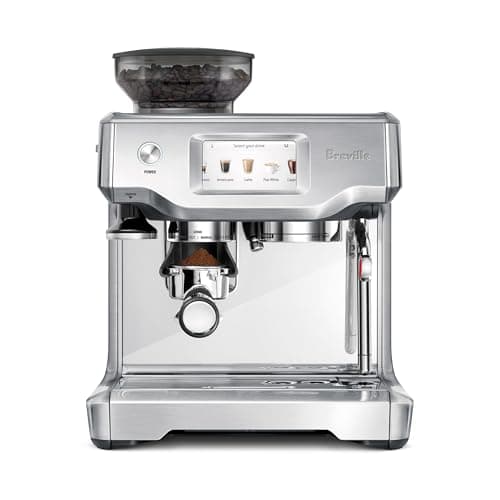
The Breville Barista Touch is the most hand-holding machine in Breville's semi-automatic lineup, and that — not raw shot quality — is the right lens to judge it through. It bundles a built-in grinder, a color touchscreen that walks you through every drink, and an automatic milk-texturing wand into one box, so a total beginner can grind, pull, and steam a cafe-style latte on day one with almost no learning curve. The honest question this review answers is not "is it a good machine?" — it plainly is — but whether the guidance and convenience it adds are worth the premium over the near-identical shot its cheaper siblings pull.
Start with what you actually get, because it is a genuinely complete setup. Breville lists the Touch with a built-in conical burr grinder, so one purchase gets you a grind-to-cup machine with nothing else to buy — the single biggest reason first-timers pick a Breville over a bare machine. On top of that sits a color touchscreen that steps you through each drink and stores adjustments, turning the usual espresso guesswork into a series of prompts. For someone who finds the idea of dialing in a shot intimidating, that screen is the feature that gets them from box to drinkable coffee fastest.
The headline convenience is the automatic milk texturing. Breville rates the Touch's wand to steam milk to a set temperature and texture on its own — you attach the jug, choose a setting, and it stops itself — so you get microfoam-grade milk without babysitting the wand or learning the hardest skill in home espresso. Steaming milk is the thing most beginners get wrong for weeks, and the auto wand simply removes it. If milk drinks are the whole reason you're buying an espresso machine, this is the capability that justifies the Touch's existence, and it's why the machine ranks so well in our best machines for lattes.
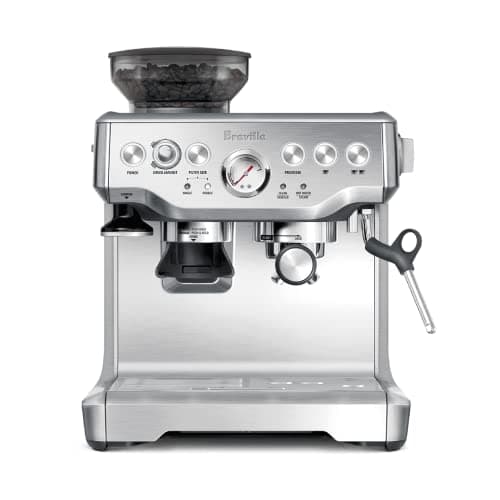
Now the honest catch, because it is the whole story of this machine. You pay a real premium over the Breville Barista Express for the screen and the automatic steam, not for a better shot. The Touch, the Express, and the Barista Pro share the same core brewing and the same 54mm portafilter, so the espresso itself is close to identical across all three — the Express pulls a very similar shot for meaningfully less money. What the extra spend buys is guidance and hands-off milk, not a fundamentally different cup. That is a fair trade for the right person and a waste for the wrong one, which is the entire buying decision here.
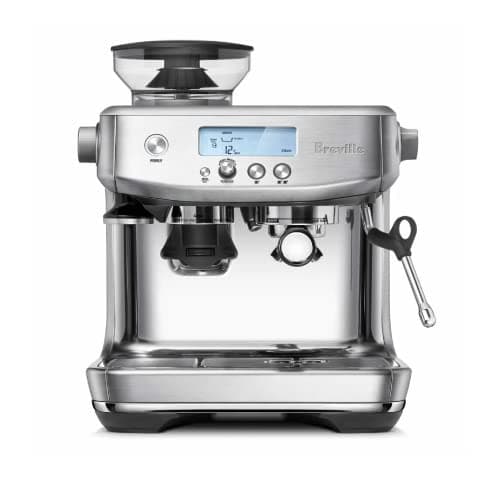
The Barista Prois the machine that complicates the picture, and deliberately so. It keeps the same built-in grinder and adds Breville's ThermoJet heater, which the company rates to reach temperature in about three seconds, plus an LCD that makes grind size and shot timing visible. What it drops is the touchscreen hand-holding and, critically, the automatic milk texturing — its wand is manual, so you steam the milk yourself. If you're willing to learn the wand, the Pro gets you most of the Touch's capability for less, and the difference is better spent on a grinder or beans. The full case for it is in our Barista Pro review.
So who is the Touch genuinely right for? The person who values the guided, hands-off experience enough to fund it — a beginner who wants a reliable latte every morning with no technique, a household where more than one person needs to make good coffee without a lesson, or anyone who would rather the machine make the decisions than learn to make them. For all of them, the touchscreen and auto-steam are worth real money, and the Touch delivers exactly what it promises. It is the friendliest way into real, non-pod espresso for someone who doesn't want a hobby, only a good drink.
Who should skip it? Anyone happy to learn the steam wand, and anyone who enjoys the craft. If you're the type who wants to dial in shots and pour latte art, the auto-steam is a ceiling, not a gift — the manual wand on the Pro or the Gaggia Classic Progives you more control and a higher skill ceiling, and the money saved goes to a better grinder. Skip it too if the budget is tight: the Express does the same core job for less. And remember the auto wand is one more electronic system that can eventually fail, where a manual wand has almost nothing to break. This is a convenience purchase; if you don't value the convenience, you are overpaying for it.
As with everything on this site, the Barista Touch was not in our hands. We worked from Breville's published specifications, the well-documented behavior of automatic versus manual steam wands, and priced it live. Where a claim is Breville's — the rated three-second heat-up on the Pro, the automatic milk texturing — we report it as the manufacturer's rating rather than a measurement of our own, in line with our research method.
Is the Barista Touch worth it? The decision in detail
Because the Touch shares its shot with the cheaper Brevilles, deciding well means understanding exactly what the premium buys and whether it matches how you want to make coffee — in the order that changes what ends up in the cup and in your wallet.
1. Guidance or control — which person are you?
The touchscreen exists to shield you from the fiddly parts of espresso, and whether that is worth paying for depends entirely on temperament. If you want a machine to make the decisions and get you to a good drink fast, that guidance is genuinely worth a premium. If you enjoy the process — the reason someone buys a Gaggia or a Rancilio Silvia— the same screen feels like training wheels you'll want to remove. Be honest about which you are before anything else; the wrong match is the most common regret with this machine.
2. The grinder is built in — count that in the price
The Touch, like the Express and Pro, builds in a conical burr grinder, so its price already includes something you'd otherwise buy separately. That's the right answer for a first-time buyer who doesn't own a grinder. But if you already have a good standalone grinder, you're paying for one you don't need — a grinder-less machine like the Bambino Plus plus your existing grinder is the smarter money. The built-in grinder is good, not the best; serious users eventually add a dedicated one anyway, which our best grinders for espresso guide covers.
3. Milk: automatic is the Touch's whole reason to exist
If you drink milk-based coffee, the milk system is the single biggest reason to choose the Touch over the Pro. Breville rates the Touch's automatic wand to hit a set temperature and texture hands-free — the closest thing to cafe microfoam with no skill — while the Pro gives you a manual wand you operate yourself. Automatic is easier and more consistent from day one; manual rewards practice with denser microfoam and latte art. Decide which you want before you look at price; our guide to steaming milkexplains what "good milk" even means.
4. What you're actually paying for — Touch vs Express vs Pro
All three share the same brewing and pull a very similar shot, so you are choosing features, not espresso. The Express is the value baseline: built-in grinder, manual wand, lowest price. The Pro adds the ThermoJet fast heat-up and an LCD but keeps the manual wand. The Touchadds the touchscreen and automatic milk texturing on top. Work out which of those upgrades you'll actually use — if it's only the auto-milk, the Touch earns its premium; if you're happy steaming milk, the Express or Pro saves you real money for the same cup.
5. It's still a single boiler — know the ceiling
For all its features, the Touch is a single-boiler machine, so it makes you wait a few seconds to switch between pulling a shot and steaming milk, and it can't extract and steam at once the way a true dual boiler can. For one or two drinks that barely matters, but if you make several milk drinks back to back, you'll feel it. If simultaneous extract-and-steam matters to you, that's the prosumer tier above this one, not the Touch.
6. Spend the last dollars where they count
Whichever Breville you pick, the built-in grinder is convenient rather than exceptional, so the highest-impact money left over goes to beans — and, eventually, to a better standalone grinder. A great machine fed by stale or poorly ground coffee is the most common and most expensive mistake here, so keep fresh beans for espresso on hand and treat the grinder as the thing you upgrade first when you outgrow the box.