This is the true-budget tier of home espresso — the machines that sit a rung below our under-$500 guideand a long way below the Brevilles with built-in grinders. Under $300 you can absolutely buy a real machine that pulls a genuine pressurized shot and steams milk, and for a lot of people that's exactly the right amount to spend to find out whether espresso is going to be a habit or a phase. But this price bracket is defined as much by what it leaves out as what it includes, and the honest job of this guide is to be clear about the compromises before you buy, and about the one purchase that matters more than any of these machines.
Two things are true of nearly everything at this price, and you should understand both up front. First, most of these machines rely on a pressurized basket (sometimes called a dual-wall basket). A pressurized basket adds an extra restriction that builds pressure for you, so it produces a thick, crema-like shot even from mediocre grinding — which is forgiving and beginner-friendly, but also means the machine flatters poor coffee rather than rewarding great coffee. Second, the steam is modest: the wands at this price are weaker and less stable than the ones on pricier machines, so texturing tight microfoam takes more patience and the results have a lower ceiling. Neither is a dealbreaker; both are the honest cost of the bracket.
The single most important thing to understand about this tier is this: the grinder matters more than the machine. Espresso is far more sensitive to grind quality than to which sub-$300 machine you own, and none of these machines includes a grinder (the Bambino, Stilosa, and Dedica are all grinder-less by design; the CASABREWS is too). Pre-ground coffee makes disappointing espresso in any of them. If your total budget is fixed, the smartest move is often to buy the cheapest machine here that meets your needs and put the savings toward a real burr grinder — our best espresso grinder under $200 guide exists precisely for this buyer. Get that order of priorities right and any of these machines can make good coffee; get it wrong and none of them will.
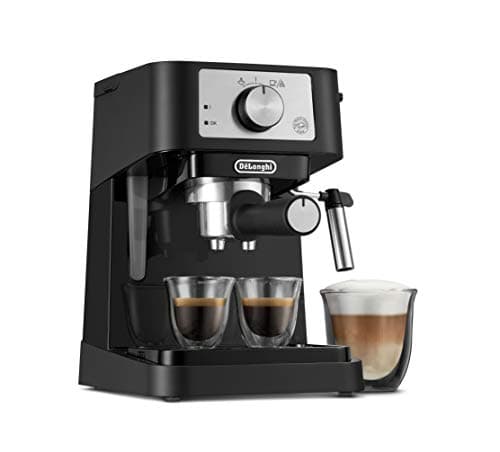
Our top pick under $300 is the De'Longhi Stilosa, and the reasoning is pure value. It costs a fraction of the others, pulls a real pressurized shot, and includes a genuine manual steam wand and a tamper, so it's a complete way to start pulling shots and practicing milk for the least money. Its build is plastic-heavy and its shot ceiling is the lowest here — single-walled basket, modest temperature stability — but that's exactly the point: it's the honest cheapest way to find out whether you're actually going to do this, and it leaves the most budget for a grinder and beans. For the true-budget buyer testing the waters, nothing here beats it on value, which is why it wins the tier. If you already know you're serious, though, you'll outgrow it fast — read on.
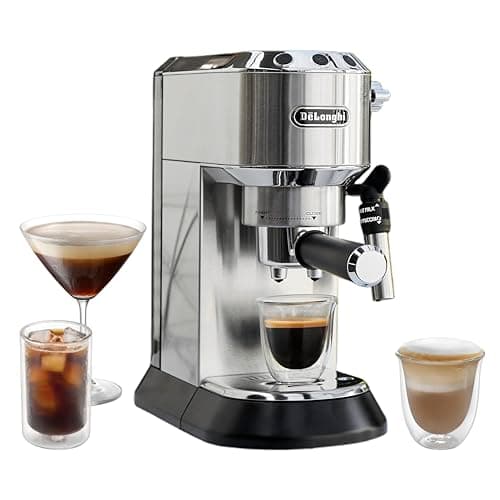
The De'Longhi Dedicais the pick for one specific and very common problem: no counter space. De'Longhi lists it at under five inches wide, which genuinely solves the "nowhere to put it" issue better than anything else at this price. It heats quickly and pulls a respectable shot for its size, with a manual frother that lets you learn milk. The trade-offs are the small stature — a small boiler and tank built for one or two drinks at a time — and, like most of the bracket, a pressurized basket that flatters mediocre grinding rather than rewarding good grinding. If your constraint is width, the Dedica is the answer; if it isn't, you're paying a slight premium for slimness you don't need. We compare it directly with the Stilosa in our Dedica vs Stilosa guide.
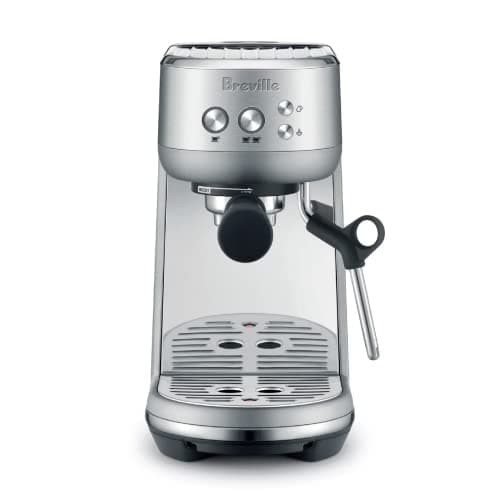
The Breville Bambino is the best machine in this group, and the one to stretch for if the budget reaches the top of the bracket and you already own a grinder. Breville builds it around a near-instant ThermoJet heat-up and a 54mm portafilter, and — crucially — it pulls a genuinely good shot and steams proper microfoam, not the airy foam the cheaper machines produce. The catch that keeps it from the top spot on a strict "under $300" basis is that it has no grinder, so its realcost is the machine plus a grinder, which together push past this budget. Its steam wand is also manual and takes practice — unlike the Bambino Plus, it won't texture the milk for you. If you have a grinder already, this is the machine that grows with you; the auto-steam question is covered in our Bambino vs Bambino Plus comparison.
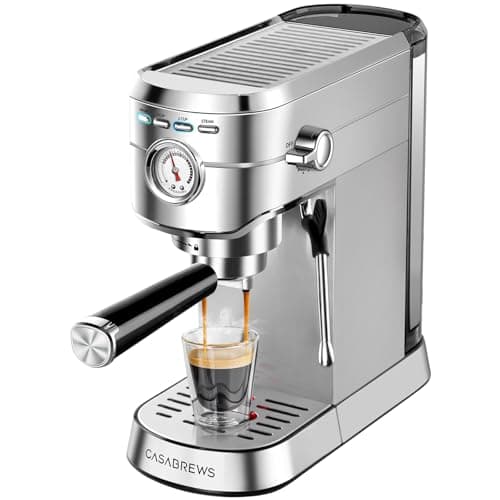
The CASABREWS Compactis the budget-brand pick — the lowest-priced way onto a machine that steams milk and looks the part in stainless. It does the core job: a pressurized shot and a working steam wand for less than the name-brand entry machines. Two honest caveats keep it at the bottom of the ranking. First, the headline "20 bar" figure is a pump rating, not a quality signal — pressurized baskets flatter poor grinding regardless of the number on the box. Second, long-term reliability and parts support are weaker than De'Longhi, Breville, or Gaggia, so it's a starter you may not keep for years. As a low-risk way to try espresso it's fine; if you already suspect the hobby will stick, the Stilosa is cheaper and the Bambino is better.
A word on what's nothere, because it's the most useful buying advice in this bracket. If any part of you wants to learn espresso as a craft — to dial in shots and texture milk by hand and keep improving — the money is better spent one tier up. A machine like the Gaggia Classic Progives you a commercial 58mm group and a real steam wand you'll grow into rather than out of, and the full field above this one is in our under-$500 guide. Under $300 is the right place to start or to test; it's rarely the right place to land if you already know you're committed.
None of these machines was in our hands. We compiled the manufacturers' published specifications, the well-documented behavior of pressurized baskets and entry-level steam wands, and aggregated owner reports, and we priced each one live. Where a claim is a maker's — the Dedica's sub-five-inch width, the CASABREWS pump rating, the Bambino's heat-up — we say so rather than pretend we measured it, in line with our research method.
How to choose an espresso machine under $300
At this price the decision is less about which machine has the best shot — they're closer than the marketing suggests — and more about matching honest constraints to honest compromises. Here's the order that actually decides it.
1. Budget for a grinder before you compare machines
This is the whole game under $300. Espresso lives or dies on grind quality, and none of these machines grinds, so your real budget is machine plus grinder — and the grinder decides more of the cup than the machine choice does. Decide up front how you'll split the money; for most people the right answer is the cheapest machine that meets their needs plus a real burr grinder from our under-$200 grinder guide. A great machine fed by pre-ground coffee is the classic expensive mistake here.
2. Understand the pressurized basket you're getting
Most machines at this price ship with a pressurized (dual-wall) basket that builds pressure for you, producing a thick, crema-topped shot even from imperfect grinding. That's genuinely helpful for a beginner and a fair trade at this price — but know what it is: forgiveness, not quality. It flatters mediocre coffee rather than rewarding great coffee, which is one reason the shot ceiling here is lower than a machine with a standard basket and a good grinder. If dialing in a "real" unpressurized shot is your goal, that ambition points one tier up.
3. Be realistic about the steam
The steam wands at this price are modest — weaker and less temperature-stable than pricier machines — so tight microfoam takes more patience and tops out lower. The manual wands on the Stilosa, Dedica, and Bambino are a genuine plus for learning milk, since you texture it yourself, but none will match the effortless results of an automatic wand or a stronger machine. Our guide to steaming milkis the fast way to get good results out of a modest wand; if hands-free milk is a must, that's a different tier.
4. Match the machine to your real constraint
Each pick here wins on a specific need. Choose the Stilosa for the lowest price and the most money left for a grinder. Choose the Dedicaif counter width is your genuine limit — De'Longhi lists it under five inches wide. Choose the Bambino if you already own a grinder and want the best shot and real microfoam, accepting that its true cost sits at the top of this budget. Choose the CASABREWS only for the absolute lowest entry price on a machine that steams, eyes open about weaker long-term support.
5. Know when to spend more instead
The most honest advice in this bracket is sometimes "don't buy in it." If you already know you're serious about espresso as a hobby, a sub-$300 machine will frustrate you and you'll end up buying twice. The commercial 58mm group of a Gaggia Classic Pro, or anything in our under-$500 guide, gives you a machine you grow into. Under $300 is for starting, testing, or tight budgets — not for the committed enthusiast who already knows what they want.
6. Don't buy any of these if...
Skip the whole bracket if you want the machine to grind, dose, and texture milk for you — that convenience starts higher up, at a guided all-in-one or a super-automatic. Skip it, too, if you refuse to buy a separate grinder: pressurized baskets help, but pre-ground coffee still makes weak espresso in every machine here. And if you want hardware you'll keep and repair for a decade, spend more now. Buy in this tier to start well and cheaply — and pair whatever you choose with a grinder and fresh beans for espresso.